Chandra Wibowo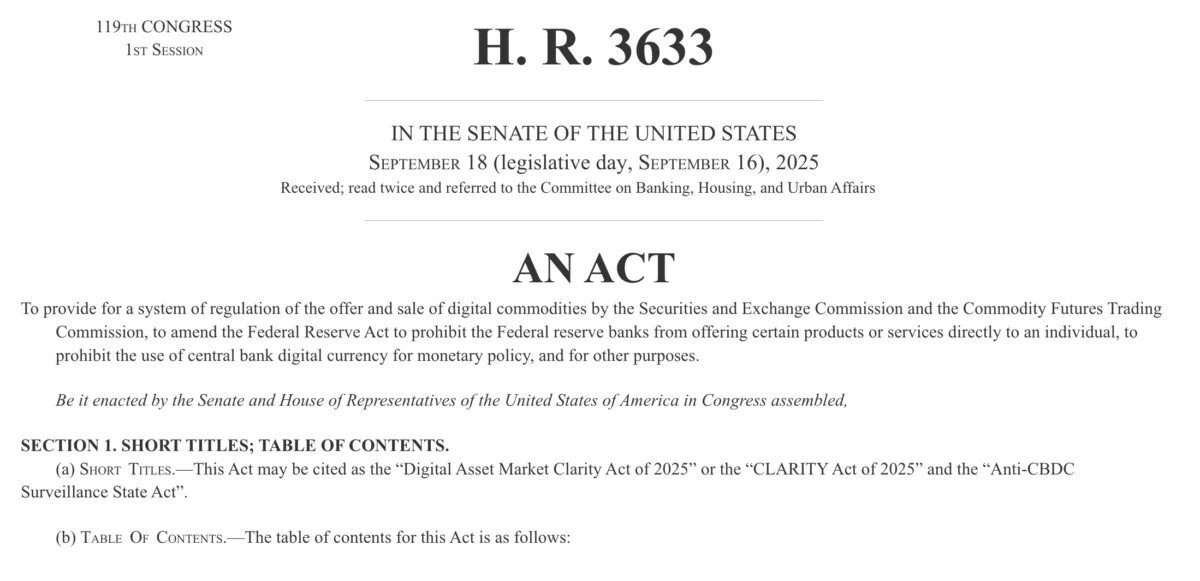
Rumors of a breakthrough have emerged in the complex landscape of cryptocurrency regulation, with reports indicating a tentative agreement has been reached between the White House and key U.S. lawmakers concerning stablecoin yield. This development could significantly propel the Digital Asset Market Clarity Act of 2025, commonly known as the CLARITY Act, toward legislative passage. The proposed legislation aims to establish a comprehensive framework for the digital asset market, and the resolution of the contentious issue of stablecoin yield is seen as a critical hurdle cleared.
The reported agreement, detailed in a Friday Politico report, stems from discussions involving Republican Senator Thom Tillis and Democratic Senator Angela Alsobrooks, both influential members of the Senate Committee on Banking, Housing, and Urban Affairs. Sources close to the negotiations have described the understanding as an "agreement in principle," suggesting a foundational consensus has been achieved. This bipartisan accord, if solidified, represents a significant step forward in bridging the gap between the executive branch and legislative bodies on a matter of considerable economic and technological importance.
Senator Alsobrooks, in her comments, articulated the dual objective of the proposed compromise: "I think what it will do is to allow us to protect innovation, but also gives us the opportunity to prevent widespread deposit flight." This statement highlights the delicate balancing act lawmakers are attempting to perform. On one hand, the goal is to foster the growth of the burgeoning digital asset sector, ensuring that the United States remains at the forefront of technological advancement. On the other hand, there is a pressing concern to safeguard the stability of the traditional financial system, particularly the banking sector, from potential disruptions caused by novel financial instruments.
The core of the reported agreement appears to center on the regulation of yield generated by stablecoins. Specifically, Senator Alsobrooks indicated that the deal prohibits stablecoin yield on "passive balances." This restriction suggests a focus on preventing stablecoin issuers from offering interest on funds that are essentially held dormant, a practice that could directly compete with traditional bank deposits. The implication is that while certain forms of yield generation might still be permissible, those that mimic traditional banking services without equivalent regulatory oversight could be curtailed. This nuanced approach aims to differentiate between innovative financial products and those that could pose systemic risks.
While the specifics of this prospective deal remain largely undisclosed, Senator Tillis emphasized the need for thorough vetting by the cryptocurrency industry before its formalization. This call for industry consultation underscores the complexity of the legislation and the desire to ensure its practicality and effectiveness. The crypto industry, which has been actively lobbying for clear and favorable regulatory guidelines, will undoubtedly scrutinize the proposed terms to assess their impact on innovation, market development, and investor protection.
Cointelegraph’s attempts to solicit details directly from the White House regarding this prospective deal were unsuccessful by the time of publication, indicating the sensitive and preliminary nature of the ongoing discussions.

A Broader Landscape of Legislative Momentum
The potential breakthrough on the CLARITY Act comes at a time of heightened anticipation within the digital asset community. Wyoming Senator Cynthia Lummis, a prominent advocate for digital asset policy in Congress, recently expressed optimism about the legislative process. Speaking at the DC Blockchain Summit, she stated, "We are so close" to enacting a comprehensive crypto regulatory framework. This sentiment, shared by key figures in the Senate, suggests a collective push to finalize legislation that has been in development for an extended period.
A spokesperson for Senator Lummis further elaborated on the timeline, informing Cointelegraph on Wednesday that a deal is anticipated to materialize "in the next few days." The spokesperson also indicated that Senator Lummis is actively engaged in refining the ethical considerations embedded within the bill, a crucial aspect of any legislation governing financial markets and technological innovation. This focus on ethics suggests a commitment to ensuring transparency, fairness, and accountability within the digital asset ecosystem.
The Genesis and Stalling of the CLARITY Act
The Digital Asset Market Clarity Act of 2025, or the CLARITY Act, is widely recognized as a landmark piece of legislation designed to bring much-needed regulatory clarity to the rapidly evolving digital asset sector. Its potential passage was initially viewed with considerable optimism, particularly following the signing of the GENIUS stablecoin framework into law. The GENIUS framework, which established certain rules for stablecoin issuers, was seen as a precursor to broader regulatory initiatives.
However, the CLARITY Act encountered significant headwinds earlier this year, stalling in January. This legislative pause was attributed to concerns voiced by major industry players, including the prominent cryptocurrency exchange Coinbase. A central point of contention revolved around the ability of stablecoin issuers to share yield generated from their reserves with token holders. This particular provision ignited a debate about the nature of stablecoins and their potential to disrupt traditional financial services.
The Banking Industry’s Stance: Fear of Deposit Flight and Market Erosion

The opposition from the banking industry to yield-bearing stablecoins is rooted in deep-seated concerns about the potential for significant disruption to their core business model. Banks, which traditionally offer low interest rates on deposits, particularly in an environment of historically low benchmark rates, fear that stablecoins offering attractive yields could siphon away substantial amounts of capital. This "deposit flight" could weaken the financial stability of banks, reduce their lending capacity, and diminish their overall market share.
The banking sector’s argument is that these yield-bearing stablecoins operate in a regulatory grey area, allowing them to offer competitive returns without the same capital requirements, compliance costs, and consumer protection measures that traditional financial institutions must adhere to. This perceived uneven playing field is a significant concern for bankers who are already navigating a challenging economic landscape.
However, some within the regulatory and policy-making circles view these concerns as overstated. Patrick Witt, the executive director of the White House Council of Advisors for Digital Assets, has publicly stated that the fears of widespread deposit flight are "overblown." Witt’s perspective suggests that the legalization and regulation of dollar-pegged, yield-bearing stablecoins could, in fact, inject a wave of fresh capital into the U.S. banking industry. This counter-argument posits that a well-regulated stablecoin market could operate in conjunction with, rather than in direct opposition to, traditional banking services, potentially leading to increased liquidity and new opportunities for financial innovation.
Analyzing the Implications of the Tentative Agreement
The reported tentative agreement on stablecoin yield within the CLARITY Act has several potential implications for the cryptocurrency market and the broader financial ecosystem:
- Increased Regulatory Certainty: A finalized CLARITY Act would provide much-needed clarity for businesses operating in the digital asset space, reducing ambiguity and fostering greater confidence for investors and developers alike.
- Controlled Innovation: By prohibiting yield on "passive balances," lawmakers appear to be signaling a desire to channel innovation towards more productive uses of stablecoins, rather than those that directly mimic traditional banking deposit products. This could encourage the development of stablecoins for payments, remittances, and decentralized finance (DeFi) applications, while mitigating risks to the traditional banking system.
- Potential for Market Growth: If the legislation strikes a balanced approach, it could lead to the increased adoption of stablecoins as a bridge between traditional finance and the digital asset world, potentially attracting more institutional capital and retail participation.
- Impact on DeFi: The specific restrictions on stablecoin yield could influence the dynamics of decentralized finance protocols that rely heavily on stablecoin yields. Protocols that offer high yields on idle stablecoin balances might need to adapt their models.
- Continued Industry Scrutiny: The crypto industry’s reaction to the finalized terms will be crucial. Resistance to certain provisions or advocacy for amendments could still lead to further legislative debate.
The path to comprehensive cryptocurrency regulation in the United States has been long and complex, marked by evolving technologies, diverse stakeholder interests, and a fundamental debate about the future of finance. The reported tentative agreement on stablecoin yield represents a significant milestone, suggesting that lawmakers are moving closer to establishing a regulatory framework that seeks to harness the potential of digital assets while safeguarding financial stability. The coming days and weeks will be critical in determining whether this agreement can be solidified into law, shaping the future of the crypto market for years to come.
The ongoing dialogue between policymakers, regulators, and the industry underscores the dynamic nature of this sector. As technology advances and market participants innovate, regulatory frameworks must adapt to remain relevant and effective. The CLARITY Act, with this potential breakthrough, signals a commitment to this adaptive process, aiming to strike a balance between fostering innovation and ensuring the integrity and stability of the financial system. The broader implications for global financial markets, the competitiveness of the U.S. in the digital asset space, and the evolution of financial services will be closely watched as this legislative effort progresses.