Vera Intan Clara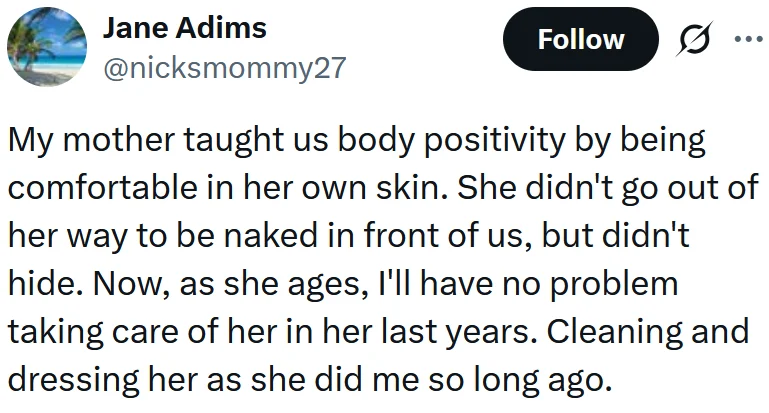
The "naked mom theory," a concept suggesting that children regularly exposed to their mothers’ nude bodies develop a healthier sense of self and others’ bodies, recently exploded across the social media platform X, igniting a fervent global discussion. This controversial proposition, which posits that such early, non-sexual exposure can foster positive body image and reduce shame, has simultaneously garnered support from those who believe it normalizes the human form and drawn sharp criticism from others who fear potential psychological harm or societal inappropriateness. The debate underscores broader societal anxieties and evolving perspectives on modesty, privacy, and the cultivation of healthy body perceptions in an increasingly image-conscious world.
The Genesis of a Viral Discussion: From TikTok to X
While the underlying ideas have likely circulated in various forms for decades, the "naked mom theory" gained significant traction and a distinct label through social media. Its recent surge in visibility can be traced back to early discussions on platforms like TikTok. In 2024, TikTok creator @kayteface was among the first to articulate the concept as a formal "theory" related to body image. She posited, "I have this theory that girls who were raised by ‘naked mom’ will grow up to have better body image than the girls who were raised by ‘we change in private, don’t ever see my body’ mom." This initial articulation laid the groundwork for the theory’s subsequent expansion into mainstream online discourse.
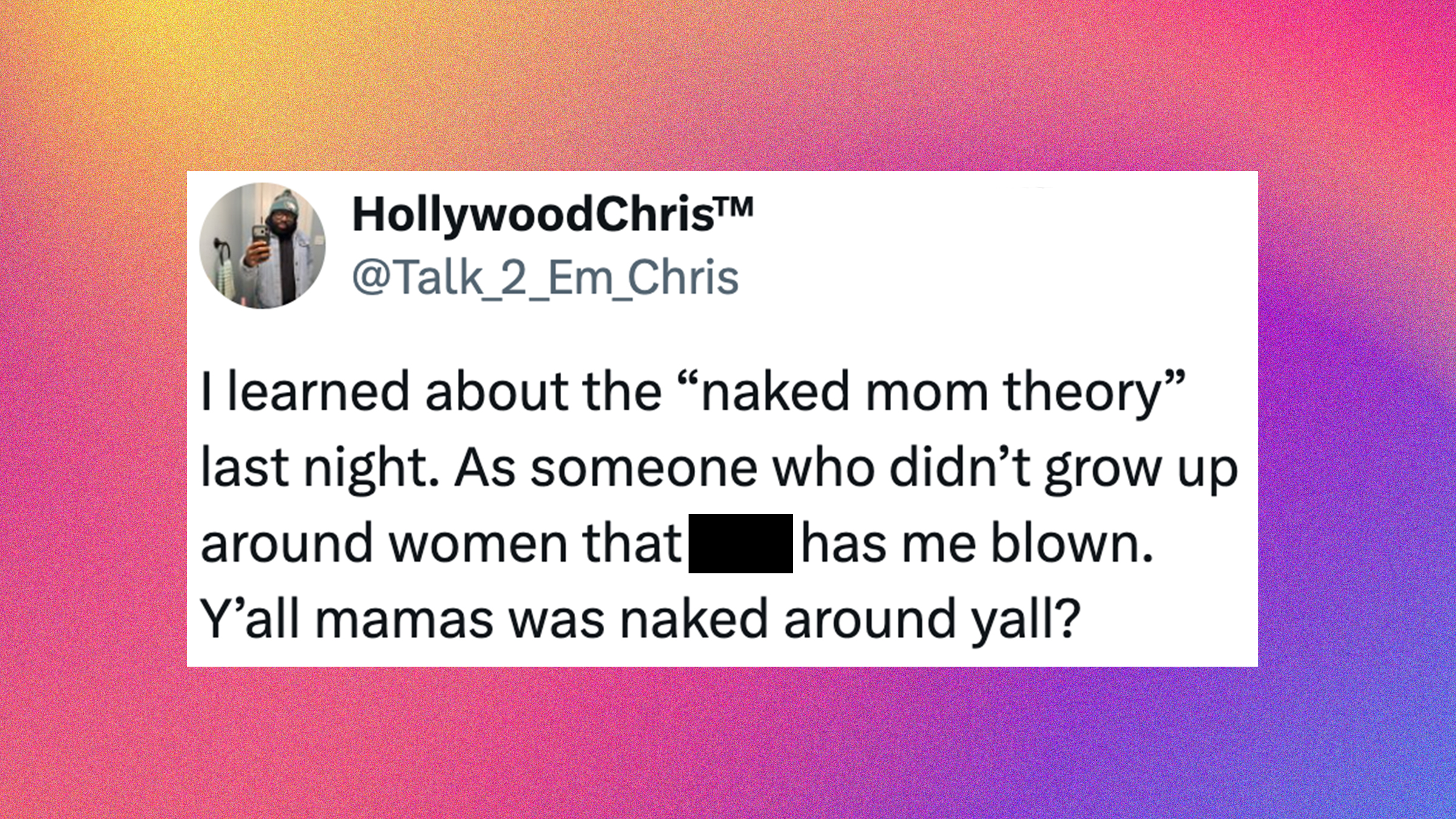
The concept truly went viral over a recent weekend when X user @Talk_2_Em_Chris, an individual identified as an Eagles fan and "hashtag girl dad," shared his newfound awareness of the theory. His post, which quickly amassed over six million views, read, "I learned about the ‘naked mom theory’ last night. As someone who didn’t grow up around women that sh*t has me blown. Y’all mamas was naked around yall?" The raw, inquisitive nature of his query resonated widely, triggering an avalanche of responses that ranged from enthusiastic agreement and shared personal anecdotes to profound discomfort and outright rejection. The provocative nature of the phrase "naked mom theory" itself proved an undeniable magnet for attention, often eliciting what some users described as "psychic whiplash" due to its evocative and potentially challenging implications.
Understanding the "Naked Mom Theory": Core Tenets and Proponents
At its core, the "naked mom theory" is not an advocacy for exhibitionism or inappropriate exposure, but rather a pedagogical approach to body image. Proponents argue that by regularly seeing a mother’s natural, unretouched body in everyday, non-sexual contexts, children—particularly daughters—can develop a more realistic and accepting view of the human form. This could manifest in various practices: a mother might change clothes in front of her children without actively hiding her body, or shower with very young children when practical and necessary for care.
The rationale behind these actions often stems from a belief that society has hyper-sexualized the naked body, transforming it from a neutral biological vessel into an object of shame or desire. In this view, children are born without preconceived notions of nudity, and exposing them to the diverse, imperfect reality of the human body early on can counteract the often-unrealistic portrayals prevalent in media and advertising. For some mothers, this practice is simply an unremarkable part of daily life, something they don’t consciously "think about" because it feels normal and natural. For others, it’s a deliberate and purposeful choice, a conscious effort to instill body neutrality and self-acceptance in their offspring. They contend that by demystifying nudity, parents can foster an environment where bodies are understood as functional and natural, rather than something to be hidden or ashamed of.
Historical and Cultural Context of Nudity in Parenting
The debate surrounding the "naked mom theory" is deeply intertwined with historical and cultural norms regarding nudity, modesty, and privacy. Across different cultures and historical periods, the boundaries of acceptable nudity, particularly within families, have varied significantly. In some indigenous cultures and certain traditional societies, familial nudity has been, and in some cases remains, a common and unremarkable aspect of daily life, not imbued with sexual connotation.
Conversely, many Western societies, particularly since the Victorian era, have developed increasingly rigid norms around modesty and privacy. The human body, especially the female form, has often been heavily veiled, both literally and figuratively, with public and even familial nudity becoming progressively stigmatized. This shift has contributed to a cultural landscape where nudity is often either sexualized or pathologized, leaving little room for a neutral, body-positive interpretation.
The emergence of the "naked mom theory" can be seen as a contemporary counter-narrative to these prevailing Western norms, drawing parallels to broader body positivity movements that challenge idealized beauty standards and promote acceptance of all body types. It also taps into evolving discussions about open communication within families regarding sensitive topics, including the human body and sexuality, often advocated by modern parenting philosophies that prioritize emotional intelligence and destigmatization.
Psychological Perspectives and Research Findings
While the "naked mom theory" is primarily a social media construct rather than a widely adopted psychological framework, existing research and psychological principles offer context to its claims. One frequently cited longitudinal study, published in 1998, examined the long-term effects of childhood exposure to parental nudity. This research reported that such exposure had no correlation with negative psychological outcomes for children. Furthermore, it surprisingly indicated that boys who grew up with parental nudity had a lower risk of contracting sexually transmitted diseases, suggesting a potential link to healthier sexual attitudes or practices, though the mechanisms behind this specific finding would require further investigation.
From a general developmental psychology standpoint, early childhood experiences significantly shape a person’s self-perception and worldview. Proponents of the theory argue that consistent, non-sexual exposure to a parent’s body can:
- Normalize the Human Form: By seeing a parent’s body as a natural entity, children may be less likely to develop unrealistic expectations or shame about their own changing bodies.
- Reduce Body Shame and Anxiety: In cultures where bodies are often hidden or only presented in idealized forms, children can internalize messages that their natural body is something to be ashamed of. Early exposure to a "real" body could counteract this.
- Foster Open Communication: A household where nudity is treated neutrally might also be one where open discussions about bodies, sexuality, and health are more comfortable, contributing to overall well-being.
- Counter Media Influence: In an age dominated by filtered images and unrealistic beauty standards, seeing a parent’s diverse body types (e.g., post-pregnancy changes, signs of aging) can provide a crucial anchor of reality.
However, critics often raise concerns rooted in child psychology, emphasizing the importance of age-appropriate boundaries and the potential for misinterpretation. While incidental nudity with very young children is generally considered harmless by most experts, the appropriateness for older children, particularly during puberty, becomes a more nuanced discussion. Some psychologists suggest that as children develop a stronger sense of personal privacy and sexual awareness, parental nudity might become a source of discomfort or confusion, potentially hindering their own developing sense of self and boundaries. The crucial distinction lies between normalizing the body and infringing on a child’s evolving need for privacy and personal space.
The Online Dialogue: A Spectrum of Reactions
The discussion on X and TikTok revealed a stark divide, largely aligning with individuals’ own upbringing and cultural exposure.
Supportive Voices and Personal Testimonials:
Many adults who reported being raised by "naked moms" offered powerful testimonials supporting the theory. These individuals often spoke of feeling comfortable in their own skin, possessing a strong sense of body neutrality, and having a realistic understanding of human anatomy.
- One TikTok user, @brendatothemax, shared, "My mom had a lot of sag from pregnancy and it helped normalize it for me. So when I got pregnant I didn’t feel so bad because it reminded me of my mom." This comment highlights the role of parental nudity in fostering acceptance of natural bodily changes, particularly those associated with life events like pregnancy and aging, which are often stigmatized in mainstream media.
- X user @SoualiganAmazon reported that "growing up going to the nude beach (our family didn’t go nude) as a kid really makes me view bodies as neutral." While not direct parental nudity, this experience underscores the idea that exposure to diverse, non-sexualized bodies can lead to a more neutral and accepting perspective.
- Another X user, @nicksmommy27, articulated a nuanced approach: "My mother taught us body positivity by being comfortable in her own skin. She didn’t go out of her way to be naked in front of us, but didn’t hide. Now, as she ages, I’ll have no problem taking care of her in her last years. Cleaning and dressing her as she did me so long ago." This perspective emphasizes a comfort level that translates into a deeper bond and willingness to provide care, viewing the body practically rather than purely sexually.
- The sentiment was further encapsulated by @IfunanyaMarian, who wrote, "Children who grow up with body neutral households develop significantly less shame, healthier relationships with their own bodies, and lower rates of eating disorders. The cultures that hide the human body the most are the same ones with the highest rates of body dysmorphia." This assertion, while broad, reflects a common belief among proponents that societal modesty correlates with negative body image outcomes.
Skeptical and Concerned Perspectives:
On the other side of the debate were those raised in "we change in private" households, who often expressed discomfort, disgust, or even horror at the idea. Their concerns typically revolved around:
- Privacy and Boundaries: Many believe that maintaining parental privacy is crucial for teaching children about personal space and appropriate boundaries.
- Age Appropriateness: While nudity for infants and toddlers is generally not controversial, concerns escalate significantly for older children, especially during and after puberty, when children begin to develop their own sexual identities and sense of self.
- Potential for Misunderstanding: Some fear that even non-sexual parental nudity could be misinterpreted by children or lead to confusion regarding societal norms outside the home.
- Societal Stigma: Despite arguments for body neutrality, the reality of many societies is that public or even familial nudity can carry social stigma, and parents worry about preparing their children for this reality.
- "Scarring" for Life: This common phrase reflects a deep-seated fear that such exposure could lead to psychological trauma, though the 1998 study suggests this fear may be largely unfounded in terms of negative outcomes.
The Broader Implications for Body Image and Parenting
The "naked mom theory" debate highlights several critical implications for contemporary parenting, body image, and public health:

Challenging Societal Norms: The theory directly challenges deeply ingrained Western modesty norms. By advocating for a more relaxed approach to nudity within the family, it pushes boundaries and forces a re-evaluation of what constitutes healthy and appropriate family dynamics regarding the human body. This re-evaluation is particularly significant in an era where societal norms are increasingly scrutinized and redefined.
Parental Autonomy vs. Child Development: The discussion places parents in a complex position, balancing their autonomy to raise children according to their beliefs with the responsibility to ensure optimal child development. It raises questions about how parents can best equip their children to navigate a world that simultaneously sexualizes and shames the body.
Impact on Body Positivity Movement: While aligned with the broader goals of the body positivity movement—promoting self-acceptance and challenging unrealistic beauty standards—the "naked mom theory" introduces a more radical approach to achieving these goals. Its direct focus on familial nudity extends the conversation beyond media representation to the very private spaces of the home, potentially offering a more fundamental approach to fostering body acceptance from an early age.
Media’s Role and Mental Health Context: The debate also serves as a stark reminder of the pervasive influence of media on body image. Children and adolescents are constantly bombarded with idealized, often digitally altered, images of bodies. This onslaught contributes to alarmingly high rates of body dissatisfaction, body dysmorphia, and eating disorders globally. According to the World Health Organization, eating disorders are among the most fatal mental illnesses, and body image issues affect a vast percentage of the population, often beginning in childhood. In this context, any practice that aims to provide children with a more grounded and realistic understanding of human bodies—like the "naked mom theory" proposes—warrants careful consideration for its potential to serve as a protective factor against these widespread mental health challenges. The theory suggests that by providing a counter-narrative to hyper-sexualized and idealized media, parents could foster resilience in their children against these pressures.
Expert Consensus and Future Directions
Currently, there is no widespread, formal consensus among child development experts or medical organizations specifically endorsing the "naked mom theory" as a prescribed parenting practice. While the 1998 study offers some reassurance regarding the absence of negative outcomes, it is a single study and does not represent a comprehensive body of research. Most experts would likely emphasize a nuanced approach, prioritizing an overall environment of body acceptance, open communication, and respect for personal boundaries. Incidental, non-sexual nudity with very young children is generally viewed as benign, but as children age and develop a stronger sense of self and privacy, the approach to nudity within the family typically evolves.
The virality of the "naked mom theory" on social media platforms underscores the public’s hunger for discussions around healthy body image and effective parenting strategies in an increasingly complex world. It highlights a growing desire among parents to proactively address the challenges their children face regarding self-esteem and body acceptance. As this conversation continues to unfold, further rigorous research would be beneficial to fully understand the long-term psychological and social impacts of varying levels of parental nudity on child development. Ultimately, the debate serves as a crucial catalyst for families to reflect on their own practices and values concerning modesty, privacy, and how they can best foster a positive and healthy relationship with the human body for their children.