Galang Taruna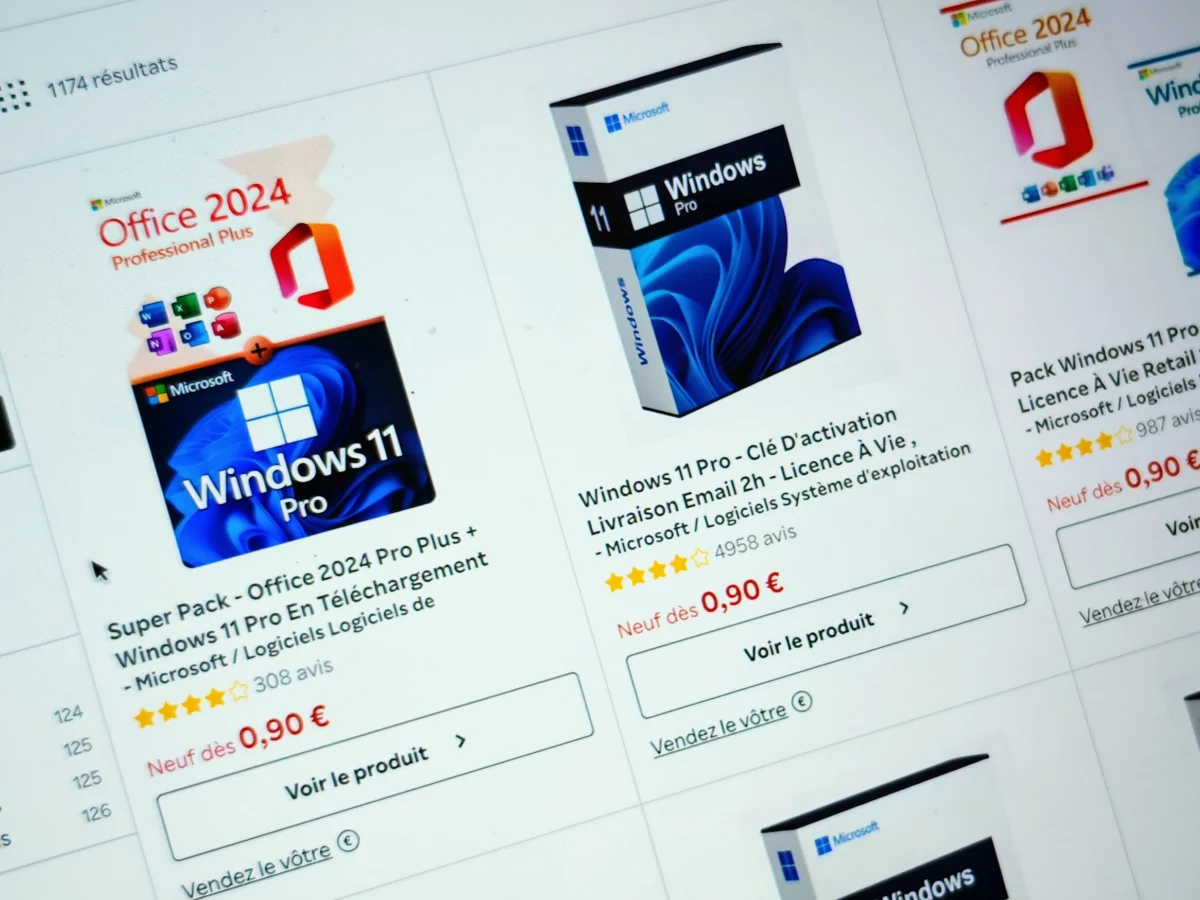
The digital marketplace for software licenses presents a perplexing dichotomy for consumers: why does an official Windows 11 Home license command a price of approximately €145, and its Pro counterpart a steep €259, when seemingly identical activation keys can be found online for as little as €1, or at most, €10 to €20? This significant discrepancy has fueled a thriving "grey market," enticing budget-conscious users but simultaneously raising critical questions about legality, security, and long-term viability. Understanding the origins of these deeply discounted keys and the inherent risks is paramount for anyone considering such a purchase.
The Official Landscape: Microsoft’s Licensing Framework
To fully grasp the dynamics of the grey market, it’s essential to first understand Microsoft’s legitimate software distribution channels. Microsoft employs several primary licensing models designed for different user segments:
- Retail Licenses: These are the licenses consumers purchase directly from Microsoft or authorized retailers (like Amazon, Fnac, or Materiel.net). They come with full support, are typically transferable to new hardware (within limits), and are intended for individual end-users. These are the licenses that carry the higher price tags.
- OEM (Original Equipment Manufacturer) Licenses: These licenses are pre-installed on new computers purchased from manufacturers like Dell, HP, or Lenovo. They are significantly cheaper for the manufacturer due to bulk purchasing agreements but are legally tied to the specific hardware they came with and are generally non-transferable.
- Volume Licenses: Designed for businesses, educational institutions, and government agencies, volume licenses allow organizations to deploy Windows across multiple devices from a single agreement. There are typically two main types:
- MAK (Multiple Activation Key): A single key can activate a specified number of devices. Once activated, the device remains licensed.
- KMS (Key Management Service): Requires a KMS host server within the organization’s network. Devices connect to this server for activation and must periodically re-activate. This model is ideal for large, dynamic environments.
Volume licenses are negotiated at a much lower per-unit cost than retail licenses, reflecting the economies of scale and the specific terms of corporate deployment. Crucially, Microsoft’s licensing agreements for these volume keys explicitly state that they are intended for use within the purchasing organization and are strictly prohibited from being resold to individual end-users outside that organization.
The Genesis of the Grey Market: Unused Volume Keys and Diversion
The vast price difference creates a powerful incentive for arbitrage. The grey market primarily thrives on the diversion of these volume license keys. The common scenario involves:
- Unused Allocations: Large organizations often purchase more licenses than they initially need, anticipating growth or future deployments. These surplus keys may sit unused.
- Decommissioned Systems: When companies upgrade their hardware or reduce their workforce, old systems are retired, and the associated volume licenses may become redundant.
- Internal Misappropriation: In some cases, unscrupulous employees within an organization with access to volume license keys might surreptitiously extract and sell them.
- Fraudulent Acquisition: More nefariously, individuals or groups might fraudulently acquire volume license agreements or generate illegitimate keys, though this is riskier and less common for high-volume sales.
These diverted keys, often obtained at minimal or no cost by the sellers, are then listed on popular online marketplaces, obscure websites, or through social media channels at prices ranging from a few euros to a few tens of euros. The appeal is immediate and undeniable: activate Windows 11 for a fraction of the official price.
Legal and Ethical Quandaries: Microsoft’s Stance and Judicial Precedents
Microsoft maintains a firm stance against the resale of volume licenses to individual consumers. The company views such transactions as a breach of its licensing terms and, in many cases, as a form of intellectual property infringement. When questioned, Microsoft consistently reminds users that Certificates of Authenticity (COAs) are designed for system integrators (PC manufacturers) and are never meant to be sold as standalone items to end-users. Any seller promoting a cheap key with a "sticker" as proof of legality is often employing a deceptive tactic to lull buyers into a false sense of security.
The legal landscape surrounding the grey market is complex and varies by jurisdiction, but enforcement actions are not uncommon. For instance, in a high-profile case in Florida in late 2023, a reseller was indeed sentenced to prison for her involvement in distributing activation keys with counterfeit Certificates of Authenticity. This case underscores the serious legal repercussions faced by sellers who traffic in these unauthorized licenses. While European courts have sometimes ruled in favor of the resale of legitimately acquired software licenses (often in the context of retail copies that have been genuinely "exhausted" through an initial sale), these rulings typically do not extend to volume licenses that were never intended for individual resale and whose terms of use explicitly forbid such distribution. The "first sale doctrine" often cited by grey market proponents has specific limitations and does not universally validate the trade of all types of software keys.
Furthermore, legal proceedings have been initiated in countries like France and Germany, primarily targeting sellers for offenses such as copyright infringement, fraud, or even "money laundering" when dealing with large volumes of illicit software keys. While individual buyers are rarely the primary target of such actions, the legal foundation of their activated software remains precarious.
The Technical Reality: Activation, Revocation, and the "House of Cards"
When a user purchases a grey market key, it often activates Windows successfully, at least initially. This immediate success is precisely what lends credibility to the grey market in the eyes of many consumers. However, this activation is often a "house of cards." Microsoft’s sophisticated backend systems continuously monitor license usage patterns. If a key originally intended for a large corporate deployment (e.g., a MAK key used for hundreds of activations) suddenly appears to be activating individual consumer PCs across disparate locations, it raises red flags.
Microsoft reserves the right to revoke any license it determines to be in violation of its terms of service. This revocation can occur without prior warning. When a key is revoked, the user’s Windows installation reverts to an unactivated state. This typically manifests as:
- A persistent "Activate Windows" watermark appearing on the desktop.
- Limited access to personalization settings (e.g., inability to change desktop background, themes).
- Potential restrictions on receiving critical security updates or feature upgrades, compromising system stability and security over time.
For an investment of €1 or €10, this outcome might be seen as a minor inconvenience, but it fundamentally undermines the expectation of a permanent, legitimate license. The "investment" essentially evaporates, forcing the user to either purchase a new, legitimate key or seek another grey market key, perpetuating a cycle of uncertainty.
Beyond Activation: Significant Security and Support Risks
The risks associated with grey market keys extend far beyond mere revocation. Two critical areas of concern are cybersecurity and official support:
-
Cybersecurity Risks: Many less scrupulous grey market sellers, especially those operating outside reputable platforms, may bundle their cheap keys with "homebrew" activation utilities or scripts. These tools are often presented as necessary to "force" activation or bypass certain checks. Downloading and running such executables is a significant cybersecurity risk. They can contain:
- Malware: Viruses, worms, or trojans that can corrupt data, steal personal information, or compromise system integrity.
- Spyware: Software designed to monitor user activity, capture keystrokes, and collect sensitive data without consent.
- Ransomware: Malicious software that encrypts files and demands a ransom for their release.
- Backdoors: Hidden pathways that allow unauthorized remote access to the computer.
- Even "legitimate" grey market keys may sometimes come from compromised sources, potentially linking your activation to a system already targeted by malicious actors.
-
Lack of Official Support: One of the often-overlooked benefits of a legitimate software license is access to technical support. If a user encounters a critical issue with their Windows installation, Microsoft’s support channels are the first line of defense. However, if the support agent identifies that the Windows installation is activated with a grey market or illegitimate key, they will almost certainly refuse assistance. This leaves the user stranded, potentially facing costly repairs or data loss without expert guidance.
Furthermore, some sophisticated pirated tools don’t even use real keys but employ techniques like KMS emulation or other system exploits to trick Windows into believing it’s activated. While this might appear to work, it leaves the system vulnerable and relies on unstable, unofficial methods that can break with any Windows update. The promise of chatbots or AI generating valid keys is largely a myth; any success is coincidental, based on publicly leaked keys, and highly unreliable.
The Consumer’s Calculus: Weighing Cost Savings Against True Value
The dilemma for the end-user is clear: save over €140 immediately versus the potential for long-term complications. For many, the immediate financial relief outweighs the perceived, often abstract, risks. The knowledge that authorities primarily target sellers, not individual buyers, further emboldens some. If a €1 key works for two years before revocation, the user might feel they’ve gotten their money’s worth.
However, this perspective overlooks the cumulative cost of potential security breaches, the time and effort spent troubleshooting activation issues, or the inconvenience of being locked out of personalization features. It also ignores the ethical implications of supporting a market that undermines legitimate software distribution and potentially funds illicit activities.
Broader Economic and Ethical Implications
The grey market for software keys has wider ramifications beyond the individual user. It represents a significant loss of revenue for Microsoft, which invests billions in developing and maintaining Windows. This revenue loss can impact future innovation and development. It also creates an unfair competitive environment for authorized retailers and system builders who adhere to licensing agreements and pay the full price for their products. These legitimate businesses are disadvantaged by sellers who bypass established channels.
Moreover, by participating in the grey market, consumers inadvertently contribute to an opaque ecosystem that lacks oversight and consumer protection. There are no guarantees of quality, authenticity, or recourse if a transaction goes awry, unlike purchases from official channels which are governed by consumer laws and offer support.
Navigating the Market: Recommendations for Informed Decisions
For those seeking peace of mind, the unequivocal recommendation is to acquire Windows 11 licenses through official channels. This includes the Microsoft Store, reputable electronics retailers, or by purchasing a new PC with Windows pre-installed (which comes with an OEM license). While the upfront cost is higher, it guarantees a legitimate, fully supported, and stable operating system.
However, acknowledging the powerful allure of deeply discounted keys, if one chooses to venture into the grey market, it is crucial to do so with full awareness of the risks:
- Temper Expectations: Understand that a cheap key is a "lottery ticket," not a guarantee. It might work for a period, or it might be revoked quickly.
- Minimize Financial Risk: If you decide to take the risk, pay the absolute minimum possible (€1 is ideal). Avoid paying €10, €20, or more to seemingly "professional" grey market sites or those endorsed by influencers. At these higher grey market prices, you are merely enriching unscrupulous sellers who are often distributing the same €1 keys, without any additional legality or security.
- Prioritize Cybersecurity: NEVER download or run any third-party activation tools, scripts, or "loaders" provided by grey market sellers. These are prime vectors for malware and pose an immediate and severe threat to your data and privacy.
- Accept Lack of Support: Be prepared for Microsoft to refuse any technical assistance if your key is found to be illegitimate.
In conclusion, the disparity between the official price of Windows 11 and the nominal cost of grey market keys reflects a complex interplay of licensing models, economic incentives, and enforcement challenges. While the immediate savings offered by the grey market are compelling, they come with a distinct set of operational, security, and ethical risks. An informed consumer understands these trade-offs and can make a decision that aligns with their comfort level regarding legality, security, and the long-term stability of their digital environment.