Sonny Valindra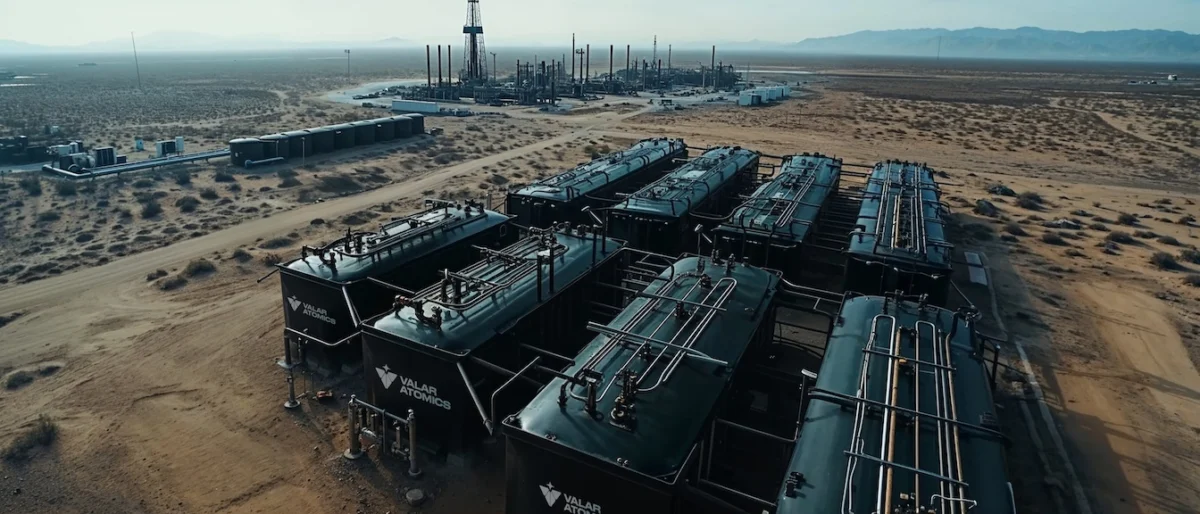
Valar Atomics, a burgeoning startup at the forefront of developing small modular nuclear reactors (SMRs), is reportedly in advanced discussions to secure a significant new round of capital, aiming for a valuation of approximately $6 billion. Sources familiar with the company indicate that the deal, potentially led by prominent venture capital firm Sequoia, signifies a substantial leap in the company’s valuation since its last funding round. The Information first broke the news of these funding discussions, reporting that Valar Atomics is seeking to raise $1 billion in equity.
Strategic Fundraising in a Shifting Energy Landscape
The fundraising initiative by Valar Atomics unfolds against a backdrop of escalating global demand for energy, particularly driven by the insatiable appetite of artificial intelligence (AI) data centers. Projections indicate a sharp rise in electricity consumption by these facilities in the coming years, while many regions face significant delays in expanding their power generation capacity. This widening gap has brought nuclear power, historically hampered by cost overruns and complex regulatory hurdles, back into sharp focus as a potential solution for powering the AI revolution.
Valar Atomics, a three-year-old company, is positioning itself to capitalize on this demand with its innovative approach to nuclear energy. Their small modular reactors (SMRs) are designed as miniaturized, factory-built power plants, promising a more cost-effective and rapid deployment compared to traditional, large-scale nuclear facilities. The company’s recent demonstration of its reactor providing a small amount of power to an Nvidia AI chip, coupled with a partnership announcement with Nvidia to explore nuclear energy for future AI data centers, underscores their strategic alignment with the burgeoning AI sector.
A History of Growth and Strategic Investment
This latest capital raise follows a previous funding effort where Valar Atomics secured $450 million, comprising $340 million in equity and $110 million in debt, at a valuation of $2 billion. This information, reported by Bloomberg in March, highlights a significant upward trajectory for the company’s market valuation. The practice of structuring funding rounds in multiple installments, often at varying valuations and executed over different periods, has become increasingly prevalent, particularly within the current AI-centric fundraising environment. While this approach can sometimes obscure the nuanced pricing of equity for different investor cohorts within the same round, it reflects a dynamic strategy employed by startups to navigate the competitive landscape and secure necessary capital.
The success of Valar Atomics is further validated by its distinguished list of early backers, which includes Palmer Luckey, the founder of Anduril, and Shyam Sankar, Chief Technology Officer at Palantir. These high-profile investors signal strong confidence in the company’s technological vision and its potential to disrupt the energy sector.
The SMR Market: Competition and Regulatory Challenges
Valar Atomics is not alone in pursuing the SMR market. Several other ambitious companies are vying for a share of this emerging sector, each with their unique technological approaches and market strategies. Kairos Power and TerraPower, backed by Bill Gates, are developing next-generation reactors specifically targeting tech and industrial clients. NuScale Power, notably, holds the distinction of being the only SMR developer with U.S. regulatory design approval, having recently secured approval for an upgraded, higher-output reactor design.
The technological foundation of Valar Atomics’ SMRs lies in a helium-cooled, high-temperature gas reactor design. The company envisions deploying hundreds of these reactors to power data centers, a bold ambition that hinges on overcoming significant technological and regulatory hurdles. While SMRs theoretically offer advantages in manufacturing costs and speed of deployment, the technology remains in its nascent stages, and the timeline for industrial-scale deployment is far from certain.
Navigating the Regulatory Labyrinth
The path to market for SMRs is not solely a technological one; it is also deeply intertwined with the regulatory framework. Valar Atomics has adopted an assertive stance in its interactions with regulatory bodies. Last year, the company joined several states and other startups in a lawsuit against the Nuclear Regulatory Commission (NRC). The core of their argument is that the NRC’s current lengthy licensing process, designed for large commercial plants, is inappropriately applied to smaller, experimental reactors. This legal challenge, which has seen periods of paused litigation, suggests ongoing negotiations and a potential for settlement, indicating a complex and evolving relationship between SMR developers and regulatory authorities.
The success of the lawsuit or a favorable settlement could significantly streamline the path to market for advanced reactor designs, potentially accelerating the deployment of technologies like those developed by Valar Atomics. Conversely, a protracted legal battle or an unfavorable outcome could introduce further delays and increase the cost of bringing these innovative energy solutions to fruition.
Genesis and Vision of Valar Atomics
The narrative of Valar Atomics is closely tied to its young and driven founder, Isaiah Taylor. Taylor, who dropped out of high school at 16, has a history of entrepreneurial endeavors, having launched two startups prior to Valar. His personal connection to nuclear physics, with a great-grandfather who worked as a nuclear physicist on the Manhattan Project, adds a layer of intergenerational legacy to his pursuit. This personal history, coupled with his demonstrated drive and vision, has undoubtedly played a role in attracting significant investment and talent to Valar Atomics.
The company’s stated long-term goal of building hundreds of SMRs to power data centers reflects a profound understanding of the impending energy crunch and a conviction in the transformative potential of nuclear energy in the digital age. However, the practicalities of scaling up nuclear technology, even in its modular form, are immense. Challenges related to supply chains, workforce development, public perception, and the ongoing refinement of safety and security protocols will need to be addressed comprehensively.
Broader Implications for the AI and Energy Sectors
The surge in interest and investment in SMR technology, exemplified by Valar Atomics’ capital raise, has broader implications for both the AI and energy sectors. For AI, the availability of reliable, scalable, and potentially carbon-neutral power sources is becoming a critical bottleneck. The ability of companies like Valar Atomics to deliver on their promises could be a game-changer, enabling the continued exponential growth of AI without exacerbating environmental concerns.
For the energy sector, the renewed focus on nuclear power, particularly SMRs, represents a potential paradigm shift. It could offer a pathway to decarbonization that complements renewable energy sources like solar and wind, addressing the intermittency challenges often associated with these technologies. The success of Valar Atomics and its competitors could usher in a new era of distributed nuclear energy, with smaller, more flexible reactors integrated into local grids and powering critical infrastructure.
However, the journey is fraught with challenges. The historical baggage of nuclear power, including concerns about waste disposal and safety, will continue to be a factor. Public acceptance and a clear, consistent regulatory environment will be paramount. The ability of companies like Valar Atomics to demonstrate not only technological viability but also robust safety protocols and a clear plan for waste management will be crucial for widespread adoption.
The current fundraising environment, characterized by a fervent demand for AI-related infrastructure, provides a unique opportunity for companies like Valar Atomics to secure the capital needed for research, development, and early-stage deployment. The $6 billion valuation being sought, if achieved, would place Valar Atomics among the top-tier startups in the advanced energy sector, underscoring the immense potential investors see in its vision. The coming years will be critical in determining whether this vision can be translated into a tangible, scalable reality that powers the future of technology and industry.