Clarissa Hana
Residential proxies, once a primary tool for anonymity within carding communities, are no longer considered a standalone solution for circumventing security measures. Instead, they are now an integral component of a sophisticated identity-simulation stack, a crucial element alongside meticulously crafted device fingerprints, browser profiles, billing details, time zone synchronization, cookie management, and nuanced transaction behavior. This evolution signifies a significant maturation in the tactics employed by cybercriminals, moving beyond simple IP masking to a more comprehensive digital impersonation strategy.
The findings emerge from an in-depth analysis conducted by researchers at Flare, who meticulously examined 2,889 unique posts published over the past two years across approximately 545 discussion threads within underground carding forums. These conversations, encompassing operational guides, troubleshooting requests, comparisons of proxy providers, analyses of transaction failures, and advertisements for "clean" or "finance-compatible" proxy services, offer a granular view into the current operational landscape of online fraud. The research highlights a fundamental shift: while residential IP addresses remain important, their efficacy as an independent bypass mechanism has diminished considerably.
A core observation from the Flare study is the emergence of a new classification system within carding circles, moving beyond the binary "residential" versus "non-residential." The new paradigm distinguishes between "clean" and "dirty" proxy pools. This distinction underscores the dynamic nature of IP reputation, a concept increasingly recognized by fraudsters themselves. Guides circulating in these forums, such as one titled "Getting the Cleanest Possible IPs for Carding," explicitly state that even seemingly pristine residential pools degrade over time as IP addresses are repeatedly utilized for illicit activities, leading to their eventual blacklisting by financial institutions and e-commerce platforms.
The implications of this shift are profound. Carders are becoming increasingly selective, dedicating significant effort to aligning the geographical location of their chosen IP address with the stolen identity data they possess. This granular approach is further amplified by the integration of proxies with antidetect browsers and other specialized tools designed to construct a highly convincing, albeit fabricated, digital identity. This holistic approach aims to create a seamless and believable online persona, making detection by modern fraud prevention systems significantly more challenging.

The Degradation of Trust: From "Residential" to "Clean"
The concept of a "residential proxy" has been fundamentally redefined in the eyes of carders. Previously, the mere attribution of an IP address to a residential ISP was sufficient to lend it a degree of credibility. However, the Flare analysis reveals a stark reality: the collective abuse of these IP addresses has led to their widespread reputation degradation. Underground discussions frequently feature users debating the merits of various proxy providers, lamenting instances where an IP address that was initially considered "clean" quickly escalates to a high-risk status after a short period of fraudulent activity.
This dynamic perception of IP reputation is a critical takeaway. Carders now operate under the assumption that the digital footprint of an IP address is not static but is actively influenced by every other user sharing that same infrastructure. This collective responsibility, albeit in a criminal context, forces a more cautious and strategic approach to proxy selection. The pursuit is no longer about simply acquiring an IP from a residential source, but about obtaining an IP that has not been flagged or compromised by previous fraudulent engagements.
Precision in Impersonation: Beyond Country Matching
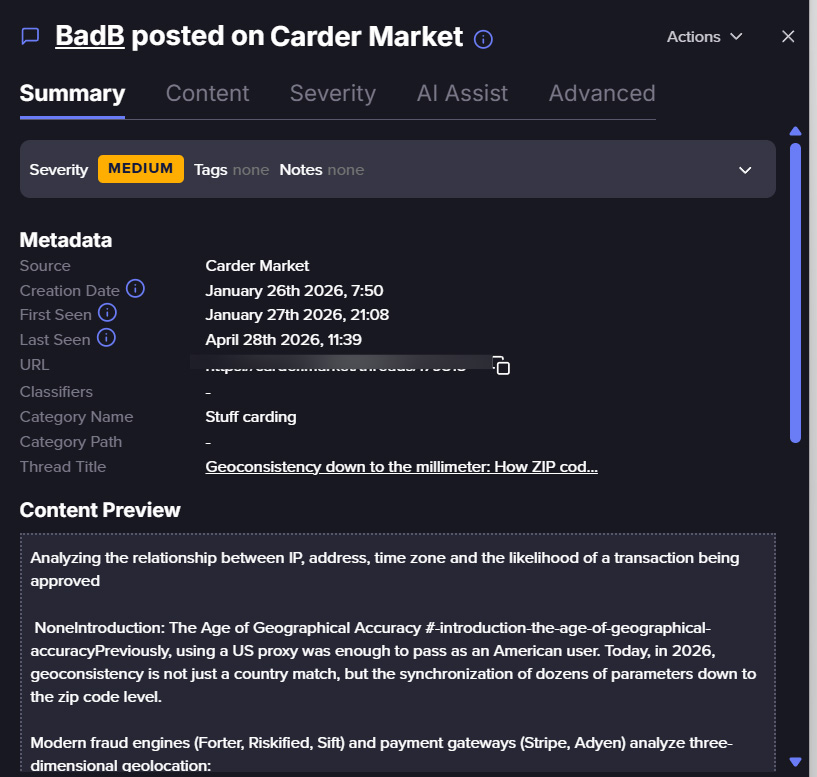
The sophistication of carding operations is further evident in the evolution of geographical targeting. Older strategies often focused on matching the IP address’s country to that of the stolen card’s origin. However, recent discussions reveal a far more granular and intricate methodology. The concept of "geoconsistency" has gained traction, emphasizing the need to align an IP address’s approximate location with a confluence of other identity markers. This includes synchronizing the IP’s location with the billing ZIP code, the device’s time zone settings, the operating system’s language preferences, and the specific characteristics of the browser being used.
This meticulous attention to detail is driven by the increasingly sophisticated detection mechanisms employed by financial services and e-commerce platforms. The inability to precisely match these seemingly minor digital attributes can trigger fraud alerts, leading to declined transactions. Complaints within carding forums about major residential proxy providers discontinuing ZIP code-level targeting, opting instead for broader country, state, or city selections, underscore the frustration and operational challenges faced by these actors when their precision is compromised. The underlying sentiment is clear: the objective is to construct a coherent and believable digital identity, not merely to obscure one’s true location.
The Proxy as a Single Layer in a Multi-Faceted Deception
The research unequivocally demonstrates that residential proxies are not an isolated tool but rather one crucial element within a much larger and interconnected system of deception. Forum discussions consistently link the use of residential proxies with a suite of other technologies and techniques designed to create a robust and evasive digital persona. These include:

- Antidetection Browsers: Specialized browsers designed to mask or spoof various browser and device identifiers, preventing websites from accurately fingerprinting the user.
- Isolated Device Environments: Virtual machines or dedicated hardware used to create separate, clean environments for fraudulent activities, preventing cross-contamination of data or detection across multiple operations.
- Cookie Management: Strategic use and manipulation of browser cookies to maintain session continuity and mimic legitimate user behavior.
- WebRTC Configuration: Ensuring that Web Real-Time Communication (WebRTC) does not inadvertently leak the user’s real IP address.
- Canvas and WebGL Fingerprinting: Techniques to spoof or randomize the unique identifiers generated by the browser’s graphics rendering capabilities.
- User-Agent Consistency: Ensuring that the User-Agent string, which identifies the browser and operating system, aligns with other fabricated identity attributes.
Guides found within these communities warn that even a "perfect residential proxy" can be rendered ineffective if other elements of the digital profile present contradictory information. The consensus is that a static, fixed configuration is insufficient. Instead, a dynamic and holistic evaluation of the device, proxy, account history, payment information, and the specific merchant being targeted is paramount. This mirrors the evolving strategies of modern fraud detection, which increasingly rely on a combination of transaction, identity, card, and historical behavioral signals, rather than single indicators.
The Quest for "Finance-Compatible" IPs and Emerging Threats
A significant practical challenge for carders lies in the restrictions imposed by many established proxy providers. These providers often block access to sensitive financial services, including banks, payment processors, and government portals. This creates a critical bottleneck, as an IP address may appear residential and possess a low fraud score but remain unusable for its intended fraudulent purpose.
Some actors interpret these restrictions as a sign that the proxy provider is actively protecting its IP pool from abuse, suggesting that restricted pools might, paradoxically, contain cleaner IPs due to less prior engagement with financial institutions. This has fueled a burgeoning demand for services explicitly advertised as "finance enabled," "bank compatible," or capable of accessing specific payment platforms. While underground users exchange recommendations and testing methods, the reliability of these claims is often difficult to verify, and the market is rife with potential scams.
This ongoing struggle for usable residential infrastructure occurs against the backdrop of a larger, more volatile proxy ecosystem. In July 2026, a significant disruption occurred when the FBI, in collaboration with industry partners, seized hundreds of domains associated with the NetNut residential proxy platform and the Popa botnet. This operation reportedly compromised over two million devices, including smart TVs and streaming boxes, which were then repurposed as residential proxy nodes. These compromised devices were allegedly used for a range of illicit activities, including advertising fraud, account takeovers, and other forms of abusive traffic.
Further underscoring the threat, a March 2026 FBI alert highlighted how criminals can select residential proxy addresses with granular precision, down to the state and city level. The alert specifically cited the use of these proxies for account takeovers, emphasizing the tactic of matching an IP address to a victim’s city to circumvent bank geolocation controls. These disruptions and warnings collectively reinforce the carders’ evolving distinction between simply obtaining a residential address and acquiring one that is demonstrably "clean," precisely located, and authorized to interact with financial services.
Strategic Implications for Defenders
The insights gleaned from these underground discussions offer crucial strategic implications for organizations seeking to bolster their defenses against carding fraud. The primary takeaway is that residential IP addresses should no longer be treated as inherently trustworthy. Instead, the focus must shift to a more comprehensive analysis of the entire transaction session.
Key defensive strategies include:
- Holistic Session Analysis: Prioritizing consistency across all elements of a transaction, including device history, account age, browser fingerprint, payment instrument, billing information, transaction velocity, and post-checkout behavior.
- Pattern Recognition: Identifying patterns that proxies cannot easily conceal, such as:
- Repeated creation of new identities using similar device characteristics.
- Multiple credit cards linked to similar devices or accounts.
- Abrupt and illogical geographical changes in transaction patterns.
- Mismatched time zones between device settings and transaction timestamps.
- Clusters of low-value authorization attempts preceding larger fraudulent transactions.
- Proactive Monitoring of Underground Markets: Continuously monitoring underground forums and dark web marketplaces for emerging trends, new tools, and evolving tactics employed by cybercriminals.
The increasing complexity and cost associated with acquiring uncontaminated infrastructure, coupled with the ongoing debates about conflicting reputation scores and the effort required to align granular identity signals, suggest that defenders are successfully raising the operational bar for fraudsters. While residential proxies remain a valuable tool for carders, their efficacy is increasingly dependent on the credibility of the surrounding digital identity elements. The construction of a truly convincing and broad digital identity is a significantly more arduous and challenging endeavor for cybercriminals, offering a critical area of focus for ongoing fraud prevention efforts. The battleground has irrevocably shifted from simple IP masking to the intricate art of digital impersonation.