George Chandra Eka
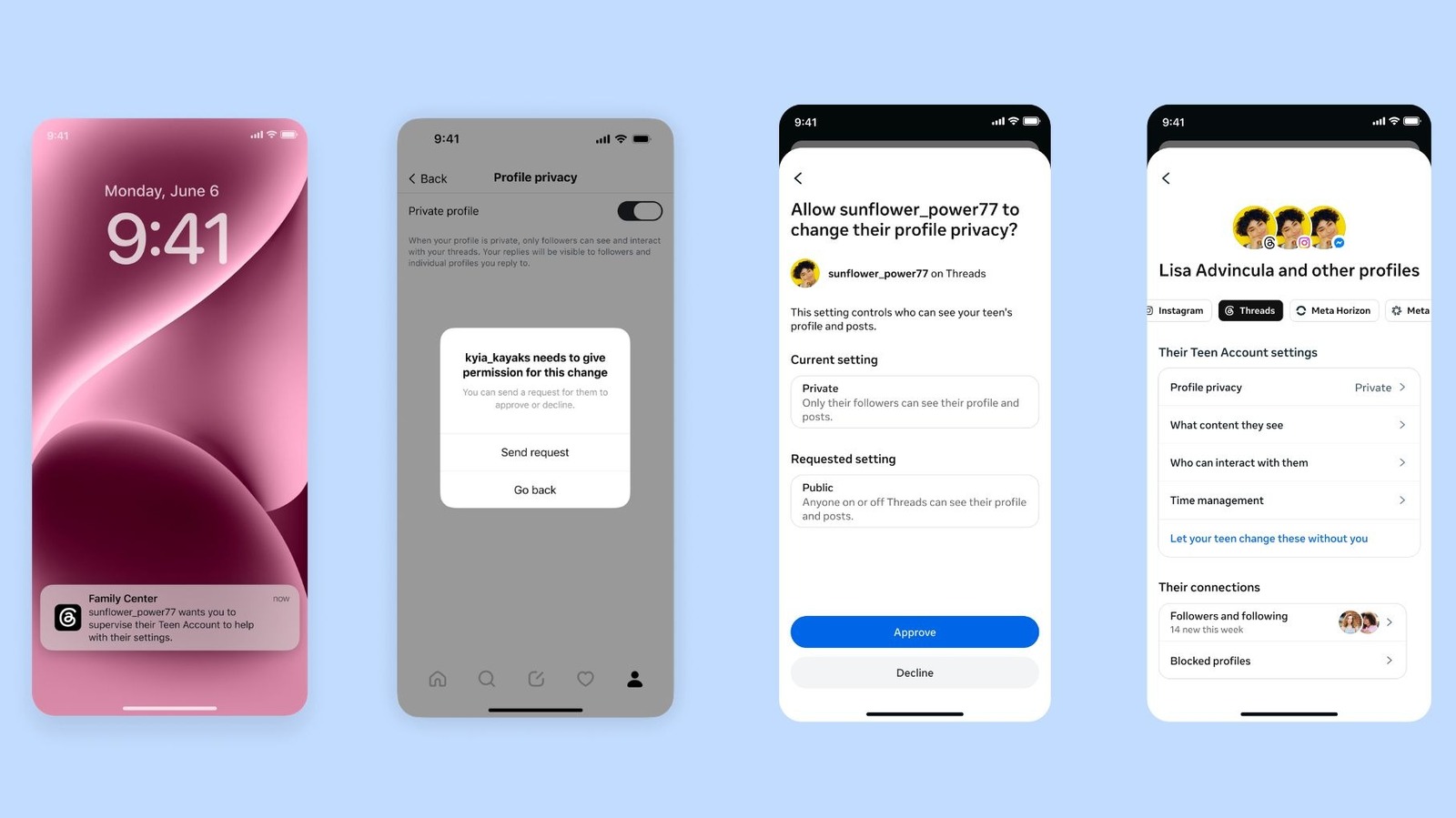
Social media network Threads is set to roll out comprehensive new features designed for parents and guardians to oversee their teenagers’ activity and engagement on the platform. The "Parental Supervision" tools, which will begin integration into Meta’s overarching Family Center hub next week, represent a significant step in Meta’s ongoing efforts to foster a safer online environment for its younger users. This initiative provides adults with critical insights into their teen’s app usage, offering granular controls over screen time, content exposure, and privacy settings, thereby empowering families to manage digital habits more effectively.
The newly unveiled Parental Supervision suite for Threads is meticulously crafted to offer guardians a robust set of functionalities. Key among these are the ability to monitor the amount of time a teenager spends within the app, alongside the capacity to institute specific daily time limits. Furthermore, parents can activate "sleep mode" hours, effectively preventing access during designated rest periods, promoting healthier sleep patterns. Beyond time management, the tools extend to content moderation, allowing guardians to place restrictions on the types of tags a teen can view, ensuring exposure to age-appropriate material. Crucially, the features also enable parents to enact other limits across both privacy and content settings, providing a multi-faceted approach to online safety and digital well-being. These enhancements are designed to complement existing, built-in restrictions already in place for all teen accounts on Threads, creating a layered defense against potential online risks.
Meta’s Enduring Commitment to Youth Safety: A Historical Perspective
The introduction of Parental Supervision for Threads is not an isolated development but rather the latest iteration in Meta’s long-standing, and often challenging, journey to reconcile its expansive social media platforms with the imperative of youth safety. The company, formerly known as Facebook, has grappled with the complexities of underage users and the impact of its products on adolescents for well over a decade, predating its rebranding to Meta. This commitment has evolved significantly in response to burgeoning public concern, mounting regulatory pressure, and a deeper understanding of the psychological effects of digital platforms on developing minds.
One of the most notable historical instances illustrating this struggle was the 2021 decision to pause the development of "Instagram Kids." This project, intended to create a version of Instagram specifically for pre-teens, faced intense scrutiny and widespread backlash from child safety advocates, policymakers, and parents who voiced concerns about the potential for harm to young children. The controversy highlighted the deep societal anxieties surrounding children’s engagement with social media and underscored the need for platforms to prioritize safety over expansion.
In the years that followed, Meta intensified its focus on developing tools and policies aimed at protecting younger users across its family of apps. Recent moves have included the implementation of features designed to share the topics teens discuss with Meta AI directly with their guardians, providing an unprecedented level of transparency in AI interactions. Additionally, Instagram, another flagship Meta platform, has introduced restrictions on repeated exposure to potentially damaging content, a measure aimed at mitigating the negative effects of algorithmic amplification of harmful or sensitive material. These initiatives collectively demonstrate a strategic pivot towards proactive safety measures, moving beyond mere reactive responses to incidents.
The integration of Threads’ new parental controls into Meta’s Family Center hub signifies a unified approach to youth safety across the company’s ecosystem. The Family Center, launched as a central resource for parents, already provides supervision tools for Instagram and Meta Quest virtual reality headsets. By extending these capabilities to Threads, Meta aims to offer a consistent and comprehensive framework for guardians managing their teens’ digital lives across its diverse platforms, streamlining the process and making safety management more accessible.
The Landscape of Teen Social Media Usage and Associated Risks
Understanding the necessity of these new parental controls requires an examination of the current landscape of teen social media usage and the inherent risks involved. According to a 2022 Pew Research Center study, an overwhelming 95% of U.S. teens aged 13-17 use social media, with nearly one in five (19%) reporting near-constant use. Platforms like Instagram, TikTok, and now Threads, have become integral to adolescent social lives, serving as primary arenas for communication, self-expression, and identity formation. While these platforms offer undeniable benefits in terms of connectivity and community, they also present significant challenges.
Data from various psychological and public health studies consistently highlight the potential negative impacts of unchecked social media use on adolescent mental health. Issues such as increased rates of anxiety, depression, body image dissatisfaction, cyberbullying, and sleep disruption have been linked to excessive or unsupervised social media engagement. For instance, a 2020 study published in JAMA Psychiatry found a significant association between increased social media use and higher rates of depression and anxiety symptoms in adolescents. The constant pressure to present an idealized self, the fear of missing out (FOMO), and exposure to cyberbullying or inappropriate content can exert considerable stress on developing minds.
Parents are acutely aware of these risks. A 2023 survey by the American Psychological Association revealed that 80% of parents are concerned about their children’s use of social media, with specific worries about exposure to harmful content, cyberbullying, and the impact on mental health. These concerns underscore the demand for effective parental control tools that go beyond basic content filters, offering a more nuanced and interactive approach to digital supervision. Meta’s move to introduce Parental Supervision on Threads directly addresses these widespread parental anxieties by providing tangible mechanisms to monitor and manage their children’s online interactions.
Statements and Inferred Reactions from Related Parties
Meta’s Official Stance:
While no specific new statement was provided in the original text, Meta’s consistent messaging around youth safety indicates their perspective. The company typically emphasizes its commitment to creating safe and positive online experiences for young people, often highlighting collaboration with child development experts, policymakers, and families. They would likely frame the Threads Parental Supervision tools as a proactive measure, a demonstration of their ongoing investment in youth well-being, and an iterative improvement based on feedback and evolving best practices. They would stress the importance of empowering parents with choice and control, while also advocating for digital literacy and open family dialogue as complementary strategies. "We are dedicated to building a safer internet for young people and are continuously developing tools that empower parents to guide their teens’ online journeys," a hypothetical Meta spokesperson might state. "The introduction of Parental Supervision for Threads is another crucial step in this commitment, providing families with enhanced visibility and control to foster healthy digital habits."
Parental Advocacy Groups:
Organizations dedicated to child safety online, such as Common Sense Media or the National Center for Missing and Exploited Children, would likely offer a mixed but generally positive reception. They would welcome the new tools as a necessary step forward, acknowledging the increased control and transparency offered to parents. However, they would also likely caution that these tools are not a panacea and that the onus should not solely be on parents to navigate complex digital environments. They might advocate for more robust default privacy settings for teens, stricter age verification, and greater transparency from platforms about their algorithms and content moderation practices. "While these new parental supervision tools for Threads are a welcome development, representing a positive shift towards greater platform accountability, they are just one piece of the puzzle," an advocate might comment. "We must ensure that platforms design for safety by default and that comprehensive legislative frameworks are in place to protect children online, complementing these parental tools."
Child Safety Experts and Psychologists:
Experts in child psychology and digital well-being would likely view the tools as a valuable addition, providing concrete mechanisms for parents to engage with their teens’ online lives. They would emphasize the importance of these tools being used in conjunction with open communication between parents and teens, rather than as a substitute for it. Experts might highlight that strict monitoring alone can sometimes breed resentment or lead teens to seek out less supervised platforms. Instead, they would advocate for a balanced approach where the tools facilitate conversations about responsible digital citizenship, privacy, and media literacy. "The availability of these parental supervision features for Threads offers a crucial opportunity for families to collaboratively establish healthy digital boundaries," a child psychologist might suggest. "It’s vital that parents use these tools not just for surveillance, but as a starting point for ongoing dialogue with their teens about online safety, critical thinking, and responsible engagement."
Teenagers’ Perspective (Inferred):
While the tools are designed for parental oversight, teens’ reactions are an important consideration. Many teens value their autonomy and privacy, and increased parental supervision might be met with some resistance or feelings of being overly controlled. However, if framed as a collaborative effort to ensure their safety and well-being, and if the tools are used to foster trust and understanding rather than just restriction, some teens might accept them as a necessary safeguard. The tension between privacy and protection is a constant dynamic in this space.
Broader Impact and Implications
The introduction of Parental Supervision for Threads carries several significant implications, extending beyond the immediate benefits for individual families.
For Parents and Families: The most direct impact is the enhanced peace of mind and greater practical control afforded to parents. By offering detailed insights into usage patterns and the ability to set clear boundaries, the tools empower guardians to proactively foster healthier digital habits, potentially mitigating the risks associated with excessive or unsupervised screen time. This can lead to more constructive conversations about digital citizenship within families and a more balanced approach to technology integration in daily life.
For Teenagers: While the immediate reaction might be a sense of reduced autonomy, the long-term implication for teenagers is a potentially safer online environment. By reducing exposure to harmful content, mitigating cyberbullying risks, and encouraging balanced screen time, these tools can contribute to improved mental health outcomes and a more positive developmental trajectory in the digital age. It can also serve as a framework for responsible online behavior, teaching teens about digital boundaries and the importance of privacy.
For Meta: From a corporate perspective, this move yields several benefits. Firstly, it enhances Meta’s public image and demonstrates a tangible commitment to youth safety, which is crucial in an era of intense scrutiny and criticism directed at social media companies. Secondly, it helps to mitigate regulatory risks. Governments worldwide are increasingly considering legislation to protect children online, and platforms that proactively implement robust safety features are better positioned to navigate these evolving legal landscapes. Thirdly, it could serve as a competitive advantage, attracting families who prioritize safety when choosing social media platforms for their teens. By integrating these tools across its ecosystem, Meta reinforces its position as a company taking comprehensive steps to address youth well-being.
For the Broader Social Media Industry: Meta’s actions often set precedents for the entire social media industry. The comprehensive nature of the Threads Parental Supervision tools could raise expectations for other platforms that cater to a significant teenage user base. Competitors might feel compelled to develop similar, equally robust features to remain competitive and to demonstrate their own commitment to youth safety. This could lead to an industry-wide elevation of safety standards and a more consistent approach to parental controls across various social media applications, ultimately benefiting young users across the digital landscape.
In conclusion, the rollout of Parental Supervision for Threads marks a pivotal moment in Meta’s ongoing commitment to youth safety. By providing parents with advanced tools for monitoring and managing their teens’ online activity, Meta is responding to critical societal concerns and regulatory pressures. While these tools represent a significant step forward, their ultimate effectiveness will depend on a multi-pronged approach that combines technological safeguards with open family communication, digital literacy education, and continued industry-wide collaboration to create a truly safe and enriching online experience for the next generation.