admin
admin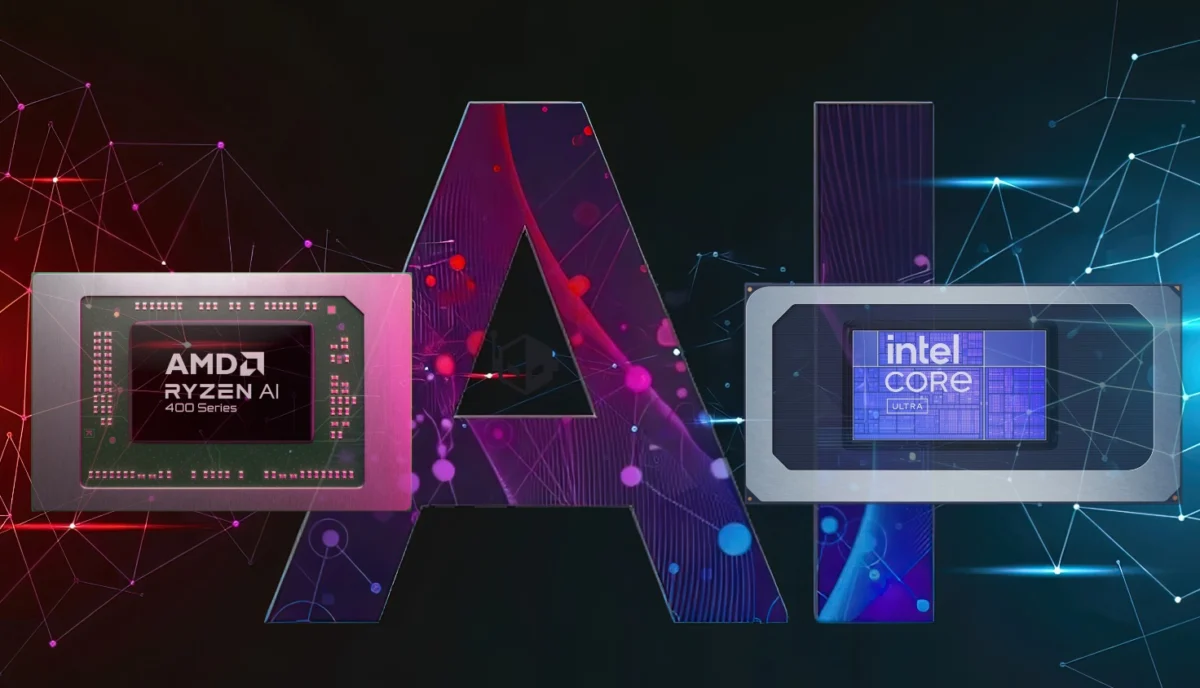
The global semiconductor market is witnessing a significant shift in infrastructure priorities as Intel Corporation and Advanced Micro Devices (AMD) have reportedly entered into extensive, long-term supply agreements with major Chinese data center operators. This strategic move, first detailed in reports from Reuters, underscores a pivot in the artificial intelligence (AI) hardware sector, where the central processing unit (CPU) is reclaiming a foundational role alongside the graphical processing unit (GPU). These agreements are primarily driven by the emergence of "agentic AI"—a sophisticated form of artificial intelligence that prioritizes autonomous reasoning and complex decision-making—which places a substantially higher computational load on traditional CPU architectures. According to industry sources, these contracts are designed to secure a steady volume of high-end server processors over the next 12 to 24 months, providing a buffer against rapidly escalating hardware costs and supply chain volatility that has seen prices for certain server components surge by nearly 40% since the beginning of the year.
The Resurgence of the CPU in the Age of Agentic Computing
For much of the past three years, the narrative surrounding AI infrastructure has been dominated by the GPU, specifically the high-demand H-series and B-series chips from NVIDIA. However, the industry is entering a new phase where the "orchestration layer" of AI applications is becoming as critical as the raw mathematical throughput of accelerators. Agentic AI differs from standard generative AI in its ability to perform multi-step reasoning, manage workflows, and interact with external software environments autonomously. These tasks require the versatile logic-handling capabilities of a CPU rather than the specialized parallel processing of a GPU.
As agentic workflows become the standard for enterprise AI deployments, the demand for high-performance x86 CPUs has spiked. This shift has caught many data center operators with insufficient inventory, leading to the current market squeeze. In China, where access to the most advanced AI GPUs is restricted by U.S. export controls, the reliance on high-performance CPUs to handle a larger share of the AI workload has become a strategic necessity. By signing long-term agreements, Chinese firms are attempting to lock in supply volumes to ensure that their data center expansions remain on schedule, even as global demand for these components reaches record highs.
Technical Evolution: The Intel-AMD x86 Advisory Group
The cooperation between Intel and AMD, traditionally fierce rivals, highlights the gravity of the current technological shift. In late 2024, the two companies formed a landmark advisory group focused on the future of the x86 microarchitecture. This collaboration was born out of a shared need to defend the x86 ecosystem against the rising influence of ARM-based architectures and to optimize the instruction sets specifically for AI-driven workloads.
By early 2025, the partnership announced four critical technical milestones intended to modernize the CPU for the AI era:

- FRED (Flexible Return and Event Delivery): A new architectural enhancement designed to improve the efficiency of low-level system transitions, reducing overhead in complex software environments.
- AVX10: An evolution of the Advanced Vector Extensions that standardizes vector processing across different performance levels, ensuring that AI-related mathematical operations are consistent and efficient across various CPU generations.
- ChkTag: A security and memory management feature aimed at improving the reliability of large-scale data operations, which are common in massive AI training and inference clusters.
- ACE (Advanced Matrix Extensions for Matrix Multiplication): Perhaps the most significant update, ACE brings dedicated matrix multiplication capabilities directly to the CPU. This allows the processor to handle certain AI tasks that were previously offloaded to external accelerators, effectively making the CPU a more capable partner in the AI stack.
The publication of the ACE specifications last month marked a turning point for the industry. By focusing on bifurcation operations between different registers and streamlining overall data operations, Intel and AMD are positioning their future silicon to serve as the "backbone" of AI computing, rather than just a supporting component for GPUs.
Market Dynamics and Pricing Volatility in China
The decision by Chinese data center firms to seek long-term supply guarantees is a direct response to a hyper-volatile pricing environment. According to market analysts, server CPU prices in the Chinese region have risen by 40% year-to-date, with specific high-performance models seeing 10% annual increases even before the current agentic AI boom. These price hikes are attributed to a combination of high global demand, increased manufacturing costs at advanced nodes, and the "China premium" often associated with navigating complex trade regulations.
The long-term agreements (LTAs) signed by Intel and AMD with their Chinese clients are notable for their structure. Unlike traditional fixed-price contracts, these deals are reportedly focused on "volume guarantees." This means that while the price of the chips may still fluctuate based on market conditions at the time of delivery, the Chinese firms are guaranteed a specific number of units. This is a critical distinction in a market where "supply tightness" is often a greater risk to business operations than price inflation itself. While most of these agreements cover a one-year period, sources indicate that several tier-one Chinese tech giants have successfully negotiated deals extending two years or longer, reflecting a long-term commitment to the x86 roadmap.
Chronology of the Shift Toward CPU-Centric AI
The transition from GPU-exclusivity to a hybrid CPU-GPU model has been developing over several quarters:
- Q4 2023: Initial rise of agentic AI frameworks (such as AutoGPT and specialized enterprise agents) begins to highlight bottlenecks in CPU-to-GPU communication.
- Q1 2024: Intel and AMD report a surprising uptick in Xeon and EPYC processor demand from cloud service providers, specifically for AI-adjacent workloads.
- Q3 2024: The U.S. government tightens export restrictions on high-end AI accelerators, prompting Chinese firms to look for alternative ways to boost computational power through optimized CPU clusters.
- Late 2024: The formation of the x86 Advisory Group signals a unified front between Intel and AMD to modernize their architectures for AI.
- Q1 2025: ACE specifications are finalized, providing a clear path for CPUs to take on matrix-heavy AI workloads.
- Mid-2025: Reports emerge of massive long-term supply deals being inked in the Chinese market to secure 2026 and 2027 inventories.
Official Perspectives and Leadership Insights
The resurgence of the CPU has been a central theme in recent executive communications. During a recent earnings call, Intel’s leadership emphasized that the market’s understanding of AI hardware is maturing. Intel’s CEO, Lip-Bu Tan, noted that the industry is moving past the "accelerator-only" phase.
"For the last few years, the story around high-performance computing was almost exclusively about GPUs and other accelerators," Tan remarked. "In recent months, we have seen clear signs that the CPU is reinserting itself as the indispensable foundation of the AI era. The CPU now serves as the orchestration layer and critical control plane for the entire AI stack. This is not just our wishful thinking; it is what we hear from our customers, and it is evident in the demand profile for our products. Xeon server demand is seeing strong and sustained momentum."

Similarly, AMD’s strategic focus on its EPYC line of processors has shifted toward highlighting their role in "AI Head Nodes." AMD leadership has frequently pointed out that for every cluster of GPUs, a robust, high-core-count CPU is required to manage data ingestion, preprocessing, and the complex logic required to keep the GPUs fed with data.
Broader Implications for the Global Tech Landscape
The strengthening of ties between U.S. chip designers and Chinese data centers through these supply deals carries significant weight in the current geopolitical climate. While the U.S. Department of Commerce has placed strict limits on the export of chips that exceed certain "total processing performance" thresholds—largely affecting high-end GPUs—most standard and high-performance server CPUs remain below these specific triggers. This allows Intel and AMD to continue serving the massive Chinese market, which remains one of the world’s largest consumers of data center hardware.
Furthermore, this trend suggests a potential stabilization of the x86 architecture against the threat of ARM. By integrating AI-specific features like ACE and AVX10, Intel and AMD are ensuring that the existing software ecosystem for data centers—which is overwhelmingly built on x86—remains the most efficient choice for the next generation of AI agents.
For the Chinese firms, these agreements represent a survival strategy. With domestic chip production still trailing the leading-edge nodes produced by TSMC and Intel, securing a reliable pipeline of Western silicon is essential for maintaining their competitiveness in the global AI race. As the demand for agentic AI grows, the data centers that can most efficiently balance CPU logic with GPU acceleration will likely emerge as the leaders of the next technological epoch.
The move by Intel and AMD to lock in these deals not only secures their revenue streams in a volatile region but also solidifies the CPU’s position as the "indispensable foundation" of the modern AI stack. As 2025 progresses, the industry will be watching closely to see if other regions follow China’s lead in prioritizing CPU volume as a hedge against the ongoing AI hardware gold rush.