Clarissa Hana
N-able has issued an emergency hotfix to address a maximum-severity remote code execution (RCE) vulnerability that has been identified within its N-central remote monitoring and management (RMM) platform. This critical flaw, tracked as CVE-2026-86218, poses a significant threat to organizations relying on N-central for the comprehensive oversight and maintenance of their IT infrastructure. The vulnerability allows unauthenticated threat actors to execute arbitrary malicious code on unpatched N-central instances that are exposed to the internet, potentially leading to widespread compromise with a relatively low degree of technical sophistication.
The N-central platform is a cornerstone solution for IT departments and managed service providers (MSPs) worldwide. It provides a centralized, web-based console that empowers these entities to efficiently monitor, manage, and maintain a vast array of client networks and individual devices. Its widespread adoption underscores the potential impact of a vulnerability like CVE-2026-86218, as a successful exploitation could grant attackers a gateway into numerous organizations’ sensitive IT environments.
N-able acted swiftly to mitigate the risk, releasing N-central 2026.3 Hotfix 4 (HF4) on Saturday, September 7, 2026. The company has strongly urged its customers to apply this patch with the utmost urgency to safeguard their systems. In an official statement, N-able acknowledged the severity of the situation: "At this time, we have no confirmations that this vulnerability has been exploited in production environments, but unpatched systems remain at risk." The company’s directive was unequivocal: "Customers running on-premises N-central deployments should upgrade to N-central 2026.3 HF4 immediately to protect their environment."
Understanding the Threat: CVE-2026-86218 and its Implications
The newly identified RCE vulnerability, CVE-2026-86218, is particularly concerning due to its low complexity and the fact that it does not require any prior authentication or elevated privileges for exploitation. This means that an attacker with basic knowledge and access to the internet could potentially compromise an exposed N-central server. Once an attacker gains unauthorized code execution capabilities, the possibilities for malicious activity are extensive. This could range from deploying ransomware and stealing sensitive data to establishing persistent backdoors for future access, disrupting critical business operations, or using the compromised server as a launchpad for further attacks against other networks.
The very nature of RMM platforms makes them attractive targets for cybercriminals. By compromising an RMM system, an attacker effectively gains access to the tools that legitimate IT administrators use to manage numerous client environments. This "key to the kingdom" scenario can lead to a cascading effect of breaches, impacting multiple organizations simultaneously.
Scope of Exposure: Internet-Connected N-central Servers
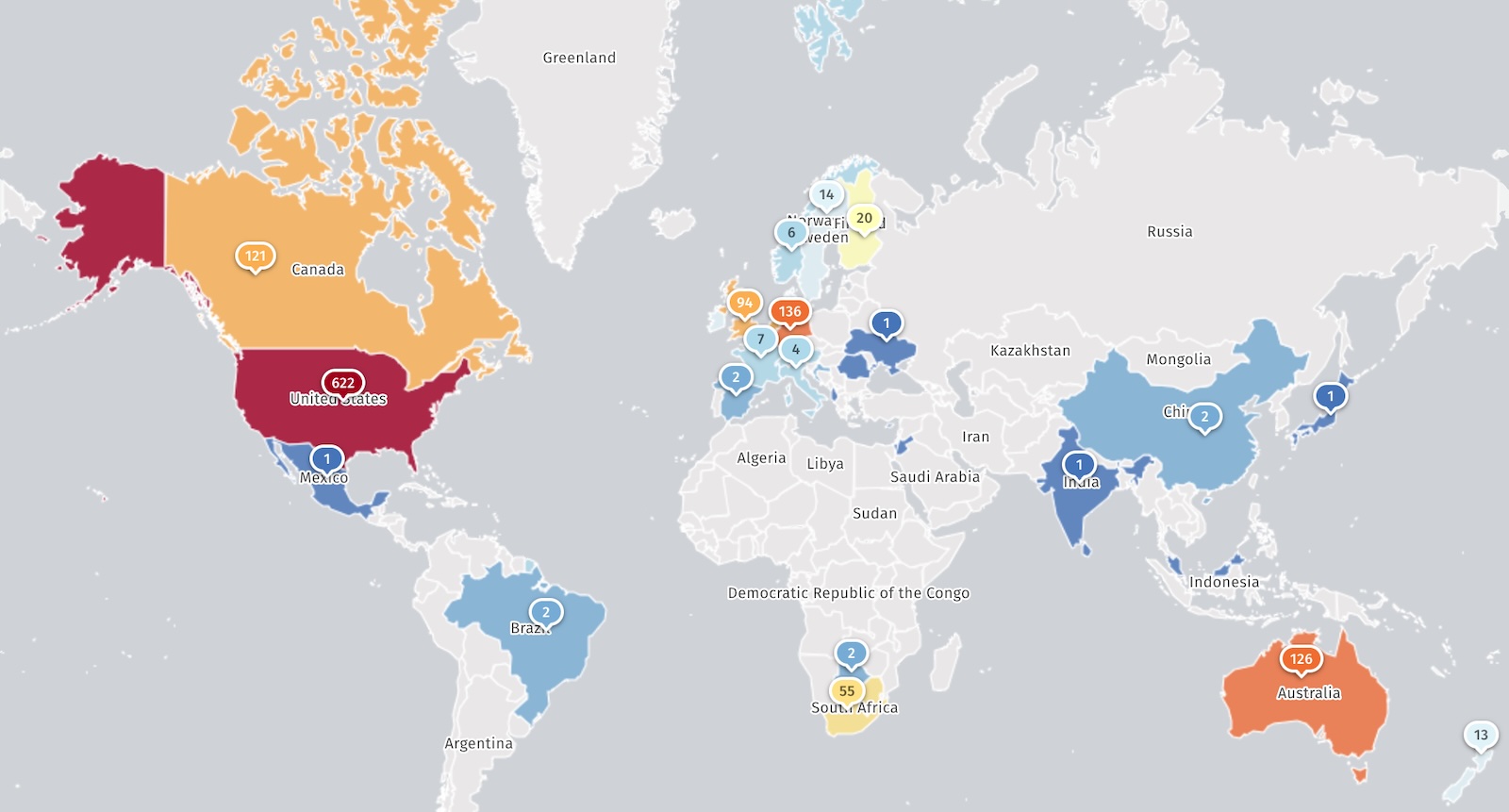
Data from the internet security nonprofit Shadowserver Foundation highlights the potential reach of this vulnerability. The foundation currently tracks nearly 1,500 N-central servers that are directly exposed to the internet. The majority of these internet-facing instances are located in the United States and Europe, areas with a high concentration of businesses and a robust MSP ecosystem. This substantial number of exposed servers represents a significant attack surface, making the prompt application of the hotfix critical for a large segment of N-able’s customer base.
The visual representation of these exposed servers, as provided by Shadowserver, underscores the global presence of N-central deployments and the potential for widespread impact should this vulnerability be widely exploited. The geographic distribution suggests that organizations across North America and Europe are at the forefront of this immediate threat.
A Pattern of Vulnerabilities and Proactive Patching
This incident is not the first time N-able has had to address critical security flaws in its N-central platform. In a significant development that adds context to the current situation, cybersecurity company Huntress has flagged CVE-2026-86218 as a potential zero-day exploit. This designation suggests that the vulnerability may have been present and potentially exploited before N-able was officially aware of it, or at least before a public patch was available.
Adding to the complexity, Huntress also highlighted two other high-severity vulnerabilities, tracked as CVE-2026-86206 and CVE-2026-86207. These flaws, which were also patched over the weekend through N-central 2026.3 Hotfix 3 (HF3), can allow attackers to bypass authentication mechanisms and gain complete administrative access to the vulnerable N-central platform. The co-occurrence of these critical vulnerabilities being addressed in rapid succession points to a challenging period for N-able’s security posture and for its customers.
Huntress’s analysis, shared on September 5, 2026, indicated that they could not definitively rule out whether CVE-2026-86206 and CVE-2026-86207 were the vulnerabilities exploited in a specific incident involving one of their customer’s production environments. The company’s investigation was hampered by log rotation on the compromised N-central server, making it impossible to ascertain which of the newly disclosed vulnerabilities was responsible for the breach.
This situation carries significant weight for organizations that may have only recently applied HF3. Huntress issued a stern warning: "On-premises N-central users must apply HF4 immediately, as systems running HF3 remain vulnerable to this newly disclosed flaw." This reiterates the critical need for immediate patching beyond the previously issued updates.
Historical Precedent: Past Exploitations of N-central Vulnerabilities
The concern surrounding CVE-2026-86218 is amplified by a historical precedent involving N-central vulnerabilities. Approximately one year prior to this incident, N-able released security updates for two N-central vulnerabilities, identified as CVE-2025-8875 and CVE-2025-8876. These flaws were notably being exploited in the wild by threat actors, prompting alerts from various security agencies.
Following N-able’s advisories and subsequent patching efforts, Shadowserver Foundation’s findings were particularly alarming. They reported that a substantial number of N-central servers, specifically 880, remained unpatched and vulnerable to attacks exploiting these two critical security flaws. This occurred even after the Cybersecurity and Infrastructure Security Agency (CISA) had issued directives to federal agencies, mandating a one-week deadline for patching these systems, and had urged all security teams to prioritize securing their environments against the ongoing threats.
The persistence of unpatched systems after such high-profile vulnerabilities and official advisories underscores a persistent challenge in the cybersecurity landscape: the timely and comprehensive application of patches across diverse IT infrastructures. This historical context serves as a stark reminder of the potential consequences of delayed patching and the critical importance of N-able’s current urgent call to action.
Broader Implications for the MSP and IT Security Ecosystem
The recurrent discovery of critical vulnerabilities in widely used RMM platforms like N-central has significant broader implications for the entire managed service provider (MSP) and IT security ecosystem. MSPs, by their very nature, manage the security and operational integrity of their clients’ IT systems. A compromise of an MSP’s primary management tool can have a devastating ripple effect, potentially impacting hundreds or even thousands of end-client organizations.
For businesses that rely on MSPs, this incident reinforces the importance of due diligence in selecting a service provider. Clients should inquire about their MSP’s patching policies, their incident response capabilities, and their overall security maturity. Similarly, MSPs must maintain a robust vulnerability management program, ensuring that all critical updates for their own tools and infrastructure are applied promptly and effectively.
The financial and reputational damage from a successful large-scale attack orchestrated through a compromised RMM platform can be immense. Beyond the immediate costs of incident response and remediation, businesses can suffer from loss of customer trust, regulatory penalties, and prolonged operational downtime.
N-able’s Response and Customer Responsibility
N-able’s prompt release of a hotfix, even on a weekend, demonstrates a commitment to addressing critical security issues. However, the ultimate responsibility for protecting environments lies with the end-users. The company’s clear communication and urgent recommendations are crucial, but they are only effective if customers heed the warnings and act decisively.
Organizations using N-central are strongly advised to:
- Prioritize Patching: Immediately apply N-central 2026.3 Hotfix 4 to all on-premises deployments.
- Verify Patch Status: Confirm that the hotfix has been successfully installed across all relevant instances.
- Review Security Posture: Conduct a thorough review of their N-central configuration and any internet-facing services to ensure they are adequately secured.
- Monitor for Suspicious Activity: Implement enhanced monitoring for any unusual activity within their N-central environment that might indicate a compromise.
- Stay Informed: Subscribe to N-able’s security advisories and status updates to remain aware of ongoing threats and resolutions.
The cybersecurity landscape is dynamic and ever-evolving. The timely detection and remediation of vulnerabilities are paramount in staying ahead of threat actors. The recent events surrounding N-central serve as a critical reminder for all organizations to maintain vigilance and a proactive approach to cybersecurity.