admin
admin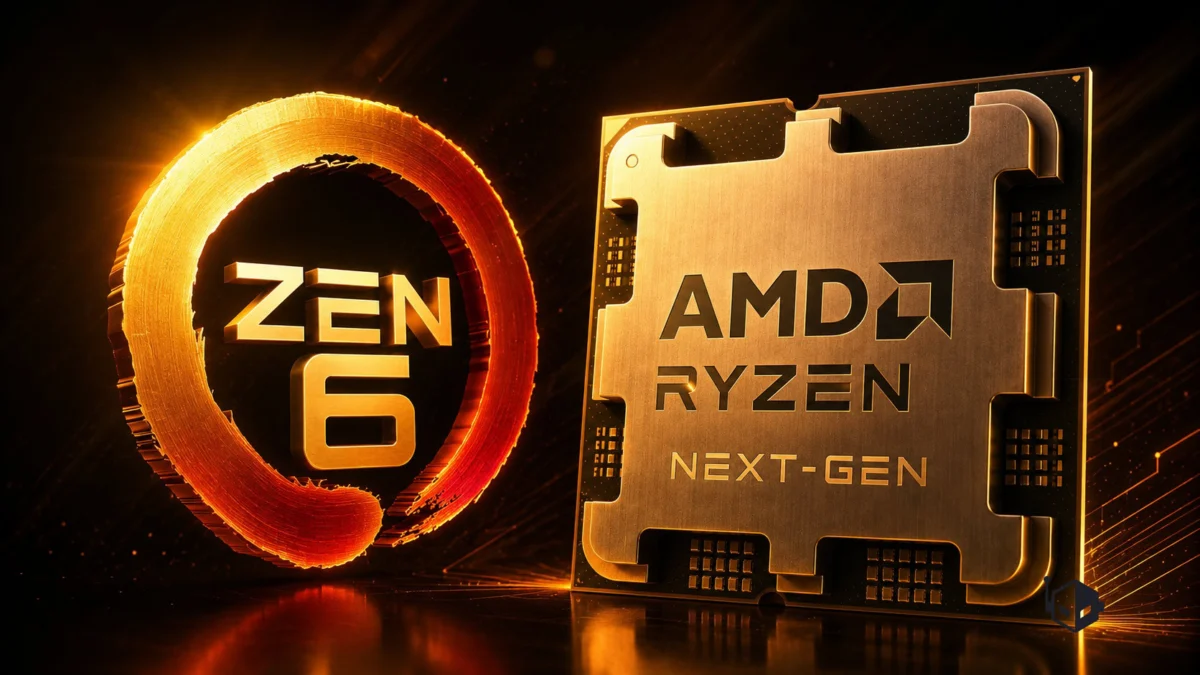
The semiconductor industry is witnessing a fundamental shift in how Advanced Micro Devices (AMD) prioritizes its product rollouts, a change underscored by the recent launch of the Zen 6-based EPYC "Venice" family. For the first time since the inception of the Zen architecture in 2017, AMD has opted to debut its latest microarchitecture in the enterprise and data center segments before bringing it to the consumer desktop market. This strategic pivot provides a transparent window into the upcoming Ryzen "Olympic Ridge" desktop processors, which are now slated for a release in early 2027. By analyzing the specifications of the EPYC Venice lineup, hardware analysts and enthusiasts can form a comprehensive picture of the performance, core counts, and efficiency targets that will define the next generation of the AM5 platform.
A Strategic Reorientation: Data Center First
Historically, AMD’s strategy involved launching its consumer Ryzen chips first to establish architectural dominance and mindshare, followed several months later by the server-grade EPYC counterparts. The first-generation Zen architecture debuted on desktops in early 2017, with the "Naples" EPYC family following later that year. This pattern held steady through the Zen 2, Zen 3, and Zen 4 cycles. However, the explosive growth of the Artificial Intelligence (AI) sector and the high-performance computing (HPC) market has altered the global silicon landscape.

The decision to prioritize EPYC Venice over Ryzen Olympic Ridge reflects a broader industry trend where compute-heavy enterprise silicon generates significantly higher margins and meets more urgent infrastructure demands. While the PC segment has faced challenges due to fluctuating component prices and supply chain constraints, the demand for data center CPUs capable of handling AI workloads has reached unprecedented levels. Consequently, the Zen 6 architecture has been tuned for the server market first, with the consumer iterations following once the production of TSMC’s advanced 2nm process node reaches sufficient maturity and volume.
Architectural Evolution: Core Density and CCD Design
The most significant takeaway from the Venice specifications is the evolution of the Compute Core Die (CCD). Since the Zen 2 era, AMD’s desktop flagship processors have topped out at 16 cores and 32 threads, utilizing a dual-CCD configuration where each die housed 8 cores. While Zen 3, Zen 4, and Zen 5 introduced various IPC (Instructions Per Clock) improvements and cache restructuring, the physical core count for the high-end desktop (HEDT) and mainstream segments remained static.
Zen 6 breaks this multi-generational plateau. The specifications for EPYC Venice confirm that AMD has developed two distinct variants of the Zen 6 core: a "Classic" Zen 6 core and a "Dense" Zen 6C core. For the Ryzen Olympic Ridge lineup, the standard Zen 6 CCD will now feature 12 cores per die, a 50% increase over the 8-core dies found in the Ryzen 9000 series. This transition allows for a new hierarchy of consumer processors:

- Flagship Models: Utilizing two CCDs to offer up to 24 cores and 48 threads.
- Mid-Range Models: Utilizing a single CCD to offer 12 cores and 24 threads.
- Entry-Level/Mainstream: Scaled-down versions featuring 6, 8, or 10 cores per die.
This leap in core density is achieved through the transition to TSMC’s 2nm (N2P) process technology. The N2P node allows for tighter transistor packing and improved power delivery, enabling AMD to fit 12 cores into a similar physical footprint previously occupied by 8, without compromising the thermal characteristics required for the AM5 socket.
Cache Hierarchy and 3D V-Cache Innovations
Beyond raw core counts, the Zen 6 architecture introduces substantial upgrades to the onboard cache system. For the "Classic" Zen 6 cores, the L3 cache per CCD has been increased from 32 MB to 48 MB. In a dual-CCD flagship Ryzen processor, this results in a total of 96 MB of L3 cache, matching the cache levels of current-generation 3D V-Cache parts but without the need for vertical stacking.
However, the most dramatic improvements are reserved for the next iteration of 3D V-Cache technology. Data from the "Venice-X" server chips indicates that AMD is significantly increasing the capacity of its vertically stacked cache. While the current Ryzen 7000 and 9000 X3D series feature 64 MB of additional L3 cache per die, the Zen 6 iteration is expected to offer 96 MB of 3D V-Cache.

When combined with the 48 MB of native L3 cache, a single-CCD Ryzen Zen 6 processor could feature a massive 144 MB of total L3 cache. For enthusiast-grade dual-CCD models, this figure could soar to 288 MB. This massive pool of low-latency memory is specifically designed to alleviate data bottlenecks in gaming and complex simulation workloads, positioning AMD to compete directly with Intel’s "Nova Lake" architecture, which is also rumored to feature large "bLLC" (Big Little Last Cache) capacities.
Frequency Targets and Power Efficiency
The transition to the 2nm process node is not solely about density; it is also a play for frequency leadership and energy efficiency. Analysis of the EPYC Venice SKUs shows a clear trend toward higher clock speeds. While server chips are typically clocked conservatively to maintain stability and meet strict Power Usage Effectiveness (PUE) targets in data centers, Zen 6 EPYC chips are already reaching 5.0 GHz to 5.15 GHz.
When these architectural gains are translated to the desktop environment—where power limits are more flexible and cooling solutions are more robust—the frequency ceiling is expected to rise significantly. Current Ryzen 9000 processors peak at approximately 5.7 GHz. Based on the 3% to 17% frequency uplifts observed in the server transition from Zen 5 to Zen 6, the Ryzen "Olympic Ridge" chips could realistically target boost clocks between 6.0 GHz and 6.3 GHz.

Simultaneously, the move to 2nm facilitates a reduction in power consumption. Preliminary data suggests an average power drop of approximately 10% across various SKU tiers when compared to Zen 5 at equivalent performance levels. This efficiency gain provides AMD with two options: they can either ship chips with lower TDPs (Thermal Design Power) for quieter, cooler systems, or they can use the thermal headroom to push clock speeds even further, reclaiming the performance-per-watt crown.
Chronology of the Zen Architecture
To understand the significance of Zen 6, it is helpful to view the timeline of AMD’s architectural milestones:
- 2017 (Zen 1): Reintroduced AMD as a high-performance contender; 8-core maximum on desktop.
- 2019 (Zen 2): Introduced the chiplet design (CCD/IOD); 16-core maximum on desktop.
- 2020 (Zen 3): Unified the L3 cache within the CCD, significantly boosting gaming performance.
- 2022 (Zen 4): Transitioned to the AM5 socket, DDR5, and PCIe 5.0; introduced the 5nm node.
- 2024 (Zen 5): Focused on IPC gains and AI instruction sets (AVX-512 improvements).
- 2027 (Zen 6 – Olympic Ridge): Expected to introduce 2nm manufacturing, 12-core CCDs, and 24-core flagship models.
Competitive Landscape: AMD vs. Intel in 2027
The year 2027 is shaping up to be a pivotal moment for the desktop computing market. As AMD prepares Olympic Ridge, Intel is expected to respond with its "Nova Lake" family. Based on leaked specifications, Nova Lake may feature up to 52 threads (a combination of P-cores and E-cores), representing a different approach to multi-threaded performance compared to AMD’s focus on high-performance "Classic" cores.

Intel’s move toward massive core counts and its own advanced packaging technologies will force AMD to rely on its cache advantages and the inherent efficiency of the TSMC 2nm node. The battle will likely be fought on two fronts: gaming performance, where AMD’s 3D V-Cache has historically held an edge, and multi-threaded productivity, where Intel’s high E-core counts challenge AMD’s traditional core scaling.
Industry Implications and Market Impact
The shift in AMD’s launch cadence has broader implications for the PC industry. By launching Zen 6 in the data center first, AMD ensures that its most profitable segment receives the latest technology during the height of the AI infrastructure build-out. However, the 2027 window for Ryzen "Olympic Ridge" suggests a longer lifecycle for current AM5 motherboards and Zen 5 processors.
For consumers, this means that the AM5 platform remains a stable and long-term investment. AMD has committed to supporting the socket through 2027 and beyond, and the eventual arrival of Zen 6 will likely be the "pinnacle" upgrade for early adopters of the platform. Furthermore, the 50% increase in core counts and cache sizes suggests that Zen 6 will not be a mere incremental update, but a significant generational leap that justifies the longer wait.

As manufacturing yields on the 2nm process improve, the industry can expect further details regarding the integrated graphics (iGPU) capabilities of Olympic Ridge, which are rumored to leverage the RDNA 5 architecture. This would potentially transform the entry-level desktop market by providing discrete-level graphics performance on a single chip.
In conclusion, while the EPYC Venice launch serves the immediate needs of the enterprise world, its technical specifications provide a roadmap for a formidable desktop successor. With up to 24 cores, massive L3 cache pools, and the efficiency of a 2nm process, Ryzen Olympic Ridge is positioned to redefine the capabilities of the enthusiast desktop when it arrives in 2027.