Chandra Wibowo
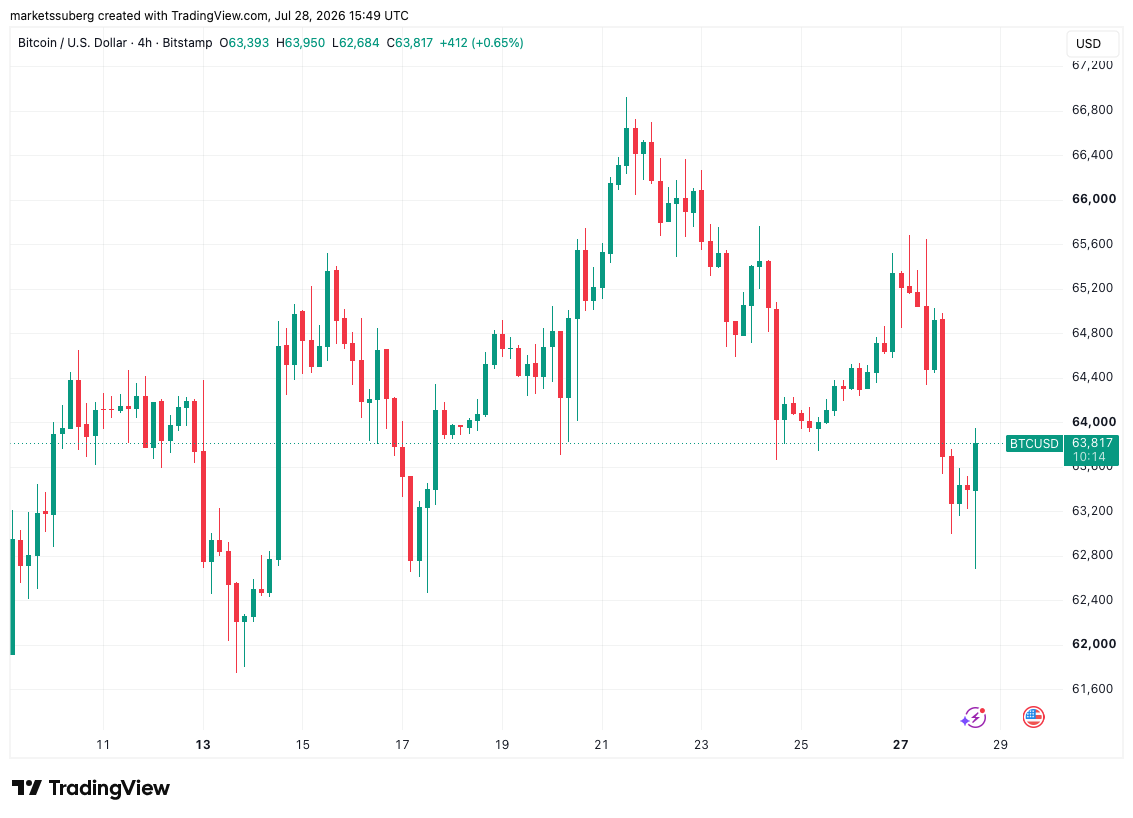
Bitcoin (BTC) experienced a significant downturn, reaching ten-day lows during Tuesday’s Wall Street open, as the cryptocurrency’s price action mirrored a broader sell-off in U.S. equities. This sharp decline in the digital asset followed a cascade of negative sentiment originating from the Asian markets, particularly impacting the technology and semiconductor sectors. The ripple effect underscored the increasing interconnectedness between traditional financial markets and the burgeoning cryptocurrency space, highlighting how macroeconomic shifts and industry-specific concerns can exert considerable influence on digital asset valuations.
Asian Markets Lead Global Equity Sell-Off Fueled by Semiconductor Woes
The day’s financial turmoil began to take shape as Asian stock markets registered substantial losses, with semiconductor giants at the epicenter of the downturn. South Korea’s KOSPI Index bore the brunt of this sell-off, concluding the trading session down an alarming 10.8%. This steep decline was heavily influenced by a staggering 14.8% drop in the share price of SK Hynix, a leading chip manufacturer. Similarly, Japan’s memory chip producer, Kioxia Holdings, experienced an 18.3% plunge, signaling a widespread investor apprehension regarding the future prospects of the semiconductor industry.
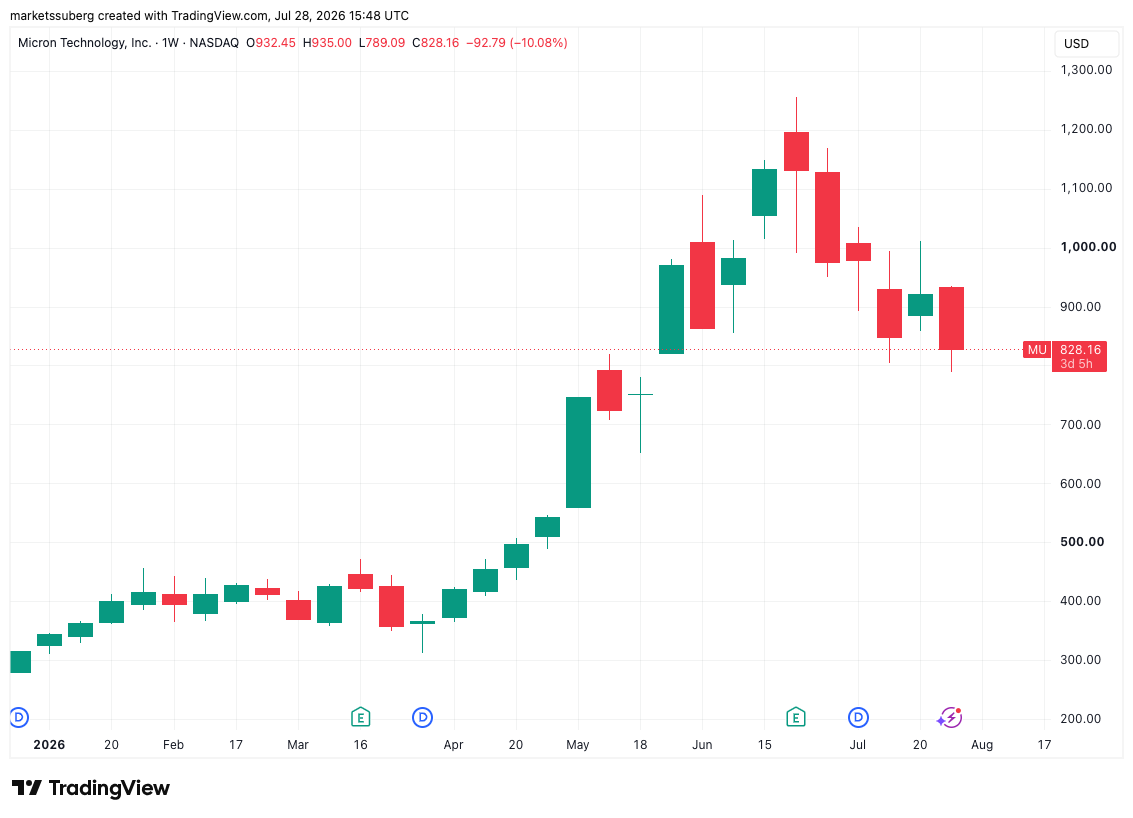
This wave of pessimism quickly permeated into U.S. trading sessions. The tech-heavy Nasdaq Composite Index, a barometer for growth-oriented companies, found itself trading down just over 1% at the time of reporting. A particularly notable casualty was Micron Technologies, a prominent U.S.-based semiconductor manufacturer. The company’s stock opened with a more than 10% decline, and despite attempts at recovery, it ultimately settled at its lowest levels since May 22, amplifying concerns about the sector’s health.
Investor Skepticism Mounts Over AI Infrastructure Spending
The underlying cause of this widespread sell-off in semiconductor stocks appears to stem from intensifying investor scrutiny over the sustainability of capital expenditure in the Artificial Intelligence (AI) infrastructure buildout. A growing chorus of market participants is questioning whether the current economic models underpinning these massive AI investments can justify their sheer scale and projected growth.

Recent analyses indicate that the combined capital expenditure (capex) guidance for 2026 from major tech giants – including Alphabet, Microsoft, Amazon, and Meta – is tracking towards an astounding $725 to $730 billion. Wall Street projections suggest this figure could escalate even further, potentially reaching $900 billion by 2027. This aggressive spending spree is designed to fuel the development and deployment of sophisticated AI models and the data centers required to support them.
However, concerns are mounting about the return on investment (ROI) for such colossal outlays. Alphabet, for instance, recently reported its first-ever quarterly cash burn, amounting to $5.9 billion in the second quarter, despite its cloud unit experiencing an impressive 82% growth. This divergence between revenue growth and cash burn raises red flags for investors, prompting them to re-evaluate the financial viability of these ambitious AI initiatives.
Adding to these financing concerns are the increasing competitive pressures faced by U.S.-based AI companies from emerging startups in China. The recent launch of Moonshot AI’s Kimi K3 open-source model, which was benchmarked competitively against leading proprietary systems from established players like Anthropic and OpenAI, has intensified questions about the cost-effectiveness of Western hyperscalers’ spending commitments. If comparable or superior AI capabilities can be replicated at a fraction of the cost by competitors, it could significantly erode the anticipated returns on the massive investments being made by U.S. tech giants. This dynamic creates a challenging environment for semiconductor manufacturers, whose fortunes are inextricably linked to the demand for AI hardware.
Bitcoin’s Price Action Mirrors Stock Market Volatility
The sell-off in the technology and semiconductor sectors did not leave the cryptocurrency market unscathed. Bitcoin (BTC), the flagship digital asset, experienced a notable decline, with data from TradingView indicating that BTC/USD dipped below the psychologically important $63,000 mark for the first time since July 17. This price action demonstrates a clear correlation between Bitcoin’s performance and the broader market sentiment, particularly within risk-on assets.
The immediate catalyst for Bitcoin’s dip appears to be the broader market reversal, which triggered elevated long liquidations across crypto markets. Data compiled by CoinGlass revealed that these liquidations surpassed $510 million over a 24-hour period. Liquidations occur when a leveraged trading position is forcibly closed by the exchange due to insufficient margin, often exacerbating price movements.
A Timeline of Recent Market Activity and Key Data Points
To understand the context of Tuesday’s market movements, it is crucial to examine the preceding days and weeks. The period leading up to this sell-off had seen Bitcoin trading within a relatively tight range, with periods of consolidation interspersed with attempts to break higher. However, underlying concerns about global economic conditions and specific industry challenges, as highlighted by the semiconductor sector’s struggles, have evidently begun to weigh on investor sentiment.
Key Data and Events:
- Tuesday’s Wall Street Open: Bitcoin (BTC) reached ten-day lows, mirroring a broader stock market decline.
- Asian Market Performance: Significant losses in South Korea’s KOSPI (down 10.8%) and Japan’s Nikkei, driven by semiconductor giants like SK Hynix (down 14.8%) and Kioxia Holdings (down 18.3%).
- U.S. Tech Sector Impact: Nasdaq Composite down over 1%, with Micron Technologies experiencing a sharp decline.
- AI Spending Scrutiny: Investor concerns over the sustainability of massive capital expenditures by tech giants for AI infrastructure.
- Alphabet’s Cash Burn: Reported first-ever quarterly cash burn of $5.9 billion in Q2.
- Chinese AI Competition: Moonshot AI’s Kimi K3 model poses competitive threat to U.S. AI leaders.
- Bitcoin’s Price Action: BTC/USD fell below $63,000, a level not seen since July 17.
- Crypto Liquidations: Over $510 million in long liquidations occurred in the 24 hours preceding the major price drop.
- CoinAnk Warning: On Monday, CoinAnk had flagged a risk of a long liquidation "cascade" below $64,700 due to substantial accumulated long liquidity. The analytics platform also identified a "major short liquidation zone" between $65,800 and $66,200.
Broader Market Implications and Future Outlook
The interconnectedness of global financial markets was once again on full display. The woes of the semiconductor industry, driven by concerns over AI spending and competitive pressures, have demonstrably impacted Bitcoin’s price. This highlights that while Bitcoin is often viewed as a distinct asset class, its valuation remains susceptible to macroeconomic trends and investor sentiment that drives broader market movements.
The significant volume of long liquidations suggests that many traders were caught off guard by the sharp downturn. The cascade warning from CoinAnk, which accurately predicted a potential trigger point for further selling pressure, underscores the importance of understanding leverage and liquidity dynamics within the cryptocurrency market. The subsequent price action, with Bitcoin falling below the predicted liquidation zone, validated these concerns.
Looking ahead, several factors will be crucial in determining Bitcoin’s trajectory. The ongoing reassessment of AI infrastructure spending by major tech companies will likely remain a key driver of sentiment in the technology sector and, by extension, in Bitcoin. Any signs of a slowdown in AI investment or a shift towards more capital-efficient AI development could further dampen investor appetite for riskier assets.
Furthermore, the broader macroeconomic environment, including inflation data, interest rate decisions from central banks like the Federal Reserve and the Bank of Japan (which is scheduled for a meeting on Friday, with the yen recently repeating 40-year lows against the U.S. dollar), and geopolitical developments, will continue to play a significant role in shaping investor sentiment.
The cryptocurrency market’s ability to decouple from traditional equity markets remains a subject of ongoing debate. However, recent events suggest that in periods of significant market stress and heightened uncertainty, the correlation can become more pronounced. Investors are advised to conduct thorough research and consider their risk tolerance before making any investment decisions, as all trading and investment activities carry inherent risks. The current market environment, characterized by volatility and evolving industry dynamics, necessitates a cautious and informed approach.