Vera Intan Clara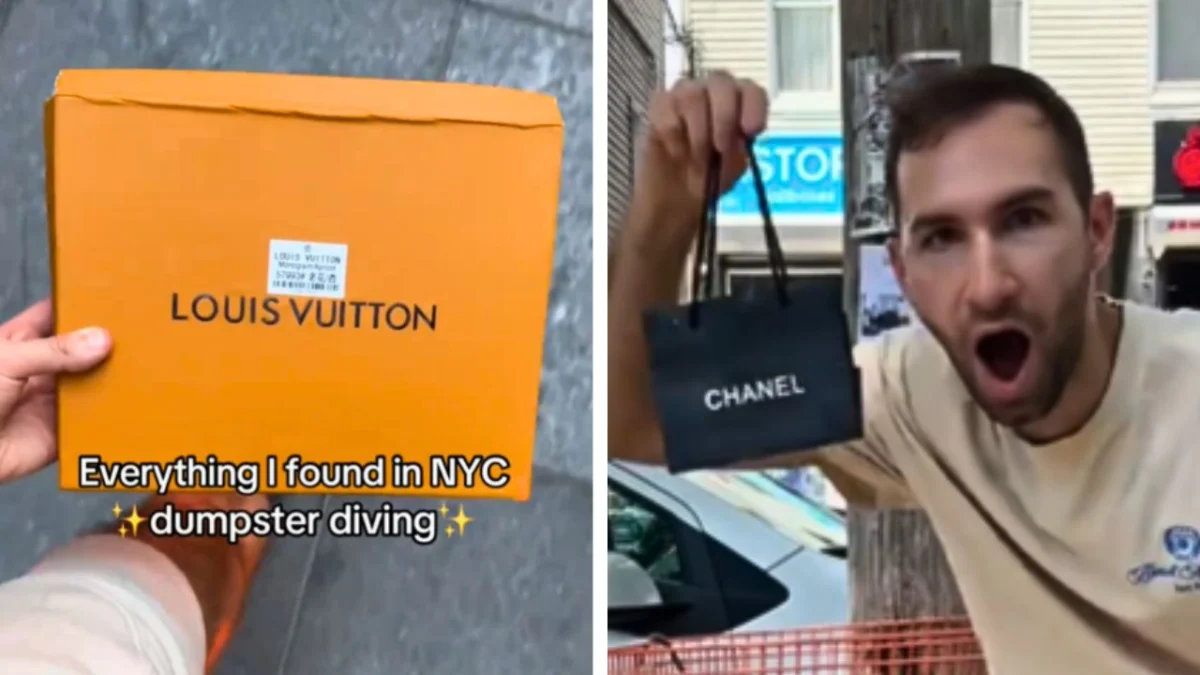
The video, which quickly garnered over 183,000 likes as of publication and millions of views, compiled several days of Bradley’s urban foraging expedition, where he searched for discarded belongings and sought alternative sources for basic necessities. While some viewers lauded his efforts to reduce consumption and promote reuse, significant portions of the content, particularly his decision to drink water directly from a fire hydrant and to search through abandoned bags on the street, provoked a strong negative reaction, leading to accusations of "rage bait" and questions about privilege.
The "Free" Expedition: An Urban Forager’s Journey
Bradley’s video documented a multi-day quest to navigate New York City with minimal financial outlay, focusing heavily on what he termed "free" resources. His finds included a diverse array of items: furniture, a mirror, a mini-fridge, Burberry sunglasses cases, a Louis Vuitton box, and a small Chanel bag. Bradley expressed particular admiration for a chair he discovered on the street, noting its apparent high quality despite his ignorance of its designer or original price. This aspect of the video resonated with a segment of viewers who champion the reuse of furniture and household items, advocating for sustainability over immediate disposal.
A striking discovery was a mirror still bearing an original price tag of $180, despite being cracked and exhibiting other defects. Bradley used this find to highlight his belief that people are excessively quick to discard items merely because they are flawed, a sentiment that aligns with growing movements towards upcycling and conscious consumption. This perspective taps into a broader societal discussion about waste, planned obsolescence, and the environmental impact of a throwaway culture. According to the U.S. Environmental Protection Agency (EPA), municipal solid waste generation in the United States was 292.4 million tons in 2018, with significant portions still ending up in landfills, underscoring the potential environmental benefit of practices like urban foraging, when conducted safely and ethically.
Chronology of Controversy: From July 18 to Widespread Debate
The video’s upload on July 18 marked the beginning of a rapid escalation in online engagement and contention. Initially attracting attention for its unique premise of extreme frugality in an expensive city, the content quickly became a lightning rod for criticism as viewers dissected its more controversial segments. The video’s virality, evidenced by its substantial like count and comments section, illustrates the immediate and widespread nature of the online discourse it generated. Within days, comments sections across various platforms where the video was shared became arenas for heated debate, with opinions sharply divided between those who saw Bradley as an innovative environmentalist and those who viewed his actions as irresponsible and insensitive. The debate continued to intensify as snippets and reactions to the original video circulated, extending its reach and deepening the controversy.
Public Health and Safety Concerns: The Fire Hydrant Dilemma
Among the most contentious elements of Bradley’s video was his demonstration of drawing water from a fire hydrant for consumption. He posed the rhetorical question of why this should be considered problematic, likening it to water flowing through apartment buildings and recalling childhood experiences of drinking from a garden hose. This comparison, however, failed to assuage the concerns of a vast majority of viewers. Comments flooded in, with one particularly prominent remark stating, "Let’s not normalize water from the fire hydrants," which alone garnered over 56,000 likes, reflecting a widespread rejection of the practice. Another viewer questioned the necessity of using a fire hydrant in New York City, given the myriad of readily available and safe drinking water sources.
Inferred Official Response and Expert Insight: Fire hydrants are critical components of urban infrastructure, specifically designed for emergency fire suppression by the Fire Department of New York (FDNY). Their unauthorized use is not only illegal but also poses significant public health and safety risks. The water from fire hydrants, while originating from the municipal supply, is not treated or maintained for direct human consumption in the same way as tap water. The pipes leading to hydrants can be older, potentially containing rust, sediment, or even contaminants from cross-connections or backflow. Furthermore, the immense pressure of hydrant water can dislodge sediment and introduce impurities. The NYC Department of Environmental Protection (DEP) rigorously monitors and treats the city’s drinking water supply, ensuring it meets stringent federal and state standards for potability. The DEP and FDNY would unequivocally advise against consuming water from fire hydrants due to these unmanaged risks. Drinking water directly from a hydrant bypasses all standard safety protocols, including filtration and disinfection, making it a potentially unsafe source that could lead to gastrointestinal illnesses or exposure to harmful substances.
Ethical Considerations of Urban Scavenging: Belongings and Privilege
Another segment that drew substantial criticism involved Bradley searching through an abandoned bag on the street. This action sparked immediate ethical concerns among viewers. One commenter articulated the fear that the bag might belong to a homeless individual, highlighting a crucial ethical dimension of urban foraging—the potential infringement on the dignity and meager possessions of vulnerable populations. Other viewers simply questioned the appropriateness of rummaging through someone else’s belongings, regardless of their perceived abandonment or the owner’s socioeconomic status.
Inferred Expert Insight: While items left on the curb for sanitation pickup are generally considered public property or waste, the act of sifting through personal belongings, especially bags that might contain items of sentimental or practical value to someone, introduces a complex ethical dilemma. Urban ethicists and social workers often emphasize the importance of distinguishing between truly discarded waste and items that might be temporarily misplaced or represent the entire worldly possessions of an unhoused individual. In a city like New York, where homelessness is a persistent challenge, public sentiment often leans towards leaving such items untouched out of respect and empathy for those who may have very little. Charities and advocacy groups for the homeless frequently highlight the vulnerability of their clients’ possessions, making such scavenging acts particularly sensitive.
The Designer Label Debate: Authenticity, Intent, and "Regift Bins"
Bradley’s explicit focus on designer labels during his scavenging — specifically taking a small Chanel item-carrying bag and Burberry sunglasses cases — further fueled the controversy. Viewers noted that he admitted uncertainty about the authenticity of these items, yet still highlighted them as valuable finds. The situation escalated when Bradley mentioned his intention to place the designer cases in his "regift bin." This comment prompted a sharp retort from a viewer who asked, "Bradley, why would anyone want a Burberry sunglasses case with nothing in it as a gift?"
This aspect of the video touched upon several cultural and economic sensitivities. The pursuit of designer labels, even if found discarded, speaks to the enduring allure of luxury brands and the social capital associated with them. The question of authenticity is critical in the luxury market, where genuine items command high prices and counterfeits flood the market. Bradley’s willingness to "regift" potentially inauthentic or empty designer accessories raised questions about his understanding of gift-giving etiquette and the true value of such items. The subtext of this criticism often revolved around the performative aspect of his frugality—was he genuinely embracing an anti-consumption lifestyle, or was he merely seeking to leverage the brand recognition of discarded luxury items for content and perceived status? The economic context of luxury goods, where items like a genuine Chanel bag can cost thousands, contrasts sharply with the idea of finding them abandoned, further complicating the public’s perception of his finds.
"Rage Bait" Accusations and the Dynamics of Viral Content
The cumulative effect of these controversial actions led many viewers to conclude that Bradley’s video was intentionally provocative, describing it as "rage bait." This term refers to content specifically designed to elicit strong emotional reactions, often anger or frustration, in order to maximize engagement—likes, comments, shares, and ultimately, algorithmic visibility. One viewer’s comment, stating they chose to believe the entire thing was a skit "for my own mental health," powerfully illustrates the emotional toll such content can take and the coping mechanisms viewers employ to process it.
Social Media Expert Insight: The phenomenon of "rage bait" is a well-documented aspect of the contemporary social media landscape. Platforms’ algorithms often prioritize content that generates high engagement, irrespective of whether that engagement is positive or negative. This incentivizes creators to produce content that polarizes opinions, as controversy often translates directly into virality. Bradley’s video, with its blend of seemingly innocuous tips and highly questionable practices, perfectly fits this model. By presenting actions like drinking from a fire hydrant or casually discussing "regifting" potentially fake designer items, the creator ensured a robust, albeit largely negative, response, thereby boosting the video’s reach. This strategy, while effective for algorithmic amplification, often comes at the cost of genuine discourse and can contribute to a more toxic online environment.
Socioeconomic Divides: Privilege and the Ethics of "Free"
Perhaps the most severe criticism leveled against Bradley concerned his perceived financial circumstances. A significant number of commenters argued that an individual whom they believed to be financially well-off should refrain from collecting discarded items, suggesting these resources should instead be left for those who genuinely need them out of economic necessity. This critique introduces a profound discussion about privilege and the ethics of "freeganism."
While The Daily Dot explicitly stated its inability to independently verify claims about Bradley’s personal wealth, the perception of his affluence significantly shaped the public’s reaction. In a city like New York, where the cost of living is notoriously high—the median rent for a one-bedroom apartment in Manhattan, for example, can exceed $4,000 per month—and where income inequality is stark, the act of "scavenging" can be viewed very differently depending on one’s socioeconomic position. For some, urban foraging is a conscious choice driven by environmental principles or a desire to reduce personal consumption. For others, it is a grim necessity born of poverty or homelessness. When someone perceived as financially stable engages in such practices, it can be seen as an appropriation of a survival strategy, diverting resources from those truly in need, or simply as a performative act that trivializes genuine hardship.
This dimension of the debate highlights a critical tension: the environmental benefit of reducing waste versus the social justice implications of who accesses discarded goods. While advocates for "freeganism" emphasize its role in challenging consumer culture and promoting sustainability, critics argue that such practices, when undertaken by the privileged, can inadvertently exacerbate inequalities or appear disrespectful to those for whom finding discarded items is not a choice but a means of survival. The video thus became a microcosm for broader societal discussions about privilege, resource allocation, and the complex interplay between environmentalism and social equity in urban environments.
Broader Impact and Implications
Bradley On A Budget’s viral TikTok video has transcended a simple demonstration of frugal living to become a multifaceted case study in contemporary online culture, urban ethics, and the complex relationship between individual actions and public perception. The controversy it sparked touches upon critical issues ranging from public health and environmental sustainability to socioeconomic inequality and the dynamics of social media engagement.
The debate highlights the ongoing challenge of balancing personal autonomy with communal responsibility, particularly in densely populated urban areas. It underscores the importance of adhering to public safety regulations, such as those governing fire hydrant use, and the ethical considerations involved in interacting with public spaces and discarded items. Furthermore, the "rage bait" accusations shed light on the evolving strategies of content creators and the often-toxic environment these tactics can foster on social media platforms.
Ultimately, the video and its ensuing backlash serve as a potent reminder of the power of digital platforms to amplify niche practices into widespread public discourse, forcing a re-examination of consumption habits, waste management, and the ethical implications of documenting such experiences for online audiences. The conversation continues, reflecting deep societal divisions on issues of privilege, necessity, and the very definition of "free" in a world increasingly grappling with resource scarcity and environmental urgency.