Metty Iskandar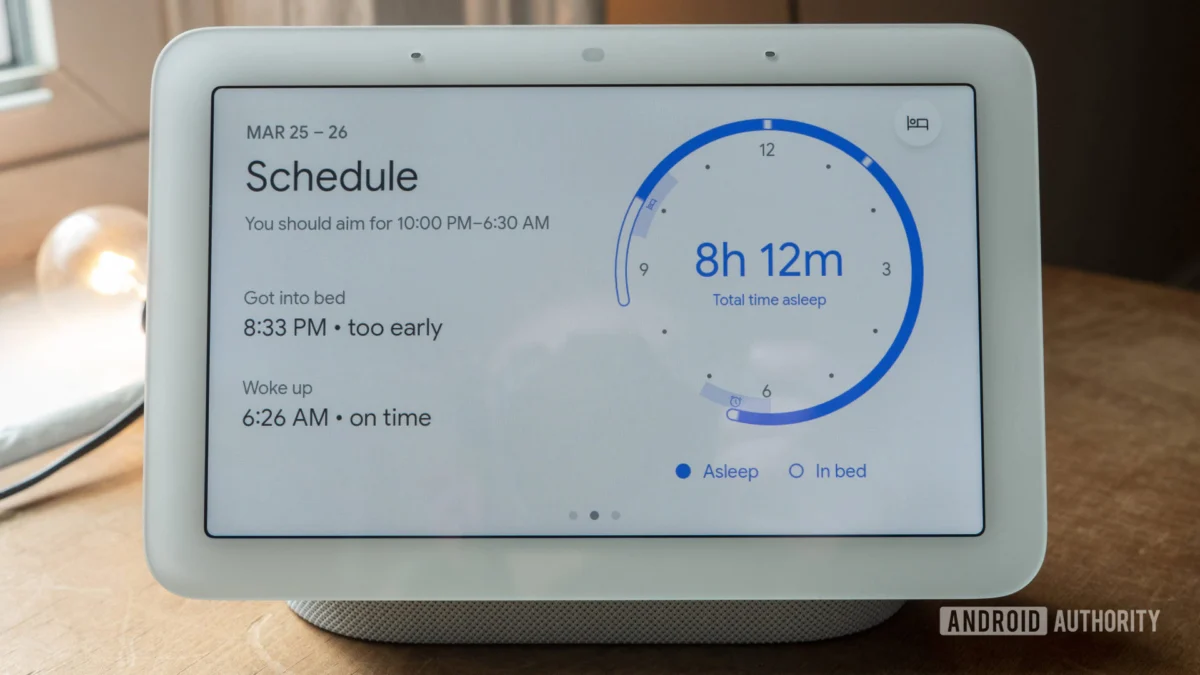
Google’s ambitious consolidation of its disparate health and fitness services under the umbrella of the new Google Health app is set to encompass another key feature: the Sleep Sensing functionality of the second-generation Nest Hub. This strategic shift, long anticipated by observers of Google’s evolving digital health ecosystem, will reportedly see sleep data generated by the smart display migrate away from the legacy Google Fit platform to the unified Google Health application. Evidence of this impending transition has emerged through updated text strings within the Google Home app, signaling a significant step in Google’s overarching strategy to streamline its user experience and consolidate health data.
The second-generation Nest Hub, a prominent device in Google’s smart home lineup, employs sophisticated technology to monitor users’ sleep patterns. At its core is the Soli radar sensor, a miniature radar system developed by Google that enables the device to detect subtle movements and breathing rhythms without requiring direct physical contact. This non-invasive approach allows the Nest Hub to generate comprehensive sleep reports, detailing metrics such as sleep stages (light, deep, REM), time spent in bed, and respiratory rate. Complementing the Soli sensor, the Nest Hub’s microphone is capable of identifying auditory cues like coughing and snoring, providing further insights into sleep quality. Additional environmental sensors within the device monitor ambient light levels and room temperature, factors that can significantly influence sleep. Google has consistently emphasized that the processing of this sensitive sleep data occurs locally on the device, a design choice intended to enhance user privacy and security.
The recent discovery of updated text within version 4.23 of the Google Home app, first reported by 9to5Google, provides concrete evidence of the impending integration. These newly identified strings explicitly explain "how your Nest Hub works with Google Health." Crucially, the language used in these updates largely supersedes previous references to Google Fit, indicating a clear intent to transition the management of Nest Hub sleep data to Google Health. This move aligns with Google’s broader strategy to centralize its health offerings, a process that has been underway for a significant portion of the current year.
A Strategic Consolidation: The Evolution of Google’s Health Platforms
The integration of Nest Hub’s Sleep Sensing into Google Health is not an isolated event but rather a pivotal moment in Google’s multi-year effort to create a cohesive and user-friendly health and fitness ecosystem. This journey began with the acquisition of Fitbit in early 2021, a move that brought a wealth of wearable technology and a dedicated user base into Google’s fold. Since then, Google has been meticulously working to merge its various health-related services and applications.
The Fitbit app itself has already undergone a significant transformation, being replaced by the Google Health app. This rebranding and functional consolidation aims to present a unified interface for users to manage their health data, regardless of its origin – whether from a Fitbit wearable, a Nest Hub, or other integrated services. For users of the standalone Fitbit app, Google has committed to providing migration tools to seamlessly transfer their historical data to Google Health later this year. This phased approach acknowledges the importance of preserving user data and ensuring a smooth transition for millions of existing Fitbit users.
Google Fit, the predecessor platform for Nest Hub’s sleep data, has long served as a foundational health-tracking app within the Android ecosystem. Launched in 2014, Google Fit aimed to aggregate fitness and health data from various sources, including smartphones and third-party wearables. However, with the increasing sophistication of dedicated health apps and the acquisition of Fitbit, Google has signaled a strategic pivot towards a more unified and comprehensive platform. The integration of Nest Hub’s sleep data into Google Health signifies the gradual phasing out of Google Fit as the primary repository for such information, reinforcing the centrality of the new Google Health app.
Implications for Users and the Smart Home Ecosystem
The shift of Nest Hub Sleep Sensing to Google Health carries several important implications for users. Firstly, it promises a more streamlined experience for individuals who utilize multiple Google health services. Instead of juggling data across different apps, users will have a single point of access for their sleep patterns, activity levels, and other health metrics. This centralization can foster a more holistic understanding of one’s well-being, allowing for easier correlation between sleep quality, daily activity, and other health indicators.
Secondly, the integration could unlock new functionalities and deeper insights by leveraging the combined data within Google Health. As the text strings suggest, other services connected to Google Health may gain access to sound-event data from the Nest Hub, such as coughs and snores, depending on user-defined privacy settings. This could pave the way for more advanced sleep analysis, potentially identifying patterns or correlations that were not previously possible. For instance, a user might be able to see how specific environmental factors or daily activities, tracked through other connected services, influence their sleep quality and the frequency of disruptive sounds.
The move also reinforces Google’s commitment to its smart home devices as integral components of a broader health and wellness strategy. The Nest Hub, initially perceived primarily as a smart display for information and entertainment, is increasingly being positioned as a device capable of contributing to a user’s health monitoring. By integrating its advanced sleep-tracking capabilities into the central Google Health app, Google is elevating the Nest Hub’s role from a mere smart home accessory to a valuable tool for personal health management.
Technical Underpinnings and Privacy Considerations
The technical capabilities of the Nest Hub’s Sleep Sensing are noteworthy. The Soli radar sensor, with its ability to detect minute movements and breathing, operates by emitting low-power radio waves and analyzing the reflections. This allows it to map the user’s presence and movements in bed without the need for a camera or microphone to be constantly active for the primary sleep tracking function. The device’s sophisticated algorithms then interpret these radar signals to determine sleep stages and respiratory patterns.
Google’s emphasis on local processing of this data is a critical aspect of its privacy strategy. By processing sensitive information like sleep patterns and breathing rates directly on the device, Google aims to minimize the amount of raw, personal data that is transmitted to its servers. This approach is designed to build user trust and address growing concerns about data privacy in the age of connected devices. The explicit mention that other services connected to Google Health may access sound-event data, "depending on your settings," underscores the granular control users are expected to have over their data. This implies that users will likely have the ability to opt in or out of sharing specific types of data with different connected services within the Google Health ecosystem.
A Glimpse into the Future of Digital Health
The migration of Nest Hub’s Sleep Sensing to Google Health represents a significant stride towards Google’s vision of a unified digital health platform. This consolidation is not merely an organizational restructuring; it is a strategic move designed to enhance user experience, unlock new analytical capabilities, and solidify the role of its smart home devices in personal wellness. As Google continues to integrate its health and fitness offerings, users can anticipate a more seamless and insightful approach to managing their health data, with the ultimate goal of empowering individuals to lead healthier lives. The ongoing evolution of Google Health, coupled with the expanding capabilities of devices like the Nest Hub, suggests a future where our everyday technology plays an increasingly vital role in our personal health journeys. The timeline for these changes, while not explicitly detailed for every specific feature, has been progressively unfolding throughout the year, with further data migration and feature integrations expected to continue.