Sisilia Frederika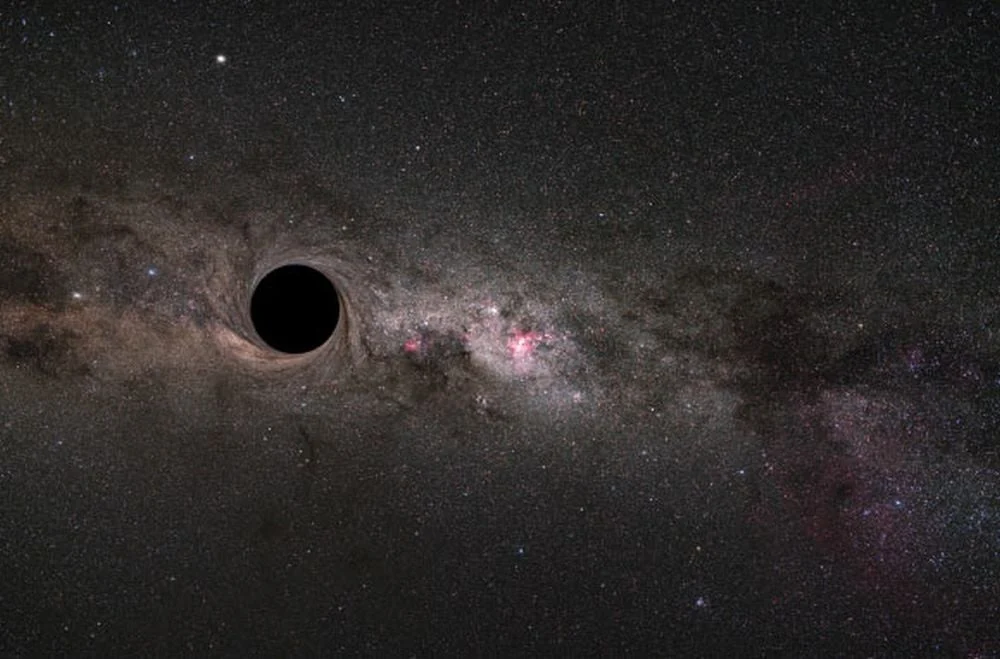
The scientific community has long grappled with the elusive nature of dark matter, a substance that constitutes approximately 85% of the universe’s total matter yet remains invisible to conventional detection methods. In a significant advancement for theoretical cosmology, a new study published in The Astrophysical Journal suggests that primordial black holes (PBHs)—hypothetical entities formed in the immediate aftermath of the Big Bang—may be hiding in plain sight by triggering some of the most luminous explosions in the cosmos. Led by Shing-Chi Leung of the Department of Physics at SUNY Polytechnic Institute and the Kavli Institute for the Physics and Mathematics of the Universe (WPI), the research provides a framework for identifying PBHs through the chemical signatures of Type Ia supernovae (SNe Ia) and their subsequent remnants.
The Nature and Origin of Primordial Black Holes
Unlike stellar-mass black holes, which result from the gravitational collapse of massive stars at the end of their life cycles, primordial black holes are theorized to have formed during the universe’s infancy. Within the first fraction of a second following the Big Bang, the universe was a hot, dense plasma. Theoretical models suggest that localized regions of extreme density could have collapsed directly into black holes without the need for a stellar progenitor.
These PBHs could theoretically exist across a vast range of masses. However, the "asteroid-mass" class—ranging from approximately $10^17$ to $10^22$ grams—is of particular interest to researchers. Because these objects would be roughly the size of an atom but possess the mass of a large celestial body, they are notoriously difficult to detect. If they exist in sufficient numbers, they could account for the entirety of the universe’s dark matter. The current research focuses on how these asteroid-mass PBHs interact with white dwarfs, the dense remnants of medium-sized stars, to create observable astronomical events.
Mechanism of a PBH-Triggered Explosion
The standard model for a Type Ia supernova involves a white dwarf in a binary system. In this scenario, the white dwarf siphons material from its companion star (the single-degenerate model) or merges with another white dwarf (the double-degenerate model). Once the white dwarf reaches the Chandrasekhar limit—approximately 1.4 times the mass of the Sun—it becomes unstable and undergoes a thermonuclear explosion.
The research by Leung and his colleagues proposes a third, alternative mechanism: the "PBH-trigger." In this model, an asteroid-mass PBH passing through the interstellar medium encounters a white dwarf. Due to the PBH’s intense gravitational field, its passage through the white dwarf’s carbon-oxygen core generates localized tidal heating. As the PBH traverses the stellar interior, the temperature in its wake can soar to over 0.5 billion Kelvin.
This extreme temperature acts as a spark in a tinderbox. If the region of nuclear burning reaches a critical size, it initiates an uncontrolled thermonuclear runaway. The resulting explosion completely annihilates the white dwarf, leaving behind no remnant star—only an expanding shell of gas and heavy elements known as a supernova remnant (SNR). This process allows a white dwarf to explode even if it has not reached the traditional Chandrasekhar mass limit, potentially explaining why some observed supernovae do not fit standard binary evolution models.
Chronology of the Research and Methodology
This latest paper represents the second phase of an ongoing investigation into the role of PBHs in stellar evolution. The research team’s journey began with an initial study focused on the fundamental physics of the ignition process.
- Phase I: Ignition and Dynamics: The researchers first established the feasibility of the PBH-trigger. They utilized sophisticated numerical simulations to model the fluid dynamics and radiative transfer that occur when a black hole pierces a white dwarf. This phase proved that the "tidal heating" mechanism could indeed lead to a full-scale supernova.
- Phase II: Chemical Fingerprinting and Light Curves: The current study expands this work by examining the "aftermath" of these explosions. By simulating the nucleosynthesis—the creation of new elements—during the explosion, the team was able to predict the specific chemical yields of a PBH-triggered event.
- Phase III: Galactic Integration: The final step involved integrating these results into Galactic Chemical Evolution (GCE) models. This allowed the researchers to see how the inclusion of PBH-triggered supernovae would alter the chemical makeup of a galaxy over billions of years.
By comparing these simulations with actual observations of supernova remnants and the elemental abundances found in stellar surveys, the team was able to look for "matches" that would suggest a PBH origin.
Supporting Data: Metallicity and Chemical Yields
One of the most critical findings in the study involves the relationship between the supernova’s "metallicity"—the abundance of elements heavier than helium—and its chemical output. The researchers found that PBH-triggered supernovae produce distinct amounts of Manganese (Mn) and Nickel (Ni).
The data indicated that:
- Manganese-to-Iron Ratios: PBH-triggered events produce specific ratios of Manganese that vary depending on the initial metallicity of the white dwarf.
- Light Curve Consistency: The light curves—the graph of light intensity over time—generated by these simulated explosions are remarkably similar to those of "ordinary" Type Ia supernovae. This explains why they have likely been misidentified as standard binary-driven events in the past.
- Early Universe Contribution: The models suggest that PBH-triggered supernovae were significantly more common in the early universe, where the conditions for such encounters may have been more favorable.
The team’s GCE model showed that adding PBH-triggered SNe Ia as a source of elements helps explain the "widespread elemental abundances" observed in high-metallicity stars across various stellar surveys. Specifically, it provides a better fit for the observed chemical evolution of the Milky Way’s "thick disk" and "halo" populations.
Official Responses and Scientific Context
Lead author Shing-Chi Leung emphasized the importance of these indirect detection methods. "Our work suggests that some supernova that we observe in the sky could be a result of the PBHs," Leung stated in a release from the Kavli Institute. "Therefore, even though we cannot directly observe these evasive entities, they leave many interesting clues in nature for us to probe their properties."
The Kavli Institute for the Physics and Mathematics of the Universe, which supported the research, noted that this study bridges the gap between particle physics and observational astronomy. By treating the PBH as a "stellar chemical source," the researchers have moved the discussion of dark matter from the realm of pure theory into the realm of empirical chemistry.
While the broader astrophysical community remains cautious regarding the existence of PBHs, the Leung study provides a "falsifiable" hypothesis. If future observations of supernova remnants consistently show the chemical signatures predicted by this model—particularly in isolated white dwarfs where no binary companion is present—it would provide compelling evidence for the existence of primordial black holes.
Broader Impact and Implications for Cosmology
The implications of this research extend far beyond the study of supernovae. If PBHs are indeed the catalysts for a fraction of Type Ia supernovae, several fundamental pillars of cosmology may need to be re-examined.
1. Dark Matter Identification:
If even a small percentage of Type Ia supernovae are triggered by PBHs, it would confirm that these objects exist and are distributed throughout the galactic halo. This would provide the first definitive evidence that dark matter is composed of macroscopic objects (PBHs) rather than weakly interacting massive particles (WIMPs).
2. Refining the "Standard Candle":
Type Ia supernovae are used by astronomers as "standard candles" to measure the expansion of the universe because they were thought to have a consistent peak luminosity. If a subset of these explosions is triggered by PBHs in white dwarfs of varying masses, it could introduce a source of error in cosmic distance measurements. Refining the standard candle model to account for PBH-triggered events could lead to more accurate measurements of the Hubble constant and the rate of universal expansion.
3. The Life Cycle of Galaxies:
By acting as a "chemical source," PBH-triggered supernovae contribute to the enrichment of the interstellar medium. The heavy elements forged in these explosions—iron, nickel, and manganese—eventually become the building blocks for new stars and planets. Understanding the frequency of these events is essential for creating accurate models of how galaxies evolve over cosmic time.
As telescope technology advances—specifically with the upcoming Vera C. Rubin Observatory and the Nancy Grace Roman Space Telescope—astronomers will have the ability to observe millions of supernovae with unprecedented detail. The "chemical fingerprints" identified by Leung and his team will serve as a vital roadmap for researchers searching for the ghost-like remnants of the Big Bang. While the primordial black hole remains a theoretical construct for now, its potential to ignite stars and shape the chemistry of the universe ensures it will remain at the forefront of astrophysical inquiry for years to come.