George Chandra Eka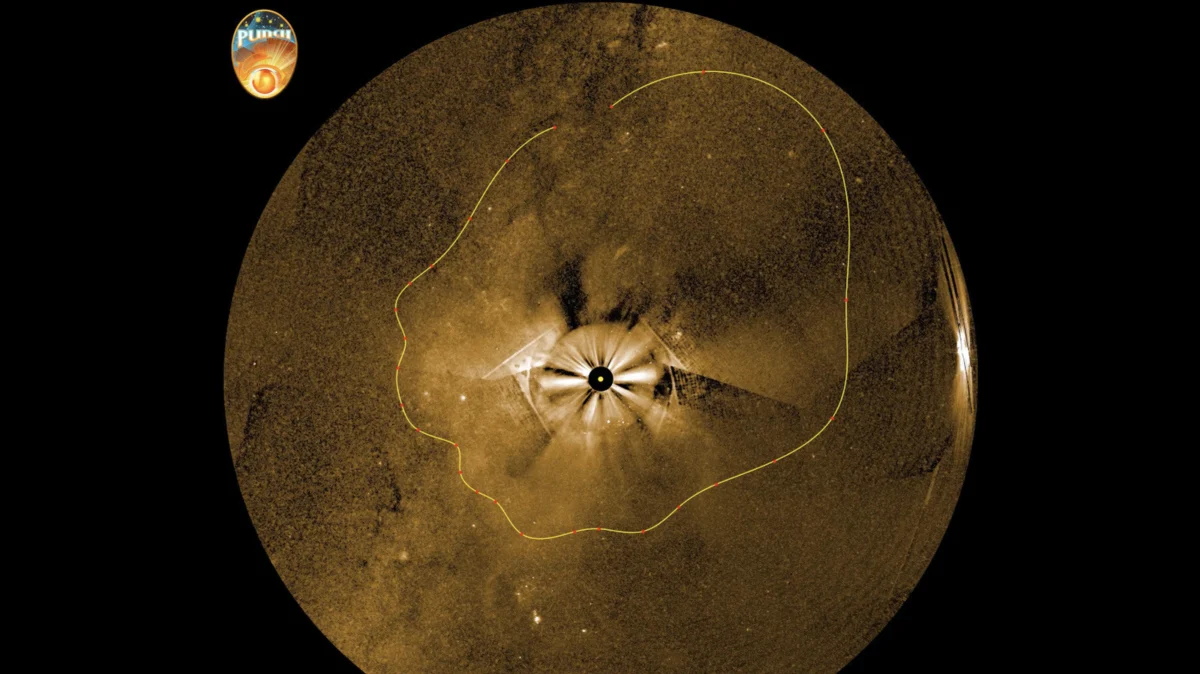
NASA’s Polarimeter to Unify the Corona and Heliosphere (PUNCH) mission has demonstrated a groundbreaking capability in forecasting solar storms, achieving accuracy within a half-hour margin during its initial tests. This marks a significant leap forward from existing methods, which typically carry an error margin of five hours, profoundly enhancing Earth’s preparedness against potentially disruptive space weather events. The mission’s constellation of four microsatellites, launched in March 2025, has already begun delivering continuous, high-resolution imagery of coronal mass ejections (CMEs), the powerful solar eruptions responsible for geomagnetic storms, from their very inception to their propagation across the vast expanse between the Sun and Earth.
A New Era in Space Weather Forecasting
For decades, the challenge of predicting the arrival of solar storms with sufficient precision has been likened to trying to predict a hurricane’s landfall with only intermittent glimpses of its path. Traditional space weather instruments, whether ground-based solar telescopes or earlier generations of space observatories like the Solar and Heliospheric Observatory (SOHO), could typically only track coronal mass ejections (CMEs) in segments—either very close to the Sun or as they neared Earth. This left a critical observational gap, often encompassing up to four-fifths of a CME’s arduous journey across 150 million kilometers of interplanetary space. The lack of continuous, comprehensive data meant that by the time a CME’s trajectory and speed could be adequately estimated, the window for effective mitigation measures on Earth was often perilously narrow.
The PUNCH mission fundamentally alters this landscape. As Craig DeForest, the principal investigator for PUNCH at Southwest Research Institute in Boulder, Colorado, remarked, "We thought PUNCH would be good at this, but it’s a stunning result. To put it in perspective, this could be the space weather equivalent of going from a steam engine to a modern internal combustion engine." This powerful analogy underscores the magnitude of the improvement, transforming what was once an imprecise art into a burgeoning science of precise prediction. PUNCH’s unique capability to track CMEs "all the way through" their journey, capturing images as frequently as every four minutes, provides an unbroken observational record that was previously unimaginable. This continuous data stream is the bedrock upon which the unprecedented forecasting accuracy is built, allowing scientists to model the CME’s evolution and trajectory with remarkable fidelity.
The PUNCH Mission: Eyes on the Heliosphere
The Polarimeter to Unify the Corona and Heliosphere (PUNCH) mission represents a cutting-edge effort by NASA to gain a deeper understanding of solar weather and its propagation through the heliosphere. Launched in March 2025, the mission consists of a constellation of four identical microsatellites, strategically positioned in Earth-trailing heliocentric orbits. This orbital configuration allows them to maintain a constant, unobstructed view of the Sun’s outer corona and the inner heliosphere, the region of space dominated by the Sun’s magnetic field and solar wind.
Each of the four PUNCH satellites is equipped with specialized imagers designed to observe different aspects of the Sun’s dynamic outer atmosphere and the solar wind. Two of the satellites carry Wide-Field Imagers (WFIs), which are optimized to observe the faint, diffuse light scattered by electrons in the outer corona and inner heliosphere. These instruments are crucial for tracking the large-scale structures and evolution of CMEs as they expand and travel away from the Sun. The other two satellites are outfitted with Narrow-Field Imagers (NFIs), which provide a closer, more detailed view of the region immediately surrounding the Sun, including the interface where the solar wind accelerates and CMEs are initially expelled. Together, these instruments create a stereoscopic and continuous observational network, monitoring the Sun 24 hours a day, seven days a week. The combined data from these imagers allows scientists to reconstruct the three-dimensional structure and kinematics of CMEs and the solar wind with unprecedented detail, a capability vital for accurate space weather forecasting.
Understanding Coronal Mass Ejections (CMEs): The Solar Threat
Coronal Mass Ejections (CMEs) are among the most powerful and energetic phenomena in our solar system. They are explosive expulsions of massive clouds of highly magnetized plasma and energetic particles from the Sun’s outermost atmospheric layer, known as the corona. While often associated with solar flares—intense bursts of radiation—CMEs can also occur independently. These colossal eruptions can eject billions of tons of solar material into space at staggering speeds, ranging from a few hundred kilometers per second (km/s) to over 3,000 km/s. At the higher end of this spectrum, a CME could traverse the entire distance from the Sun to Earth in less than a day, while slower ones might take four days or more.
The journey of a CME to Earth is approximately 150 million kilometers. The real danger to Earth arises when a CME’s immense magnetic field interacts with our planet’s protective magnetosphere. If the magnetic field carried by the CME is oriented opposite to Earth’s magnetic field, they can "reconnect" explosively, transferring vast amounts of energy into the magnetosphere. This interaction triggers a geomagnetic storm, a disturbance in Earth’s magnetic field that can have far-reaching consequences for technological systems.
The current period, heading towards or within the peak of Solar Cycle 25, known as solar maximum, makes PUNCH’s breakthrough particularly timely. During solar maximum, the Sun’s magnetic field is at its most complex and active, leading to an increased frequency and intensity of solar flares and CMEs. This heightened activity translates directly into a greater probability of severe space weather events impacting Earth, making robust and accurate forecasting capabilities more critical than ever before.
The May 31, 2025 Test Case: A Precision Forecast
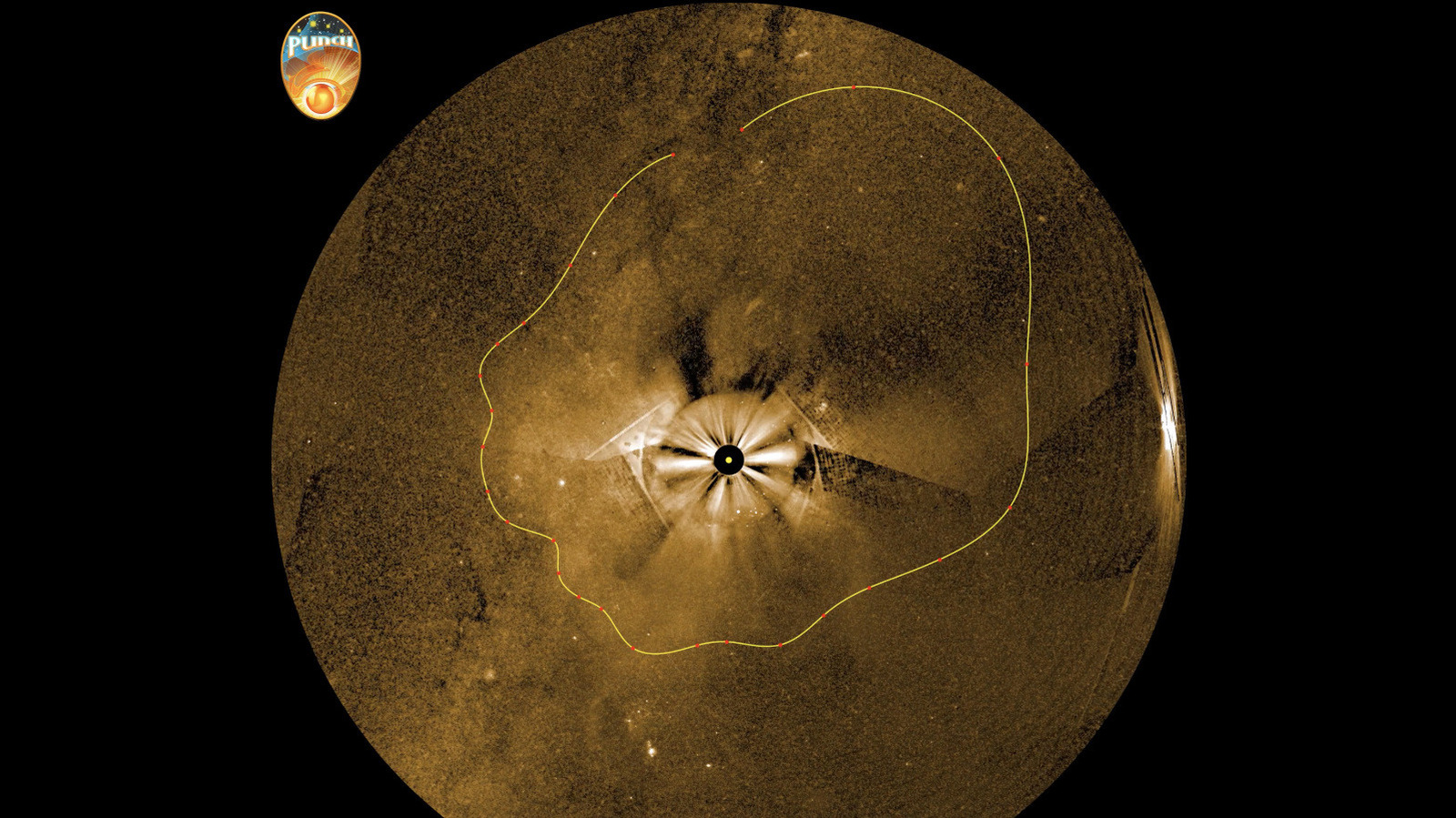
The proof-of-concept for PUNCH’s forecasting prowess came with the analysis of a coronal mass ejection that erupted on May 31, 2025. From the moment of its initial expulsion, the PUNCH satellite constellation began collecting a continuous stream of imagery and data, meticulously documenting the CME’s evolution and trajectory. This uninterrupted observational record, taken every four minutes, provided a level of detail previously unattainable.
Scientists then fed this rich dataset into a sophisticated computer model designed to analyze the complex dynamics of CMEs. The model meticulously tracked the edges of the expanding CME over time, calculating its evolving speed, shape, and direction of travel. Crucially, because PUNCH provided a continuous view, the model had a comprehensive understanding of the CME’s kinematics from an early stage, rather than having to extrapolate from limited snapshots. After analyzing the first 12 hours of the CME’s propagation—a period during which older instruments would have provided only fragmented data—the model was able to project its trajectory and velocity with remarkable accuracy. It predicted that the solar storm triggered by this CME would arrive at Earth eight hours later.
The subsequent validation confirmed the extraordinary precision of PUNCH’s forecast: the solar storm arrived within half an hour of the predicted time. This half-hour error margin represents a monumental improvement over existing methods, which typically carry an error margin of five hours. The stark difference highlights PUNCH’s unique advantage: by being able to track the CME continuously from its origin, rather than just small, disparate segments of its journey, PUNCH provides far more accurate initial conditions and real-time adjustments for velocity and trajectory data. The frequent four-minute imaging cadence ensures that even subtle changes in the CME’s dynamics, which could significantly alter its arrival time, are captured and integrated into the forecasting models, leading to unparalleled reliability.
Profound Implications for Earth’s Infrastructure
The ability to predict solar storms with such unprecedented accuracy carries profound implications across numerous sectors of modern society, which have become increasingly reliant on sensitive technological infrastructure vulnerable to space weather.
-
Power Grids: One of the most significant threats posed by severe geomagnetic storms is to electrical power grids. Geomagnetic currents, induced by disturbances in Earth’s magnetic field, can flow through long transmission lines, causing transformers to overheat, trip circuit breakers, and potentially lead to widespread power outages. The infamous 1989 Quebec blackout, which left six million people without power for hours, stands as a stark reminder of this vulnerability. An accurate, multi-hour warning would allow utility companies to implement protective measures, such as temporarily reducing load on susceptible lines, disconnecting vulnerable equipment, or adjusting voltage regulators, significantly mitigating the risk of cascading failures.
-
Satellite Operations: Earth-orbiting satellites are the backbone of modern communication, navigation (GPS), weather forecasting, and scientific research. These assets are highly susceptible to the effects of solar storms, including increased radiation exposure, which can cause single-event upsets (SEUs) in electronics or even permanent damage. Enhanced atmospheric drag due to heating and expansion of the upper atmosphere during geomagnetic storms can also prematurely de-orbit satellites. Furthermore, solar storms can disrupt satellite-to-ground communications. With precise forecasts, satellite operators can take proactive steps such as placing sensitive instruments in "safe mode," orienting spacecraft to shield vulnerable components, or adjusting orbital parameters to minimize drag, thereby extending mission lifespans and ensuring continuous service.
-
Aviation: High-altitude flights, particularly those over the polar regions where Earth’s magnetic field provides less protection, are vulnerable to increased radiation exposure for passengers and crew during solar particle events (a component of solar storms). Additionally, geomagnetic storms can cause high-frequency (HF) radio blackouts, disrupting critical communication between aircraft and ground control. Accurate predictions enable airlines to reroute flights away from polar regions or lower altitudes, safeguarding passenger and crew health, and maintaining communication integrity, albeit at potentially higher operational costs.
-
Internet and Communication: While fiber optic cables are largely immune to geomagnetic currents, the ground-based infrastructure that supports the internet, including undersea cable repeaters, data centers, and various communication networks, can be affected. Strong geomagnetic currents could induce surges in these systems, leading to localized or regional internet outages. Radio communication across various bands, including amateur radio, emergency services, and military communications, is highly vulnerable to solar storm-induced ionospheric disturbances. Early warnings allow for contingency planning and the activation of alternative communication pathways.
-
Space Exploration and Astronaut Safety: As humanity ventures further into space with missions like Artemis to the Moon and future crewed missions to Mars, protecting astronauts from solar radiation becomes paramount. Outside Earth’s protective magnetosphere, astronauts are exposed to significantly higher levels of radiation from solar particle events, which can cause acute radiation sickness and increase long-term cancer risks. PUNCH’s ability to provide timely and accurate warnings is critical for mission planners to schedule extravehicular activities (EVAs) and transit phases, or to direct astronauts to shielded areas within their spacecraft, ensuring their safety during deep-space exploration.
Mitigation and Preparedness: Leveraging Advanced Warning
The economic impact of a major, unpredicted solar storm could be staggering, potentially running into trillions of dollars globally through widespread infrastructure damage and service disruptions. The half-hour accuracy achieved by PUNCH transforms this grim outlook, shifting the paradigm from reactive damage control to proactive mitigation.
With several hours of advance notice, utility companies can implement preventative measures such as temporary load shedding, disconnecting vulnerable equipment like large transformers, or adjusting grid configurations to reduce exposure to induced currents. Satellite operators gain precious time to initiate protective sequences, powering down sensitive components, reorienting spacecraft for shielding, or uploading software patches to safeguard against potential glitches. Airlines can make informed decisions to reroute flights, avoiding hazardous polar routes and ensuring the safety of passengers and crew while minimizing operational disruptions. Emergency services and critical infrastructure providers can activate contingency plans, ensuring alternative communication channels are ready and essential services remain operational.
Beyond immediate operational adjustments, this enhanced forecasting capability will inform long-term resilience strategies. Governments and industries can use this improved understanding to invest in more robust infrastructure, develop better shielding technologies, and refine emergency response protocols. The PUNCH mission, therefore, is not just a scientific endeavor; it is a critical investment in global resilience against the unpredictable power of our star.
Looking Ahead: Refining Models and Expanding Capabilities
The results presented by the PUNCH scientists, demonstrating their initial proof of concept, are currently undergoing rigorous peer review for publication in the esteemed Space Weather journal. This initial success is merely the beginning. The PUNCH team anticipates that with continuous operation, the collection of even more refined data, and the iterative improvement of their computer models, it will be possible to achieve even greater accuracy and extend the lead time for solar storm forecasts significantly.
Future enhancements are expected to involve the integration of PUNCH’s unique data with observations from a wider array of heliophysics missions. Data from spacecraft like the Parker Solar Probe, which ventures closer to the Sun than any previous mission, and Solar Orbiter, which provides unprecedented views of the Sun’s poles, alongside venerable observatories like SOHO, can be combined with PUNCH’s continuous tracking capabilities. This multi-messenger approach will create an even more comprehensive and holistic picture of solar activity and space weather evolution, allowing scientists to build more sophisticated and predictive models. Furthermore, the global nature of space weather necessitates robust international collaboration. Data sharing and joint analysis efforts between space agencies worldwide will be crucial to maximize the benefits of missions like PUNCH and ensure a globally coordinated response to solar threats.
NASA’s Broader Heliophysics Vision
The PUNCH mission is an integral component of NASA’s overarching Heliophysics program, which is dedicated to understanding the Sun and its profound influence on Earth and the entire solar system. Heliophysics aims to unravel the fundamental physical processes that govern our dynamic star, from the nuclear fusion in its core to the outer reaches of the heliosphere. This includes studying the Sun’s magnetic field, solar flares, CMEs, and the constant outflow of particles known as the solar wind, all of which constitute space weather.
By investing in pioneering missions like PUNCH, NASA is not only expanding the frontiers of scientific knowledge but also actively safeguarding humanity’s technological infrastructure and future space endeavors. A deeper understanding of space weather and the capability to predict its events accurately are paramount for protecting astronauts, critical communication and navigation systems, and terrestrial power grids. PUNCH exemplifies how fundamental scientific research translates directly into tangible benefits for society, ensuring that humanity is better prepared to live and operate safely in the dynamic environment shaped by our nearest star.