Lina Irawan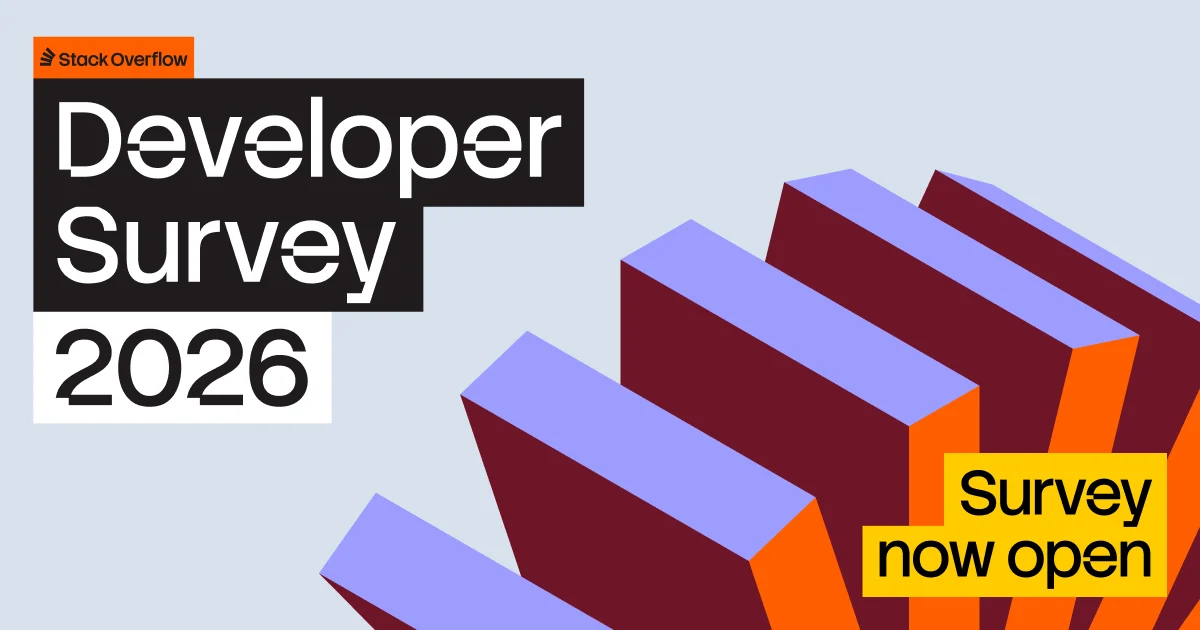
Stack Overflow, the world’s largest online community for developers, has officially opened its 2026 Developer Survey, marking the 15th anniversary of what has become the industry’s most comprehensive annual census of the software engineering profession. This year’s iteration arrives at a pivotal moment for the technology sector, as the industry transitions from the initial excitement of generative artificial intelligence to the practical, and often contentious, integration of autonomous AI agents within the software development lifecycle. By soliciting input from millions of practitioners worldwide, Stack Overflow aims to quantify how the fundamental nature of coding is being reshaped by new tools, changing economic expectations, and shifting sentiments regarding the reliability of automated systems.
The Evolution of the Developer Landscape: 2011 to 2026
The Stack Overflow Developer Survey has served as a historical record of the technological zeitgeist for a decade and a half. When the inaugural survey was conducted in 2011, the industry was primarily concerned with the rise of mobile platforms and the differing workflows between small startups and large enterprise environments. At that time, the "app store" economy was in its infancy, and the concept of cloud computing was still emerging as a standard for infrastructure.
Over the subsequent 15 years, the scope of the survey expanded to mirror the increasing complexity of the field. The mid-2010s saw the survey track the explosion of data science and the formalization of DevOps. By the turn of the decade, the focus shifted toward the sudden, global transition to remote work and the mental health implications of a decentralized workforce. Today, the 2026 survey represents a new era where the focus is no longer just on where developers work or what languages they use, but on the very agency of the developer in an increasingly automated environment.
The Rise of Agentic AI and the 2026 Focus
The central theme of the 2026 survey is the emergence of "agentic AI"—systems designed not merely to suggest snippets of code, but to independently execute tasks, navigate file systems, and manage complex portions of the development process. This marks a significant departure from the "copilots" of previous years. Stack Overflow’s internal research indicates that the usage of these autonomous agents has doubled within the last year, yet this adoption has not been accompanied by a corresponding increase in confidence.
The 2026 questionnaire seeks to categorize developers into distinct archetypes based on their adoption of these technologies. These range from the "AI-pilled"—those who have fully integrated AI agents into their daily workflows—to the "curious but wary," and finally the "neo-Luddites," a growing segment of the community expressing deep-seated concerns regarding the long-term impact of AI on job security, code quality, and intellectual property.
Analyzing the Trust Gap and Quality Concerns
Data from the 2025 survey provided a baseline for the current inquiry, revealing a paradoxical trend: while more developers are utilizing AI tools to increase velocity, the level of trust in the output of these tools has plummeted. The 2026 survey is designed to probe the specifics of this trust gap. Industry analysts suggest that "hallucinations" and security vulnerabilities in AI-generated code have led to a "find out" stage of adoption, where the initial speed gains are being offset by the time required for rigorous human auditing and debugging.
One of the most significant challenges identified in the lead-up to this year’s survey is "decision fatigue." As AI agents offer an overwhelming number of solutions or architectural paths, developers report a cognitive burden in choosing the correct course of action. The 2026 survey will investigate whether these tools are truly liberating developers from mundane tasks or if they are simply replacing "writing code" with "reviewing machine-generated output," a shift that many practitioners find less fulfilling and more taxing.
From Experimental "YOLO" to Measurable ROI
A critical transition highlighted in the 2026 survey is the shift from "YOLO" (You Only Live Once) development—characterized by the rapid, often unchecked adoption of experimental AI tools—to a focus on Return on Investment (ROI). Organizations are increasingly demanding proof that AI integration leads to measurable improvements in software quality and business value, rather than just an increase in the volume of code produced.
The survey asks respondents to detail where AI fits within the Software Development Lifecycle (SDLC), including requirements gathering, architecture, testing, and deployment. By tracking these metrics, Stack Overflow intends to provide a roadmap for how companies are moving past the hype cycle into a phase of disciplined implementation. This data is expected to be particularly valuable for Chief Technology Officers (CTOs) and engineering managers who are currently navigating the pressure to automate while maintaining system stability.
Technical Methodology and Platform Logistics
To ensure data integrity and a user-friendly experience, Stack Overflow continues its partnership with Qualtrics, a leading survey and experience management platform. However, the organization has noted several technical and geopolitical hurdles that may affect participation.
From a technical standpoint, users of third-party ad-blocking plugins may encounter errors while attempting to access the survey. Stack Overflow has issued a formal request for participants to temporarily disable these plugins or whitelist the Qualtrics domain to ensure their responses are recorded correctly.
Geopolitical restrictions also play a role in the survey’s reach. Due to compliance requirements and international sanctions, Qualtrics blocks access to its services in several regions. These include:
- Cuba
- Iran
- North Korea
- Syria
- The Crimea region of Ukraine (including Sevastopol)
Additionally, users within mainland China may experience connectivity issues due to local internet service provider restrictions and the "Great Firewall." Despite these limitations, Stack Overflow maintains that the survey remains the most globally representative dataset of its kind, though it acknowledges the gaps created by these digital borders.
The Significance of Developer Sentiment on Industry Policy
The results of the Stack Overflow Developer Survey are historically utilized by a wide array of stakeholders. Tech companies use the data to refine their product roadmaps; recruiters use it to understand salary benchmarks and the popularity of specific tech stacks; and educational institutions use it to align their curricula with market demands.
In 2026, the stakes are arguably higher. As governments around the world debate AI regulation and copyright laws, the collective voice of the developer community serves as a vital data point for policymakers. If the survey reveals a widespread lack of trust in AI-generated code, it could bolster arguments for stricter "human-in-the-loop" requirements in critical infrastructure software. Conversely, if the data shows that AI agents are significantly lowering the barrier to entry for new developers, it could influence how the industry approaches the global talent shortage.
Anticipated Impact and Community Engagement
The 2026 survey is expected to remain open for several weeks, with the final report typically released in the summer. Stack Overflow has encouraged developers to share the survey across various social and professional platforms to ensure a diverse respondent pool. The organization emphasizes that every voice—from the hobbyist to the enterprise architect—is essential for creating an accurate picture of the industry.
As the tech sector continues to grapple with the "agentic" shift, the 2026 Developer Survey will likely be remembered as the moment the industry moved beyond the novelty of AI. Whether the data shows a community empowered by these new tools or one increasingly alienated by them, the findings will set the tone for the next decade of software engineering.
The conclusion of the survey period will trigger a massive data-processing phase, where Stack Overflow’s analysts will look for correlations between AI adoption and job satisfaction, salary levels, and preferred programming languages. In an era where "the tools are changing all the time," as the organization noted in its announcement, the 2026 survey provides a necessary anchor, offering a moment of reflection for a profession that is currently moving at an unprecedented pace. Organizations and individuals alike are encouraged to participate to ensure that the resulting data reflects the true state of the global developer ecosystem.