Sisilia Frederika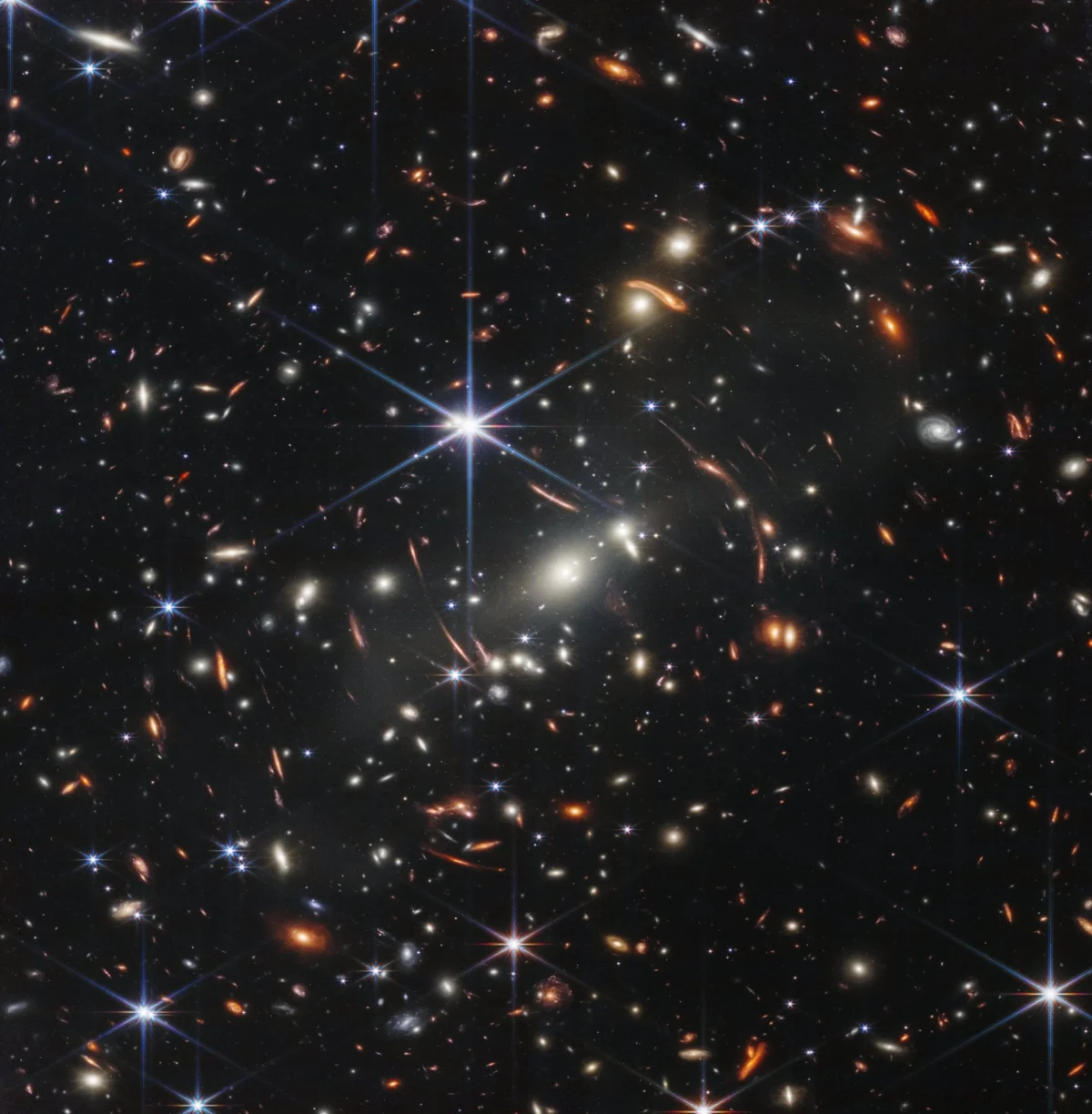
The James Webb Space Telescope (JWST) continues to redefine the boundaries of observational astronomy, not only through its planned primary missions but also through the wealth of information contained within its rapidly expanding public archives. In a significant development for the study of the early universe, astrophysicist Dr. Homer Dávila Gutierrez has identified a new gravitational arc candidate, designated A1, within the massive galaxy cluster MACS J0308.9+2645. This discovery, made using archival data from the telescope’s Near-Infrared Camera (NIRCam), underscores the potential for independent researchers to contribute to high-level cosmic discoveries by re-examining data gathered during broad surveys.
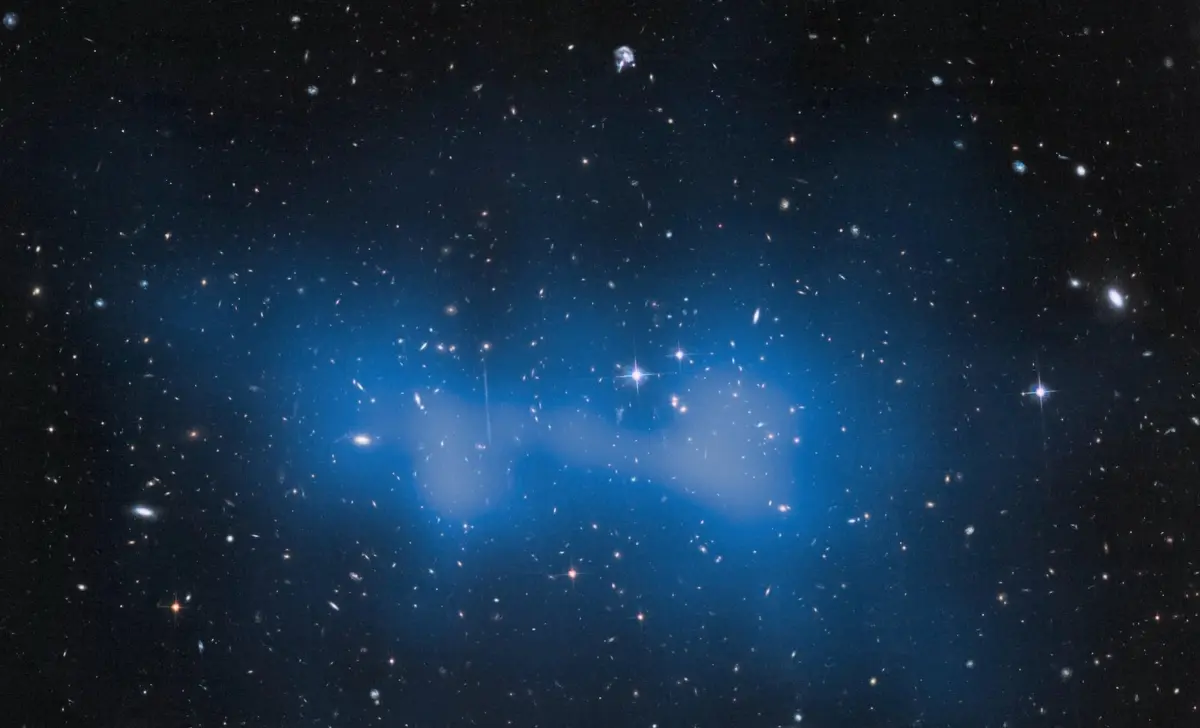
The identification of A1 marks a new chapter in the study of MACS J0308.9+2645, a cluster that has long been a subject of interest for the astronomical community. Previously observed by the Hubble Space Telescope, the cluster serves as a natural "gravitational lens," a phenomenon where the immense mass of a foreground object warps the fabric of spacetime, magnifying and distorting the light from much more distant objects behind it. While Hubble provided the first deep-field glimpses of this region, the JWST’s superior infrared resolution has allowed for the detection of fainter, more elongated structures that remained hidden from previous generations of observatories.
The Mechanics of Cosmic Magnification
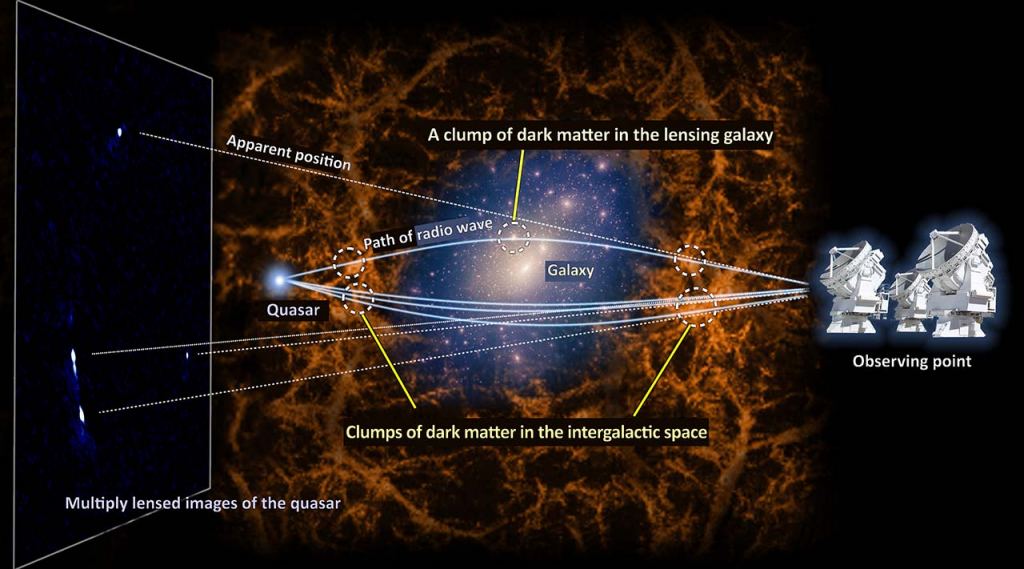
To understand the significance of the A1 candidate, one must look to the foundations of modern physics. Gravitational lensing was one of the cornerstone predictions of Albert Einstein’s 1915 General Theory of Relativity. Einstein proposed that mass does not merely exist within space but actually dictates the geometry of space itself. When light from a distant galaxy travels toward Earth and passes near a massive object like the MACS J0308.9+2645 cluster, it follows the curved path of spacetime.
This effect acts similarly to a terrestrial glass lens, focusing and amplifying the light. In some cases, this creates "gravitational arcs"—stretched, banana-shaped images of distant galaxies—or even "Einstein Rings" if the alignment is perfect. For astronomers, these lenses are indispensable tools, effectively acting as natural telescopes that provide a "boost" to human-made instruments, allowing them to see objects that would otherwise be too dim or too distant to detect.
The cluster MACS J0308.9+2645 is particularly adept at this. Located at a redshift of approximately $z = 0.356$, it is one of the most massive clusters known to science. Its gravitational field is so intense that it has already revealed galaxies existing 13 billion years ago, a mere billion years after the Big Bang. The discovery of A1 adds a new piece to this ancient puzzle.
Chronology of the Discovery
The journey to identifying A1 began with the release of the JWST’s first full-color images on July 12, 2022. This event signaled to the global scientific community that the observatory’s Near-Infrared Camera (NIRCam) was functioning at peak efficiency. Following this, the Space Telescope Science Institute (STScI) began populating its archives with data from various observation campaigns.
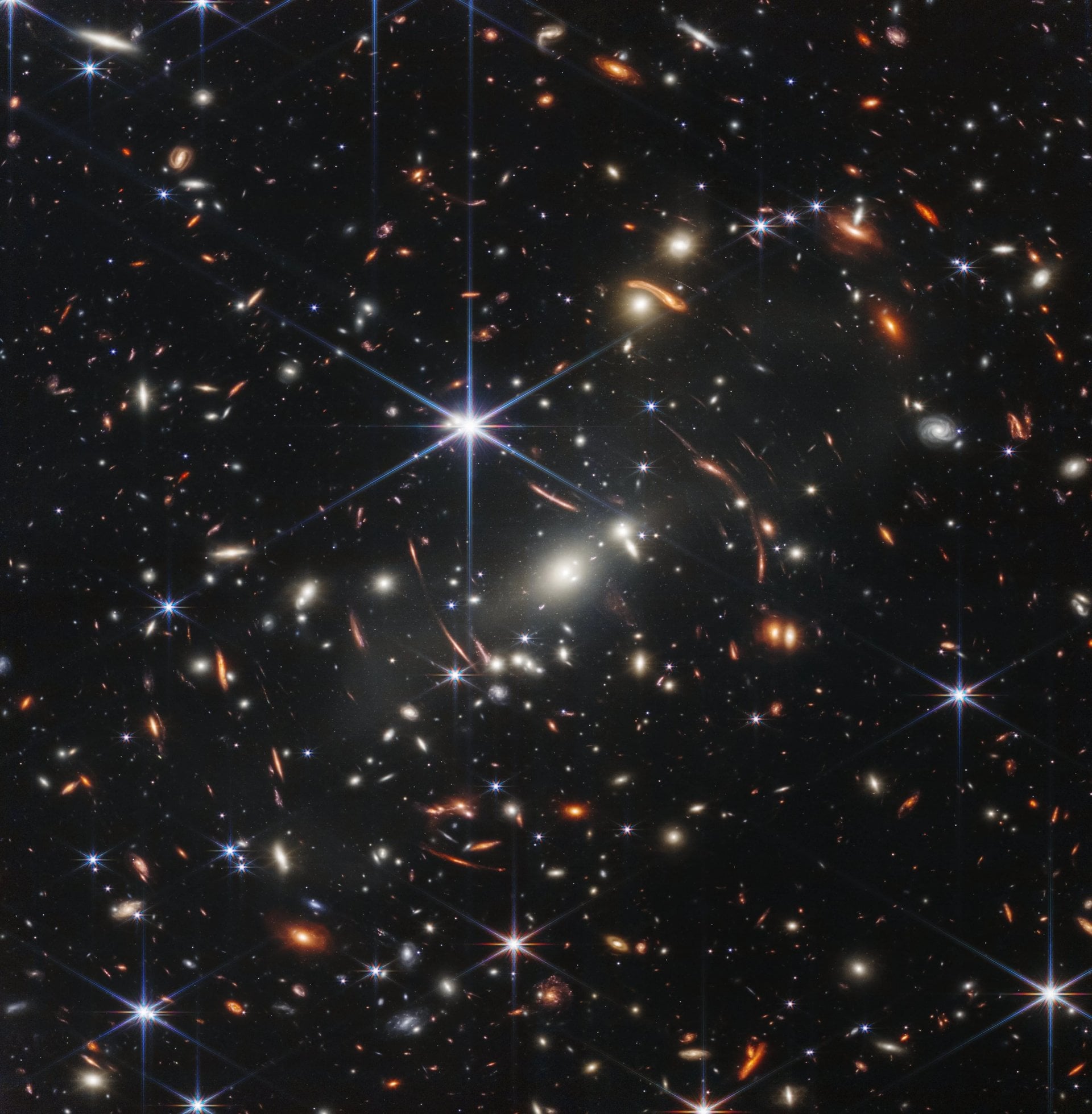
Dr. Gutierrez, the founder of SKYCR.ORG and a Fellow of the Royal Astronomical Society, conducted a systematic search through the public JWST/NIRCam fields. His investigation was part of a broader effort to identify lensed sources within the Reionization Lensing Cluster Survey (RELICS), which is integrated into the Webb’s General Observation (GO) 5293 campaign.
Between late 2022 and mid-2024, Gutierrez evaluated 1,591 possible candidates across 54 different observation fields. The process was grueling, involving the manual and algorithmic filtering of thousands of light sources to distinguish between foreground stars, nearby galaxies, and genuine lensed arcs from the distant past. Out of this massive dataset, A1 emerged as the most robust candidate due to its unique geometric and photometric properties.
Technical Analysis of Candidate A1
The A1 candidate stands out due to three primary factors: its extreme geometry, its brightness relative to its surroundings, and its absence from existing astronomical databases. According to Gutierrez’s analysis, A1 possesses an axis ratio of approximately 6.5, making it exceptionally elongated. Furthermore, it is aligned tangentially with respect to the center of the MACS J0308.9+2645 cluster to within one degree—a signature characteristic of gravitational lensing.
Initial photometric assessments using the "Easy and Accurate Zphot from Yale" (EAZY) tool suggested a redshift value of $z approx 4.4$. This would have placed the galaxy in the very early universe, appearing as it was less than a billion years after the Big Bang. However, further refinement and corrected photometry provided a more nuanced picture.
The revised data indicates that A1 is likely a galaxy at $z approx 1.4$. While this is less distant than the initial estimate, it still places the galaxy roughly 9 billion years in the past. At this distance, the light we see today began its journey when the universe was less than half its current age. The analysis, supported by tools developed by astrophysicist Ana Acebron to constrain cluster mass, determined that A1 is subject to a magnification factor of seven. This means the cluster’s gravity has made the galaxy appear seven times brighter and significantly larger than it would otherwise appear in a non-lensed field.
The Mystery of Candidate A2
During the investigation, a second potential candidate, designated A2, was also identified. A2 shares a similar geometry with A1 and is located at a similar projected distance from the cluster’s X-ray center. However, A2 presents a more significant challenge for astronomers. It is considerably fainter and more elongated than A1, making its photometry—the measurement of its light intensity—less certain.
Dr. Gutierrez has noted that the same photometric issues that initially skewed the redshift estimate for A1 are even more pronounced in A2. Automated catalogs often use "aperture magnitudes" that capture only a small portion of an extended source’s light, leading to inaccurate data. Consequently, the true nature and distance of A2 remain open questions. Until a more detailed reanalysis is completed, A2 serves as a reminder of the complexities involved in interpreting deep-space imagery.
Collaborative Science and Data Integrity
One of the most significant aspects of this discovery is the collaborative nature of the research. Upon identifying the uncatalogued arc, Dr. Gutierrez contacted the original GO-5293 program team. The team confirmed that A1 had not been included in their initial analysis or any major published inventories such as SIMBAD, NED, or VizieR.
This interaction highlights a vital trend in modern astronomy: the democratization of data. The JWST archive is growing at a rate that exceeds the capacity of any single team to analyze fully. As Gutierrez pointed out, the fact that a "real, bright, uncatalogued arc-like source" could be found in already-released data suggests that many more discoveries are waiting for researchers who are willing to perform meticulous manual verification.
However, the discovery also serves as a cautionary tale regarding automated data processing. The initial overestimation of A1’s redshift demonstrates that while software tools are essential for handling "Big Data," they are not infallible—especially when dealing with extended, distorted sources like gravitational arcs. Independent remeasurement and peer collaboration remain essential safeguards for scientific accuracy.
Implications for Future Research
The work regarding A1 and A2 is currently undergoing peer review for publication in the Publications of the Astronomical Society of Japan. If confirmed, A1 will be added to the growing inventory of "strong-lensing" sources, providing cosmologists with more data points to map the distribution of dark matter within galaxy clusters.
Because gravitational lensing depends on the total mass of the lens—including both visible baryonic matter and invisible dark matter—each new arc discovered helps refine models of how mass is distributed in the universe. MACS J0308.9+2645 is a prime laboratory for this research, and the addition of A1 allows for a more precise "weighting" of the cluster.
Furthermore, this discovery reinforces the value of the JWST’s NIRCam instrument. By operating in the near-infrared spectrum, NIRCam can peer through cosmic dust and detect the redshifted light of ancient galaxies that are invisible to optical telescopes. As more researchers dive into the RELICS survey data and other JWST campaigns, the map of the early universe is expected to become significantly more crowded.
The identification of A1 by an independent researcher serves as a testament to the "open science" era of the James Webb Space Telescope. It proves that the most powerful observatory ever built is not just a tool for elite institutional teams, but a resource for the global scientific community to uncover the hidden structures of the cosmos, one gravitational arc at a time.