Lina Irawan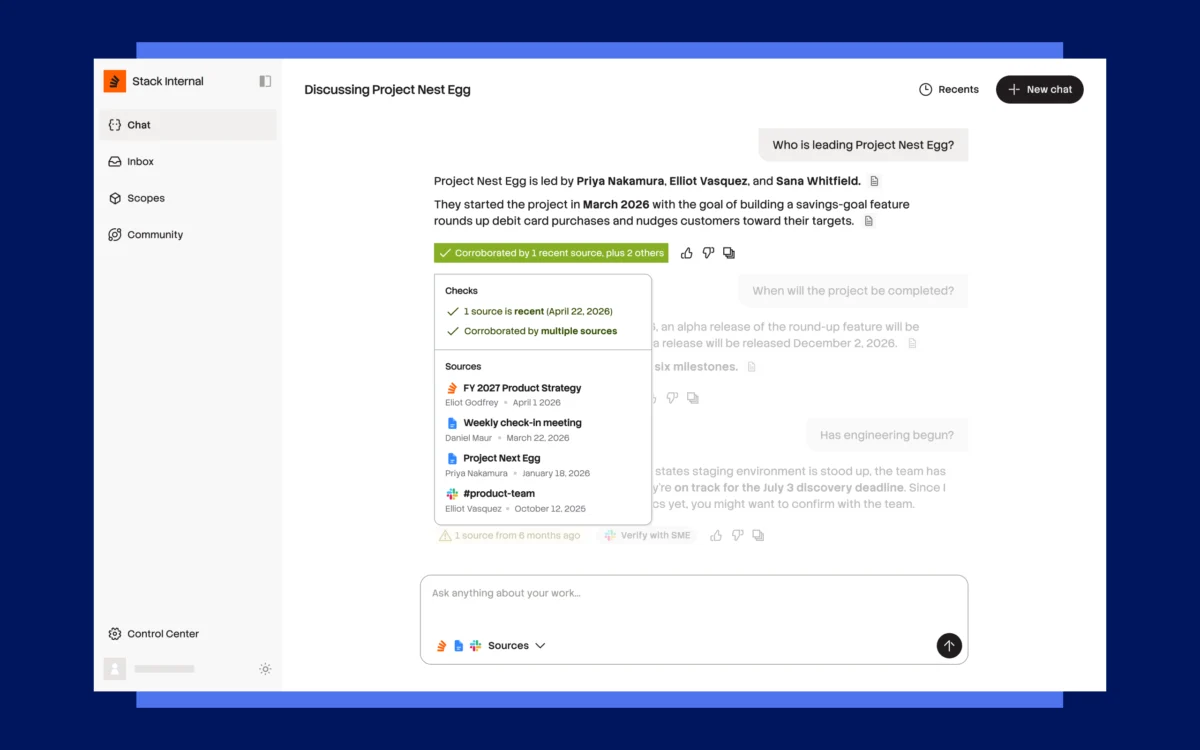
The global landscape of enterprise knowledge management has reached a critical inflection point as Stack Overflow, the preeminent platform for developer knowledge, officially unveiled its next-generation AI-native platform under the Stack Internal banner. This launch, announced on July 30, 2026, introduces a suite of capabilities designed to transform how organizations capture, validate, and utilize internal data in an era increasingly dominated by artificial intelligence and autonomous agents. The release marks a strategic shift from traditional documentation repositories to a "living" knowledge layer that treats both human employees and AI agents as primary consumers of organizational intelligence.
For decades, large-scale enterprises have struggled with the "fragmentation of truth," a phenomenon where critical business logic and technical solutions are scattered across disparate surfaces, including Slack conversations, Google Docs, private coding environments, and transient AI chat sessions. This fragmentation has been exacerbated by the rapid adoption of generative AI tools, which, while increasing the speed of content production, often struggle with "hallucinations" or the confident delivery of stale and conflicting information. The new Stack Internal platform seeks to solve these issues by creating a centralized, validated source of truth that integrates directly into existing infrastructure.
The Problem of Data Decay in the AI Era
As organizations accelerate their digital transformation through AI, they are simultaneously accumulating data at a rate that exceeds human capacity for curation. Industry research suggests that the average enterprise now utilizes hundreds of distinct SaaS applications, each creating its own silo of information. When AI agents are deployed within these environments, they often retrieve information that is outdated or irrelevant, leading to what industry analysts call "historical mistake execution." This occurs when an agent follows a legacy process with high confidence, forcing human supervisors to remain "in the loop" to verify every output—a bottleneck that negates the efficiency gains promised by automation.
The July 2026 release of Stack Internal addresses this by moving beyond simple information retrieval. Rather than merely finding documents that match a keyword search, the platform evaluates whether the information is reliable, current, and safe to use. By implementing a system that "slices" raw data into durable, stored knowledge, Stack Internal ensures that the context provided to an AI model or a human team member is not just relevant, but authoritative.
Technical Architecture and Automatic Ingestion
The core of the new platform experience is its automated ingestion engine. Historically, knowledge management was viewed as a "chore"—a manual process where developers or project managers had to stop their work to document solutions. Stack Internal aims to make knowledge a byproduct of the work itself.
The initial July release introduces connectors for Google Docs and Slack, as well as the native Stack Internal community environment. These connectors monitor active discussions and documentation updates, automatically ingesting context and evaluating it for trust. This process involves a sophisticated analysis of metadata, including the expertise level of the contributors, the frequency of information updates, and the consensus reached within the internal community.
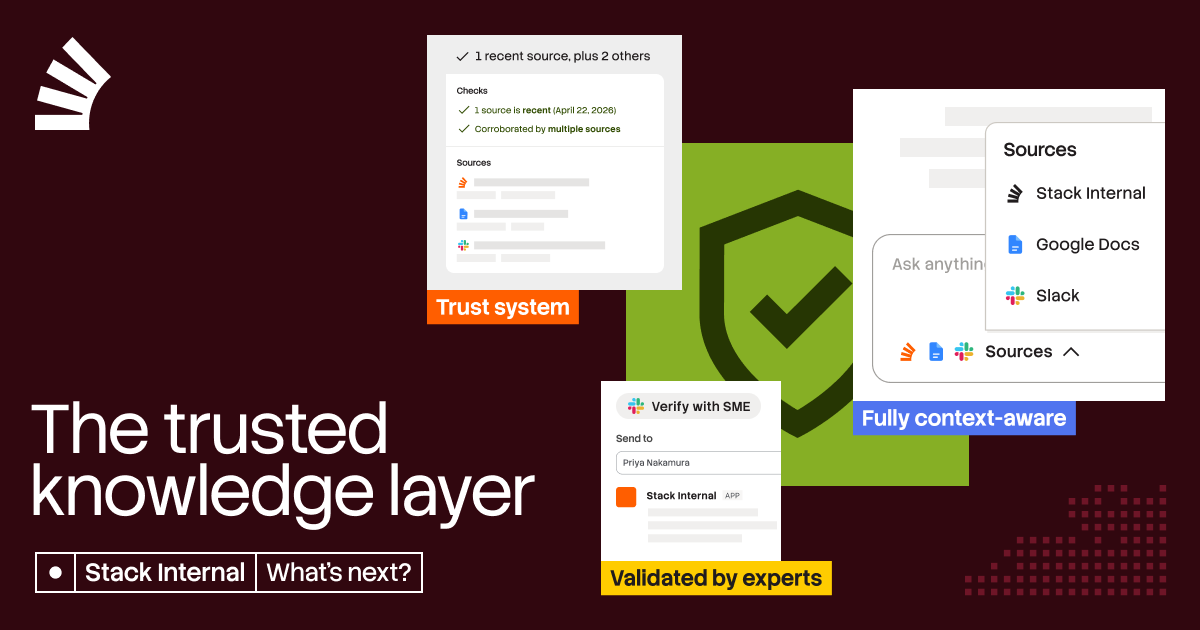
Furthermore, the platform introduces a new chat interface equipped with response-level confidence labels and provenance cards. These features provide a transparent audit trail, allowing users to see exactly where a piece of information originated and why the system considers it trustworthy. If the platform detects a gap in its existing knowledge base, it is designed to automatically route questions to identified domain experts for verification—a feature currently in the final stages of its "coming soon" roadmap.
A Chronology of Stack Overflow’s Evolution
The launch of the AI-native Stack Internal platform represents the culmination of a multi-year strategic pivot for Stack Overflow.
- The Q&A Foundation (2008–2017): Stack Overflow established itself as the world’s largest public community for developers to share knowledge through a gamified Q&A format.
- Enterprise Expansion (2018–2022): Recognizing that companies needed the same collaborative environment for proprietary code, the company launched "Stack Overflow for Teams," later rebranded and expanded into the "Stack Internal" suite.
- The AI Integration Phase (2023–2025): With the rise of Large Language Models (LLMs), the company introduced OverflowAI, focusing on integrating public community knowledge into developer workflows via IDE extensions and AI search.
- The Agent-First Era (2026): The current launch signifies the final step in this evolution, where the platform moves from being a UI for humans to an API-first knowledge layer for autonomous agents and enterprise-wide AI systems.
Treating AI Agents as First-Class Citizens
One of the most significant shifts in the new Stack Internal platform is the formal recognition of AI agents as primary users of organizational data. In many current enterprise setups, AI agents operate with broad, often unchecked access to data, or they are restricted by rigid permissions that prevent them from accessing the context they need to be effective.
The new platform introduces "permission-aware knowledge access," ensuring that agents operate within the same identity-aware data boundaries as human employees. This mitigate the risk of data leakage and ensures that agents do not inadvertently access sensitive payroll, legal, or strategic information that is outside their designated scope. By making agent interactions "explainable" and "compliant," Stack Overflow is positioning itself as a critical layer in the enterprise security stack.
To support this, the platform has integrated with the Model Context Protocol (MCP). This allows for streamlined context retrieval in-flow, enabling AI agents to pull validated organizational memory directly into their execution environments without requiring manual human intervention or repetitive prompting.
Metrics and Visibility for Engineering Leadership
Engineering and IT leaders are increasingly tasked with proving the Return on Investment (ROI) of their AI and knowledge management initiatives. To address this, the July 2026 update includes the new Swagger API (v3) endpoints. These tools allow administrators to query precise metrics regarding how internal knowledge is being consumed across the organization.
Leaders can now break down call volumes by specific internal applications, monitor which high-traffic dependencies are most reliant on the knowledge base, and compare adoption rates between older and newer API versions. This level of visibility is essential for identifying "knowledge hotspots"—areas of the business where information is frequently updated and consumed—as well as "knowledge deserts," where a lack of documented solutions may be hindering productivity.
Supporting Data and Market Analysis
The necessity for a platform like Stack Internal is underscored by recent industry data. According to a 2025 study on developer productivity, engineers spend upwards of 25% of their work week searching for information or waiting for answers from colleagues. Furthermore, the "token cost" of feeding unorganized, redundant data into LLMs has become a significant line item in IT budgets.
By refining data into "decision-grade knowledge" before it reaches the AI model, Stack Internal claims to reduce token spend and improve the accuracy of RAG (Retrieval-Augmented Generation) workflows. This creates a "virtuous cycle" where the more a team contributes and validates knowledge, the more valuable and cost-effective the organization’s AI tools become.
Official Responses and Industry Impact
While the company has not released a formal list of external testimonials for this specific July 30 release, the sentiment within the developer relations (DevRel) community suggests a positive reception. Analysts note that the integration of "trust scores" for machine consumption is a pioneering move.
"The challenge for the next three years isn’t going to be how to generate more code or more documents; it’s going to be how to prune the forest of information we’ve already grown," said one industry analyst familiar with the platform’s development. "Stack Overflow is essentially building the ‘immune system’ for enterprise data—identifying what is healthy and current, and flagging what is decayed or conflicting."
The Roadmap Ahead: Decay Detection and Synthesis
The July 30 launch is described by the company as "just the beginning" of the new platform experience. Future updates, expected in late 2026 and early 2027, will introduce even more advanced features:
- Conflict and Decay Detection: Automated alerts when two pieces of documentation contradict each other or when a solution has not been updated in a timeframe consistent with the software’s release cycle.
- Machine-Facing Trust Scores: Direct API outputs that allow AI agents to weight their own confidence based on the platform’s internal trust metrics.
- Super-Powered Synthesis: The ability for the platform to not just store solutions, but to synthesize multiple discussions into a single, comprehensive "canonical" answer automatically.
As of today, current Stack Internal customers can begin testing these capabilities through a free trial. Admins are encouraged to follow the updated implementation guides to activate the new Google Docs and Slack connectors.
Broader Implications for the Future of Work
The launch of the AI-native Stack Internal platform reflects a broader trend in the technology sector: the shift from "Information Management" to "Knowledge Orchestration." In the past, having a searchable wiki was sufficient for most organizations. Today, as work moves faster and is increasingly performed by non-human entities, the requirements for data precision have reached an unprecedented level.
By focusing on provenance, trust, and permission-aware access, Stack Overflow is attempting to bridge the gap between human expertise and machine efficiency. If successful, the platform could become the foundational layer for the "autonomous enterprise," where AI agents handle the bulk of repetitive execution while humans focus on high-level strategy and the validation of complex, novel solutions. For now, the July 30 release provides a necessary toolkit for organizations looking to reclaim their data from the silos of the modern digital workspace and put it to work in the AI-driven future.