Chandra Wibowo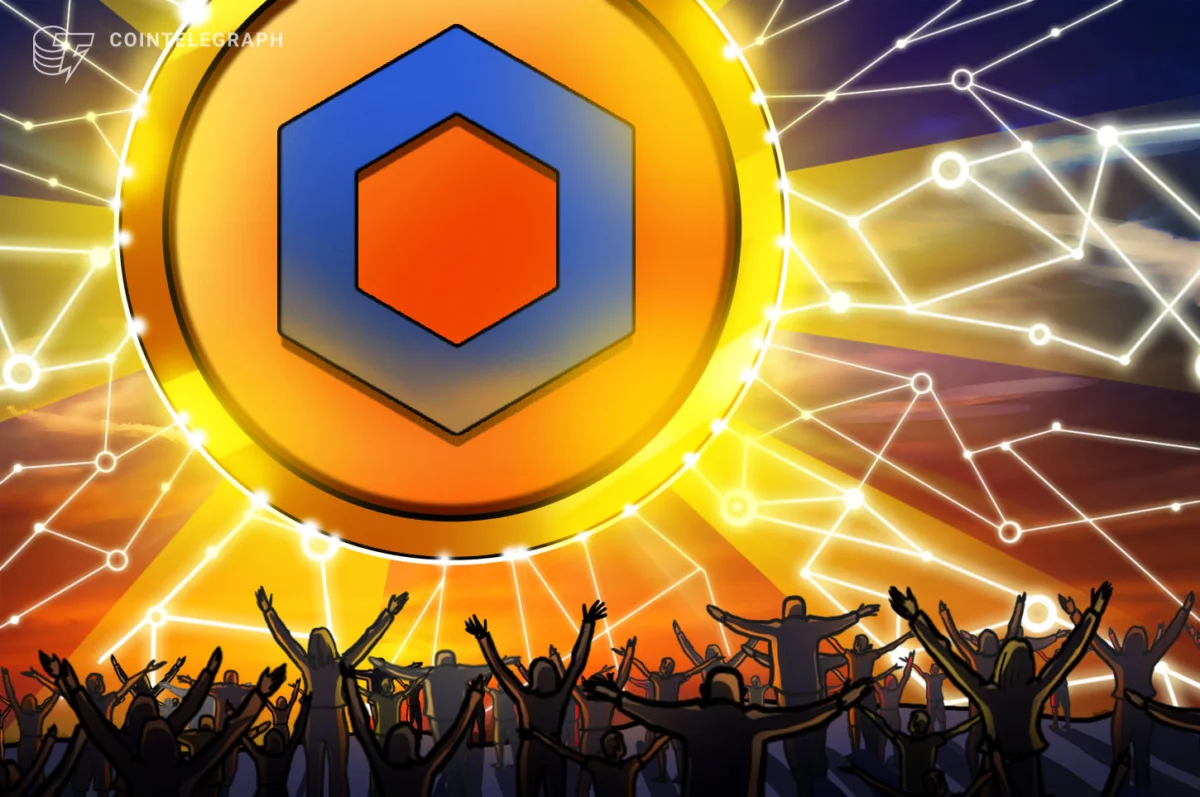
The financial landscape is on the cusp of a transformative shift, with projections indicating a significant surge in the value of Chainlink’s native token, LINK. Standard Chartered, a prominent global banking institution, has released a bold forecast suggesting that LINK could skyrocket by a staggering 25 times, reaching $200 by the close of 2030. This optimistic outlook is primarily driven by the burgeoning market for tokenized real-world assets (RWAs) and the critical role Chainlink plays as the industry’s largest oracle service provider in facilitating the secure integration of external data onto blockchain networks.
The RWA Revolution and Chainlink’s Integral Role
The core of Standard Chartered’s projection lies in the anticipated exponential growth of tokenized real-world assets. Geoff Kendrick, the global head of digital asset research at Standard Chartered, forecasts that the value of tokenized RWAs will reach an impressive $4 trillion by the end of 2028. This surge represents a fundamental reimagining of asset ownership and management, where traditional assets like real estate, commodities, and even intellectual property are converted into digital tokens on blockchain platforms.
This dramatic expansion of tokenized assets will necessitate a robust and secure mechanism for bridging the gap between the on-chain digital realm and the off-chain physical world. This is precisely where Chainlink’s expertise as a decentralized oracle network becomes indispensable. Oracles are crucial middleware that provide smart contracts with external data, such as price feeds, weather information, or the outcome of real-world events, enabling them to execute with accuracy and reliability.
Kendrick elaborated on this point, stating that the increasing volume of tokenized assets will inevitably lead to a greater demand for secure and reliable external data to be fed onto blockchain networks. This heightened demand is expected to translate directly into increased fee generation for Chainlink’s services. As the leading provider in this space, Chainlink is strategically positioned to capture a significant portion of this growing market, thereby driving up the value of its native LINK token. The current price of LINK hovers around $8, making the $200 target a substantial, yet according to Standard Chartered, achievable, aspiration.
Beyond Real-World Assets: The Broader DeFi Ecosystem
The optimistic forecast for LINK extends beyond just the RWA market. Standard Chartered’s report also anticipates a substantial 37-fold increase in tokenized and crypto-native assets deployed within the decentralized finance (DeFi) ecosystem. This growth is projected to push the total value of these assets to $2.7 trillion by the end of 2030.
Kendrick highlighted that this expanding DeFi landscape will require a sophisticated suite of services that Chainlink is uniquely positioned to provide. These essential services include:
- Trusted Data: Ensuring the accuracy and integrity of data used by DeFi protocols.
- Interoperability: Facilitating seamless communication and asset transfer between different blockchain networks.
- Privacy-Preserving Compliance: Enabling regulatory adherence without compromising user privacy.
- Integrations with Existing Financial Systems: Bridging the gap between traditional finance and the decentralized world.
Kendrick’s assertion that "only Chainlink is currently equipped to provide" these critical functionalities underscores the perceived technological advantage and established infrastructure of the Chainlink network within the rapidly evolving digital asset space.
A Timeline of Anticipated Growth
To contextualize Standard Chartered’s forecast, it’s helpful to consider a potential timeline of these developments:
- Present (August 2026): Chainlink is already a dominant force in the oracle market, securing over $34.4 billion in total value. The RWA market is experiencing initial growth, with trading volume on decentralized exchanges reaching new highs.
- 2028: Tokenized real-world assets are projected to reach $4 trillion, a significant milestone that will amplify the demand for oracle services.
- 2030: The DeFi ecosystem sees substantial growth, with tokenized and crypto-native assets reaching $2.7 trillion. Chainlink’s LINK token is predicted to hit the $200 mark, reflecting its expanded utility and market dominance.
This projected trajectory suggests a period of sustained and accelerated adoption of blockchain technology and its associated financial applications, with Chainlink at the forefront of enabling this expansion.
Supporting Data and Market Trends
The foundation of Standard Chartered’s bullish outlook is underpinned by observable market trends and data. The report references the recent all-time high in tokenized RWA trading on decentralized exchanges (DEXs), which reached $141 billion in July. This represented a significant 19.5% monthly increase, with public equities being a major driver of this growth, according to data provider CryptoRank. This surge indicates a growing appetite from institutional and retail investors to engage with tokenized versions of traditional assets.
Furthermore, Chainlink’s current market position, as the industry’s leading decentralized oracle provider, is well-established. Data from DefiLlama positions Chainlink as the undisputed leader, securing $34.4 billion in total value, far surpassing its closest competitor, Chronicle, which secures $7.36 billion. This market dominance provides Chainlink with a significant network effect and a substantial user base, which are crucial for its continued growth.
Potential Risks and Considerations
While the forecast presented by Standard Chartered is highly optimistic, it is essential to acknowledge the potential risks that could impact its realization. Kendrick himself identified several key factors that could hinder the projected growth:
- Slower-than-expected Institutional Tokenization Initiatives: The pace at which traditional financial institutions adopt and integrate tokenization technologies could be slower than anticipated, impacting the demand for oracle services.
- Competition from Specialist Oracle Providers: While Chainlink currently holds a dominant position, the emergence of new, specialized oracle solutions could present a competitive challenge.
- Potential Technical Setbacks: As with any rapidly evolving technology, unforeseen technical challenges or security vulnerabilities could arise, impacting the reliability and adoption of oracle services.
These factors highlight the dynamic and competitive nature of the blockchain and digital asset industry, where innovation and adaptation are paramount for sustained success.
Broader Implications for Financial Markets
The implications of Chainlink’s potential growth and the broader RWA tokenization trend are far-reaching for the global financial system. The increasing integration of real-world assets onto blockchain networks could lead to:
- Enhanced Liquidity: Tokenization can unlock liquidity for traditionally illiquid assets, such as real estate and private equity, making them more accessible to a wider range of investors.
- Increased Efficiency: Smart contracts powered by reliable oracle data can automate complex financial processes, reducing transaction costs and settlement times.
- Greater Transparency: Blockchain technology inherently provides a transparent ledger of transactions, which can enhance trust and reduce the potential for fraud.
- New Investment Opportunities: The ability to tokenize a diverse range of assets opens up new avenues for investment and portfolio diversification.
The exploration of on-chain systems by established financial entities, such as the New York Stock Exchange (NYSE), as highlighted in related industry discussions, further validates the growing interest in these transformative technologies. The NYSE’s investigation into on-chain systems signals a potential for mainstream adoption and integration, which would further amplify the demand for foundational infrastructure like Chainlink’s oracle network.
Conclusion: A Transformative Decade Ahead
Standard Chartered’s projection of a 25-fold increase in Chainlink’s LINK token value by 2030 is a testament to the transformative potential of real-world asset tokenization and the critical role of decentralized oracle networks. As the financial industry continues to embrace blockchain technology, the demand for secure, reliable, and interoperable data solutions will only intensify. Chainlink, with its established infrastructure and market leadership, is strategically positioned to capitalize on this trend, potentially ushering in a new era of financial innovation and accessibility. While challenges and competition exist, the fundamental drivers of growth – the increasing digitization of assets and the need for seamless on-chain and off-chain integration – appear robust, suggesting that the coming decade could indeed be a pivotal period for Chainlink and the broader digital asset ecosystem.