admin
admin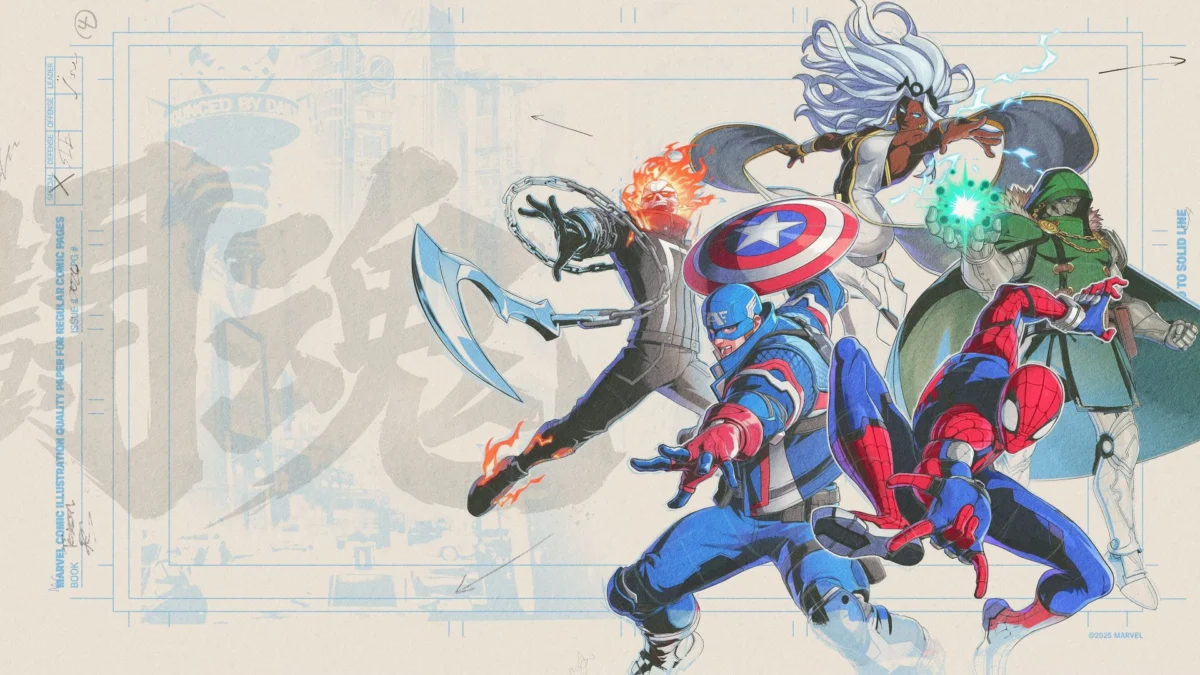
Arc System Works, the acclaimed developer behind some of the world’s most technical and visually striking fighting games, has officially released a critical update for the PC version of its latest title, MARVEL TŌkon: Fighting Souls. Following a launch period characterized by a stark performance divide between console and PC platforms, the August 10 update aims to rectify systemic optimization issues that have hindered the competitive experience for thousands of players. The patch, which arrived after a scheduled maintenance period, specifically targets high CPU utilization and various stability bugs that prevented the game from maintaining a consistent 60 frames per second (FPS) on a wide range of hardware configurations.
The Disparity Between PlayStation 5 and PC Performance
When MARVEL TŌkon: Fighting Souls launched in early August 2026, it was met with immediate praise for its innovative 4-vs-4 combat mechanics and its faithful representation of the Marvel Universe. On the PlayStation 5, the game was hailed as a technical masterpiece, delivering fluid animations and stable performance even during the most chaotic screen-filling "Soul Burst" maneuvers. However, the PC community reported a vastly different experience.
Despite the flexibility of the PC platform, the initial release suffered from severe optimization hurdles. Players utilizing mid-range and even some high-end hardware reported frequent frame drops, stuttering, and an inability to maintain the 60 FPS standard required for frame-accurate fighting game inputs. In the fighting game genre, where victory is often determined by single-frame windows (1/60th of a second), performance inconsistency is more than a visual nuisance; it is a fundamental barrier to competitive play.
Reports from the community indicated that the game struggled with disproportionately high CPU usage, often bottlenecking systems that should have theoretically handled the game with ease. This resulted in "slowdown" effects where the entire game logic would decelerate to match the frame rate, a common issue in fighting games designed with fixed-frame logic.
Technical Deep Dive: The August 10 Patch Notes
The August 10 update was first signaled via the game’s official Discord server before being deployed globally. The primary focus of this maintenance window was to align the PC experience with the stability found on the PlayStation 5. According to the full patch notes released by Arc System Works, the update introduces several key fixes:

- CPU Optimization: The development team identified specific sub-routines within the game’s engine that were causing excessive processor load. The patch implements a more efficient threading model, significantly reducing the strain on the CPU during high-intensity 4-vs-4 matches.
- Stability and Bug Fixes: Beyond raw performance, the patch addresses several "PC-only" bugs, including crashes related to specific GPU driver interactions and resolution scaling issues that previously caused UI elements to blur on non-standard monitors.
- Online Synchronization: While primarily a performance patch, the update includes back-end adjustments to the game’s rollback netcode. By stabilizing the local frame rate, the patch indirectly improves the online experience, reducing the "rollback frames" that occur when a client’s hardware desyncs from the server.
Initial feedback from the community has been largely positive. During the maintenance period, players who accessed the game’s offline modes reported a noticeable increase in smoothness. Users with high-end specifications, such as the NVIDIA GeForce RTX 4080 paired with an Intel i7-13700F, noted that while their systems could previously "brute-force" through the optimization issues, the overall frame delivery now feels more consistent, with fewer micro-stutters during character transitions.
Chronology of the MARVEL TŌkon Launch
The journey to this first major performance patch began with the game’s highly anticipated reveal earlier in 2026. Arc System Works, known for their work on Guilty Gear -Strive- and Dragon Ball FighterZ, promised a Marvel experience that combined the accessibility of modern fighters with the deep, technical "tag-team" complexity the studio is known for.
- May 2026: MARVEL TŌkon: Fighting Souls is officially announced, showcasing the "Fighting Souls" mechanic where players can swap between four heroes dynamically.
- July 2026: The "Unbreakable X-Men" roster expansion is revealed, generating massive hype for the August launch.
- August 3, 2026: The game launches globally on PC and PlayStation 5.
- August 4–9, 2026: PC players flood social media and Steam forums with reports of poor optimization, 100% CPU usage, and unplayable online matches due to frame desync.
- August 10, 2026: Arc System Works initiates emergency maintenance and deploys the first performance-focused patch.
This timeline reflects a rapid response from the developer, suggesting that Arc System Works was aware of the hardware-specific bottlenecks shortly after the telemetry data from the global launch began to populate.
The Critical Importance of 60 FPS in Competitive Fighting Games
To understand why this patch was so vital, one must look at the mechanics of MARVEL TŌkon: Fighting Souls. Unlike many modern action titles that can be played at variable frame rates (30, 60, 120+ FPS), fighting games are typically built on a fixed-frame engine. In this environment, the game’s physics, input detection, and animation data are all tied to the 60 FPS standard.
When a PC fails to maintain 60 FPS in a title like Fighting Souls, the game does not simply "skip" frames to keep up with real-time; instead, the entire simulation slows down. In an online environment, this creates a "desynchronization" nightmare. If Player A is running at a steady 60 FPS but Player B’s PC drops to 45 FPS, the game’s rollback netcode must constantly "teleport" characters and rewrite history to keep both players in the same state. This results in the "5 or more rollback frames" mentioned by early reviewers, making the game virtually unplayable at a high level.
By addressing the CPU usage concerns, Arc System Works is effectively lowering the "floor" for PC hardware, allowing a broader range of systems to hit the 60 FPS target. This is essential for maintaining a healthy player base, as fighting games rely heavily on a unified ecosystem where PC and console players can eventually interact through cross-play features.

Official Responses and Community Sentiment
While Arc System Works has not issued a lengthy corporate apology, their swift action on the Discord server and the rapid deployment of the patch serve as a tacit acknowledgment of the PC version’s shortcomings. Community managers have been active in gathering DXDiag reports from users to further refine the game’s compatibility with various hardware configurations.
Professional fighting game players and content creators have expressed cautious optimism. Many have noted that MARVEL TŌkon: Fighting Souls is one of the best-designed games in the genre for years, praising its "easy to learn, hard to master" philosophy. However, the sentiment remains that the PC version should have undergone more rigorous compatibility testing prior to release. The general consensus is that if Arc System Works can maintain this pace of updates, the game is on track to become a staple at major tournaments such as EVO (Evolution Championship Series).
Broader Implications and Future Outlook
The launch of MARVEL TŌkon: Fighting Souls and its subsequent PC struggles highlight a growing trend in the gaming industry where PC ports of Japanese-developed titles often face optimization hurdles. Despite Arc System Works’ experience, the complexity of modern PC hardware—ranging from various CPU architectures to different memory speeds—continues to pose a challenge compared to the static hardware of the PlayStation 5.
However, the August 10 patch represents more than just a fix; it is a commitment to the longevity of the title. With the "Unbreakable X-Men" already joining the roster and rumors of further Marvel Cinematic Universe (MCU) tie-ins on the horizon, the developer knows that a stable PC platform is required to sustain a live-service fighting game model.
As the community continues to test the August 10 patch, the focus will likely shift from technical stability to balance adjustments and new content. For now, PC players can finally enjoy the high-octane, 4-vs-4 superhero action with the fluidity that the developers intended. The successful resolution of these performance issues is a win not only for the players but for the reputation of Arc System Works as a premier developer in the competitive gaming space.
Further updates are expected in the coming weeks as the developers monitor the impact of the current patch. Players are encouraged to keep their GPU drivers updated and report any lingering performance hiccups via the official support channels to ensure that MARVEL TŌkon: Fighting Souls remains a top-tier contender in the fighting game landscape of 2026.