Chandra Wibowo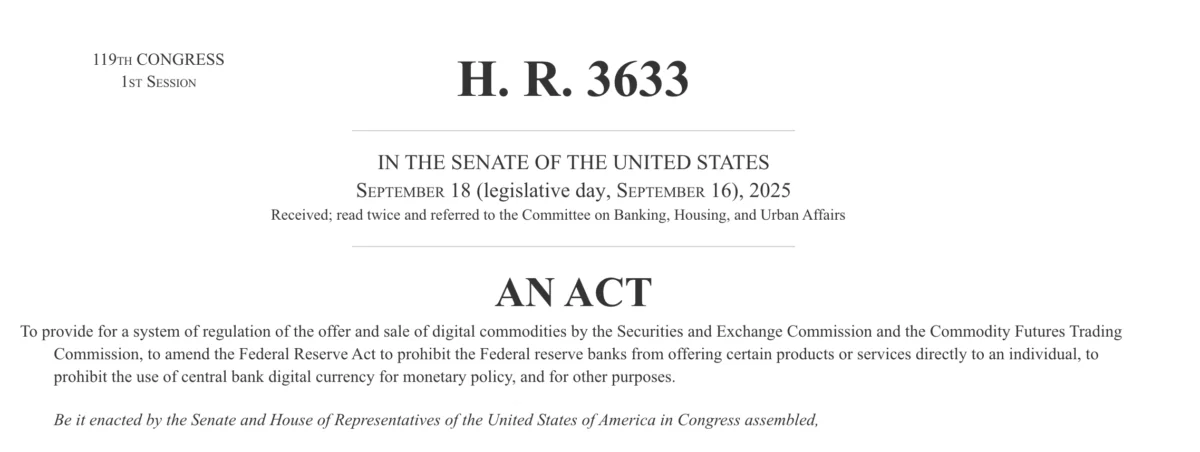
The nascent digital asset industry faces a critical juncture as the US Digital Asset Market Structure Clarity Act, commonly referred to as the CLARITY Act, navigates the legislative landscape. While proponents argue the bill offers much-needed regulatory definition for the burgeoning crypto market, prominent figures within the decentralized finance (DeFi) ecosystem express deep concern that its provisions could inadvertently concentrate power in the hands of large financial institutions, thereby eroding the foundational principles of decentralization and user ownership that define blockchain technology.
Dr. Friederike Ernst, co-founder of the Gnosis blockchain protocol, articulated these anxieties in a recent interview with Cointelegraph. She posited that the regulatory framework embedded within the CLARITY Act appears to presuppose a reliance on centralized intermediaries for digital asset activities. This structural assumption, according to Ernst, carries a significant risk of consolidating control over crypto infrastructure within a select group of established players. "Blockchain’s real breakthrough was not just a new financial infrastructure," Ernst emphasized. "It was the ability for users themselves to become owners of the networks they rely on." She cautioned that a regulatory approach that pushes activity back through institutional intermediaries risks transforming users from stakeholders with ownership in financial technologies into mere customers renting access, thereby undermining the very essence of the decentralized revolution. The paramount challenge, she stated, lies in ensuring that the pursuit of regulatory clarity does not inadvertently dismantle this critical ownership model.
A Closer Look at the CLARITY Act’s Provisions and Criticisms
The CLARITY Act, introduced in the 118th Congress, aims to establish a clearer regulatory framework for digital assets in the United States, particularly addressing the jurisdictional divide between the Securities and Exchange Commission (SEC) and the Commodity Futures Trading Commission (CFTC). While Ernst acknowledged that the bill does provide some beneficial clarity by defining regulatory responsibilities between these two key agencies and offers protections for peer-to-peer transactions and self-custody, she argued that its shortcomings pose a substantial threat.
The core of Ernst’s criticism centers on the bill’s failure to adequately safeguard open, permissionless blockchain rails and decentralized finance (DeFi) protocols. She contends that by not sufficiently protecting these decentralized infrastructures, the CLARITY Act risks importing the very vulnerabilities and points of failure that plague the traditional, legacy financial system into the digital asset space. This could manifest as a centralization of power, increased systemic risk, and a diminished ability for innovation to flourish outside of established financial channels.
The Stumbling Blocks: Stablecoin Yields and Industry Disagreements
The legislative journey of the CLARITY Act has been far from smooth, encountering significant hurdles and partisan disagreements. A primary point of contention that has stalled progress in Congress revolves around the issue of stablecoin yields and whether issuers of stablecoins should be permitted to share interest earned on reserves with token holders. This debate pits the interests of the crypto industry, which sees stablecoin yield as a vital component for product innovation and user incentives, against traditional banking institutions and some regulators who express concerns about financial stability and consumer protection.
This disagreement has led to notable withdrawals of support from key industry players. In January, Coinbase, one of the largest cryptocurrency exchanges, announced it was retracting its backing for the bill. The exchange cited specific provisions within the draft legislation that it believed would weaken the decentralized finance industry, prohibit stablecoin yield mechanisms, and hinder the development of the tokenized real-world asset (RWA) sector. Brian Armstrong, CEO of Coinbase, publicly stated his stance, declaring, "We’d rather have no bill than a bad bill," underscoring the severity of the perceived flaws in the proposed legislation from his perspective.
The implications of these industry divisions are significant. The CLARITY Act’s potential passage, or continued delay, will have a profound impact on the future regulatory landscape of digital assets in the US. The longer the stalemate persists, the greater the uncertainty for businesses operating in the space, potentially stifling investment and innovation.

Timeline and Prospects for Passage
The CLARITY Act has been a subject of intense discussion and negotiation for an extended period. While some lawmakers, such as US Senator Bernie Moreno, have expressed optimism regarding its potential passage by April and subsequent signing by President Donald Trump, others remain more circumspect.
Alex Thorn, head of firmwide research at investment firm Galaxy, offered a more cautious outlook. He suggested that if the bill does not clear legislative hurdles by April 2026, the likelihood of it becoming law in the current year diminishes significantly. Thorn further posited that the debate over stablecoin yields might not be the ultimate obstacle, but rather a symptom of deeper underlying disagreements. He highlighted potential future challenges related to the regulation of DeFi protocols, the protection of developers within the ecosystem, and the precise delineation of regulatory authority as areas that could also derail the bill’s progress. "It’s very possible that rewards are not the ‘final’ hurdle but instead just the current hill the bill is dying on," Thorn commented on X, reflecting a sentiment of ongoing legislative fragility.
Broader Context: The Global Regulatory Push for Digital Assets
The discussions surrounding the CLARITY Act in the United States are part of a broader, global trend of governments attempting to grapple with the rapidly evolving digital asset landscape. Jurisdictions worldwide are formulating regulatory frameworks, with varying approaches and priorities.
In Europe, for instance, the Markets in Crypto-Assets (MiCA) regulation has been implemented, aiming to harmonize rules for crypto-assets across the European Union. However, as some legal experts have warned, there’s a risk that such regulations, if not carefully crafted, could inadvertently replicate past mistakes made in financial regulation, potentially stifling innovation or creating unintended consequences for decentralized technologies. The CLARITY Act’s trajectory in the US mirrors these global concerns about striking the right balance between fostering innovation, protecting investors, and ensuring financial stability.
The Promise of Clarity vs. the Peril of Centralization
The allure of the CLARITY Act lies in its promise of providing much-needed regulatory certainty. For businesses operating in the digital asset space, navigating the current patchwork of regulations can be complex and costly. A clear framework could encourage greater institutional adoption and investment. However, the core debate revolves around what kind of clarity is being pursued.
If the CLARITY Act, as Dr. Ernst suggests, leads to a regulatory environment that inherently favors centralized intermediaries, it could represent a significant step backward for the crypto industry. The decentralized ethos of blockchain technology is built on principles of disintermediation, transparency, and user empowerment. A regulatory regime that mandates the use of centralized entities for most digital asset activities would not only undermine these principles but could also recreate the systemic risks associated with traditional finance, such as single points of failure, lack of transparency, and potential for market manipulation by dominant players.
The fact that prominent industry figures like Brian Armstrong of Coinbase are willing to forgo a bill altogether rather than accept what they deem to be detrimental provisions highlights the high stakes involved. The crypto industry is not monolithic, and disagreements over the CLARITY Act reflect divergent views on the optimal path forward for digital assets.

Supporting Data and Analysis
The debate is not merely theoretical; it has tangible implications for market growth and innovation. The global cryptocurrency market capitalization, while volatile, has seen substantial growth over the past decade. As of early 2024, the total market cap has fluctuated in the trillions of dollars, demonstrating significant investor interest and the growing importance of digital assets in the global financial system. The lack of a clear and supportive regulatory framework in a major economic power like the United States can indeed deter institutional investment and hinder the development of innovative applications.
Furthermore, the growth of Decentralized Finance (DeFi) is a testament to the demand for alternative financial services. DeFi protocols have attracted billions of dollars in total value locked (TVL), offering services ranging from lending and borrowing to trading and insurance, often with greater transparency and accessibility than traditional finance. Provisions within the CLARITY Act that could stifle DeFi innovation, such as restrictions on stablecoin yields or unclear regulations for smart contracts and decentralized applications (dApps), could significantly curtail this growth and push development to more crypto-friendly jurisdictions.
The CLARITY Act’s potential impact on self-custody is also a critical point. Self-custody, where individuals control their private keys and thus their digital assets, is a cornerstone of cryptocurrency’s appeal as it grants users direct ownership and control. Regulatory measures that inadvertently push users towards custodial solutions, managed by centralized entities, could diminish this core benefit and reintroduce counterparty risk.
Looking Ahead: The Path to Responsible Regulation
The ongoing legislative process for the CLARITY Act underscores the complex challenge of regulating a rapidly evolving technology. The goal of any regulatory framework should be to foster innovation, protect consumers and investors, and ensure financial stability without stifling the transformative potential of blockchain technology.
The concerns raised by Dr. Ernst and others in the DeFi community highlight the need for a nuanced approach that recognizes the unique characteristics of decentralized systems. Legislation that is overly prescriptive or assumes a centralized model risks misinterpreting the very nature of blockchain and its potential to democratize finance.
As the CLARITY Act continues its journey through Congress, the industry, regulators, and policymakers face the crucial task of finding common ground. The outcome of these deliberations will not only shape the future of digital assets in the United States but will also serve as a significant signal to the global regulatory community regarding the direction of digital asset policy. The ultimate success of such legislation will be measured by its ability to provide clear rules of the road without paving the way for a return to the centralized financial paradigms that the blockchain revolution sought to transcend.