Lina Irawan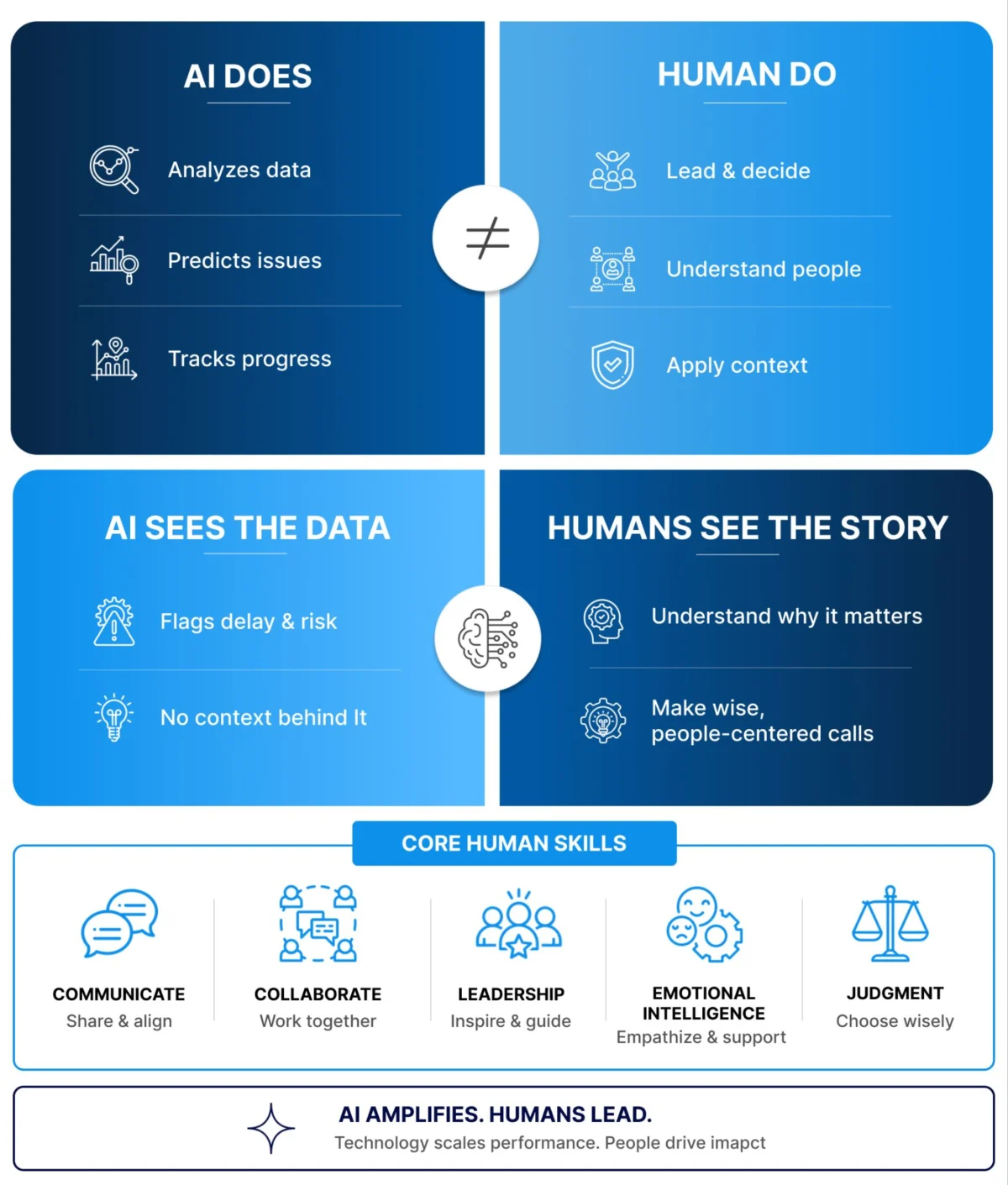
The landscape of software engineering project management is undergoing its most significant evolution since the introduction of the Agile Manifesto, transitioning from manual administrative oversight to a sophisticated model of predictive orchestration. For decades, the discipline was defined by the "Gantt chart warrior," a professional whose primary utility lay in the manual tracking of dependencies, the reconciliation of spreadsheets, and the persistent follow-up with engineering teams to ensure milestones were met. However, the integration of generative artificial intelligence (AI), large language models (LLMs), and autonomous agentic workflows is rapidly dismantling this traditional paradigm. As engineering organizations scale in complexity, the role of the Technical Project Manager (TPM) is being reimagined as a "Systems Architect" of delivery, where human intuition is augmented by machine-driven telemetry to navigate the intricacies of modern software development.
The High Cost of the Coordination Tax
Modern engineering organizations are currently grappling with what industry analysts describe as a "coordination tax." Internal audits across the technology sector indicate that highly skilled project managers spend between 60% and 70% of their weekly bandwidth on routine administrative tasks. These activities include updating status reports, manually reconciling conflicting data across disparate software tools like Jira and GitHub, and facilitating synchronous meetings to uncover information that is often already captured in digital logs.
According to Microsoft’s 2024 Work Trend Index, the burden of digital debt—the inflow of data, emails, and notifications—has outpaced the human capacity to process it. The research suggests that by 2030, AI will automate approximately 80% of these routine administrative functions. This shift is not merely an incremental improvement in efficiency; it represents a fundamental change in the operational mechanics of technical delivery. By automating the "low-value" aspects of project management, organizations are attempting to reclaim thousands of hours of productivity, shifting the focus from reactive management—identifying what failed in the past—to predictive orchestration, which anticipates bottlenecks before they manifest.
A Chronology of Project Management Evolution
To understand the current shift, it is necessary to examine the historical trajectory of the discipline. The evolution of project management can be categorized into four distinct eras:
- The Analog Era (1950s–1990s): Characterized by physical boards, paper-based Gantt charts, and the Critical Path Method (CPM). Management was centralized, rigid, and slow to adapt to changes.
- The Digital Transition (2000s–2010s): The rise of Agile and DevOps. Tools like Jira, Trello, and Asana moved the documentation to the cloud, but the entry of data remained almost entirely manual, relying on engineers and PMs to keep the system of record updated.
- The Reactive Data Era (2015–2023): Organizations began using basic data visualization and business intelligence (BI) tools to track velocity and burn-down charts. While data was more accessible, it remained historical, showing what had already occurred rather than what was likely to happen.
- The Era of Predictive Orchestration (2024–Present): The current phase utilizes agentic AI to ingest real-time telemetry from the entire development lifecycle. Systems now analyze code commits, pull request (PR) comments, and continuous integration/continuous deployment (CI/CD) logs to provide a live, autonomous assessment of project health.
Technical Mechanisms of AI Integration
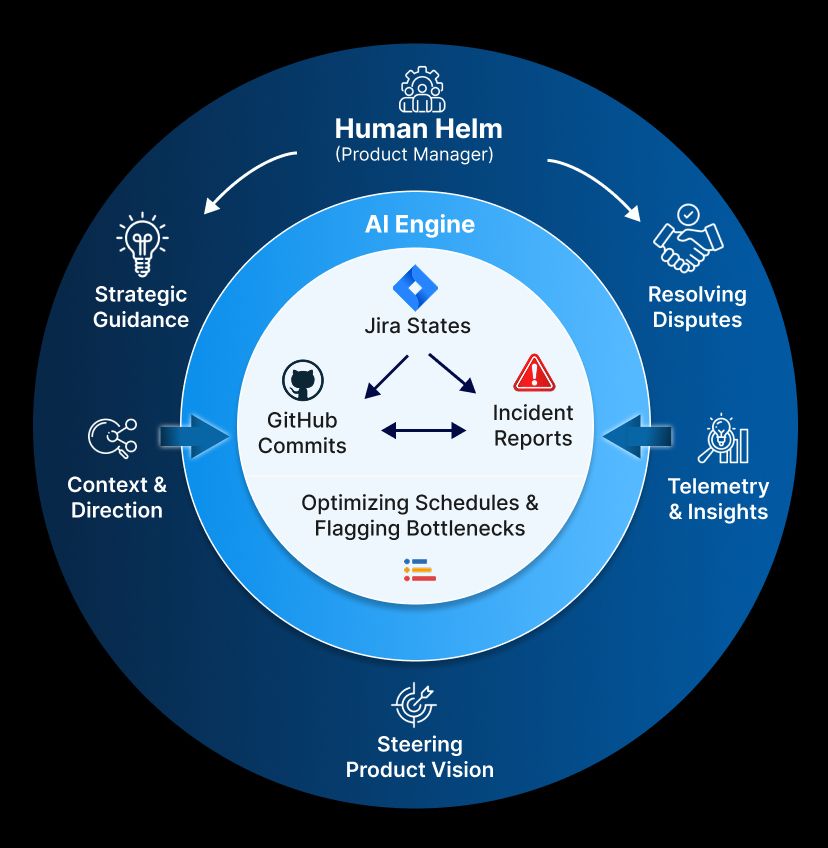
The transition to AI-augmented management is powered by several core technologies that replace manual check-ins with automated telemetry. Instead of a PM asking an engineer for a status update, AI agents monitor the "digital exhaust" of the engineering process.
Continuous Telemetry and Real-Time Assessment
AI agents are now capable of ingesting data directly from version control systems. By analyzing the frequency and substance of Git commits and the sentiment of PR reviews, these systems can gauge the true progress of a feature. If a developer has been "stuck" on a specific branch for three days without a commit, the system can flag a potential roadblock to the TPM without requiring a daily stand-up meeting.
Probabilistic Forecasting via ML Models
Risk identification has moved beyond subjective assessment. Machine learning (ML) models now analyze codebase complexity and historical delivery patterns. By running Monte Carlo simulations—a mathematical technique used to estimate the probability of various outcomes in a process that cannot easily be predicted due to the intervention of random variables—these systems can provide a statistical likelihood of a project hitting its deadline. This allows TPMs to communicate with stakeholders using data-backed confidence intervals rather than "gut feelings."
Agentic Workflows and Independent Action
The most advanced organizations are moving beyond simple generative AI to "Agentic AI." These are multi-agent systems designed to take independent action within defined parameters. For example, if an AI agent detects via an HR system or Slack status that a critical path engineer is unavailable, it can independently analyze the sprint backlog, identify dependency chains, and propose a re-prioritized workload for the TPM’s approval. This reduces the time spent on resource reallocation from hours to minutes.
Quantifying the Impact on Professional Time Allocation
The redistribution of time allowed by AI integration is profound. Data collected from pilot programs in high-growth tech firms shows a dramatic shift in how project managers spend their day.
- Status Tracking: Historically consuming 25% of a PM’s time, this has dropped to approximately 8% through automated telemetry.
- Risk Management: Reduced from 15% to 5% as AI-driven forecasting identifies anomalies in team velocity or code complexity.
- Resource Allocation: Dynamic capacity planning has halved the time spent on this task from 10% to 5%.
The time reclaimed from these administrative burdens is being redirected toward high-value strategic work. Strategic planning, which previously accounted for only 10% of a PM’s time, has expanded to 25%. Similarly, stakeholder alignment—the critical work of ensuring that technical output matches business objectives—has increased from 8% to 18%. The result is a professional role that is less about "keeping the lights on" and more about driving business outcomes and informed decision-making.
Operational Friction and the Challenge of Data Quality
Despite the technological promise, the implementation of AI in the engineering floor is often fraught with difficulty. The deployment of these tools frequently exposes "operational debt"—the inconsistent processes and poor data hygiene that many organizations have ignored for years.
A primary challenge is the lack of standardized data. AI models are only as effective as the data they process. In many engineering teams, the definition of "Done" is inconsistent; one team might mark a ticket complete when the code is merged, while another waits until it has passed quality assurance (QA). When AI systems attempt to generate status reports from this inconsistent data, the results are often inaccurate or "hallucinated." This necessitates a period of rigorous process standardization before AI tools can be effectively utilized.
Furthermore, there is the risk of "algorithmic over-reliance." There have been documented instances where automated scheduling tools recommended deployments at inappropriate times—such as late Friday afternoons—simply because the model identified a historical pattern of "spare capacity." The algorithm, lacking the human context of "read-only Fridays" or the risk of weekend outages, failed to distinguish between a planned release and an emergency hotfix. This underscores the necessity of human oversight and "AI literacy"—the ability to understand the difference between correlation and causation.
The Irreplaceable Value of Human Emotional Intelligence
While AI excels at logic, pattern recognition, and data processing, it remains fundamentally incapable of navigating human complexity and organizational politics. The "art" of software delivery involves emotional intelligence (EQ) and contextual judgment, areas where machines have no foothold.
Consider a scenario involving a critical security vulnerability. An AI system might flag a two-week delay in a feature launch as a failure in engineering velocity. However, a human PM understands that this delay was a strategic choice to prioritize security hardening—a move that, if framed correctly to an executive board, builds trust rather than triggering panic. AI cannot "read a room," nor can it resolve interpersonal disputes between a product manager demanding new features and an engineering lead concerned about mounting technical debt.
Moreover, AI can detect a drop in a team’s sprint velocity, but it cannot identify the underlying cause if it is human-centric, such as team burnout or a personal crisis affecting a key contributor. Building psychological safety and maintaining team morale remain exclusively human responsibilities.
Future Outlook: The Specialization of the TPM Role
As the industry moves toward 2030, the role of the Technical Project Manager is expected to bifurcate into more specialized, high-level domains. The routine aspects of the job will likely become an entry-level function supported by robust AI assistants. The senior levels of the profession will likely evolve into the following roles:
- The Systems Architect PM: Focused on the technical orchestration of both human developers and AI agents, ensuring that the delivery pipeline is optimized and that AI trust frameworks are maintained.
- The Strategic Outcomes Lead: A role dedicated entirely to ensuring that engineering efforts align with long-term business goals and market shifts.
- The AI Ethics and Governance Overseer: Responsible for monitoring algorithmic bias and ensuring that automated decision-making processes are transparent and fair.
In conclusion, the integration of artificial intelligence into technical project management is not a precursor to the obsolescence of the human professional. Rather, it is an invitation to move away from the tedious, repetitive tasks that have historically bogged down the discipline. By leveraging AI to handle the "science" of project management—the tracking, the reporting, and the forecasting—human leaders are finally free to focus on the "art" of delivery: leadership, strategic judgment, and the pursuit of technical excellence. The future of software delivery is a collaborative model where the AI provides the autopilot, but the human pilot remains firmly in control of the destination.