Sisilia Frederika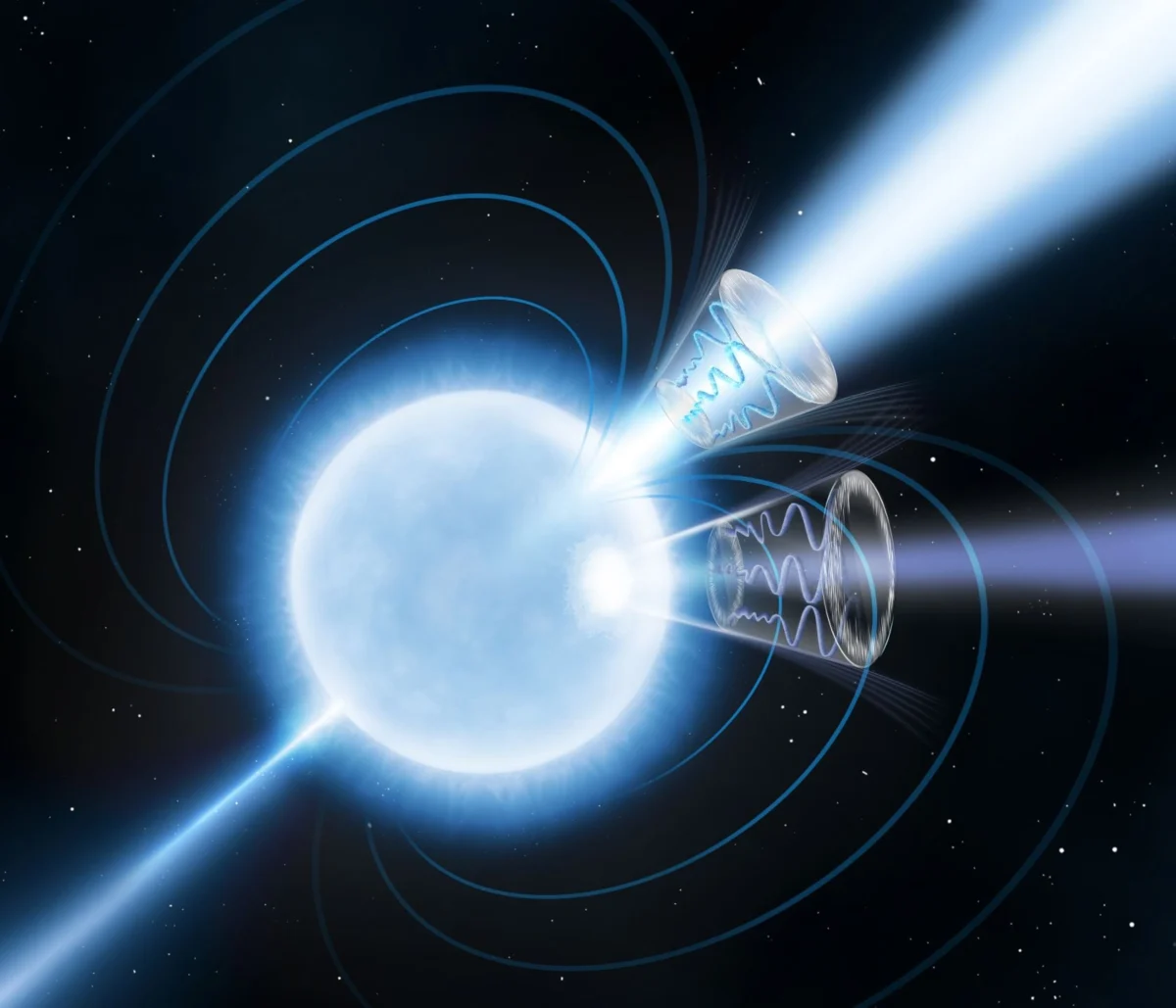
The fundamental architecture of the universe, once thought to be a simple stage of empty space, has been revealed as a dynamic and reactive medium through the first potential confirmation of vacuum birefringence. This quantum mechanical phenomenon, which suggests that a vacuum under extreme stress can act like a prism and alter the behavior of light, was first postulated nearly nine decades ago by the Nobel laureate Werner Heisenberg. In a landmark study published in the journal Nature, an international coalition of astrophysicists and quantum theorists has reported evidence of this effect occurring in the intense magnetic environment surrounding a magnetar, a rare and highly magnetized remnant of a supernova.
The discovery marks a significant milestone in the history of physics, bridging the gap between theoretical predictions made in the 1930s and the observational capabilities of the 21st century. By utilizing a suite of space-based observatories and ground-based radio telescopes, the research team, led by Rachael E. Stewart of George Washington University, has effectively turned a star located thousands of light-years away into a high-precision laboratory. The findings suggest that the "empty" space surrounding the magnetar 1E 1547.0–5408 is teeming with virtual particles that respond to magnetic fields, a discovery that validates a core tenet of Quantum Electrodynamics (QED).
The Heisenberg Prediction: A Century of Theoretical Anticipation
In 1936, Werner Heisenberg and his colleague Hans Heinrich Euler published a paper that challenged the classical understanding of a vacuum. In classical Newtonian and Maxwellian physics, a vacuum is defined as "nothingness"—an absolute void devoid of matter and energy. However, Heisenberg’s work in the nascent field of quantum mechanics suggested otherwise. He theorized that according to the uncertainty principle, energy could be "borrowed" from the vacuum for incredibly short durations, allowing pairs of "virtual" particles—specifically electrons and positrons—to pop in and out of existence.
Heisenberg and Euler predicted that in the presence of an exceptionally strong magnetic field, these virtual particles would become polarized. This polarization would cause the vacuum itself to become "birefringent," meaning it would possess a refractive index that depends on the polarization and direction of light passing through it. Essentially, the vacuum would behave like a crystal, splitting light into two paths and changing its polarization state.
For 90 years, this effect remained purely theoretical. The magnetic fields required to induce a measurable degree of vacuum birefringence (VB) are staggering—far beyond the capabilities of any terrestrial laboratory. While modern particle accelerators can create immense energies, they cannot sustain the static, large-scale magnetic fields necessary to witness light interacting with the quantum vacuum in this specific way.
Magnetars: The Universe’s Most Extreme Laboratories
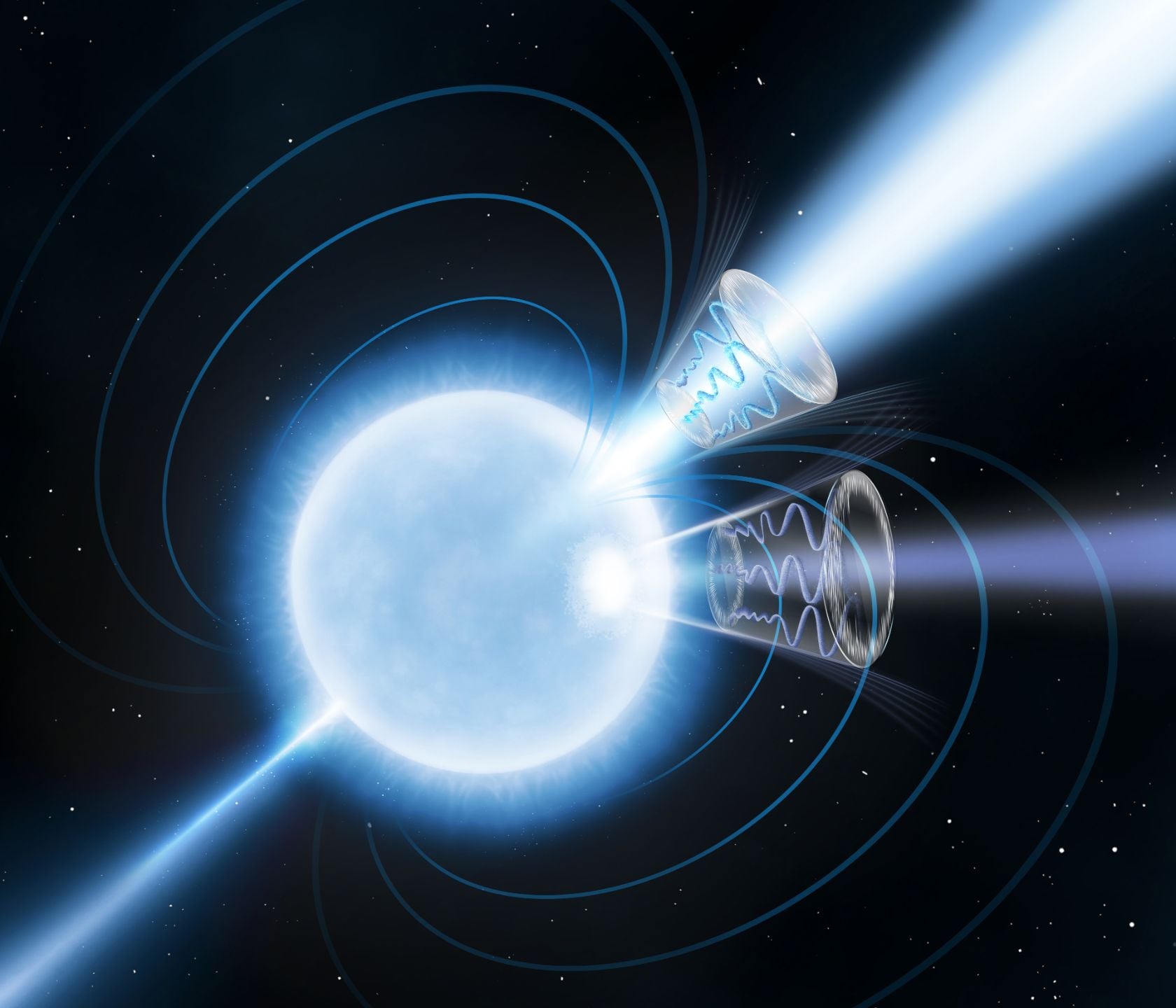
To find a magnetic field strong enough to test Heisenberg’s theory, scientists had to look beyond our solar system. The solution lay in magnetars, a specific class of neutron stars. Neutron stars are the collapsed cores of massive stars that have ended their lives in supernova explosions. While a typical neutron star possesses a magnetic field trillions of times stronger than Earth’s, magnetars are a different breed entirely. Their magnetic fields are another thousand times stronger, reaching intensities of up to 10^15 Gauss.
"Detecting vacuum birefringence requires a magnetic field that is over 100 million times stronger than any we’ve ever made on Earth," explained Dr. Marcus Lower, an Australian Research Council DECRA Fellow at the Swinburne University of Technology. Dr. Lower, who led the radio-frequency observations for the study, noted that magnetars are the only objects in the known universe capable of providing the necessary conditions for this quantum effect to manifest on a scale visible to our instruments.
The subject of the study, 1E 1547.0–5408, is one of the most active magnetars known to astronomers. Located within our galaxy, it has been the subject of intense scrutiny due to its frequent "glitches" and outbursts of X-rays. Its unique orientation—viewed almost "pole-on" from Earth—provided the researchers with a clear, unobstructed view of the light escaping the star’s immediate magnetic environment.
A Multi-Instrumental Approach to Quantum Detection
The confirmation of vacuum birefringence was not the result of a single observation but rather the synthesis of data from several of the world’s most advanced astronomical tools. The study integrated X-ray data, radio waves, and supercomputer simulations to build a comprehensive picture of the magnetar’s emissions.
Key instruments involved in the study included:
- NASA’s Imaging X-ray Polarimetry Explorer (IXPE): Launched in 2021, IXPE is designed specifically to measure the polarization of X-rays from cosmic sources. It provided the critical evidence of high-degree polarization in the X-rays emitted by 1E 1547.
- The NICER (Neutron star Interior Composition Explorer): Situated on the International Space Station, NICER provided high-precision timing of the magnetar’s rotation, allowing the team to correlate polarization changes with the star’s spin.
- CSIRO’s Murriyang (Parkes) Radio Telescope: Located in Australia, this 64-meter dish tracked the magnetar’s radio emissions, which served as a baseline for understanding the star’s magnetic geometry.
- Ngarrgu Tindebeek Supercomputer: Based at Swinburne University, this facility processed the vast amounts of data and ran complex simulations to rule out other possible causes for the observed polarization.
By monitoring the radio emissions, the team was able to determine the direction of the magnetar’s oscillations, known as its polarization state. They discovered that the magnetic and rotational axes of 1E 1547 were nearly aligned. This alignment is crucial because it simplifies the geometry of the light’s path, making the signatures of vacuum birefringence much easier to isolate from other stellar phenomena.
Chronology of the Discovery
The path to this discovery was decades in the making, involving a timeline of theoretical breakthroughs and technological milestones:
- 1936: Werner Heisenberg and Hans Euler predict vacuum birefringence as a consequence of QED.
- 1960s-70s: Theoretical refinements of the Heisenberg-Euler Lagrangian provide a mathematical framework for how light interacts with virtual particles.
- 2000s: Astronomers begin to identify magnetars as potential candidates for testing VB, but telescope technology lacks the sensitivity to measure X-ray polarization.
- 2021: NASA launches IXPE, the first satellite capable of measuring the polarization of X-rays from objects like neutron stars.
- 2023-2025: Systematic observations of magnetar 1E 1547.0–5408 are conducted across the X-ray and radio spectrums.
- 2026: The research team, led by Rachael E. Stewart, completes the data analysis and publishes the findings in Nature, providing the first robust evidence of the effect.
Analyzing the Data: The Smoking Gun
The "smoking gun" for vacuum birefringence lies in the relationship between X-ray and radio polarization. The team found that the X-rays detected by IXPE exhibited an extremely high degree of polarization—far higher than what would be expected if the light were simply traveling through empty space without interacting with virtual particles.
Furthermore, the direction of this polarization was "locked" to the magnetar’s magnetic field. As the star rotated, the polarization direction of both the X-rays and the radio waves shifted in perfect synchronization. In a vacuum without the Heisenberg effect, the light would not necessarily maintain this strict alignment as it moved through the magnetar’s magnetosphere. The fact that the polarization remained tied to the field lines as the light traveled through the "void" suggests that the vacuum itself was forcing the light to stay aligned.
"Because of the magnetic field’s strength, Heisenberg’s virtual particles become aligned with the direction the field is pointing," said Dr. Lower. "By carefully tracking the direction the radio waves and X-rays oscillate as the magnetar rotates, we found that the alignment of 1E 1547’s magnetic and rotational poles was ideal for detecting vacuum birefringence."
Institutional Collaboration and Global Effort
The study represents a massive collaborative effort involving many of the world’s leading space and science organizations. The involvement of the Center for Space Sciences and Technology, the South African Radio Astronomy Observatory (SARAO), and the Los Alamos National Laboratory highlights the interdisciplinary nature of the project.
Rachael E. Stewart, the lead author and a graduate student at George Washington University, coordinated the input from diverse fields including high-energy astrophysics, quantum field theory, and computational modeling. NASA’s Marshall Space Flight Center and Goddard Space Flight Center provided the essential orbital data, while universities from Australia to Europe contributed to the theoretical interpretation of the results.
This global partnership was essential because the data required both the "macro" view of the star’s position and rotation and the "micro" view of how photons interact with subatomic fluctuations. The success of the study serves as a testament to the power of international scientific cooperation in tackling questions that have remained unanswered for nearly a century.
Implications for the Future of Physics
The confirmation of vacuum birefringence has profound implications for our understanding of the universe. First and foremost, it provides a crucial test of Quantum Electrodynamics in the "strong-field" regime. While QED has been tested with extreme precision in weak-field environments (such as the hydrogen atom), its behavior in the presence of massive gravitational and magnetic forces is less well understood.
"This is more than just checking a box on a 90-year-old theory," said one researcher associated with the study. "It tells us that our models of the quantum realm hold up even in the most extreme environments imaginable. It gives us confidence as we move toward even more complex theories, such as those attempting to unify gravity with quantum mechanics."
Beyond the theoretical, the findings pave the way for a new era of "magnetar archaeology." By using vacuum birefringence as a tool, astronomers can now probe the surfaces and atmospheres of neutron stars with much greater detail. The degree of polarization can reveal the temperature, chemical composition, and magnetic structure of these stars in ways that were previously impossible.
Challenges and Next Steps
Despite the excitement, the scientific community remains cautious. The study authors noted that while the evidence is highly compelling, further data is needed to completely rule out alternative explanations, such as the effects of plasma within the magnetar’s atmosphere.
The next phase of the research will involve:
- Refining Computer Simulations: Using the Ngarrgu Tindebeek supercomputer to create even more detailed models of how light moves through the magnetar’s magnetosphere.
- Observing Additional Magnetars: The team plans to apply the same methodology to other magnetars, such as SGR 1806-20, to see if the effect is consistent across different objects.
- Future Space Missions: There are already calls for a successor to IXPE with even higher sensitivity to further refine the measurements of X-ray polarization.
If these future observations continue to support the current findings, the quest started by Heisenberg and Euler in 1936 will finally be complete. The "nothingness" of the vacuum will be officially recognized not as a void, but as a rich, active substance that defines the very nature of light and reality. As science continues to push the boundaries of the observable universe, the most profound secrets may continue to be found in the places where we once thought there was nothing at all.