Sonny Valindra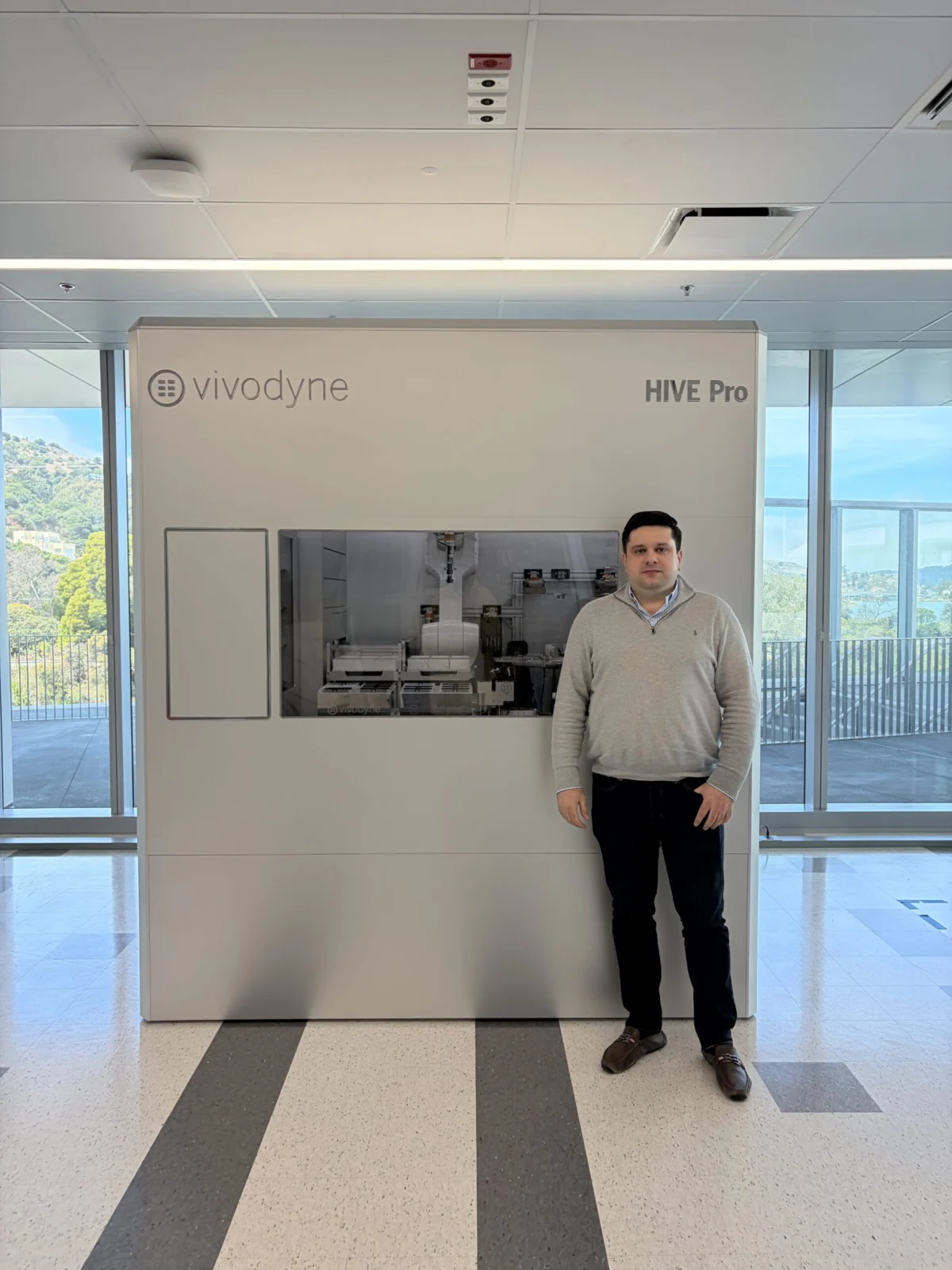
The burgeoning field of Artificial Intelligence (AI) in drug discovery, while heralded for its potential to revolutionize pharmaceutical research, faces a critical hurdle: a profound lack of high-quality, human-centric biological data. This deficit, according to biotech startup Vivodyne, is precisely what they aim to address with their innovative approach, which centers on advanced robotic laboratories designed to generate causal biological data from living human tissues. This endeavor positions Vivodyne as a key player challenging the current paradigms of AI-driven drug development and offering a potential solution to the industry’s persistent failure rates.
The AI Drug Discovery Dilemma: A Data Hunger
The promise of AI in accelerating drug discovery has been a dominant narrative in recent years. Leading figures in the AI landscape, from Anthropic’s Dario Amodei to OpenAI’s Sam Altman and Google DeepMind’s Demis Hassabis, have frequently cited the potential for AI to cure diseases, including cancer, within ambitious timelines. For instance, Hassabis stated last year that AI could potentially cure all diseases within a decade. However, the tangible results have, thus far, remained notably subdued.
While AI has made significant strides in areas like protein structure prediction, exemplified by Nobel Prize-winning AlphaFold, its direct contribution to bringing novel drugs to market has been more incremental than transformative. Isomorphic Labs, founded by Google to leverage AlphaFold’s capabilities, has seen its initial drug trial timelines pushed back, with expectations for their first human trials now set for later this year, after originally being planned for 2025. In a February statement, Isomorphic Labs acknowledged that true drug discovery necessitates "highly accurate predictive models, across an expansive range of biochemical properties and interactions," underscoring the need for more comprehensive data inputs.
The core of the problem, as articulated by Vivodyne’s CEO and co-founder Andrei Georgescu, lies in the nature of the data currently used to train AI models. "Absent human testing, what are these [AI] models going to do?" Georgescu questioned. "They’re going to cure cancer in mice." This sentiment was echoed by Dario Amodei, who recently remarked that claims of AI curing cancer have become more cliché than credible, emphasizing that "the thing that will work is actually curing cancer."
The reliance on animal testing and studies of isolated cells or proteins presents a significant disconnect from the complex, dynamic environment of living human tissue. This leads to a crucial deficiency in causal biological data – the understanding of how biological systems respond to stimuli and interventions. Without this nuanced understanding, AI models, despite their computational power, are essentially operating with incomplete blueprints of human health and disease.
Vivodyne’s HIVE: Building a "Human Data Center"
Vivodyne’s strategy diverges sharply from the conventional AI drug discovery pipeline. The company has developed HIVE (High-throughput Integrated Vivarium Environments), a network of modular robotic laboratories. These HIVE systems are engineered to cultivate up to 20 different types of human tissue. Crucially, they can autonomously dose these tissues with compounds and meticulously monitor their responses over time. This process generates the kind of detailed, dynamic, and causal biological data that current AI models are lacking.
"The space needs a sanity check," Georgescu stated, highlighting that existing AI models struggle to capture the intricate complexity of human biology. This challenge is a pervasive issue within the pharmaceutical industry itself. A stark indicator of this disconnect is the high failure rate of drugs in clinical trials: approximately 90% of drugs that demonstrate efficacy in animal testing fail to gain regulatory approval for human use.
Vivodyne, which spun out of the University of Pennsylvania in 2021 following Georgescu’s PhD in bioengineering, claims its engineered tissues closely replicate the behavior of human organs. The company has presented compelling data to support these assertions. Their liver cells, for instance, have shown 94% predictive accuracy when compared to human toxicity trials. Similarly, their airway tissue has demonstrated a 96% concordance with the behavior of actual human tissue, and their bone marrow tissue has achieved a perfect 100% concordance in tests involving 20 different chemotherapy drugs.
This commitment to generating human-relevant data led Vivodyne to open what they term the world’s largest "human data center" just outside of San Francisco. This facility, supported by nearly $80 million in funding across two rounds led by Khosla Ventures, is reportedly achieving twice the throughput of all animal trials conducted in the United States.

Accelerating Drug Development and Training Advanced AI
The immediate objective of Vivodyne’s HIVE system is to expedite the drug candidate pipeline. By providing a more accurate prediction of a drug’s efficacy and safety in human tissues before it enters costly clinical trials, the company aims to significantly reduce both the time and financial investment required for drug development. Clinical trials typically cost tens of millions of dollars, and a substantial portion of these expenses is often rendered futile by high failure rates.
While Vivodyne remains discreet about its specific partners due to confidentiality agreements, it confirms collaborations with multiple major pharmaceutical companies. Georgescu draws an analogy to the automotive industry, where manufacturers are generally confident their vehicles will meet safety standards before undergoing rigorous testing. In contrast, drug developers often approach clinical trials with a much lower degree of certainty, given the high probability of failure in obtaining FDA approval.
Beyond its immediate impact on accelerating drug development, Vivodyne’s long-term vision is to fundamentally enhance the training of AI models themselves. Georgescu believes that their autonomous biology labs are crucial for generating the causal data necessary to build AI models that possess a deeper, more intuitive understanding of human biology. He points to recent research, such as a study published in Nature Methods last month, which found no clear data scaling laws when training generative AI models on existing cellular data.
"All the training is done on static snapshots of these cells, and the models are not conditioned at all by the how a cell got to that state," Georgescu explained to TechCrunch. "In other words, the model learns ‘this is cell state A,’ ‘this is cell state B,’ but never ‘cell state B is the effect of inflaming cell state A.’" This limitation means that current AI models can identify correlations but struggle to establish causation, a critical distinction in biological processes.
Vivodyne’s HIVE machines, by continuously monitoring hundreds of thousands of experiments where diseased tissues are exposed to various stimuli, are designed to provide the kind of rich, dynamic data that facilitates reinforcement learning. This, Georgescu anticipates, will lead to the development of AI models capable of understanding human biology with a depth that can translate into more meaningful advancements in healthcare.
The Future of Medicine: Combination Therapies and Causality
The implications of Vivodyne’s approach extend to the future of medicine, particularly in addressing complex diseases that may require multi-faceted treatment strategies. As medical science progresses, there is a growing need for drugs that can target multiple biological pathways simultaneously. This is particularly relevant for the development of combination therapies, where the number of potential drug interactions and synergistic effects becomes astronomically large.
"If we want combination therapies, the space that has to be searched explodes – it can’t be an experimental approach," Georgescu stated. "You have to say, ‘I want this effect to happen, so what cause should I invoke?’ Establishing causality in human biology is the basis of all of this."
Vivodyne’s ability to generate causal data from human tissues offers a pathway to overcoming this challenge. By understanding the cause-and-effect relationships within biological systems, AI models can be trained to predict not only the efficacy of single drug candidates but also the complex interactions and outcomes of combining multiple therapeutic agents. This could unlock new possibilities for treating diseases that have historically been intractable, such as advanced cancers, neurodegenerative disorders, and autoimmune conditions.
The company’s progress, underscored by its significant funding and the establishment of its advanced "human data center," signals a strategic shift in how AI is being integrated into drug discovery. By prioritizing the generation of high-fidelity, human-relevant data, Vivodyne is not merely improving the inputs for existing AI models; it is laying the groundwork for a new generation of AI that can truly understand and manipulate the intricacies of human biology, promising a more effective and efficient future for medicine.