Sisilia Frederika
For over a decade, the celestial object known as AT 2016blu has teased the global astronomical community with the promise of a spectacular death. Located approximately 29 million light-years away in the spiral galaxy NGC 4559, this massive star—roughly 33 times the mass of our Sun—frequently exhibited the hallmarks of a star on the precipice of a core-collapse supernova. However, new research published in The Astrophysical Journal reveals that AT 2016blu is not a dying star in its final seconds, but rather a "supernova impostor" caught in a complex gravitational dance with a hidden, compact companion.
The study, titled "AT 2016blu: Accretion-Powered Outbursts in a Luminous Blue Variable and Compact Object Binary," led by astronomer Mojgan Aghakhanloo of the University of Virginia, provides the first definitive evidence of a Luminous Blue Variable (LBV) star whose periodic outbursts are fueled by accretion onto a compact object, such as a neutron star or a black hole. This discovery reshapes our understanding of how massive stars interact with their environments and provides a rare look at the precursor stages of High-Mass X-ray Binaries (HMXBs).
The Enigma of the Supernova Impostor
The term "supernova impostor" refers to a class of stellar transients that appear, at least initially, to be cataclysmic explosions. To the untrained eye—and sometimes even to sophisticated automated sky surveys—the sudden increase in luminosity from these stars mimics the brightening of a supernova. However, unlike a true supernova, which marks the permanent destruction of a star, an impostor survives its outburst.
AT 2016blu was first identified in 2012 and was categorized as a Luminous Blue Variable. LBVs are among the most massive and luminous stars in the universe, characterized by their instability and unpredictable fluctuations in brightness. The most famous example is Eta Carinae, which famously underwent a "Great Eruption" in the mid-19th century that briefly made it the second-brightest star in the sky before it faded.
Since its discovery, AT 2016blu has erupted 27 times. These outbursts were quasiperiodic, occurring roughly every 113 days. Initially, astronomers hypothesized that these flares were "pre-supernova" eruptions—violent shedding of the star’s outer layers as it prepared for a final collapse. Recent observations of other supernovae have shown that massive stars often experience such "death throes" in the years or months leading up to their ultimate destruction. However, as the 113-day cycle of AT 2016blu persisted for over a decade without a final explosion, researchers began to suspect a different mechanism was at play.
A Decade of Observation and the 2026 Breakthrough
The investigation into AT 2016blu has been a multi-year effort, with Aghakhanloo and her team publishing foundational research in 2023 and 2025. These earlier studies hinted at the existence of a binary system but lacked the "smoking gun" evidence needed to confirm the nature of the companion.
The breakthrough came in early 2026. By precisely timing the expected 113-day cycle, the research team predicted a major outburst would occur in March 2026. This allowed them to coordinate a global observation campaign involving multiple ground-based observatories and more than 30 amateur astronomers, whose continuous monitoring provided a high-cadence light curve of the event.
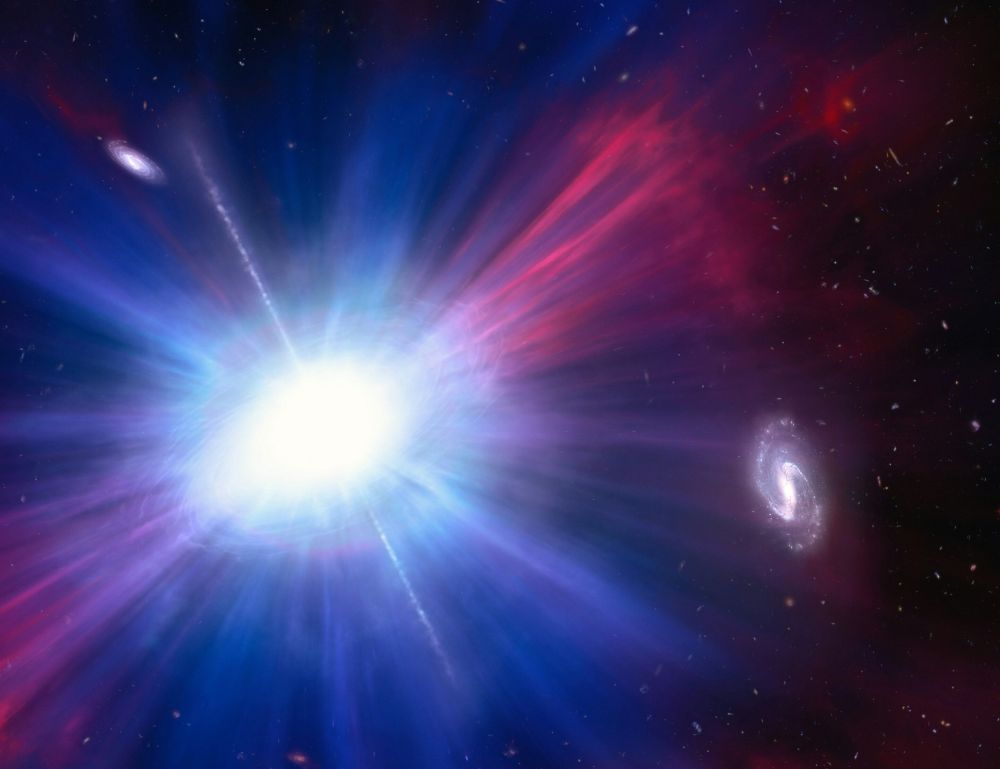
As the star reached its peak brightness, the team triggered a "Target of Opportunity" (ToO) request for NASA’s Chandra X-ray Observatory. The ToO protocol is reserved for transient events that require immediate attention, allowing Chandra to interrupt its pre-planned schedule to focus on a rapidly changing target.
The resulting X-ray data provided the missing piece of the puzzle. Chandra detected a significant X-ray source originating from AT 2016blu during the outburst. Crucially, the team compared these new findings with archival Chandra data from 2001 and 2002—years before the periodic outbursts began. In those archival images, the system was X-ray quiet. The appearance of X-rays only during the modern outbursts pointed directly to a process called accretion.
The Mechanics of Accretion-Powered Outbursts
The X-rays detected by Chandra are a byproduct of extreme physical conditions. In a binary system consisting of a massive LBV and a compact companion (a neutron star or black hole), the two objects orbit a common center of mass. The 113-day period corresponds to the orbital cycle of this system.
The orbit is highly eccentric, meaning it is not a perfect circle but an elongated oval. Most of the time, the two objects are relatively far apart. However, during "periastron"—the point of closest approach—the gravitational pull of the compact companion becomes strong enough to strip material away from the bloated, unstable LBV.
As this stellar material falls toward the compact object, it forms an accretion disk or slams directly into the object’s surface (if it is a neutron star). This process converts gravitational potential energy into heat and high-energy radiation, specifically X-rays. The researchers calculated that the mass accretion rate required to produce the observed X-ray luminosity is perfectly consistent with a compact companion feeding off the LBV’s stellar wind or outer envelope.
"We therefore conclude that AT 2016blu is the first known case of an LBV SN impostor whose outbursts are driven by intermittent accretion onto a compact object," the researchers stated in their paper. This finding officially reclassifies AT 2016blu as a High-Mass X-ray Binary, a rare and fleeting stage in stellar evolution.
Scientific Significance and Stellar Evolution
The discovery of AT 2016blu’s true nature has profound implications for the study of massive stars. These stars are the chemical factories of the universe; they forge heavy elements like oxygen, iron, and gold in their cores and through the explosive processes that end their lives. By shedding their outer layers during the LBV phase, they enrich the surrounding interstellar medium, providing the raw materials for future generations of stars and planets.
However, the "impostor" phase has long been a source of confusion for theorists. The case of AT 2016blu suggests that many events currently classified as pre-supernova outbursts might actually be binary interactions. If a significant fraction of LBV outbursts are driven by hidden companions, it changes our calculations regarding how much mass these stars lose on their own and how close they truly are to death.
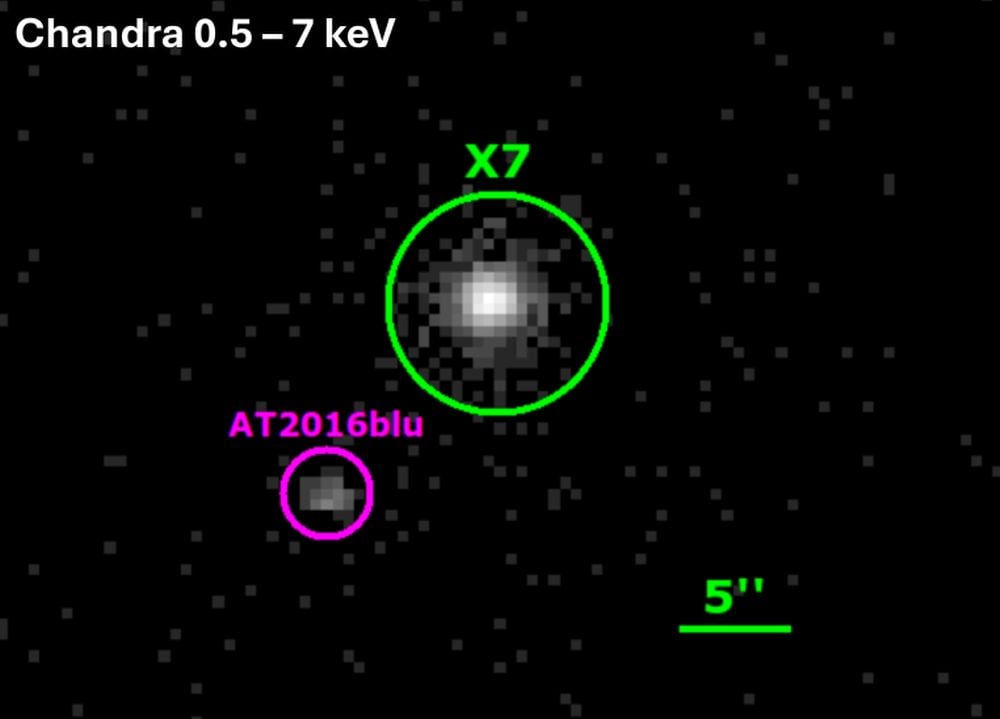
Furthermore, the system provides a "front-row seat," as Aghakhanloo described it, to the interaction between a living star and a stellar corpse. Because the companion is already a compact remnant, it means the binary system has already survived one supernova explosion (the one that created the neutron star or black hole). Now, the second star is approaching its own demise. This system offers a preview of the eventual formation of a double compact object binary, which could eventually merge and produce detectable gravitational waves.
Future Research and the Vera Rubin Observatory
While AT 2016blu is the first confirmed case of its kind, it is unlikely to be the last. Aghakhanloo and her colleagues have already secured additional observing time with the Chandra X-ray Observatory to investigate other known supernova impostors. The goal is to determine if accretion-powered outbursts are a common feature of LBVs or a rare exception.
The astronomical community is also looking toward the start of operations at the Vera C. Rubin Observatory in Chile. The Rubin Observatory’s Legacy Survey of Space and Time (LSST) will conduct a 10-year survey of the sky, capturing high-resolution images of billions of objects every few nights. This "cosmic movie" is expected to uncover thousands of transient events, including many more supernova impostors.
By identifying these systems early and monitoring their periodicity, astronomers will be able to distinguish between stars that are truly about to explode and those that are simply interacting with a companion. This distinction is vital for refining the stellar evolution models that underpin our understanding of the galaxy’s history.
Conclusion
The story of AT 2016blu is a testament to the importance of long-term monitoring and multi-wavelength astronomy. What appeared for a decade to be a star on the brink of destruction turned out to be a complex, binary system that is rewriting the textbook on Luminous Blue Variables.
As Aghakhanloo noted, while we have learned a great deal about these massive stars, many open questions remain. "We still don’t fully understand how they evolve or how they die," she said. Through the study of "impostors" like AT 2016blu, scientists are slowly peeling back the layers of these stellar mysteries, gaining a clearer picture of the violent and beautiful processes that shape the cosmos. For now, AT 2016blu remains a living laboratory, a massive star slowly losing its essence to a dark companion, providing a unique window into the final chapters of stellar life.