Vera Intan Clara
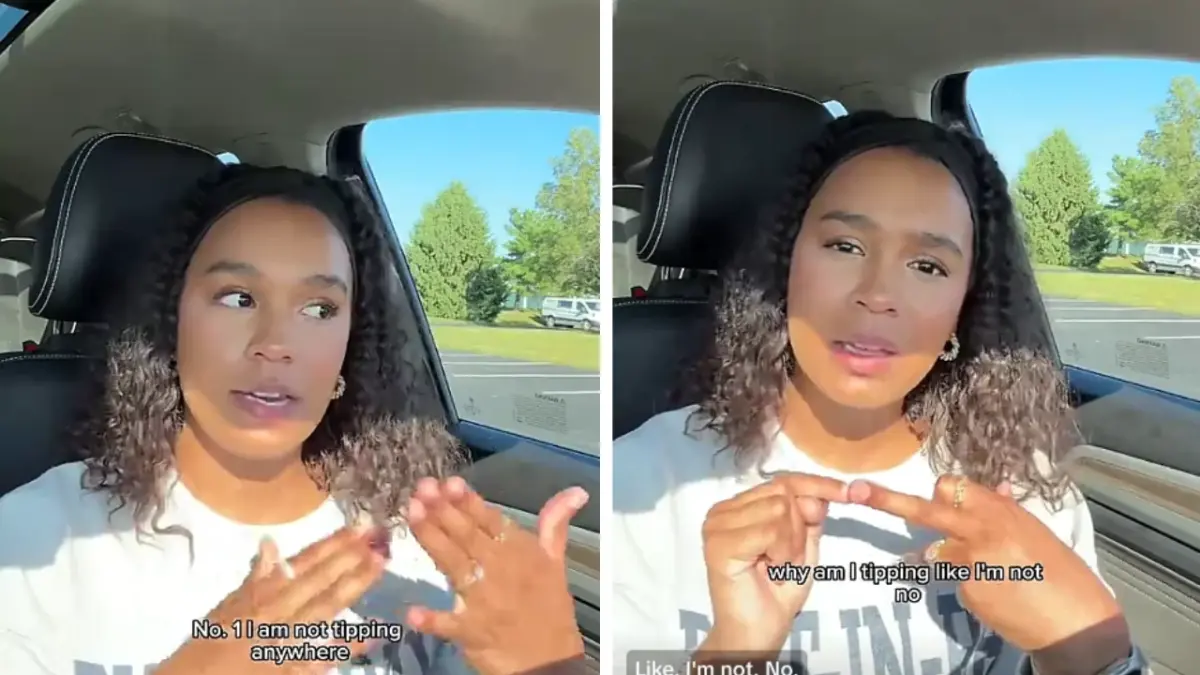
A recent video shared by TikToker and content creator @alitzahs has ignited a significant online discussion regarding contemporary tipping practices, drawing close to 62,000 views and approximately 257 comments. In her widely circulated post, Alitzah outlined a stringent set of personal rules for gratuities, asserting that current tipping expectations have become excessive and necessitate a reevaluation by consumers. Her systematic approach to deciding when and where to tip reflects a growing sentiment among many consumers who perceive an overreach in the service industry’s requests for gratuities, prompting a broader examination of the cultural and economic underpinnings of tipping in the United States.
The Historical Context of Tipping in America
To understand the current debate, it is crucial to contextualize the history and evolution of tipping in America. Tipping, initially a European custom, was largely rejected in the United States during the 19th century, viewed by many as an aristocratic and undemocratic practice. However, it gained traction in the post-Civil War era, particularly as a mechanism to pay newly freed enslaved people little to nothing, relying instead on customer gratuities. This controversial origin laid the groundwork for a bifurcated wage system that persists to this day, where a federal minimum wage for tipped workers—currently $2.13 per hour—is substantially lower than the standard minimum wage, with the expectation that tips will bridge the gap to at least the federal minimum wage of $7.25 per hour. States have varying laws, with some mandating that tipped workers receive the full state minimum wage before tips, while others adhere to the federal standard.
Over the decades, tipping became ingrained in certain sectors, primarily full-service restaurants, bars, and personal care services like hair salons. It was traditionally seen as a discretionary reward for exceptional service, a way for patrons to express appreciation beyond the cost of the meal or service itself. This model fostered a direct relationship between the quality of service provided and the financial compensation received by the worker, encouraging high standards of customer care.
The Post-Pandemic Acceleration of "Tip Creep"
The COVID-19 pandemic marked a significant turning point in American tipping culture. As lockdowns and restrictions reshaped the economy, many consumers adopted "gratitude tipping" as a way to support frontline workers who continued to provide essential services, often at personal risk. This period saw an expansion of tip requests into previously untipped or minimally tipped sectors, such as quick-service restaurants, coffee shops, grocery stores, and even retail outlets. Digital payment systems, equipped with pre-set tip options (e.g., 15%, 18%, 20%, or custom), became ubiquitous, making it easier and often socially pressuring for businesses to prompt customers for gratuities at every transaction point, regardless of the service type.
This phenomenon, widely dubbed "tip creep" or "tip fatigue," describes the increasing frequency and expectation of tipping in a broader array of transactions, often for services that involve minimal interaction or are traditionally compensated solely by an hourly wage. Consumers report feeling pressured by these prompts, particularly when presented before service has even been rendered, raising questions about the fairness and logic of the system.
Alitzah’s System: A Response to Evolving Expectations
Alitzah’s viral video directly addresses this "tip creep" by establishing clear boundaries for her personal tipping habits. Her primary rule dictates a refusal to tip anywhere she is asked for gratuity before receiving service. She vividly illustrates this point with an experience at a smoothie bar, where she was prompted for a tip before her order was prepared or tasted. "The answer is no. One, y’all haven’t made my smoothie. Two, I haven’t tasted my smoothie. Three, I don’t even know if I’m gonna like this smoothie. Why am I tipping?" she questioned, emphasizing the logical disconnect in rewarding a service that has yet to be delivered or evaluated. She further clarified that a smoothie bar, unlike a full-service restaurant, does not offer the comprehensive "experience" that she believes warrants a tip.
She articulated that her willingness to tip remains for traditional full-service establishments like sit-down restaurants, where customers "can sit down and experience the food, service, and ambiance." Even in these settings, she stresses that tips should be based on the personal experience, good or bad, reinforcing the original premise of tipping as a reward for service quality. Nail salons also fall into her category of tip-worthy businesses due to the experiential nature of the service, though again, she firmly rejects preemptive tipping.
Conversely, Alitzah explicitly stated her refusal to tip at coffee shops and ice cream parlors. Her rationale for ice cream shops is pragmatic: "You scooped my ice cream for 15 seconds and put it in a cup. . . No." For both coffee and ice cream establishments, she posits that workers are typically paid an hourly wage, implying that if these wages are deemed insufficient, the onus for redress lies with the employer, not the consumer. This stance highlights a central tension in the current tipping debate: whether consumers should bear the responsibility of supplementing wages for services where an hourly rate is the primary compensation model.
Alitzah, herself a business owner selling handmade planners, underscored her philosophy by noting that she does not offer a tipping option to her customers, even for artisanal products. Her rhetorical question, "Leave a tip for what?!" encapsulates her belief that tips should be reserved for specific service contexts and not applied universally to all commercial transactions.
Supporting Data and Consumer Sentiment
Recent surveys and economic data underscore the validity of Alitzah’s observations regarding changing consumer attitudes toward tipping. A 2023 Bankrate survey revealed that 66% of U.S. adults have a negative view of tipping, citing reasons such as inflated pre-set tip amounts, requests for tips in unexpected places, and the perceived pressure to tip. This figure represents a significant increase from previous years, indicating a growing "tip fatigue" across the populace. The survey also found that 35% of respondents believe tipping culture has gotten "out of control," aligning precisely with Alitzah’s sentiment.
While average tip percentages for full-service restaurants generally remain stable, typically ranging from 15% to 20%, the expansion of tip requests into quick-service establishments has met with consumer resistance. A 2023 study by Square, a leading payment processing company, indicated that customers are less likely to tip at counter-service restaurants than at full-service establishments, with average quick-service tips often falling below 10% when offered. This disparity highlights a consumer distinction between "table service" and "transactional service."
The debate also intertwines with the broader discussion of minimum wages. According to the U.S. Department of Labor, the federal minimum wage for tipped employees has remained at $2.13 per hour since 1991. While employers are legally required to ensure that a tipped employee’s total earnings (hourly wage plus tips) meet the federal minimum wage of $7.25 per hour, and many states have higher minimum wages for tipped workers, the reliance on tips creates income instability for workers and places a perceived burden on consumers to subsidize wages. For instance, states like California and Washington mandate that employers pay tipped workers the full state minimum wage before tips, which often reduces the consumer’s perceived obligation to tip generously, although tipping remains common. In contrast, states adhering to the federal $2.13 minimum for tipped workers place a heavier reliance on customer gratuities.
Public Reaction and Broader Implications
The comments section of Alitzah’s video overwhelmingly supported her position, reflecting a collective frustration among consumers. Many commenters echoed her sentiment that workers should not be reliant on tips for duties that are part of their salaried or hourly responsibilities. "I feel like I’m just throwing money away when I tip! So I’m tipping you for doing your job that you’re getting paid for?" one commenter wrote, articulating a common grievance. Another commenter, identifying as a nurse, drew a parallel to their own profession: "Agree. Why we tip people to do their job? I’m a nurse. Nobody’s tipping me, and I provided a service as well." This highlights a perceived inequity in which professions are deemed tip-worthy, particularly those requiring extensive training and providing critical services.
A significant portion of the online discourse shifted the responsibility from consumers to employers. "The company needs to pay the service providers more!! We shouldn’t have to supplement with our post tax dollars!! we have to get more mad at the company than the minimum wage service provider!!" another commenter urged, advocating for systemic change rather than individual consumer action. This perspective aligns with arguments made by labor advocacy groups, which consistently call for an end to the sub-minimum wage for tipped workers and an increase in base wages across the service industry. They contend that a predictable, livable wage would stabilize workers’ incomes and remove the ethical dilemma for consumers regarding gratuities.
For businesses, the implications of shifting tipping norms are complex. Many restaurant owners and service providers argue that tips are essential for attracting and retaining talent, particularly in a competitive labor market, and that eliminating tips or significantly raising base wages would necessitate higher menu prices, potentially deterring customers. Some establishments have experimented with "no-tipping" policies, opting instead for higher menu prices or service charges, but these models have met with mixed success, often facing resistance from both customers accustomed to tipping and staff who fear losing potential high earnings from gratuities.
The technological aspect also plays a crucial role. Modern point-of-sale (POS) systems are programmed to prompt for tips at nearly every transaction, sometimes with default percentages starting as high as 20% or 25%. This automation removes the traditional social cues associated with tipping and can create an awkward interaction, particularly for customers who prefer not to tip or wish to tip a lower amount. The pressure can feel heightened when an employee is directly observing the transaction on a screen.
The Future of Tipping Culture
The viral discussion sparked by Alitzah’s video underscores a critical juncture in American tipping culture. It reflects a growing consumer resistance to the expansion of gratuity expectations, particularly in contexts where service is minimal or where pre-service tipping is requested. The debate is multi-faceted, involving consumer expectations, worker compensation, business operational models, and long-standing cultural norms.
While a complete overhaul of the tipping system is unlikely to happen quickly, the conversation is pushing for greater transparency and clarity. Consumers are increasingly questioning the implicit social contract of tipping, advocating for a system where service quality genuinely dictates gratuity, and where employers bear primary responsibility for fair wages. The rise of social media platforms like TikTok provides an unprecedented forum for these discussions, allowing individual consumers like Alitzah to articulate widely held frustrations and potentially influence broader cultural shifts in how Americans approach paying for service. The tension between tradition, economic realities, and evolving consumer sentiment ensures that the debate over tipping will continue to be a prominent feature of the American service landscape for the foreseeable future.
The Daily Dot was unable to independently verify the claims made by TikTok creator @alitzahs, which are based on the account shared in her video.