Sisilia Frederika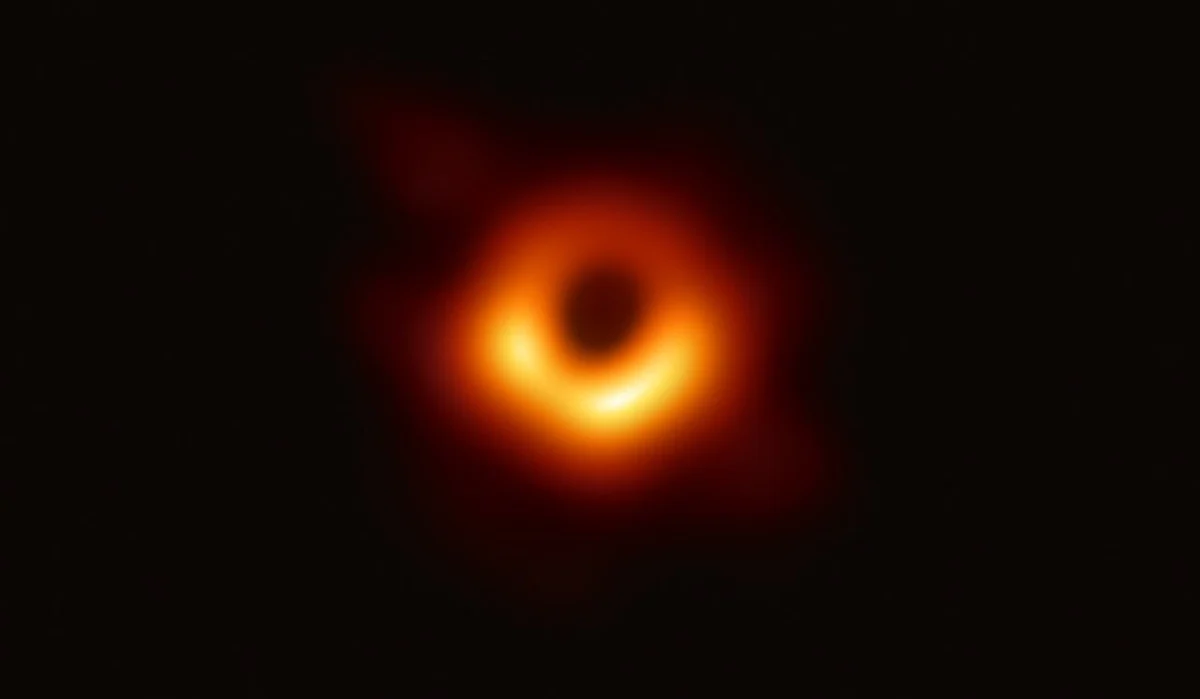
Modern theoretical physics distinguishes between the boundaries of the observable universe and the boundaries created by the motion of an observer, a distinction largely codified by the work of the late physicist Wolfgang Rindler. While the concept of an "event horizon" is most commonly associated with the gravitational pull of black holes, Rindler demonstrated that a similar phenomenon occurs through the simple act of constant acceleration. This boundary, now known as the Rindler horizon, represents a fundamental limit on the transmission of information within the framework of special relativity, effectively partitioning the universe into accessible and inaccessible regions for an accelerating traveler.
The Academic Legacy of Wolfgang Rindler
To understand the Rindler horizon, one must first understand the man who named the event horizon itself. Wolfgang Rindler was born in Vienna in 1924. His life was shaped by the geopolitical upheavals of the 20th century; in 1938, he was sent to Great Britain as part of the Kindertransport to escape the Nazi occupation of Austria. This transition eventually led him to a distinguished career in mathematics and physics, where he became a leading authority on general relativity and cosmology.
Rindler’s contribution to the field was not merely nomenclature. While the "Schwarzschild radius" had been mathematically defined by Karl Schwarzschild in 1916 to describe the point of no return around a non-rotating mass, it was Rindler who popularized the term "event horizon" in the 1950s. He sought to emphasize that this was not just a mathematical singularity, but a physical boundary in space-time. An event, in the parlance of relativity, is a specific coordinate in four-dimensional space-time—a unique "where" and "when." Rindler’s work clarified that horizons are boundaries that separate which events can be observed or influenced by a specific observer and which are forever lost to them.
The Mechanics of Relativistic Acceleration
In classical Newtonian physics, constant acceleration implies that an object’s velocity will increase linearly over time without limit. However, the special theory of relativity, established by Albert Einstein in 1905, dictates that no object with mass can reach or exceed the speed of light ($c$), which is approximately 299,792,458 meters per second.
When a spacecraft undergoes constant proper acceleration—meaning the crew feels a steady force, such as 1g (9.8 m/s²)—its velocity relative to a stationary observer does not increase linearly. Instead, it follows a hyperbolic trajectory in space-time. As the ship’s velocity approaches the speed of light, it becomes increasingly difficult to add more speed from the perspective of an outside observer. The ship continues to accelerate, getting closer and closer to $c$ (e.g., 0.99c, 0.999c, 0.9999c), but it never reaches the threshold.
This asymptotic approach to the speed of light creates a profound effect on the reception of external signals. In a scenario where an observer on Earth sends a light pulse to a ship that is already accelerating away, the light pulse must close the distance. If the ship were moving at a constant velocity, the light pulse would eventually catch it, as light is always faster than any massive object. However, if the ship is constantly accelerating, the gap between the ship’s speed and the speed of light narrows continuously.
The Formation of the Rindler Horizon
The Rindler horizon is the mathematical and physical consequence of this "chase" between a light signal and an accelerating target. If the ship starts its acceleration from a certain distance away from the signal source, or if the signal is sent after the ship has already reached a certain threshold of acceleration and distance, the light pulse will never reach the ship.
Mathematically, as the light pulse moves toward the ship, the ship is gaining speed. By the time the light reaches the ship’s former position, the ship has moved further away and is now traveling at a higher fraction of $c$. Because the ship’s acceleration is constant, the time required for the light to close the remaining distance increases exponentially. In the limit, the time required for the signal to reach the ship becomes infinite.
From the perspective of the accelerating traveler, the universe behind them is effectively cut off. There is a "wall" in space-time beyond which no light, no radio signal, and no physical influence can ever reach them, provided they maintain their acceleration indefinitely. This is not due to gravity, as is the case with a black hole, but is a purely kinematic effect of the observer’s own motion.
Chronology of Horizon Theory Development
The evolution of our understanding of space-time horizons followed a specific historical trajectory:
- 1905: Albert Einstein publishes the Special Theory of Relativity, establishing the speed of light as a universal constant and the ultimate speed limit.
- 1915-1916: Einstein publishes General Relativity. Shortly thereafter, Karl Schwarzschild derives the solution for the gravitational field of a point mass, identifying the Schwarzschild radius.
- 1950s: Wolfgang Rindler begins his work on the geometry of space-time. He introduces the term "event horizon" to provide a more intuitive understanding of the Schwarzschild radius.
- 1960: Rindler publishes papers detailing the "Rindler Coordinate System," which describes the perspective of a uniformly accelerating observer. He demonstrates that these observers experience a horizon similar to that of a black hole.
- 1970s: Physicists like Stephen Hawking and William Unruh build upon Rindler’s work to explore the quantum effects of horizons, leading to the discovery of Hawking radiation and the Unruh effect.
Comparative Analysis: Gravitational vs. Kinematic Horizons
While the Rindler horizon and the Schwarzschild horizon (black hole) share the name "horizon," they arise from different physical origins, though they are mathematically linked through the Equivalence Principle.
- Schwarzschild Horizon: This is a gravitational horizon. It is static and exists at a fixed distance from a mass. It is "absolute" in the sense that any observer, regardless of their motion, will agree that the horizon exists for the black hole.
- Rindler Horizon: This is a kinematic or "apparent" horizon. It is observer-dependent. If the traveler stops accelerating, the horizon disappears, and the signals that were previously "stuck" behind the horizon will eventually catch up to them.
The existence of the Rindler horizon suggests that the vacuum of space is not perceived the same way by all observers. For a stationary observer, the vacuum is empty. However, for an accelerating observer, the presence of the Rindler horizon has even more startling implications, including the perception of a thermal bath of particles, a phenomenon known as the Unruh effect.
Broader Impact and Scientific Implications
The study of Rindler horizons has moved beyond theoretical curiosity and into the realm of fundamental quantum field theory. One of the most significant implications is the realization that "particles" are not absolute entities but are relative to the state of motion of the observer.
Official scientific discourse on the matter often highlights the Unruh effect as the "acceleration equivalent" of Hawking radiation. Just as a black hole’s horizon is predicted to emit radiation due to quantum fluctuations, a Rindler horizon should also "glow" with heat from the perspective of the accelerating observer. If a spacecraft were to accelerate at 1g, this temperature would be incredibly small—roughly $4 times 10^-20$ Kelvin—making it currently impossible to detect. However, at extreme accelerations, such as those experienced by subatomic particles in high-energy colliders, the effect becomes more pronounced.
Furthermore, the Rindler horizon provides a vital tool for physicists attempting to reconcile general relativity with quantum mechanics. By studying how information is lost or preserved across a Rindler horizon, researchers can model the "Information Paradox" of black holes in a simpler, non-gravitational context.
Conclusion: The Divided Universe
The work of Wolfgang Rindler transformed the understanding of space-time from a passive stage into a dynamic environment shaped by the observer. The Rindler horizon serves as a reminder that the universe we perceive is dictated by our motion through it. For an interstellar traveler capable of sustained, high-magnitude acceleration, the universe would not just appear warped or blue-shifted; it would be physically partitioned.
As humanity looks toward the distant future of deep-space exploration, the physics of horizons will transition from the chalkboard to the cockpit. The realization that the act of moving can wall off entire sections of reality remains one of the most profound conclusions of relativistic physics. While the "Horizon Guy" Wolfgang Rindler passed away in 2019, his eponymous boundary remains a cornerstone of modern cosmology, defining the limits of what can be known and reached in an accelerating cosmos.