Sisilia Frederika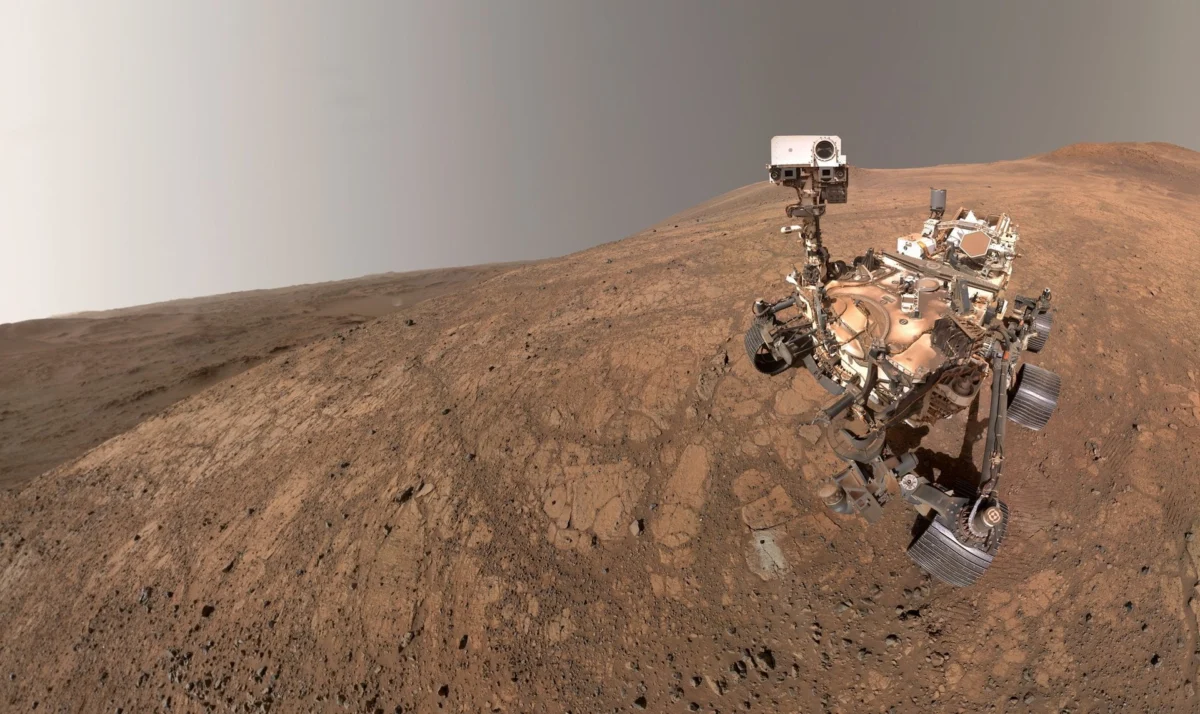
The NASA Perseverance rover, currently navigating the rugged periphery of the Jezero Crater on Mars, has transmitted data revealing a massive, 75-meter-thick stack of layered bedrock that provides a rare window into the Solar System’s most turbulent epoch. This geological formation, designated the “Broom Point member” by the mission’s science team, dates back approximately 3.9 billion years, placing its origin squarely within the Late Heavy Bombardment—a period of intense asteroid activity that reshaped the inner planets. This discovery, detailed in a recent study published in the Journal of Geophysical Research: Planets, marks some of the oldest terrain ever scrutinized by a rover on the Martian surface, offering insights into a chapter of planetary history that has been largely erased from Earth’s own geological record.
For over three years, Perseverance has been exploring the Jezero Crater, a 45-kilometer-wide impact basin in the planet’s northern hemisphere that scientists believe once housed a deep lake and a river delta. However, as the rover began its ascent out of the crater floor and onto the western rim in late 2024, it transitioned from studying the sedimentary history of the lake to investigating the primordial crust of the planet itself. The Broom Point discovery represents a fundamental shift in the mission’s scope, moving from the search for ancient microbial life in river deposits to reconstructing the violent physical forces that forged the Martian landscape billions of years ago.
The Significance of the Late Heavy Bombardment
The Late Heavy Bombardment (LHB) is a hypothesized era occurring between 4.1 and 3.8 billion years ago. During this time, a surge of asteroids and comets collided with the inner Solar System bodies, including Mercury, Venus, Earth, the Moon, and Mars. Scientists believe this chaos may have been triggered by the orbital migration of the giant outer planets—Jupiter, Saturn, Uranus, and Neptune—which disrupted the asteroid and Kuiper belts, sending debris hurtling toward the sun.
On Earth, the evidence of this era is virtually non-existent. Our planet’s active plate tectonics and constant erosion by wind and water have recycled the crust many times over, destroying the rocks that existed during the LHB. Mars, however, is a "one-plate" planet. Lacking the tectonic machinery to subduct and melt its crust, Mars acts as a planetary time capsule. The Broom Point member offers a pristine look at the debris left behind by these ancient impacts, allowing researchers to study the energy, frequency, and composition of the objects that struck the early inner planets.
Ken Farley, the Perseverance deputy project scientist at Caltech, emphasized the rarity of this find in a statement released by NASA’s Jet Propulsion Laboratory (JPL). Farley noted that the rover is now exploring a "brand-new frontier" that predates the very crater it was sent to investigate. By analyzing these ancient layers, scientists can observe a geological timeline that simply does not exist in an accessible form on Earth.
Detailed Geological Findings at Broom Point
The research team, led by geologists from Imperial College London (ICL), utilized Perseverance’s advanced suite of imaging and chemical analysis tools to dissect the Broom Point member. Their findings revealed a complex internal structure consisting of six distinct rock types. These layers are characterized by a mixture of fine-grained rock dust and "breccias"—jagged, angular rock fragments that are fused together.
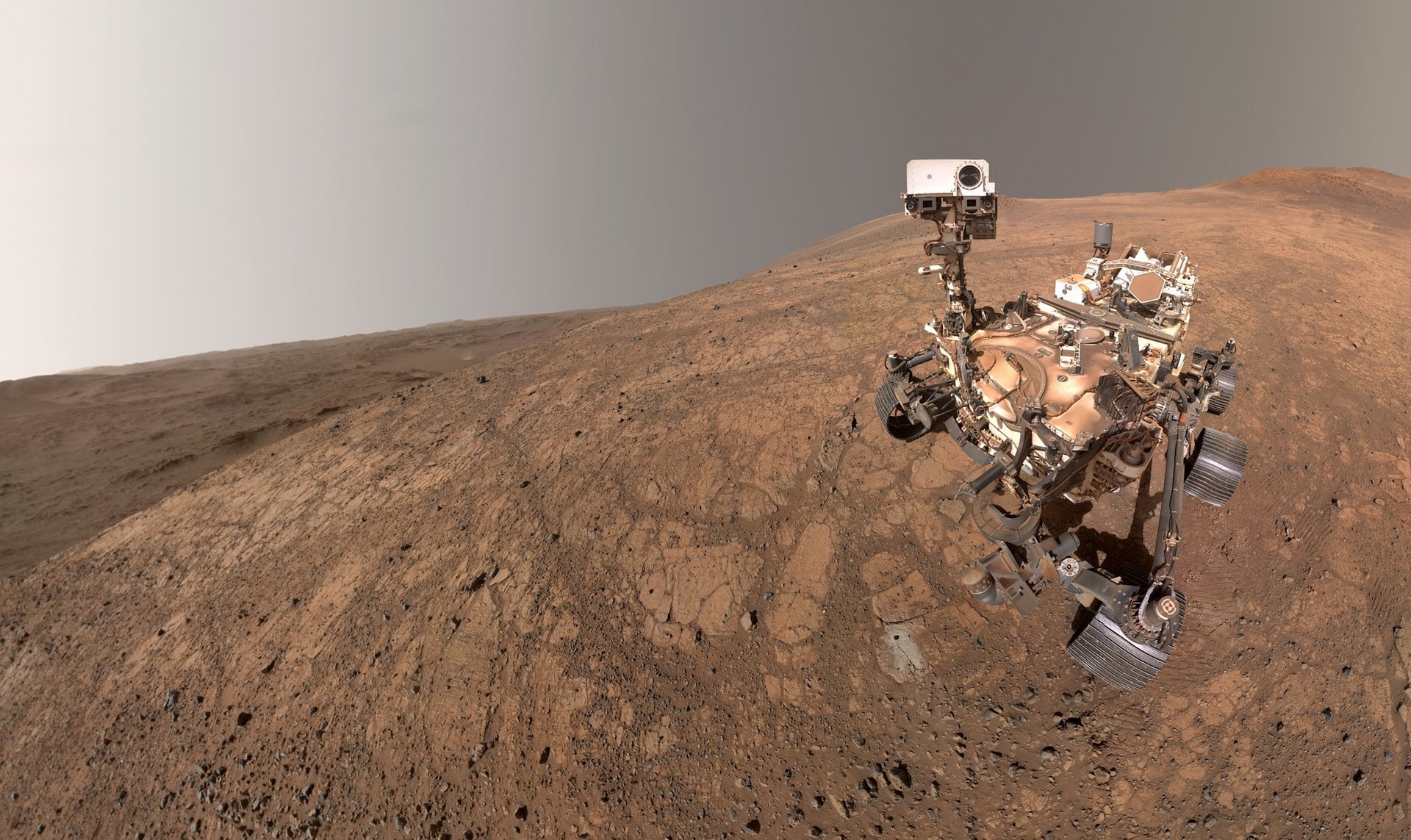
The presence of breccias is a hallmark of high-energy impact events. When an asteroid strikes a planetary surface, the immense pressure and heat shatter the local bedrock and launch fragments into the atmosphere, which then settle back into thick layers. Within the Broom Point breccias, scientists identified cavities known as vesicles. On Earth, these are typically formed by gas bubbles trapped in cooling lava, suggesting that the material at Broom Point was once molten, likely liquefied by the heat of an impact.
Perhaps the most compelling evidence of ancient violence was the discovery of dark glass beads embedded within the rock layers. These impact glasses form when rock is instantly vaporized and then rains back down as molten droplets that solidify before hitting the ground. The researchers noted that the largest of these beads are comparable in scale to those found in the ejecta of the Chicxulub impact—the asteroid event 66 million years ago that led to the extinction of the dinosaurs on Earth. The presence of these beads across multiple layers suggests that the Broom Point region was not shaped by a single event, but rather by a succession of impacts of varying sizes and distances.
A Chronology of Impact and Uplift
The structural orientation of the Broom Point rocks provides clues to the sequence of events that shaped the Jezero region. Observations from Perseverance’s Mastcam-Z and SuperCam instruments revealed that some of these rock layers are tilted at near-vertical angles, exceeding 80 degrees. According to the study’s lead author, Alex Jones, a Ph.D. student at ICL, this extreme tilting cannot be explained by the impact that created the Jezero Crater alone.
Instead, the team proposes a two-stage chronological model:
- The Isidis Impact: Approximately 3.9 billion years ago, a massive asteroid struck Mars, creating the Isidis Basin—a 1,900-kilometer-wide (1,200-mile) depression that remains one of the largest impact features in the Solar System. The debris from this gargantuan collision, along with debris from other contemporaneous impacts, accumulated to form the Broom Point member.
- The Jezero Impact: Sometime after the Isidis event, a smaller asteroid struck the edge of the Isidis Basin, forming the Jezero Crater. This second impact was powerful enough to fracture the pre-existing Broom Point layers, thrusting them upward and tilting them into the steep orientations observed by the rover today.
This sequence suggests that the Broom Point member is a composite record of the Solar System’s early history, capturing debris from far-away "mega-impacts" and smaller, localized collisions.
Interactions with Ancient Water and Ice
Beyond the evidence of asteroid strikes, the Broom Point member also hints at the presence of volatiles—water or ice—during the impact era. Some of the rock layers appear to have been deposited by rapid debris flows. On Earth, such flows are often triggered when molten volcanic or impact material comes into contact with ice or liquid water, causing an explosive expansion of steam (a process known as phreatomagmatic activity).
The researchers theorize that the early Martian surface at this location may have been covered in ice or contained significant groundwater when the impacts occurred. If confirmed, this would suggest that even during the chaotic Late Heavy Bombardment, Mars possessed the ingredients necessary for a hydrosphere. This has profound implications for the search for life, as it suggests that water-rich environments existed on Mars much earlier than previously thought, potentially providing a long-term habitat for prebiotic chemistry or early microbial life to take hold.
Technological Execution and Mission Context
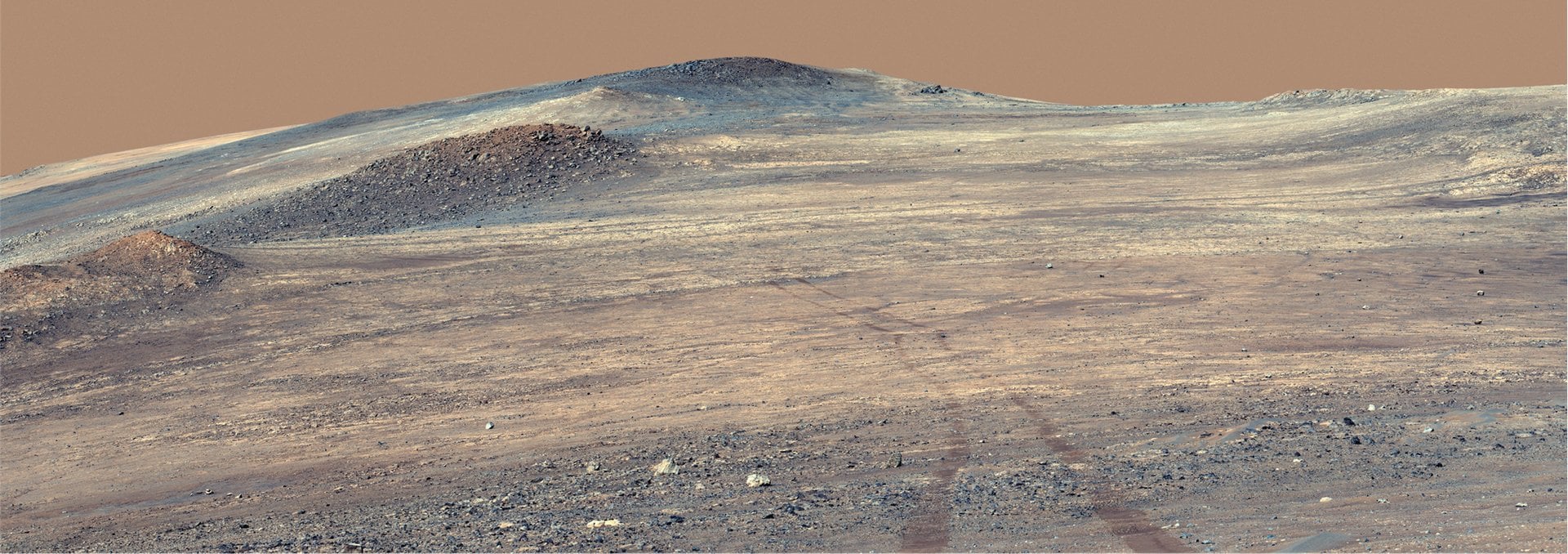
The discovery at Broom Point was made possible by Perseverance’s "walking" laboratory. To reach this site, the rover navigated treacherous terrain, moving from the "Margin Unit"—a carbonate-rich area—to the steep slopes of the crater rim. The rover’s autonomous navigation system, AutoNav, has been instrumental in allowing the vehicle to cover record distances across the Martian surface, reaching Broom Point in mid-2025.
Key instruments involved in this study include:
- Mastcam-Z: A dual-camera system with zoom capability that provided high-resolution 3D images of the layered bedrock.
- SuperCam: A laser-based instrument that determined the chemical and mineral composition of the rocks from a distance.
- PIXL (Planetary Instrument for X-ray Lithochemistry): An X-ray fluorescence spectrometer that mapped the elemental distribution within the breccias and glass beads.
The mission, which landed in February 2021, is currently in its extended phase. While its primary objective remains the collection of samples for future return to Earth, the geological surveying of the Jezero rim is providing the essential "context" needed to understand those samples.
Broader Scientific Implications and Future Outlook
The findings at Broom Point are not merely a local curiosity; they contribute to a broader effort to map the history of the entire Solar System. By comparing the impact record at Jezero Crater with similar features on the Moon (such as the South Pole-Aitken basin) and Mercury, scientists are refining the "crater counting" method used to date planetary surfaces.
Furthermore, the discovery challenges existing models of Martian evolution. It suggests that the planet’s crust was significantly more dynamic during its first billion years than was previously understood. The ability of the Broom Point member to preserve delicate features like gas cavities and glass beads for nearly four billion years confirms that Mars is the premier destination for studying the "missing" history of the inner planets.
As Perseverance continues its climb toward the top of the Jezero rim, the science team anticipates finding even older rocks. Each meter of elevation gained represents a step further back in time, potentially reaching the pre-Isidis crust. These upcoming observations will be critical in determining whether Mars was a "warm and wet" world from the beginning or if its early history was a staccato of violent impacts interspersed with brief periods of habitability.
The data gathered at Broom Point serves as a reminder of the violent origins of our planetary neighborhood. While Earth has hidden its scars beneath oceans and moving continents, Mars stands as a silent witness to the era of impacts that defined the architecture of the Solar System. For the team at NASA and Imperial College London, the layered rocks of Broom Point are more than just stones; they are the pages of a deep-time chronicle that humanity is only just beginning to read.