Sisilia Frederika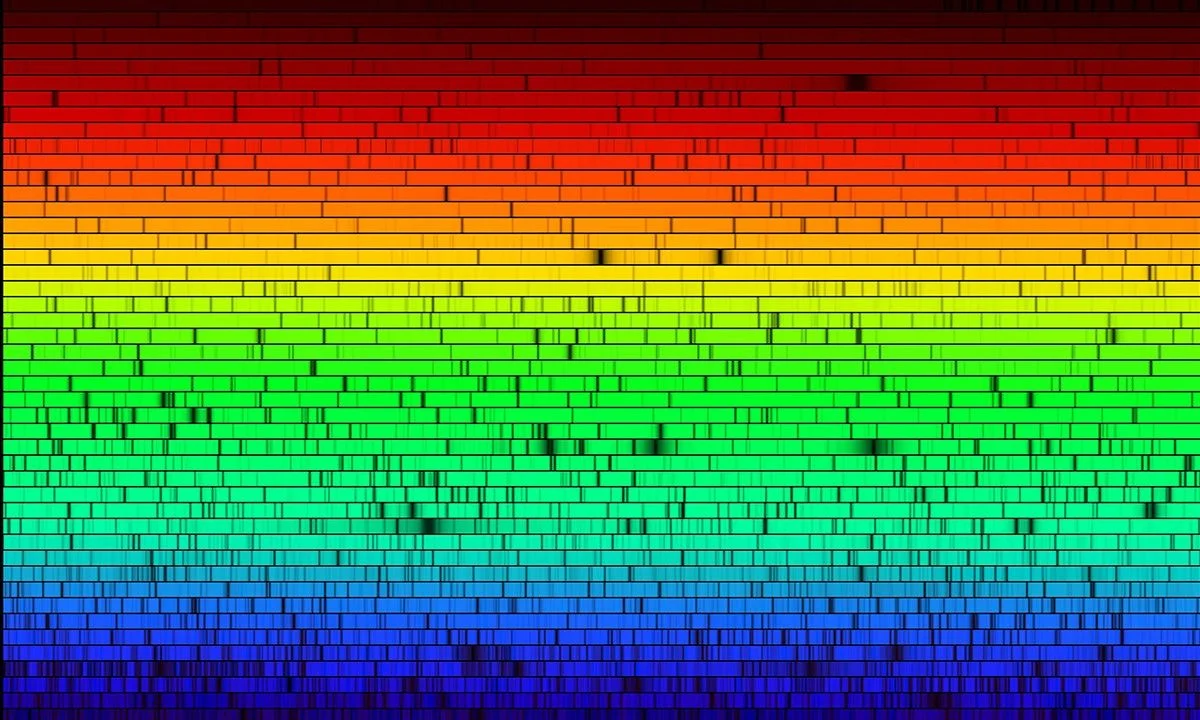
For decades, a fundamental discrepancy has sat at the heart of solar physics, challenging our understanding of the Sun’s chemical makeup and the early history of our Solar System. Recent research led by Sema Caliskan at Uppsala University has finally resolved this long-standing inconsistency regarding the abundance of silver in the Sun. By employing advanced three-dimensional modeling and refined atomic physics, the research team has demonstrated that the Sun contains approximately 55 percent more silver than previous estimates suggested. This discovery brings the Sun’s chemical profile into alignment with the composition of meteorites, providing a more cohesive picture of the primordial cloud from which our planetary system emerged 4.6 billion years ago.
The Solar Composition Conundrum
The mystery of the "missing silver" dates back to a foundational principle of planetary science: the shared origin of the Sun and the rest of the Solar System. Approximately 4.6 billion years ago, a massive cloud of interstellar gas and dust collapsed under its own gravity to form the Sun and the surrounding protoplanetary disk. Because they originated from the same reservoir of material, the Sun and the primitive bodies of the Solar System—specifically meteorites—should theoretically exhibit the same proportions of heavy elements.
While astronomers can measure the Sun’s composition by analyzing its light, they use meteorites as a physical benchmark. Meteorites, particularly a class known as CI chondrites, are considered pristine "time capsules" because they have undergone minimal geological processing since the birth of the Solar System. For most heavy elements, the measurements from the Sun and these meteorites match with remarkable precision. However, silver remained a notable and frustrating outlier. Previous spectroscopic analyses consistently indicated that the Sun was significantly depleted in silver compared to the levels found in meteorites. This gap suggested either an error in our understanding of solar formation or, more likely, a flaw in the methods used to measure stellar chemistry.
Meteorites as the Chemical Gold Standard
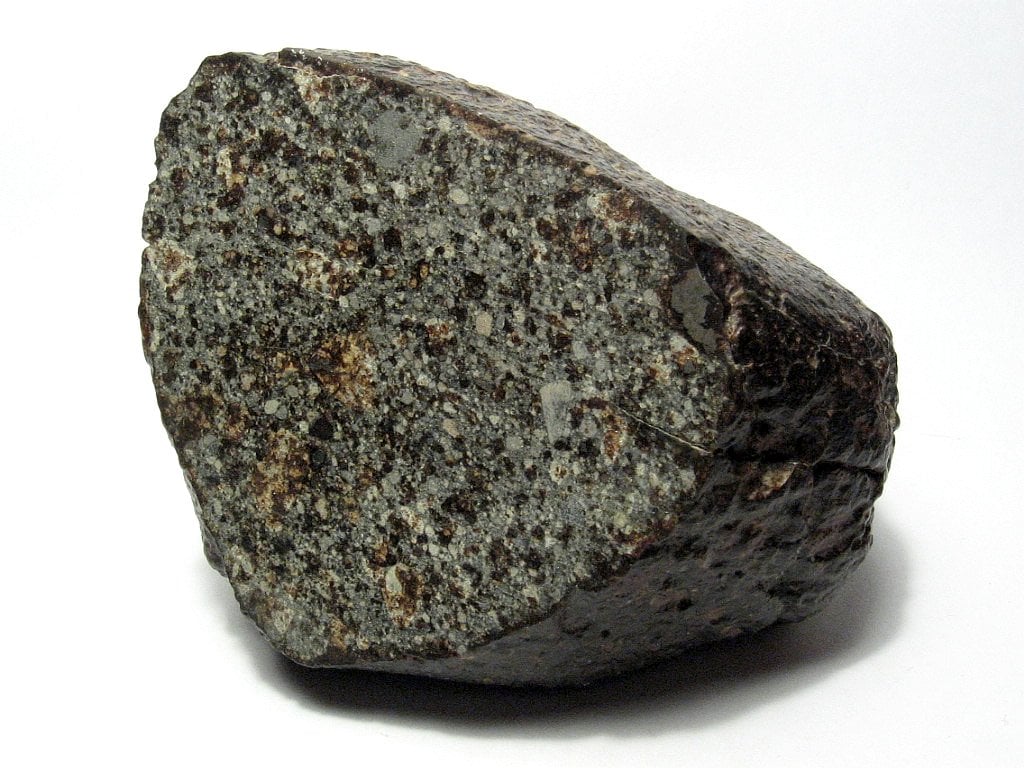
To appreciate the significance of this reconciliation, one must understand the role of meteorites in astrophysics. Specimens like the NWA 869 chondrite provide a direct chemical map of the early Solar System. These rocks contain chondrules—small, round grains that formed from molten droplets in space—and metal flakes that have remained largely unchanged for billions of years.
By analyzing these meteorites in laboratories on Earth, scientists can determine the "cosmic abundance" of elements with high precision. When solar observations fail to match these laboratory findings, it signals a potential misunderstanding of stellar physics. In the case of silver, the discrepancy was not a minor margin of error; it was a substantial gap that called into question the accuracy of the "Solar Standard," the reference point used to determine the composition of every other star in the galaxy.
The Evolution of Stellar Spectroscopy
The method used to determine what a star is made of is known as spectroscopy. Every element in a star’s atmosphere absorbs light at specific, predictable wavelengths. When starlight is passed through a prism or a diffraction grating, it produces a spectrum marked by dark "absorption lines." The width and depth of these lines correlate to the amount of a specific element present in the star’s outer layers.
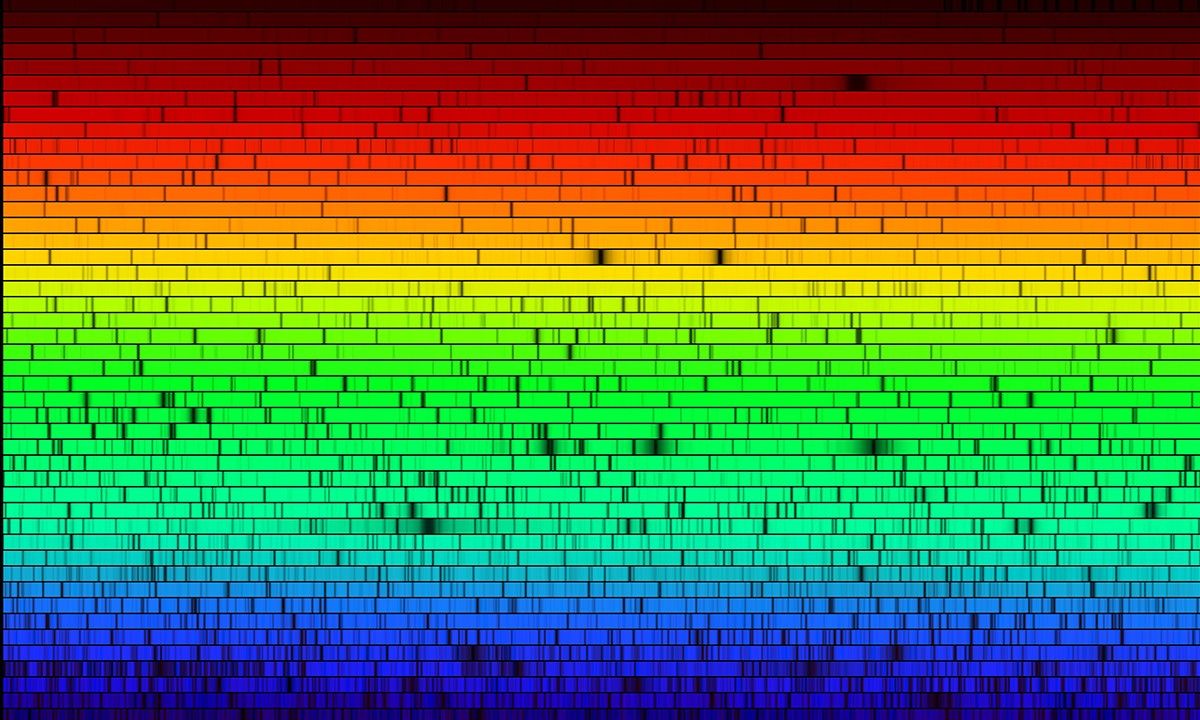
However, translating a dark line on a graph into a precise numerical value for elemental abundance is a complex task. It requires a mathematical model of the star’s atmosphere. For years, these models were limited by the computational power available to scientists. Traditionally, astronomers used one-dimensional (1D) models that assumed the Sun’s atmosphere was a series of static, uniform layers. While these 1D models were sufficient for many elements, they failed to capture the chaotic, moving environment of the real Sun, leading to inaccuracies in the measurement of elements like silver.
Moving from 1D Simplicity to 3D Complexity
The breakthrough achieved by Sema Caliskan and the team at Uppsala University stems from the application of three-dimensional (3D) hydrodynamic models. Unlike the static 1D models of the past, these new simulations account for the turbulent, boiling nature of the Sun’s surface. The Sun’s outer layers are characterized by convection—the rising of hot gas and the sinking of cooler gas—which creates a "granulated" appearance.
This 3D modeling is significantly more computationally intensive but offers a far more realistic depiction of how light travels through the solar plasma. The researchers found that the temperature fluctuations and physical movement of the gas in a 3D environment significantly change how silver atoms absorb light. In the older 1D models, these nuances were smoothed over, leading to an underestimation of how much silver was actually present to produce the observed absorption lines.
The Impact of Non-LTE Physics
Beyond the shift to 3D modeling, the study incorporated a critical advancement in atomic physics known as "Non-Local Thermodynamic Equilibrium" (Non-LTE) effects. In simpler models, scientists often assume "Local Thermodynamic Equilibrium" (LTE), which posits that the state of atoms is determined solely by the local temperature of the gas surrounding them.
In reality, the intense radiation field of the Sun can "knock" atoms out of this equilibrium. Light itself influences the behavior of silver atoms, changing the way they interact with photons and, consequently, the appearance of their absorption lines in the solar spectrum. By accounting for these Non-LTE effects, the Uppsala team was able to describe the silver atoms’ interactions with unprecedented accuracy. When the researchers combined the 3D hydrodynamic models with these sophisticated atomic physics calculations, the "missing" silver reappeared in their data.
Quantifying the Discovery: A 55 Percent Adjustment
The results of the new analysis were stark. The revised calculations showed that the Sun contains 55 percent more silver than the previous scientific consensus suggested. This dramatic shift almost perfectly closes the gap between solar observations and meteoritic data.
This 55 percent increase is not merely a technical correction; it is a validation of the "Standard Solar Model." It confirms that the Sun and meteorites do, in fact, share a common chemical heritage, reinforcing our foundational theories of Solar System formation. The resolution of this decades-old inconsistency demonstrates that when observations and theory clash, the solution often lies in refining the tools of measurement rather than discarding established cosmic history.
Nucleosynthesis and the Origin of Silver
The importance of getting the silver count right extends to our understanding of the history of the Milky Way. Silver is a heavy element, and like all elements heavier than iron, it is not produced by the normal fusion processes inside a living star. Instead, silver is forged in the extreme environments of dying stars through processes known as neutron capture.
There are two primary pathways for this: the s-process (slow neutron capture), which occurs in the late stages of medium-sized stars, and the r-process (rapid neutron capture), which takes place during violent events like supernovae or the merger of two neutron stars. By accurately measuring the amount of silver in the Sun, scientists can better calculate how much each of these cosmic events contributed to the chemical "soup" that eventually formed our Solar System.
Broader Implications for Galactic Archaeology
The Sun serves as the "standard candle" for the entire field of stellar spectroscopy. When astronomers look at a distant star to determine its age, origin, or potential for hosting habitable planets, they do so by comparing it to the Sun. If the solar reference point for an element like silver is incorrect, then every subsequent measurement of every other star in the galaxy is also skewed.
Sema Caliskan’s research provides a more reliable yardstick for the field of "galactic archaeology." This branch of astronomy seeks to reconstruct the history of the Milky Way by studying the chemical compositions of stars of different ages. With a corrected value for solar silver, researchers can now more accurately trace the evolution of heavy elements across billions of years of galactic history.
Future Research and Global Scientific Impact
Following the success of the silver study, the Uppsala University team intends to apply these high-fidelity 3D Non-LTE models to other elements and other stars. There are several other "problematic" elements whose solar abundances still show slight deviations from meteoritic values. By refining the models for these elements, the team hopes to create the most accurate map of solar chemistry ever produced.
Furthermore, the team plans to expand their scope to include stars of various types and ages across the Milky Way. This will allow them to observe how the production of silver and similar heavy elements has changed over the lifetime of the universe. These findings will provide vital data for nuclear physicists trying to model the r-process and s-process, as well as for cosmologists studying the chemical enrichment of galaxies.
The resolution of the solar silver mystery is a testament to the power of iterative science. It serves as a reminder that even the most "settled" facts in astronomy—such as what our own Sun is made of—are subject to revision as our computational tools and physical models improve. By looking closer at the light of our nearest star, scientists have not only solved a local mystery but have also sharpened our view of the chemical history of the entire cosmos.