Garick Elordi
The landscape of classic gaming preservation and modernization has reached a significant milestone as an independent developer successfully transitioned the foundational action role-playing game Diablo 2 into a fully immersive virtual reality experience. This conversion, which shifts the title from its traditional isometric perspective to an intimate first-person viewpoint, represents a technical feat that many long-term fans of the franchise considered improbable given the original game’s engine constraints. The project, spearheaded by a modder known as Sergious (documented on Reddit under the handle Fantastic-Author2736), utilizes a suite of sophisticated tools to reimagine Sanctuary not as a distant battlefield viewed from the heavens, but as a visceral, harrowing world experienced at eye level.
Technical Implementation and Gameplay Mechanics
The Diablo 2 VR mod is built upon a foundation of specialized software including FlatVR and BodyWalk, though the developer has noted that the latter is not strictly mandatory for basic functionality. By intercepting the game’s rendering and input pipelines, Sergious has managed to map the complex mechanics of an early-2000s ARPG onto modern VR hardware. The transition involves more than a simple camera shift; it requires a complete overhaul of the User Interface (UI) and Heads-Up Display (HUD) to ensure playability within a 360-degree environment.
Footage released by the developer showcases a Sorceress navigating the Blood Moor, the game’s iconic starting area. In this version, the traditional static HUD has been replaced with diegetic elements—information that exists within the game world itself. The character’s health and mana globes, along with the skill toolbar, are projected onto the player’s virtual left forearm. This allows players to check their vital statistics with a natural glance at their wrist, similar to checking a watch. Furthermore, the inventory system has been reimagined as a physical belt, and the world map is held as a tangible object in the player’s hand. These changes address one of the primary hurdles of VR porting: translating menu-heavy interfaces into intuitive, spatial interactions.
The Evolution of the Diablo Perspective
Since its inception in 1996, the Diablo series has been defined by its isometric, "god-view" camera. This perspective was originally chosen by Blizzard North to facilitate tactical movement and to manage the technical limitations of 2D sprite rendering. When Diablo 2 was released in 2000, it refined this formula, creating a dark, gothic atmosphere that relied on limited light radii and sudden enemy ambushes from the screen’s edges.
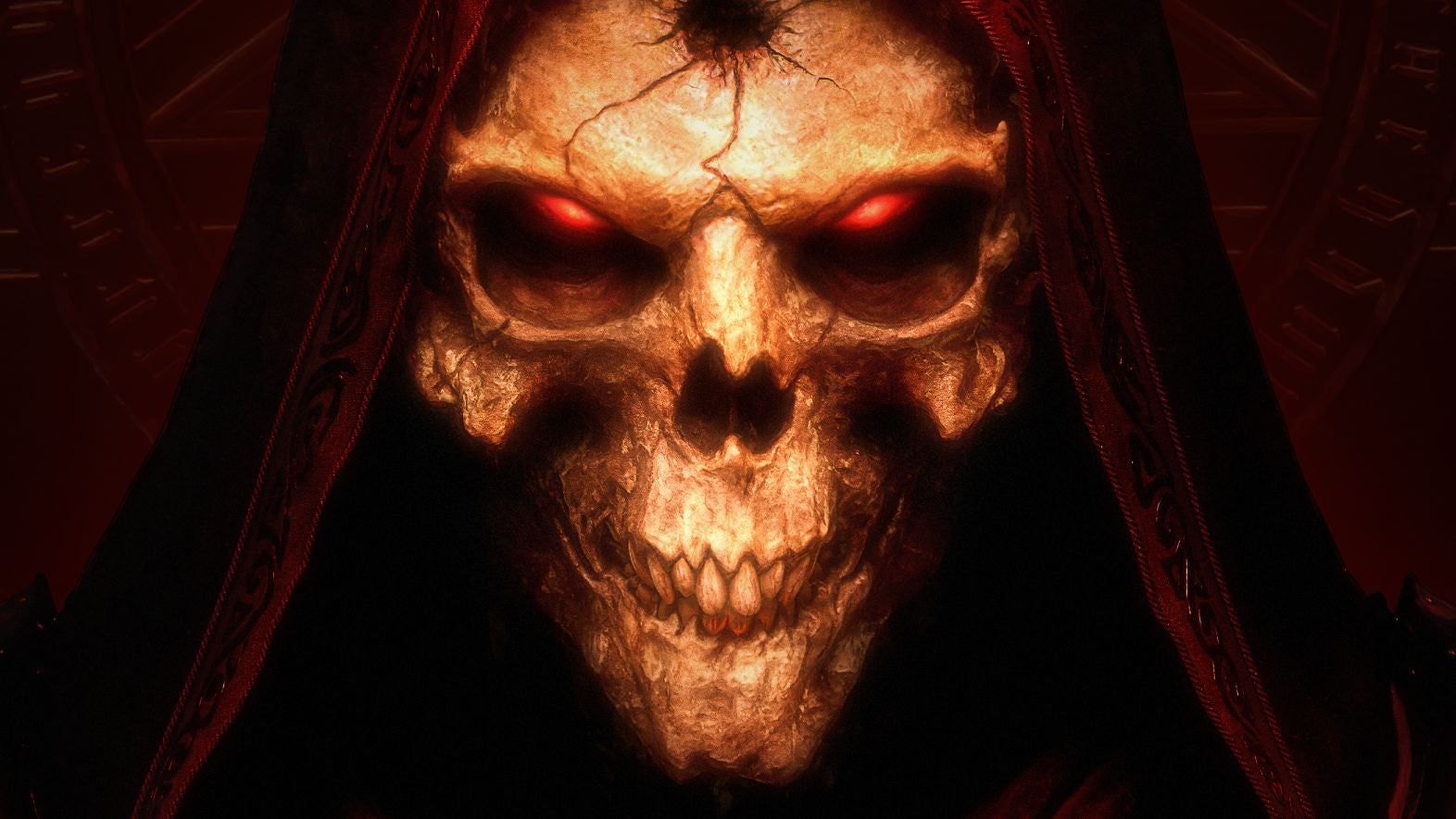
The move to a first-person VR perspective fundamentally alters the player’s psychological relationship with the environment. In the isometric view, the player acts as an overseer, directing a hero through a dioramas of carnage. In Sergious’s VR mod, the scale of the world is dramatically magnified. Zombies and skeletons, once small sprites on a monitor, become life-sized threats that tower over the player. Industry analysts suggest that this shift in perspective could revitalize interest in the classic title, offering veteran players a way to rediscover the claustrophobic horror that defined the series’ early lore but was often mitigated by the detached camera angle.
Chronology of Development and Availability
The project has moved from a conceptual stage to a functional prototype with remarkable speed. The modder has made the source files and installation instructions available via GitHub under the repository "diablo2-vr-port." This open-access approach allows the broader modding community to contribute to the project’s stability and feature set.
- Early Concept Phase: Research into the FlatVR framework to determine if Diablo 2’s logic could support a 3D camera.
- UI Integration: The development of the "arm-mounted" HUD to replace the 2D overlay.
- Public Demonstration: The release of gameplay footage on Reddit, demonstrating combat, spellcasting, and exploration.
- Community Release: The publishing of mod files on GitHub for public testing and iterative feedback.
While the mod is currently optimized for specific character classes like the Sorceress, whose ranged fireball attacks translate well to VR aiming, the developer continues to refine the experience for melee-focused classes like the Barbarian or Paladin, which present unique challenges regarding motion sickness and "weight" in virtual combat.
Hardware Synergy: The Valve Steam Frame
The emergence of this mod coincides with a pivotal moment in VR hardware. Valve recently expanded its footprint in the industry with the release of the Steam Frame, a high-end wireless headset that has garnered critical acclaim for its balance of performance and comfort. Priced at £889 for the base model, the Steam Frame represents a significant investment, yet it provides the necessary fidelity to render older games like Diablo 2 with the clarity required to avoid the "screen door effect" that plagued earlier VR generations.
The Steam Frame’s ability to handle "hybrid" experiences—where non-VR games are projected into a 3D space—serves as a bridge for projects like the Diablo 2 VR mod. Testers have noted that the headset’s wireless capabilities are particularly beneficial for a game like Diablo, where players may find themselves physically turning to track enemies approaching from the flank. The synergy between ambitious fan-made software and cutting-edge hardware is creating a secondary market for "legacy VR," where classic PC titles are given a second life through unofficial patches and community-driven innovation.

Official Stance and the Future of the Franchise
Blizzard Entertainment has historically maintained a complex relationship with the modding community. While the company has supported certain types of user-generated content, it has also been protective of its intellectual property, particularly concerning its online Battle.net infrastructure. As this VR mod gains traction, it remains to be seen how Blizzard will respond. Currently, the mod is intended for single-player or private use, which typically falls under the umbrella of transformative fan work, provided it does not facilitate piracy.
The timing of the mod is also notable given recent announcements regarding the future of the franchise. At a recent BlizzCon event, Blizzard confirmed that early planning for Diablo 5 is underway. While the studio has not officially committed to a change in perspective, there has been persistent speculation among the fanbase regarding a potential shift toward an over-the-shoulder or first-person camera to compete with modern action-RPGs. The success and popularity of Sergious’s VR mod serve as a "proof of concept" that the Diablo aesthetic can survive, and even thrive, outside of its traditional isometric cage.
Broader Implications for the ARPG Genre
The Diablo 2 VR conversion is more than a novelty; it is a case study in the "Universal VR" (UVR) movement, which seeks to make every digital experience accessible through spatial computing. By proving that a game built on 25-year-old logic can be successfully ported to VR, the project opens the door for other classic titles in the genre—such as Grim Dawn or Path of Exile—to receive similar treatments.
The implications for player immersion are profound. In the VR version of Diablo 2, the "Den of Evil" is no longer just the first quest on a checklist; it is a dark, stifling cave where the sound of a shaman’s chant echoes from behind a physical pillar. This level of environmental storytelling was always present in the game’s design, but it was often obscured by the mechanical necessity of the top-down view.
As the modding community continues to polish the Diablo 2 VR experience, the project stands as a testament to the enduring legacy of Blizzard’s masterpiece. It suggests that the "Greatest ARPG of All Time" still has secrets to reveal, provided one is willing to look at it through a different lens. For those with the hardware and the technical inclination, the fields of the Rogue Encampment have never looked quite so real—or quite so dangerous.