admin
admin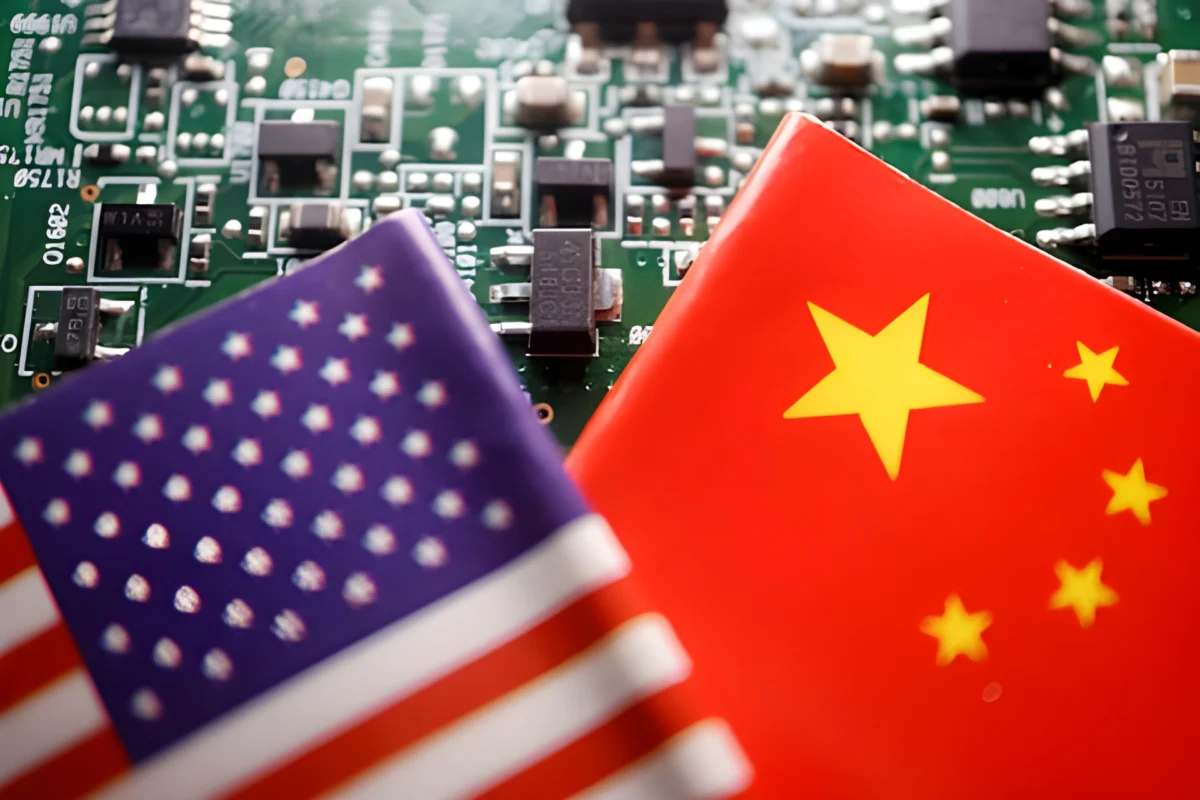
The landscape of the global semiconductor industry is witnessing a significant strategic shift as China’s leading memory manufacturers, ChangXin Memory Technologies (CXMT) and Yangtze Memory Technologies Corp (YMTC), redefine their relationships with Western tech titans. Recent industry intelligence suggests that these domestic champions, specializing in Dynamic Random-Access Memory (DRAM) and NAND flash respectively, are no longer viewing a primary role in Apple’s supply chain as an ultimate objective. Instead, they are positioning any potential certification from the Cupertino-based giant as a symbolic "seal of quality" intended to bolster their reputation among other Western clients and domestic stakeholders, while prioritizing national self-sufficiency goals and high-margin enterprise contracts.
The Strategic Shift: Quality Validation Over Volume Supply
For years, becoming a primary supplier for Apple was considered the pinnacle of achievement for hardware manufacturers, offering high volumes and global prestige. However, the "Apple labyrinth"—characterized by notoriously thin margins, rigorous audits, and the requirement for massive dedicated capacity—appears less attractive to CXMT and YMTC in the current geopolitical climate. Reports from industry analysts, including those from DigiTimes, indicate that while these companies seek the bragging rights associated with being an Apple-certified vendor, they have little desire to become critical, high-volume nodes within Apple’s global logistics network.
The rationale behind this move is twofold. First, achieving "Apple-grade" status serves as definitive proof that Chinese-made memory has reached parity with industry leaders like Samsung, SK Hynix, and Micron. This validation is a powerful marketing tool when courting North American and European cloud service providers who may be wary of the technical maturity of Chinese silicon. Second, both CXMT and YMTC are currently operating under a mandate to secure China’s domestic supply chain, leaving limited overhead for the volatile demands of consumer electronics giants.
Financial Fortification and the Path to Public Markets
The financial health of these two entities has seen a dramatic improvement, providing them with the capital necessary to pursue aggressive expansion without relying on the immediate revenue of an Apple contract. YMTC, despite being placed on the U.S. Entity List in late 2022, has reportedly achieved profitability in 2024. This turnaround is attributed to strong domestic demand and a successful pivot toward higher-value enterprise storage solutions. To further fuel its growth, YMTC is preparing for a public flotation later this year, with an aim to raise approximately 33 billion Yuan (roughly $4.5 billion).
CXMT is following an even more ambitious financial trajectory. The DRAM specialist recently concluded a massive funding round, raising 66.6 billion Yuan ($9.2 billion) ahead of its own anticipated Initial Public Offering (IPO). This influx of capital has allowed CXMT to engage in a rapid capacity build-out that rivals the historical growth rates of established South Korean competitors. With flush balance sheets, both companies are prioritizing long-term infrastructure over the short-term prestige of a high-volume consumer partnership.
Aggressive Capacity Expansion and the 2027 Self-Sufficiency Goal
China has set a clear target to achieve at least 50 percent self-sufficiency in memory chips by the end of 2027 or 2028. To meet this objective, CXMT and YMTC are expanding their fabrication capabilities at a record pace.
CXMT’s Ascent in the DRAM Market
CXMT is currently in the midst of a massive scaling operation. By the end of this year, the company expects to reach a production capacity of 300,000 wafers per month, a 50 percent increase from its current output of 200,000. Looking further ahead, the construction of new fabrication plants in Shanghai and Hefei is projected to double that capacity to 600,000 wafers per month. If these targets are met, CXMT is on a trajectory to overtake U.S.-based Micron in total volume production by 2030. Furthermore, CXMT is carving out a niche in the high-stakes Artificial Intelligence (AI) market, dedicating roughly 50,000 wafers per month to High Bandwidth Memory (HBM) production—a critical component for AI accelerators.
YMTC’s Accelerated NAND Strategy
On the NAND flash side, YMTC is accelerating its timelines. The company now intends to commission its "Wuhan Phase 3" plant by the fourth quarter of 2026, moving up the schedule from the previously estimated second quarter of 2027. This facility is designed for an ultimate capacity of 100,000 wafers per month. Initial production is expected to start at 50,000 wafers, with a strategic 20 percent of that volume reserved for the trial production of Low-Power Double Data Rate (LPDDR) modules, signaling YMTC’s intent to diversify its portfolio beyond simple storage.
Navigating Geopolitics: Stealth Supply and Western Integration
Despite the friction caused by international trade restrictions, CXMT and YMTC are successfully infiltrating Western markets through "stealth" supply chains. This strategy allows them to capture the "premium" paid by Western customers while circumventing the political sensitivities associated with Chinese-sourced components.

YMTC has reportedly utilized third-party independent module manufacturers to act as intermediaries. These entities purchase YMTC NAND flash and assemble it into enterprise-grade Solid-State Drives (SSDs). By the time these products reach the end-user—often data centers in North America or Europe—the "YMTC" branding is obscured, though the underlying technology remains Chinese.
Similarly, CXMT has begun product qualification processes with small and mid-sized cloud service providers in the United States and Canada. By encouraging these customers to lock in capacity commitments years in advance, CXMT is effectively "sold out" through 2027. Recent analysis suggests that CXMT’s utilization rate is hovering around 95 percent, leaving virtually no room for the massive, sudden orders that a company like Apple would require for a new iPhone launch.
The Apple Equation: Why the Labyrinth is Being Avoided
The relationship between Apple and Chinese memory suppliers has been a subject of intense speculation for years. In 2022, rumors circulated that Apple was close to certifying YMTC for use in iPhones sold within the Chinese market. However, political pressure from Washington reportedly stalled those plans.
Current data suggests that if Apple were to source memory from CXMT for its China-focused demand alone, it would require approximately 6.6 percent of CXMT’s total year-end capacity. Given that CXMT is already fully booked through 2027, the company would have to displace existing, higher-margin domestic or enterprise customers to accommodate Apple.
From a strategic standpoint, CXMT and YMTC have calculated that the "Apple Tax"—the high cost of compliance and the risk of over-dependence on a single American client—outweighs the benefits. By maintaining a minimal, "certified but low-volume" relationship, they gain the marketing prestige of being an Apple supplier without the operational vulnerability.
Historical Timeline: The Rise of China’s Memory Champions
- 2016: CXMT (then Innotron) and YMTC are founded as part of China’s national push for semiconductor independence.
- 2019: YMTC announces its proprietary Xtacking architecture, proving it can innovate rather than just replicate.
- 2020-2021: CXMT begins mass production of DDR4 and LPDDR4, narrowing the generational gap with Samsung and Micron.
- 2022: The U.S. Department of Commerce adds YMTC to the Entity List, restricting its access to advanced chipmaking equipment.
- 2023: CXMT introduces China’s first home-grown LPDDR5 and DDR5 modules.
- 2024: YMTC reaches profitability; CXMT raises 66.6 billion Yuan in a pre-IPO round.
- 2026-2027 (Projected): YMTC Wuhan Phase 3 comes online; CXMT reaches 600,000 wafers per month.
Broader Implications for the Global Semiconductor Market
The refusal of CXMT and YMTC to bend their business models to suit Apple signifies a maturing Chinese semiconductor ecosystem. It suggests that domestic players are no longer desperate for Western validation to survive; they have sufficient internal demand and capital to set their own terms.
For global leaders like Samsung and SK Hynix, this represents a dual threat. In the short term, they face losing market share within China as local firms prioritize domestic "buy-national" policies. In the long term, as CXMT and YMTC use their "Apple-certified" status to win over Western cloud providers, the South Korean giants will face stiffer competition in the high-margin data center market.
Furthermore, the aggressive expansion of CXMT could lead to a global DRAM oversupply by the late 2020s. If CXMT successfully overtakes Micron in volume by 2030, the downward pressure on memory prices could fundamentally alter the profitability of the entire sector. While Apple may not be getting its chips from CXMT today, the ripples created by these Chinese behemoths will undoubtedly reshape the economics of every device Apple builds in the decade to come.
In conclusion, the strategic "snub" of Apple’s volume supply chain by CXMT and YMTC is a calculated move. By prioritizing self-sufficiency, technological parity, and stealthy integration into Western enterprise markets, China’s memory leaders are playing a long game—one where the goal is not just to be a part of the global supply chain, but to eventually lead it.