Evan Lee Salim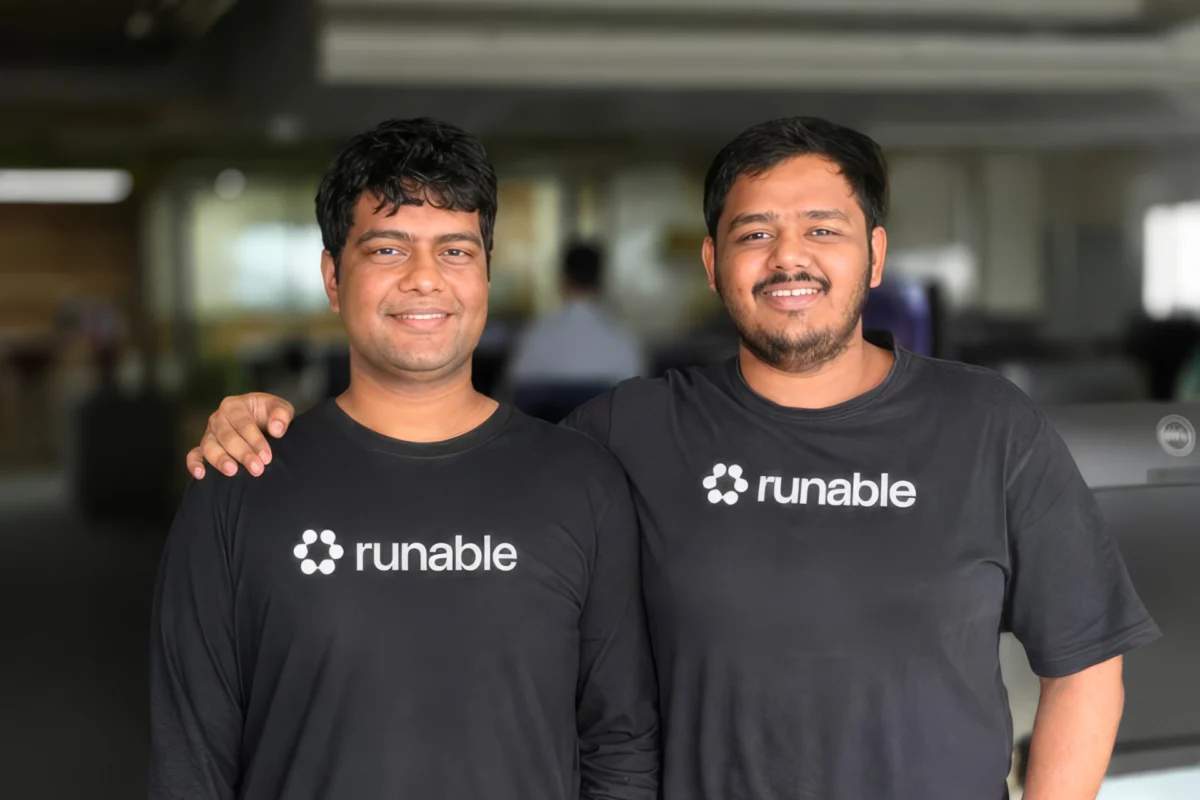
As artificial intelligence continues to democratize the creation of websites and applications, a burgeoning Indian startup, Runable, is strategically positioning itself to capitalize on the subsequent, often more challenging, phase of business development: customer acquisition and sustainable growth. The Bengaluru-based firm has successfully closed a Series A funding round, raising $21 million to expand its innovative platform designed to empower small and medium-sized businesses (SMBs) with AI-powered marketing and growth solutions. This significant investment underscores a growing conviction among venture capitalists that the next frontier in AI lies not just in building, but in autonomously growing enterprises.
The Series A round was co-led by two prominent venture capital firms, Susquehanna Venture Capital and Nexus Venture Partners, signaling strong investor confidence in Runable’s vision and market potential. Existing investors Together Fund and Array VC also participated, reinforcing their commitment to the startup’s trajectory. This all-equity, primary funding infusion values Runable at a robust $65 million post-investment, according to co-founder and CEO Umesh Kumar. The capital infusion is earmarked for aggressive expansion, product development, and scaling the company’s unique AI agent capabilities.
The Paradigm Shift: From AI Building to AI Growth
Runable’s core premise challenges the conventional understanding of AI’s role in business. While many current AI platforms and coding tools, such as Anthropic, OpenAI, Cursor, Lovable, and Replit, focus primarily on facilitating software development and content creation, Runable is targeting the crucial post-creation phase. In an increasingly crowded digital landscape, building a product is often just the first step; finding and retaining customers, running effective marketing campaigns, and optimizing business operations for growth remain significant hurdles, particularly for SMBs lacking extensive resources or technical expertise.
Umesh Kumar, co-founder and CEO (pictured right), articulated this philosophy in an exclusive interview: "In the end, a business doesn’t require Codex or Claude Code or anything. They require real outcomes. If I am paying an agency $10,000 to run my Google Ads, can someone come in and do it for me for a lower price? That’s where Runable comes in." This statement encapsulates Runable’s commitment to delivering tangible business results rather than merely providing development tools. The startup aims to democratize access to sophisticated marketing and growth strategies, making them affordable and accessible through an intuitive AI agent.
A Deep Dive into Runable’s Offering: The General-Purpose AI Agent
Runable, founded recently in 2025, has swiftly emerged as a key player in this evolving AI landscape. Initially conceptualized as an AI infrastructure startup focused on building browser technology for large-scale data scraping, the company underwent a strategic pivot based on organic user behavior. Co-founders Umesh Kumar and Saksham Sarda (pictured left) observed that users were increasingly tasking their browser-based agent with generating various outputs, including slide decks and websites, indicating a broader need for a general-purpose AI agent capable of more diverse tasks.
This pivot proved instrumental, propelling Runable from zero to a remarkable $2 million annualized revenue run rate within just three weeks of launching its payment system in March. Today, Runable’s AI agent empowers users to create websites, applications, presentations, and other digital content using natural language prompts, while also managing underlying infrastructure like deployment and analytics. The platform’s innovation lies in its expansion into the "grow" side of business operations. This extended capability includes running targeted ad campaigns, managing social media presence, optimizing for search engines (SEO), and enhancing a business’s visibility and engagement within AI chatbot results.
Kumar envisions a future where small business owners can simply instruct Runable to achieve a specific customer acquisition target, eliminating the need to separately configure websites, analytics tools, advertising accounts, and marketing campaigns. This integrated, outcome-driven approach promises to significantly reduce the complexity and cost associated with digital business growth, freeing entrepreneurs to focus on their core products and services.
Funding and Investor Confidence: A Bet on the Future of SMB Growth
The $21 million Series A funding round is a testament to the investor community’s belief in Runable’s disruptive potential. Susquehanna Venture Capital and Nexus Venture Partners, both prominent names in the global venture capital arena, bring significant expertise and resources. Susquehanna, known for its investments across various tech sectors, likely sees Runable as a crucial enabler for the vast SMB market, which often struggles with digital transformation. Nexus Venture Partners, a leading India-focused VC firm, recognizes the immense opportunity within the rapidly digitizing Indian and global SMB ecosystem. Their co-leadership of the round suggests a strong conviction that Runable is uniquely positioned to capture a significant share of this market.
The participation of existing investors, Together Fund and Array VC, further validates Runable’s progress and strategic direction. Their continued backing demonstrates confidence in the management team, the product roadmap, and the company’s ability to execute its ambitious vision. The $65 million post-money valuation, achieved at such an early stage and with a lean 15-person team, highlights the perceived high growth potential and the strategic importance of Runable’s integrated AI solution in the evolving digital economy.
The Genesis and Strategic Pivot: Adapting to User Needs
Runable’s journey, though brief, showcases remarkable agility. Founded in 2025, the company initially focused on a niche within AI infrastructure. This early phase involved developing sophisticated browser technology capable of scraping data at scale, a foundational element for many AI applications. However, the founders keenly observed how their initial user base interacted with their technology. The unexpected demand for content generation – slide decks, websites, and other creative outputs – revealed a broader, unmet need for a more versatile AI agent.
This user-driven insight prompted a decisive strategic pivot towards a general-purpose AI agent. This adaptability is a hallmark of successful startups, allowing them to iterate and refine their offerings based on real-world market feedback. The rapid transition from an infrastructure play to an outcome-oriented growth platform, culminating in a $2 million annualized revenue run rate within weeks of monetizing, underscores the market’s readiness for such a solution and Runable’s ability to execute this shift effectively. This rapid traction also highlights the burgeoning demand for AI tools that directly translate into business value, rather than merely providing components.
Market Landscape and Competitive Edge: Carving a Niche
The artificial intelligence market is fiercely competitive, with a multitude of players vying for dominance. On one side, there are AI giants like OpenAI and Anthropic, which develop foundational large language models and increasingly offer sophisticated AI agents. On the other, there are specialized coding platforms such as Cursor, Lovable, and Replit, catering primarily to developers. Runable, however, deliberately steers clear of directly competing with these entities in their core domains.
Runable’s target demographic is distinct: small businesses and non-technical entrepreneurs who require comprehensive solutions without the need to "stitch together multiple services." While developer-centric tools might offer advanced coding assistance, they often demand a level of technical proficiency and integration effort that is prohibitive for most SMB owners. Runable’s value proposition lies in its ability to abstract away this complexity, providing an all-in-one platform for both creation and growth.
Kumar explicitly stated that Runable is not attempting to outcompete coding agents. For professional developers working with local files or primarily focused on writing code, tools like OpenAI’s Codex or Anthropic’s Claude Code may indeed be a better fit. Runable, instead, targets those who wish to transform an AI-generated product into a fully functioning, customer-generating business without the overhead of configuring numerous disparate tools and services.
Within the nascent general-purpose AI agent space, Runable identifies Manus and Genspark as its closest competitors. These platforms also aim to serve similar user segments and markets. However, Runable distinguishes itself by placing a pronounced emphasis on customer acquisition and business growth through AI, rather than solely on AI-powered content or software building. This outcome-focused differentiation is critical in a market where the ultimate goal for most businesses is profitability and expansion.
Traction and Global Reach: Early Success and Future Ambitions
Runable’s rapid ascent is further evidenced by its impressive user base. The company currently boasts approximately 1.7 million registered users, demonstrating significant global appeal. Its largest markets include the United States, the United Kingdom, and Japan, indicating a strong international footprint from the outset. While Brazil is also a notable market, Runable plans to intensify its focus on the U.S., UK, and Japan, with a particular expectation for Japan to emerge alongside the U.S. as a top-tier market in the very near future. This geographical focus suggests a strategic move to concentrate resources on regions with high digital adoption rates and a substantial SMB sector.
This global traction, achieved with a relatively small team, underscores the universal demand for accessible and effective digital growth solutions. It also reflects the efficiency of Runable’s AI agent in reaching and serving diverse user needs across different cultural and economic contexts.
Operational Challenges and Future Economics: Navigating the Cost of AI
Despite its impressive user growth and revenue velocity, Runable faces the inherent challenges common to many early-stage AI companies, particularly concerning operational economics. Kumar acknowledged that the startup currently operates with negative gross margins. This is largely attributable to the high computational costs associated with running sophisticated AI models, coupled with Runable’s strategy of subsidizing AI usage for its customers to encourage adoption and demonstrate value.
The consumption of over 1 trillion tokens by its users in the last 90 days, with 60% to 70% of that usage coming from paying customers, highlights both the immense utility of the platform and the significant cost burden. To address this, Runable is pursuing a multi-pronged strategy. The company is actively working with a mix of models, including the development of its own proprietary AI models. This approach aims to reduce reliance on third-party model providers, which typically incur higher per-token costs. Furthermore, Kumar expressed optimism about the industry-wide trend of falling inference costs, predicting a future where the same quality of inference can be provided at "almost 10x less cost." This projected reduction in operational expenses is crucial for Runable’s long-term profitability and scalability.
Navigating the AI Agent Ecosystem: Differentiation in a Crowding Field
One of Runable’s most significant challenges lies in differentiating itself as major AI model providers increasingly develop their own agent capabilities. As companies like OpenAI and Anthropic enhance their foundational models with more sophisticated agentic features, the line between a general-purpose AI agent like Runable and an advanced model’s native agent blurs.
However, Kumar asserts that Runable’s distinct advantage lies in its holistic approach: "Runable’s advantage is handling the work required to produce an outcome for a small business – including infrastructure, analytics, and distribution – without requiring users to stitch together multiple services." This integrated solution, managing everything from website deployment to analytics and marketing campaigns, stands in contrast to many foundational AI agents that might still require significant configuration and external integrations.
A brief test conducted by TechCrunch highlighted both the strengths and current limitations of Runable’s agent. When asked to build and deploy a website for a fictional coffee subscription business, set up analytics, and attract its first 100 visitors with a $25 ad budget, Runable successfully built the site and prepared an ad campaign. However, it required an advertising account to be connected before launching the campaign, a limitation also observed in competing platforms like Cursor. This indicates that while Runable handles more of the internal infrastructure, certain external integrations, particularly for third-party advertising platforms, remain necessary.
Addressing this, Runable clarified that its ability to run ads without customers connecting their own advertising accounts is currently available for ads on ChatGPT. The startup alluded to strategic partnerships enabling such capabilities, describing these relationships as a "soft wedge" into broader advertising automation. This suggests a future where Runable could potentially offer more seamless ad management across various platforms.
Implications for Small Businesses and the Digital Economy
Runable’s emergence has profound implications for small businesses, the broader digital economy, and the future of marketing. For SMBs, it represents a significant step towards democratizing access to sophisticated growth strategies that were once the exclusive domain of large corporations or expensive marketing agencies. By making these capabilities accessible through an intuitive, affordable AI agent, Runable empowers millions of entrepreneurs to compete more effectively in the digital marketplace.
The platform could also disrupt traditional marketing and advertising agencies, particularly those serving the SMB segment. If Runable can consistently deliver "real outcomes" at a lower price point, it could force agencies to evolve their service offerings, focusing more on high-level strategy, creative content, and complex campaign management that AI agents cannot yet fully replicate. This shift could lead to a more efficient and outcome-driven marketing ecosystem.
Furthermore, Runable’s focus on integrating creation and growth signals a broader trend in the AI industry: the move towards autonomous, goal-oriented agents that can execute multi-step tasks to achieve specific business objectives. This development heralds a future where AI isn’t just a tool for assistance but a proactive partner in driving business success.
Conclusion: Paving the Way for Autonomous Business Growth
Runable’s successful Series A funding round and rapid traction position it at the forefront of the next wave of AI innovation. By shifting the focus from mere AI-powered creation to comprehensive, outcome-driven growth, the Indian startup is addressing a critical pain point for small businesses globally. While challenges remain, particularly concerning operational costs and competition from foundational AI model providers, Runable’s integrated approach, strong investor backing, and clear vision for autonomous business growth suggest a promising trajectory. As the digital economy continues to evolve, Runable is poised to play a pivotal role in empowering millions of entrepreneurs to not just build, but truly thrive.