Evan Lee Salim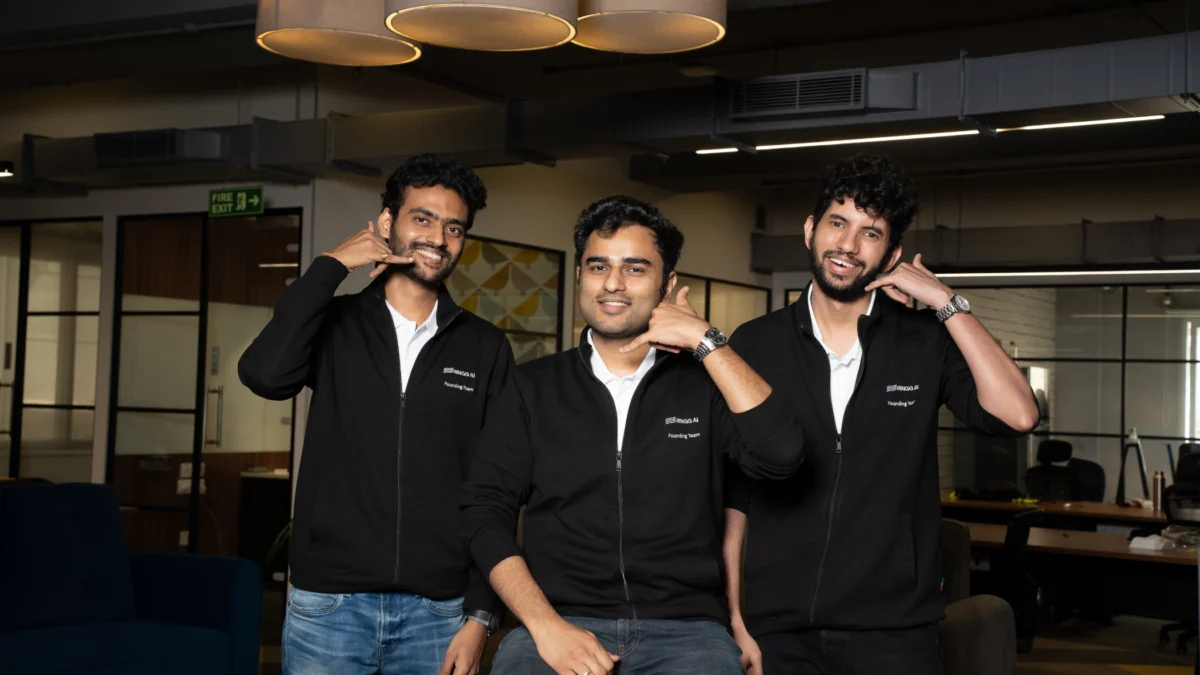
Indian voice AI startup Ringg has successfully secured an additional $10 million in a Series A extension round from Peak XV Partners, bringing its total Series A funding to $15.5 million. This significant investment underscores growing investor confidence in the burgeoning voice AI market, particularly in India, where consumer preference for phone calls with businesses remains exceptionally high. The funding arrives at a pivotal time, as businesses increasingly seek to automate customer support and outreach using advanced voice artificial intelligence technologies to enhance efficiency and customer experience.
The latest capital injection follows an earlier $5.5 million Series A round this year, signaling rapid growth and strategic alignment with market demands. Ringg, which already manages an impressive 20 million call attempts monthly, is strategically positioned to capitalize on India’s vast and evolving digital landscape, where voice communication continues to be a dominant mode of interaction between consumers and enterprises.
India’s Voice-First Digital Landscape: A Fertile Ground for AI
A recent study by Truecaller, a leading global platform for verifying contacts and blocking unwanted communication, revealed that over 76% of Indian consumers prefer engaging with businesses via a phone call. This statistic is not merely a preference but a foundational element of India’s unique digital ecosystem. In a country characterized by diverse linguistic demographics, varying levels of digital literacy, and rapidly increasing smartphone penetration, voice often serves as the most accessible and intuitive interface for a significant portion of the population. While text-based communication, including chat and messaging apps, has seen widespread adoption, the immediacy, personal touch, and clarity offered by a direct voice conversation continue to hold sway, especially for critical interactions like customer support, sales inquiries, and service follow-ups.
This pervasive preference creates an immense opportunity for voice AI solutions to bridge the gap between human interaction and scalable automation. Businesses grappling with high call volumes, the need for 24/7 support, and the challenge of maintaining consistent service quality are increasingly turning to AI-powered voice agents. These agents can handle routine inquiries, qualify leads, provide information, and even execute complex transactions, freeing human agents to focus on more intricate or sensitive customer issues. The market for AI in India is projected to grow substantially, with reports suggesting it could reach over $7.8 billion by 2025, driven by sectors like IT, BFSI (Banking, Financial Services, and Insurance), and healthcare – all areas where voice interaction is paramount.
Ringg’s Strategic Evolution: From Text-to-Speech to Enterprise AI Orchestration
Ringg’s journey reflects a keen understanding of market dynamics and a strategic pivot to address high-value enterprise needs. The company initially began as DesiVocal, a text-to-speech startup. However, the founders quickly recognized the prohibitive costs associated with training proprietary speech models from the ground up. This realization prompted a crucial strategic shift: instead of focusing solely on the foundational text-to-speech technology, Ringg moved "up the stack" to develop comprehensive voice AI agents for enterprise clients.
This pivot proved prescient. By building full-fledged AI agents, Ringg could offer end-to-end solutions that directly addressed business pain points, rather than just providing a component technology. The company’s innovative approach quickly attracted its first major client, Indian fintech giant Cred. This initial success paved the way for partnerships with other prominent Indian startups, including e-commerce behemoth Flipkart, healthcare platform Practo, investment platform Groww, and insurance marketplace PolicyBazaar. These early adopters validated Ringg’s model and demonstrated the broad applicability of its voice AI agents across diverse sectors.
Elevating Engagement: From Simple Tasks to Complex Workflows
Siddharth Tripathi, co-founder of Ringg, articulated the company’s evolution in strategy: "At the start, we were doing high-volume, low-complexity use cases like outbound calling, lead qualification, loan collection, and more. We quickly realized these are not sticky use cases, and so it’s always going to be a price game." This insight led Ringg to recalibrate its focus towards more complex, higher-value workflows that offer greater stickiness and defensibility in the market.
While Ringg continues to support simpler, high-volume tasks for some clients, its strategic emphasis has shifted dramatically. The company is now tackling intricate processes such as appointment booking for healthcare clinics, proactive abandoned-cart recovery for e-commerce platforms, and rigorous onboarding/Know Your Customer (KYC) checks for fintech applications. These use cases demand a sophisticated understanding of context, multi-turn conversational capabilities, and seamless integration with backend enterprise systems.
For instance, Ringg’s voice agent is now deployed across 1,200 clinics for Practo, the healthcare app, where it assists patients with scheduling visits and following up on post-visit instructions. This level of integration and functionality demonstrates the platform’s ability to handle nuanced interactions that directly impact operational efficiency and customer satisfaction in critical sectors. Such applications move beyond mere automation; they embed AI agents deeply into core business processes, delivering tangible outcomes and cementing Ringg’s value proposition.
Beyond Voice: Building an Outcome-Driven AI Platform
Ringg’s strategic vision extends beyond being a mere "voice AI provider." Tripathi emphasized this broader ambition, stating, "We are trying to position ourselves as a platform for agents that bring outcomes or get things done rather than voice agents for enterprises." This platform-centric approach signifies a shift from offering a technology component to providing comprehensive solutions that drive specific business results.
While voice calls still constitute over 70% of Ringg’s business, the company has begun diversifying its channels, integrating chat and WhatsApp support. For select clients like Shell, Ringg is also automating browser-based support requests, further expanding its reach and demonstrating its versatility as an omnichannel AI agent platform. This diversification is crucial in a market where customers expect seamless interactions across various touchpoints. By offering a unified platform that can orchestrate interactions across voice, chat, and web, Ringg aims to provide a holistic solution for customer engagement and operational automation. This strategy not only enhances customer experience but also provides enterprises with a more integrated and efficient way to manage their customer interactions, solidifying Ringg’s position as a strategic partner rather than just a vendor.
Global Ambitions with a Localized Strategy: The GCC Advantage
While most of Ringg’s current customer base is concentrated in India, with a smaller footprint in the Middle East and the U.S., the company has devised a unique strategy for international expansion, particularly into the lucrative U.S. market. Rather than directly competing with established U.S. technology providers, Ringg plans to partner with Global Capability Centers (GCCs) located in India.
GCCs are offshore hubs established by multinational corporations in countries like India to handle a range of functions, including back-office operations, IT services, R&D, and customer support. These centers are increasingly vital for global enterprises seeking to optimize costs, access skilled talent, and drive innovation. Ringg’s strategy involves leveraging these existing relationships and infrastructure to sell its automation capacity alongside human support provided by the GCCs. This approach allows Ringg to tap into a vast network of international clients without the immediate overhead and challenges of building a direct sales presence in overseas markets. It’s a shrewd move that recognizes the growing importance of India as a global tech services hub and positions Ringg to scale its solutions through established channels. This collaborative model enables multinational corporations to integrate Ringg’s voice AI seamlessly into their existing operational frameworks, achieving higher levels of automation and efficiency while maintaining human oversight where necessary.
Technical Depth as a Differentiator: The Full-Stack Vision
A core strength of Ringg, highlighted by investors, is its deep technical expertise. The company builds its own speech recognition and generation models, a significant undertaking that requires substantial R&D investment. This proprietary model development gives Ringg greater control over customization, performance, and efficiency, crucial factors for handling complex enterprise workflows.
Rishen Kapoor, a principal at Peak XV, commented on this technical prowess, stating that because Ringg "started as a research lab building its own models, that technical depth shows up in the complex use cases it’s now tackling." He further added, "Because of the technical capabilities, they can actually do these hard-won enterprise workflows end to end. They can complete these higher-value tasks like merchant onboarding, like L1 and L2 support, with quality and with consistency."
While Ringg’s long-term aspiration is to own the entire voice stack, including infrastructure and deployment, the current economic realities make this an expensive endeavor. For now, the product functions as an orchestration layer, intelligently routing tasks to different models based on the specific use case and requirements. This allows Ringg to maintain flexibility and optimize resource allocation while working towards its full-stack vision. The ability to control and customize core AI models provides a strong competitive advantage, enabling Ringg to offer highly tailored and performant solutions that off-the-shelf models might struggle to deliver, especially in linguistically diverse markets like India.
Navigating a Crowded and Dynamic Market
The voice AI landscape in India is undeniably competitive, with a multitude of players vying for market share across different layers of the technology stack. This includes global model makers such as Deepgram, ElevenLabs, and Cartesia, which provide foundational speech AI technologies. Locally, companies like Sarvam and Smallest.ai are also making significant strides in developing proprietary AI models tailored for the Indian context.
Beyond foundational models, there are orchestration-focused startups like Bolna and Blue Machines that operate in the same layer as Ringg, aiming to integrate various AI components to deliver comprehensive solutions. Additionally, sector-focused players such as Gnani and Arrowhead concentrate heavily on specific verticals like finance, developing specialized AI agents for those industries.
This layered ecosystem—comprising model makers, orchestrators, and application-layer players—is a defining characteristic of the AI market. The battle for defensibility and long-term value increasingly revolves around who owns the customer relationship and, critically, who delivers measurable business outcomes. Ringg’s strategy of building deep technical capabilities, focusing on complex enterprise workflows, and positioning itself as an outcome-driven platform aligns well with this market dynamic. By securing high-value, "sticky" customer relationships through effective problem-solving, Ringg aims to carve out a sustainable competitive advantage amidst fierce competition. The funding will undoubtedly aid Ringg in accelerating its product development, expanding its market reach, and attracting top talent to maintain its edge in this rapidly evolving sector.
Future Outlook and Talent Acquisition
Currently, Ringg employs 40 individuals, having significantly expanded its team with over 15 new hires in the last three months. The company is actively seeking to recruit "forward-deployed engineer" roles, which require a unique blend of technical expertise and product management skills. These engineers are crucial for integrating Ringg’s AI solutions seamlessly into client operations and ensuring they meet specific business needs. Additionally, Ringg is investing in researchers dedicated to optimizing the cost of running its AI models, a critical factor for scalability and profitability in the long run.
This strategic hiring reflects Ringg’s dual focus: expanding its operational capabilities to serve a growing client base and deepening its technological prowess to maintain a competitive edge. The recent funding injection from Peak XV Partners will undoubtedly accelerate these efforts, positioning Ringg to further solidify its leadership in India’s booming voice AI market and beyond. As businesses globally continue to embrace digital transformation and automation, Ringg’s specialized approach to voice AI, coupled with its strategic expansion plans, places it firmly at the forefront of this technological revolution. The journey from a text-to-speech startup to a sophisticated enterprise AI platform underscores the dynamic potential of India’s tech ecosystem and its capacity to innovate for a global audience.