Vera Intan Clara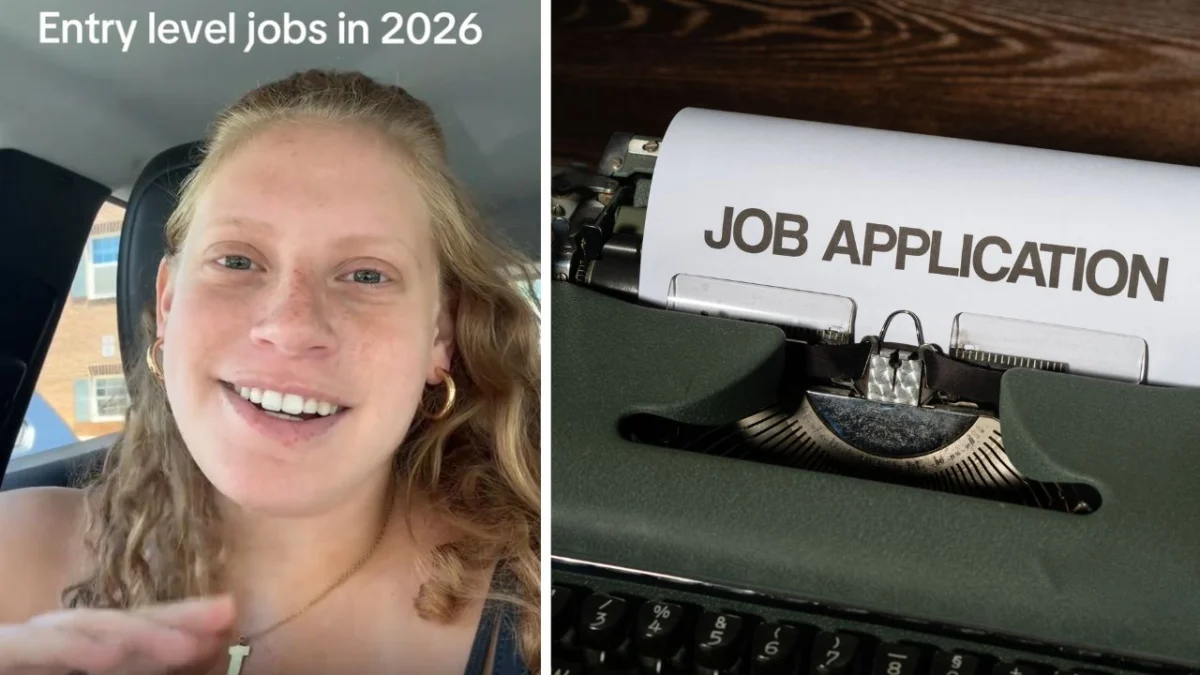
A recent comedic sketch by TikTok user Jamie (@jamiemarkss) has rapidly gone viral, resonating deeply with millions of viewers who share a collective sense of frustration regarding the contemporary entry-level job market. The video critically dissects the often-contradictory and increasingly demanding landscape faced by new job seekers, highlighting significant discrepancies between employer expectations, compensation, and the actual pathways to career entry. This digital commentary has not only captured the zeitgeist of a generation but has also reignited crucial conversations surrounding labor practices, economic realities, and the evolving social contract between employers and aspiring professionals.
The Anatomy of Frustration: Unpacking Jamie’s Viral Narrative
Jamie’s sketch masterfully employs satire to illuminate several pervasive issues plaguing the entry-level job market. Central to her critique is the paradoxical requirement for extensive experience in roles ostensibly designated for beginners. "You don’t need a college degree, but you do need 15 years of relevant experience," she quipped, articulating a common exasperation. This observation points to a significant shift in employer expectations, where "entry-level" no longer implies a starting point for on-the-job training but rather a junior position demanding a fully formed skillset. This phenomenon, often termed "experience creep," effectively creates a Catch-22 for recent graduates or those looking to pivot careers, as they struggle to gain the requisite experience without first securing an entry-level position.
Beyond the experience paradox, Jamie tackled the issue of underpayment for substantial responsibilities. She satirized job descriptions that demand candidates "do someone else’s job for them as an assistant and earn $5,000 a year," starkly illustrating the perceived devaluation of labor, especially at the entry point. This sentiment is further underscored by her portrayal of a "freelance creatives" role offering a meager "$13 an hour part-time," a rate often falling below a living wage in many regions, despite requiring specialized skills and creative output. Such examples highlight a growing concern that companies are offloading significant workloads onto junior staff or contractors without commensurate compensation, exacerbating financial precarity for new entrants to the workforce.
The TikToker also brought to light the demoralizing experience of being "ghosted" by prospective employers – a common practice where companies cease communication with applicants after interviews or even after multiple rounds, leaving candidates in a state of uncertainty. "Apply to this job and we’ll never tell you if you got it or not," Jamie dramatized, tapping into the widespread feeling of disrespect and lack of transparency. Compounding this issue is the alarming rise of "fake job postings." Jamie’s depiction of applying to a role only to discover "It’s not real" exposes a darker facet of the job search, where listings may be posted for various reasons unrelated to genuine hiring, such as market research, data collection, or to create an illusion of company growth, further wasting applicants’ time and emotional energy.
A Chorus of Discontent: Echoes from the Digital Sphere
The immediate and overwhelming response to Jamie’s video underscored the universality of these frustrations. Comment sections became a digital town square where job seekers from diverse backgrounds shared their own harrowing experiences, creating a powerful collective narrative of struggle and disillusionment.
One particularly poignant comment suggested a racial bias in hiring practices, stating, "At this point I’m done applying and doing interviews like how I stay in a big city and no one is hiring I’m tired of hearing wait a week and I’ll get back to you I have 2 degrees and a high school diploma I feel like it’s my color at this point." This observation transcends the general frustrations to touch upon systemic inequalities and discrimination that disproportionately affect minority candidates, adding another layer of complexity to an already challenging market. It highlights how biases, whether overt or implicit, can compound the difficulty for certain demographics in securing employment, even when highly qualified.
Another user echoed the "overqualification paradox," writing, "‘Required experience: associates degree OR 2 years of relevant experience’ I’ll do you one better, I have a bachelors degree AND 1 year of relevant experience ‘sorry we went with someone who meets the qualifications.’" This scenario perfectly encapsulates the frustration of exceeding stated qualifications only to be rejected for nebulous reasons, suggesting that stated requirements may not always reflect the true, often unarticulated, preferences of hiring managers.
The absurdity of some job descriptions was further illustrated by a viewer who recalled, "I saw a listing for a part time receptionist position. It required a Bachelor’s degree or a degree in office management and 2-5 years of experience. It also paid $12/hr." This example vividly demonstrates the phenomenon of "degree inflation," where roles traditionally not requiring a four-year degree are now demanding one, often without a corresponding increase in compensation, making higher education an increasingly dubious investment for certain career paths.
The emotional toll of the job search was palpable in a commenter’s account of an extensive interview process: "I had 5 rounds of interviews for an entry level job. They flew me to nyc for the final round to meet everyone. I was 100% sure I got it. Next day got the email ‘we went with another candidate.’" This narrative of significant time, effort, and financial investment in the hiring process culminating in an abrupt, impersonal rejection is a frequent source of burnout and disappointment for job seekers, eroding trust in corporate hiring practices.
Finally, the disconnect between required credentials and compensation was starkly highlighted by a user who noted, "I saw a few job postings that required a masters but were only paying $17 an hour and required to use your own vehicle for work related trips with no gas reimbursement." This illustrates a concerning trend where advanced degrees, which represent substantial financial and academic investment, are not translating into commensurate earning potential, particularly when additional, uncompensated expenses are factored into the role.
Historical Context: The Evolving Landscape of Entry-Level Employment
The challenges highlighted by Jamie’s video are not entirely new but represent an intensification of trends that have been reshaping the labor market for decades. Historically, "entry-level" roles often served as genuine apprenticeships, where individuals could gain foundational skills and experience with minimal prior qualifications. The post-World War II economic boom, for instance, saw many enter the workforce directly from high school, learning trades and skills on the job.
However, the late 20th and early 21st centuries witnessed a gradual "credentialing" of the workforce. As higher education became more accessible and competitive, a bachelor’s degree transformed from a distinguishing asset into a de facto minimum requirement for many professional roles. This "degree inflation" was partly driven by an increasing supply of graduates and employers’ use of degrees as a convenient filter in a growing applicant pool, even for jobs where specific academic knowledge might not be directly relevant.
The 2008 financial crisis further exacerbated these trends. A tighter job market meant more competition, allowing employers to raise their demands for even entry-level positions. Graduates from top universities found themselves competing for roles previously occupied by those with less formal education. The subsequent economic recovery, while bringing down unemployment rates, did not universally translate into higher wages or more accessible entry points for new workers. The rise of the gig economy and an increasing reliance on contract work also blurred the lines of employment, often shifting more risk and responsibility onto individual workers without the benefits or stability of traditional employment.
More recently, the COVID-19 pandemic introduced unprecedented volatility. While some sectors experienced significant labor shortages, others saw a surge in applications for limited roles. The rapid acceleration of digital transformation and remote work further complicated hiring, creating a more competitive global talent pool for some positions while exposing critical skills gaps in others. This volatile environment has empowered some employers to maintain stringent requirements and lower compensation, particularly for positions perceived as desirable.
Data-Driven Insights: Quantifying the Job Market’s Challenges
The anecdotal evidence from Jamie’s TikTok comments is supported by a growing body of research and economic data.
- Degree Inflation and the Experience Trap: Studies by organizations like Burning Glass Technologies (now Lightcast) have repeatedly shown that a significant percentage of "entry-level" jobs (defined as requiring 0-3 years of experience) actually demand at least one to three years of prior experience. Furthermore, many roles that did not traditionally require a bachelor’s degree now list it as a prerequisite, often without a corresponding increase in salary. For instance, a 2021 report indicated that nearly half of all job postings for administrative assistants now require a bachelor’s degree, up from a quarter in 2000.
- Wage Stagnation: While overall wages have seen some increases, real wage growth for entry-level positions, particularly when adjusted for inflation and the rising cost of living in major metropolitan areas, has largely stagnated over the past two decades. A 2023 analysis by the Economic Policy Institute found that despite productivity gains, entry-level wages have not kept pace with the cost of necessities, leading to a decline in purchasing power for new workers. For instance, the average starting salary for recent college graduates has seen modest increases, but these gains are often nullified by inflation and the escalating cost of housing, healthcare, and education.
- The Prevalence of Ghosting: Surveys consistently indicate that job seeker ghosting is a widespread issue. A 2022 survey by ResumeLab revealed that nearly 75% of job seekers had been ghosted by an employer, with 10% experiencing it "often." This practice not only causes emotional distress but also reflects poorly on employer brands and contributes to a perception of corporate indifference.
- Fake Job Postings: While difficult to quantify precisely, reports from platforms like LinkedIn and cybersecurity firms have highlighted the increasing presence of fake job postings. These can range from sophisticated scams designed to collect personal information (phishing) to less malicious but equally frustrating "phantom jobs" posted to benchmark salaries, gather market intelligence, or maintain a positive public image of growth and activity, without any actual intention to hire. Some estimates suggest that up to 10-15% of online job postings at any given time could be fake or highly misleading.
- Unemployment and Underemployment: While overall unemployment rates may appear low, statistics for recent graduates often paint a more nuanced picture, with many struggling to find roles directly related to their field of study or settling for underemployment—jobs that do not fully utilize their skills or education. This contributes to student loan debt distress and delayed financial independence.
The Employer’s Perspective: Navigating Talent Acquisition
While the frustrations of job seekers are undeniable, it is also important to consider the complexities from the employer’s side. Companies often face intense pressure to hire quickly and efficiently, especially in competitive markets.
- Cost of Training: Employers frequently argue that extensive training programs for truly entry-level candidates represent a significant investment in time and resources, particularly for small to medium-sized businesses with limited budgets. They prefer candidates who can hit the ground running, even if that means requiring some prior experience.
- High Application Volume: Digital job boards have dramatically increased the volume of applications for any given role. Applicant Tracking Systems (ATS) are often used as an initial filter, relying on keywords and structured data to manage the influx. This can inadvertently screen out otherwise qualified candidates whose resumes don’t perfectly match algorithmic criteria.
- Defining "Entry-Level": The definition of "entry-level" itself has evolved. For many companies, it now signifies a role for someone early in their professional career, but still possessing foundational skills and a basic understanding of professional environments, rather than someone completely new to the workforce.
- Market Competition for Talent: In certain specialized fields, competition for skilled talent is fierce. Employers may feel compelled to list ambitious requirements to attract the "best of the best," even if they are prepared to be flexible for an exceptional candidate.
- Budgetary Constraints: Salary offerings are often dictated by company budgets, industry standards, and internal pay equity considerations. While job seekers may perceive a salary as low, it might align with the company’s established pay bands for that specific role and level of responsibility.
- The Intent Behind Ghosting/Fake Postings: While indefensible, ghosting can sometimes be a byproduct of overwhelmed HR departments lacking the resources to personally respond to every applicant. Fake postings, as mentioned, might serve market research or data collection purposes, though these practices are ethically questionable and contribute to job seeker fatigue.
Broader Economic and Societal Implications
The widespread frustrations articulated in Jamie’s viral TikTok sketch carry significant broader implications for the economy and society.
- Economic Stagnation: If talented individuals struggle to enter their chosen fields or are significantly underpaid, it can stifle innovation, reduce consumer spending, and hinder overall economic growth. A workforce that is constantly stressed and undercompensated is less productive and less likely to contribute to a dynamic economy. The difficulty in upward mobility for new entrants can create a rigid class structure, limiting economic fluidity.
- Brain Drain and Skills Mismatch: The "experience trap" can force highly educated individuals into roles below their skill level or even push them out of their desired industries, potentially leading to a "brain drain" as talent seeks opportunities elsewhere or leaves the professional workforce altogether. This also contributes to a persistent skills mismatch, where employers claim a lack of qualified candidates while a large pool of educated individuals remains underemployed.
- Mental Health Crisis: The relentless and often fruitless job search, coupled with financial insecurity, contributes significantly to stress, anxiety, and depression among young professionals. The emotional toll of ghosting, rejection, and the feeling of being undervalued can have long-lasting effects on mental well-being and career confidence.
- Erosion of Trust: The lack of transparency, the prevalence of ghosting, and the existence of fake job postings erode trust between job seekers and employers, and more broadly, in the institutions that govern the labor market. This can lead to cynicism and disengagement among the younger generation entering the workforce.
- Policy Considerations: The issues brought to light by this viral discussion underscore the need for potential policy interventions. These could include initiatives for better vocational training pathways, incentives for companies to invest in entry-level training programs, stricter regulations against misleading job postings, and discussions around minimum wage adjustments that reflect the true cost of living and the value of labor, particularly for those with advanced qualifications. Furthermore, promoting greater transparency in hiring processes and employer feedback mechanisms could foster a more equitable and respectful job market.
- The Power of Social Media: Jamie’s TikTok video exemplifies the increasing power of social media platforms as forums for collective expression and catalysts for social change. In an era where traditional media may not always capture the nuances of individual struggles, platforms like TikTok provide a voice to millions, transforming personal grievances into widely recognized societal issues and demanding accountability from institutions.
Conclusion
Jamie’s viral TikTok sketch serves as a powerful microcosm of the systemic challenges confronting entry-level job seekers today. It has effectively amplified a widespread sentiment of frustration with unrealistic expectations, inadequate compensation, and opaque hiring practices. The overwhelming agreement from millions of viewers and commenters underscores that these are not isolated incidents but rather pervasive issues deeply embedded in the contemporary labor market. As the dialogue continues, the spotlight remains on both employers and policymakers to critically re-evaluate their approaches to talent acquisition, compensation, and the creation of genuine pathways for the next generation of professionals. The digital outcry signals a clear demand for a more transparent, equitable, and realistic entry-level job landscape that values both education and the potential of aspiring workers.
The Daily Dot was unable to independently verify the events described in this post. The details above reflect the account shared by user Jamie (@jamiemarkss) on TikTok.