Vera Intan Clara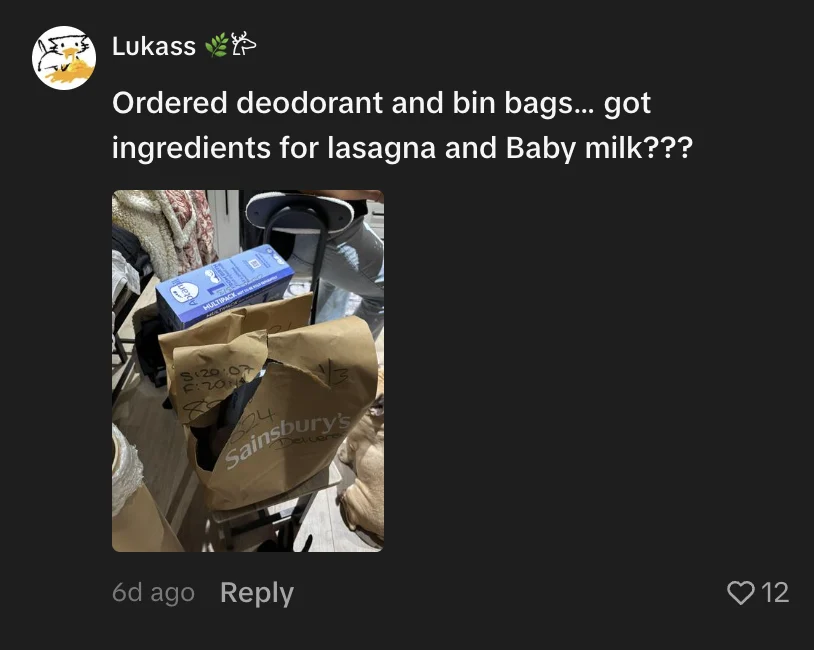
A recent incident involving an Uber Eats delivery, where a customer’s simple order for a single can of Diet Coke inexplicably escalated into a colossal delivery of 12 liters of the beverage along with 3 liters of milk and additional groceries, has captivated hundreds of thousands on TikTok, highlighting both the unpredictable nature of modern food delivery services and the power of social media to amplify unique consumer experiences. The unusual transaction, initiated by a woman placing an order at 4:00 a.m., has since become a viral sensation, prompting widespread amusement, confusion, and a flood of theories from online commenters regarding the potential causes of such a significant mix-up.
The Early Morning Mix-Up: A Detailed Account
The sequence of events began in the early hours of the morning, specifically at 4:00 a.m., when a customer identified on TikTok as @leahscoobydoobydoo placed an order through the Uber Eats platform. Her request was straightforward: a single can of Diet Coke. This seemingly minor convenience purchase, often made for immediate gratification, set the stage for an unexpected logistical anomaly that would soon capture widespread attention across digital platforms.
According to the user’s account, approximately a week prior to her viral post, she received a delivery that far exceeded her expectations and original order. Instead of a single beverage, she was confronted with multiple large paper bags. Upon inspection, the contents revealed an astonishing quantity: two bags packed snugly with what amounted to 12 liters of Diet Coke. This volume is equivalent to approximately 33 standard 355ml cans, a stark contrast to her requested single unit. Adding to the perplexing delivery, she also received 3 liters of milk. Furthermore, a separate bag contained an unspecified assortment of other groceries, the ordering status of which the customer did not clarify in her initial public statements. The sheer scale of the incorrect delivery left the customer bewildered, leading her to question whether the error originated from Uber Eats’ operational side or if it was an accidental order placed by another customer that somehow rerouted to her. The unverified nature of the event, as noted by The Daily Dot, means the specifics of the mistake remain a point of public speculation rather than confirmed fact.
The Digital Echo Chamber: TikTok Virality and Community Engagement
The customer’s decision to share her bewildering experience on TikTok proved to be a masterstroke in capturing public attention. Her video, posted under the handle @leahscoobydoobydoo, quickly gained traction, racking up 733,000 views as of the time of publication. The overlay text in her video explicitly mentioned the 4:00 a.m. timing of her original order, adding a layer of intrigue to the late-night, oversized delivery. This detail resonated with many who are familiar with late-night convenience orders through delivery apps.
The platform’s dynamic, short-form video format, combined with its robust commenting and sharing features, allowed the story to disseminate rapidly. Viewers were drawn to the absurdity and relatable humor of a simple request gone spectacularly wrong. The comments section beneath the video transformed into a vibrant forum of public discourse, reflecting a spectrum of reactions from genuine confusion and empathetic amusement to speculative theories and shared anecdotes of similar delivery mishaps. This phenomenon underscores TikTok’s significant role not only as an entertainment platform but also as a contemporary channel for consumer advocacy, anecdotal sharing, and informal quality control for service-based industries. The collective engagement demonstrates how individual consumer experiences, when shared publicly, can quickly become cultural touchstones, sparking broader conversations about convenience culture and the mechanics of the gig economy. The engagement metrics, reaching hundreds of thousands of views, exemplify the rapid virality potential of unique content within the platform’s ecosystem.
Theories and Shared Experiences: A Glimpse into Delivery Anomaly Patterns
The influx of comments provided a fascinating insight into how the public attempts to rationalize such logistical blunders. One prevalent theory suggested that the woman might have received a canceled order meant for someone else. A user commented, "I’m thinking someone canceled their order and the person simply said they don’t need that lol." This hypothesis posits that a delivery driver, faced with a large, unsaleable quantity of items from a canceled order, might have opted to deliver it to an active, nearby customer rather than dispose of it or return it to the vendor, a scenario that could potentially save the driver time and effort. Another commenter humorously declared, "You hit the absolute motherload," acknowledging the unexpected windfall quality of the delivery.
Beyond simple amusement, some theories delved into the operational incentives within the gig economy. One commenter speculated, "If tipping (on Uber Eats) was based on % of charges, they would do this but not for a flat rate tip." This theory, while speculative and not confirmed by Uber Eats’ operational models, highlights a common perception among some users regarding driver motivations and the potential for perceived inefficiencies in flat-rate tipping systems for high-value or bulk orders. Such discussions reflect a public attempt to understand the complex economic interactions driving the gig economy.
Perhaps the most compelling aspect of the viral thread was the revelation that the initial incident was far from isolated. Numerous other TikTok users chimed in with their own tales of receiving significantly incorrect, often bulk, deliveries when they had ordered only a single item. These anecdotes paint a picture of recurring logistical challenges within the delivery ecosystem. One individual recounted ordering Red Bull, Doritos, and eggs, only to receive a substantial haul of ribs, a whole salmon, and a steak. This suggests a complete order swap or a significant picking error at the vendor. Another user shared a slightly less fortunate, but equally mismatched, experience, reporting that their order of Red Bull was accompanied by an all-in-one men’s shower gel, illustrating the varied nature of these unexpected additions. These shared experiences lend credence to the idea that such errors, while seemingly random, might be symptomatic of systemic vulnerabilities in the complex chain of online order fulfillment rather than isolated occurrences.
Understanding the Intricacies of Modern Food and Grocery Delivery
To contextualize Leah’s viral experience, it is essential to understand the intricate operational framework of modern food and grocery delivery services like Uber Eats. These platforms operate on a multi-party model involving the customer, the platform itself (Uber Eats), the vendor (a grocery store or restaurant), and the independent delivery driver. Each step in this chain presents potential points of failure that can lead to order inaccuracies. The rapid expansion of this sector has also brought with it increased complexity and potential for logistical missteps.
The global online food delivery market has witnessed explosive growth over the past decade, significantly accelerated by the COVID-19 pandemic. According to Statista, the market is projected to reach over $300 billion in revenue by 2024, with millions of orders processed daily across various platforms. This massive scale, while offering unprecedented convenience and economic opportunities for gig workers, inherently increases the statistical probability of errors occurring at any point in the delivery lifecycle. The demand for speed and efficiency often places immense pressure on both vendors and drivers, which can contribute to mistakes.
Potential Points of Failure in the Delivery Chain:
-
Vendor Error: This is a common source of discrepancies in online orders. Store employees or restaurant staff responsible for picking and packing orders might:
- Misread quantities: Confusing a single unit with a case or a bulk package is a plausible scenario for the Diet Coke incident, where "1" might have been interpreted as "1 case" or "12-pack" and then further misinterpreted as "12 liters."
- Pick incorrect items: Grabbing a similar-looking but wrong product from shelves or storage.
- Consolidate orders incorrectly: Accidentally mixing items from multiple customer orders into a single bag or preparing an order for the wrong customer entirely, particularly during peak hours.
- Inventory discrepancies: The item ordered might be out of stock, leading to a hurried substitute that is either incorrect or a different customer’s full order.
- System integration issues: The vendor’s inventory management system might not perfectly sync with the delivery platform’s ordering system, leading to confusion regarding available stock or specific product codes.
-
Driver Error: Independent delivery drivers, often managing multiple orders concurrently across different platforms to maximize earnings, operate under significant time pressure and logistical challenges. Potential errors include:
- Picking up the wrong order: Drivers might inadvertently take an incorrect bag from the vendor, especially if multiple orders are ready simultaneously and poorly labeled by the store.
- Delivering to the wrong address: While less likely for a complete mix-up of items, it can happen if a driver confuses two orders for different customers at the same address or nearby addresses.
- Mixing up items from co-mingled orders: If a driver is handling multiple deliveries, items from one order might accidentally be placed in another customer’s bag, or an entire incorrect order might be delivered due to confusion between bags.
-
Platform/System Glitch: Though less frequent, technological errors within the delivery platform’s software can occur:
- Order processing errors: A software bug could theoretically duplicate an item, alter quantities, or merge parts of different orders during transmission to the vendor or driver.
- Database synchronization issues: Problems in how order details are transmitted and updated between the customer app, the vendor’s system, and the driver’s app can lead to miscommunications or incorrect instructions.
-
Customer Error: While the TikTok user expressed confusion, implying no error on her part, it is statistically possible for customers to inadvertently select incorrect quantities or items, especially during late-night orders when attention might be reduced. However, receiving 12 liters of soda instead of one can strongly suggests a systemic rather than user input error, given the dramatic difference in quantity.
The Economic and Operational Implications of Delivery Errors
Incidents like Leah’s Diet Coke saga carry various implications for all stakeholders in the gig economy ecosystem, extending beyond mere inconvenience to impact financial bottom lines and operational efficiencies.
For Delivery Platforms (e.g., Uber Eats):
- Customer Trust and Loyalty: Frequent or significant errors can erode customer trust, leading to user churn. Conversely, swift and effective resolution of such incidents can build loyalty and reinforce a positive brand image.
- Financial Costs: Platforms typically bear the cost of refunds or re-deliveries for incorrect orders. This includes the cost of the product, delivery fees, and potentially compensation for inconvenience. While individual incidents might be minor, the aggregate cost of errors across millions of orders can be substantial, impacting profitability.
- Reputation Management: Viral incidents, while offering free publicity, can also highlight perceived flaws in service quality, potentially damaging brand image. Platforms must actively monitor and respond to social media narratives to mitigate negative impacts.
- Operational Overhead: Investigating and resolving disputes adds to customer service and operational costs, requiring dedicated teams and resources.
For Vendors (Grocery Stores/Restaurants):
- Product Loss: Incorrectly packed items, if not recovered, represent lost inventory and revenue for the vendor.
- Labor Costs: Time spent correcting errors, repacking orders, or dealing with customer complaints from drivers or the platform adds to operational labor costs.
- Relationship with Platform: Consistent errors originating from the vendor can strain relationships with delivery platforms, potentially affecting their standing, visibility, or contractual terms.
- Brand Image: A vendor consistently associated with incorrect orders risks damage to its reputation among consumers, irrespective of whether the error originated with their staff or the delivery driver.
For Delivery Drivers:
- Ratings and Reviews: Errors can lead to negative customer ratings, which are crucial for drivers’ access to future assignments and overall earnings within the platform’s incentive structures.
- Time and Effort: Dealing with incorrect deliveries, whether returning items, waiting for customer service resolution, or making a re-delivery, consumes valuable time that could be spent on new, paying deliveries.
- Potential Disciplinary Action: While platforms generally understand that some errors are beyond a driver’s control, repeated mistakes or negligence could lead to warnings or deactivation from the platform.
For Consumers:
- Inconvenience: Not receiving the correct order can be highly inconvenient, especially for urgent items, specific dietary needs, or during late hours when alternative options are limited.
- Satisfaction: An incorrect order directly impacts customer satisfaction and the perceived value of the service.
- Ethical Dilemmas: Receiving an unexpected "bonus" raises questions about whether to keep the items or report the error. Most platforms advise reporting the error to ensure proper refunds and accountability, though the temptation to keep an unexpected windfall is often present.
Official Responses and Consumer Recourse
While Uber Eats has not issued a specific statement regarding @leahscoobydoobydoo’s viral incident, likely due to their policy of not commenting on individual customer cases without a full internal investigation, the company generally has established protocols for handling order inaccuracies. This is a standard practice for large corporations to avoid commenting on unverified anecdotal reports.
When a customer receives an incorrect or incomplete order, the standard procedure involves:
- Reporting through the App: Customers are typically directed to report the issue directly through the Uber Eats app, often within a specific timeframe (e.g., 24-48 hours) to ensure prompt investigation.
- Providing Details: Customers are asked to specify what was wrong (e.g., missing items, wrong items, damaged items) and may be prompted to upload photos or provide other evidence to support their claim.
- Resolution: Based on the nature of the error, Uber Eats’ customer support usually offers a refund for the incorrect items, a credit for future orders, or arranges a re-delivery if feasible and practical.
For platforms like Uber Eats, maintaining robust customer support channels is paramount. The goal is to resolve issues quickly and efficiently to minimize customer dissatisfaction and prevent negative sentiment from spreading, particularly on social media. The fact that The Daily Dot, as noted in the original article, was unable to independently verify the events described underscores the challenge for media outlets and the public in getting official confirmation for viral social media content, further highlighting the power and unverified nature of user-generated content in the digital age.
Broader Implications: Social Media, Accountability, and the Future of Delivery
The Diet Coke saga transcends a mere delivery error; it serves as a microcosm of broader trends shaping modern consumerism and the digital landscape.
Social Media as a De Facto Customer Service Channel: The incident vividly illustrates how platforms like TikTok have become powerful, albeit informal, channels for customer service and accountability. When traditional channels might seem slow or insufficient, consumers increasingly turn to social media to share grievances, seek advice, or simply vent, often with the unforeseen consequence of going viral. This public exposure can exert significant pressure on companies to address issues, not just for the individual customer but for their wider brand image and operational integrity.
The Blurring Lines of Entertainment and Complaint: Leah’s video, while a genuine account of confusion, also became a source of entertainment. This duality highlights how consumer complaints can morph into viral content, blurring the lines between seeking resolution and creating shareable media. This trend compels companies to develop sophisticated social media listening and engagement strategies that can identify and respond to both direct complaints and viral content.
The "Unexpected Windfall" Phenomenon: The "motherload" comment speaks to a peculiar aspect of delivery errors: the occasional, unintended benefit to the customer. While a single Diet Coke customer receiving 12 liters is an extreme example, smaller versions of this phenomenon are not uncommon. It raises informal ethical questions for consumers about whether to keep the extra items or report them, though official policy encourages reporting errors to ensure accurate record-keeping and proper resolution for all parties involved.
The Evolving Nature of Convenience: The incident also subtly critiques the very convenience that delivery services promise. While the ability to order a single can of soda at 4: