Vera Intan Clara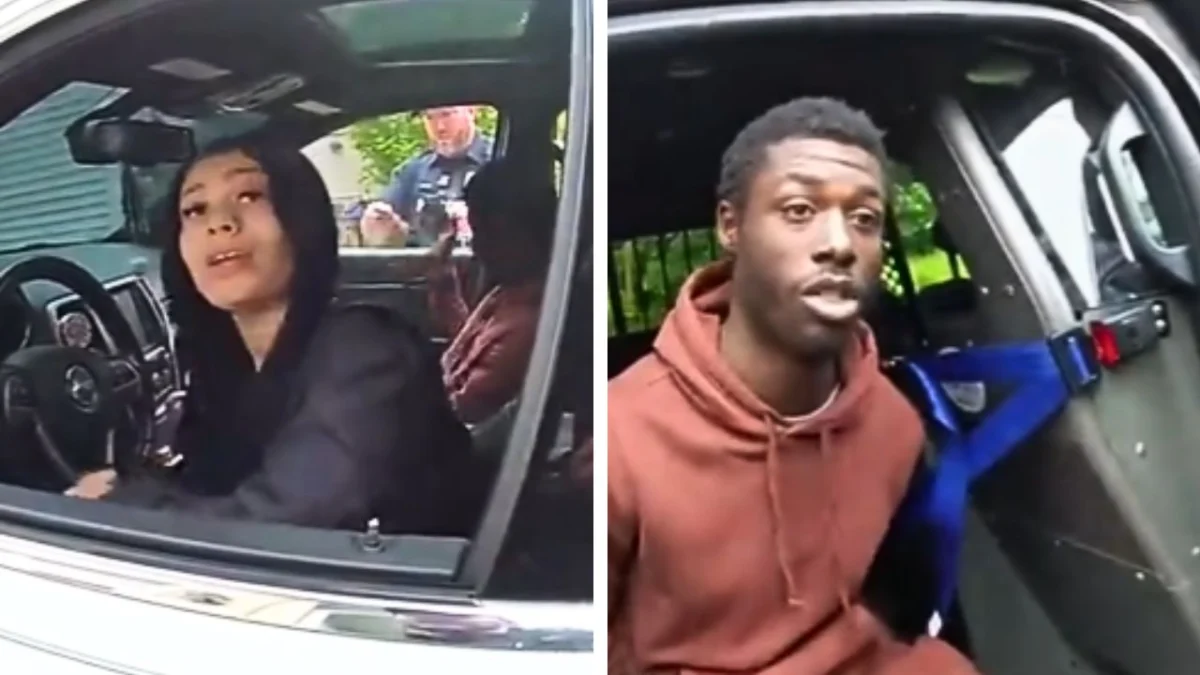
A police body camera video, widely circulated on TikTok since its upload on July 12, has become the focal point of an intense public discussion surrounding law enforcement procedures, citizen rights, and the evolving legal landscape of marijuana. The footage, captioned with the overlay text "A Simple Traffic Stop Becomes Anything But Routine," captures a traffic stop that rapidly escalated from an alleged minor infraction to a vehicle search based on probable cause, prompting widespread scrutiny and diverse interpretations across social media platforms.
The incident, which remains unverified in terms of location and final outcome by independent journalistic sources, showcases the complex dynamics often at play during police encounters. It highlights the immediate and often conflicting perspectives of officers enforcing the law and citizens navigating their rights, all under the unforgiving lens of a body-worn camera that provides a raw, unfiltered view to a global audience. The video has garnered significant attention, amassing over 43,000 likes and thousands of comments, underscoring the public’s keen interest in police accountability and the intricacies of roadside interactions.
Chronology of Events: From Minor Stop to Vehicle Search
The viral footage commences with an officer engaging a female driver, initially addressing an alleged traffic violation. The officer informs the woman that she failed to come to a complete stop at a designated sign, setting the stage for the subsequent interactions. This initial claim of a stop-sign violation itself became a point of contention among viewers, with many questioning its validity.
Following the initial statement, the officer requests the driver’s identification. The woman responds by stating she does not have her physical wallet but possesses a digital photograph of her ID, which the officer accepts. This exchange, seemingly minor, later contributed to the public’s debate regarding documentation requirements during traffic stops.
The situation takes a decisive turn when the officer inquires about the presence of firearms in the vehicle and asks the occupants to lower the rear windows. It is at this juncture that the officer states he observed what he described as a "blunt or blunt roach" inside the vehicle. This observation immediately provides a new dimension to the stop, shifting the focus from a minor traffic infraction to potential drug-related activity. The officer then directly asks the occupants when they last smoked, to which the woman candidly replies, "Twenty-five minutes ago." This admission, seemingly innocuous to the occupants, became a critical piece of evidence for the officer and a major topic of discussion in the comments section, with many questioning the wisdom of such a precise disclosure.
Based on the alleged discovery of marijuana in plain view and the occupants’ admission of recent use, the officer informs both individuals that he now has probable cause to search the vehicle. He instructs them to switch off the car and exit the vehicle. The footage then shows officers conducting pat-down searches of both the driver and the male passenger for weapons, a standard procedure when officers perceive a heightened risk or are preparing for a vehicle search. While this is ongoing, they await the arrival of an additional police unit, indicating a procedural escalation and a perceived need for more personnel to manage the situation safely.
During the subsequent questioning outside the vehicle, the male passenger reveals he had recently been released from prison and was en route to work. He also stated he had just acquired the vehicle, adding another layer of complexity to the situation. Expressing concern, he mentions the possibility of a firearm belonging to another individual being present in the newly acquired car, an admission that could further influence officer perception and actions. The officer then proceeds to read the passenger his Miranda rights, asking if he understands them and if he wishes to speak further with the police. The video concludes without showing the resolution of the incident, leaving viewers to speculate on whether arrests were made, charges were filed, or if the occupants were ultimately released.
The Legal Landscape: Probable Cause, Marijuana, and Passenger Rights
The incident depicted in the TikTok video touches upon several critical legal principles that frequently surface in discussions about police-citizen encounters. Understanding these concepts is crucial for comprehending the public’s reactions and the implications of such stops.
Probable Cause and Vehicle Searches
At the heart of the escalation in the video is the concept of probable cause. In the United States, the Fourth Amendment to the Constitution protects citizens from unreasonable searches and seizures. For a police officer to legally search a vehicle without a warrant, they must generally have probable cause to believe that the vehicle contains evidence of a crime. In this case, the officer’s claim of observing a "blunt or blunt roach" in plain view, coupled with the occupants’ admission of having smoked marijuana just 25 minutes prior, formed the basis for asserting probable cause.
The "plain view doctrine" allows officers to seize evidence of a crime without a warrant if it is immediately apparent that the object is contraband or evidence and the officer is lawfully in a position to view it. The admission of recent drug use further strengthens the probable cause argument, suggesting the presence of additional contraband or evidence within the vehicle. This legal framework permits officers to conduct a thorough search of the vehicle, including any containers within it, where the object of the search (e.g., more marijuana, drug paraphernalia) could reasonably be found.
The Evolving Status of Marijuana Laws
The legality of marijuana significantly complicates probable cause arguments across the United States. While cannabis remains illegal at the federal level, a growing number of states have legalized it for recreational or medicinal use, or have decriminalized possession of small amounts. This patchwork of laws creates considerable ambiguity for both law enforcement and citizens.
In jurisdictions where marijuana remains illegal or only medically legal, the sight or smell of cannabis can still provide probable cause for a search. However, in states where recreational marijuana is legal, the mere smell or presence of a small amount may not, on its own, establish probable cause for a full vehicle search, as it might not indicate illegal activity. Officers in these states often require additional indicators of impaired driving or illegal quantities to justify a search. The specific jurisdiction where this traffic stop occurred is not disclosed, but the officers’ actions suggest they operated under a legal framework where the alleged blunt and admission of recent use were sufficient to establish probable cause for a search. This highlights the critical importance of citizens knowing their local laws regarding cannabis.
Passenger Rights and Identification
Another contentious point raised by viewers concerned the officer’s request for the male passenger to exit the vehicle and later his identification. While drivers are generally required to provide identification and vehicle documentation during a traffic stop, the legal obligations of passengers are often different and vary by state. In many jurisdictions, passengers are not legally obligated to provide identification unless the officer has a reasonable suspicion that the passenger has committed, is committing, or is about to commit a crime.
The request for the passenger to exit the vehicle is generally permissible under established Supreme Court precedent (e.g., Maryland v. Wilson, 1997), which grants officers the authority to order passengers out of a car during a traffic stop for officer safety reasons. However, compelling a passenger to identify themselves without reasonable suspicion is a different matter and is often protected by Fourth Amendment rights against unreasonable seizure. The comments section reflected this legal nuance, with many questioning the necessity and legality of demanding identification from a passenger during a stop primarily initiated for a driver’s traffic violation.
Broader Impact and Public Discourse
The TikTok video serves as a powerful illustration of how body camera footage, when amplified by social media, can catalyze public debate on police procedures and citizen rights. The sheer volume and diversity of comments underscore a widespread public engagement with these issues, albeit often fueled by incomplete information or differing interpretations of legal standards.
Public Scrutiny and Skepticism
A significant portion of the comments expressed skepticism regarding the initial traffic violation, with phrases like "Stop sign?" appearing repeatedly. This reflects a common public sentiment that minor traffic infractions can sometimes be used as pretexts for officers to investigate further, a practice often referred to as a "pretextual stop." While legal, such stops frequently generate public mistrust, especially when they escalate into more serious encounters.
The occupants’ admission of recent marijuana use also drew considerable criticism from viewers. Many questioned their candor, with one commenter asking, "Why (…) would they say 25 mins [ago?]," and another joking they should have claimed "hours ago." This reaction highlights a public understanding that certain statements made to law enforcement, even if truthful, can have significant legal consequences and are often best withheld until legal counsel can be consulted. Conversely, some viewers criticized the passengers for smoking in the car in the first place, aligning with a more conservative view on drug use in public or within vehicles.
Officer Conduct and Citizen Cooperation
Interestingly, a segment of the comments lauded the officers for their calm demeanor and noted the occupants’ cooperation with instructions. Remarks such as "officers had to follow protocol" and "occupants were obeying instructions" suggest an appreciation for professionalism and compliance during potentially tense situations. This perspective often emphasizes the challenges officers face and the importance of maintaining order and safety.
However, other commenters voiced concern about the rapid escalation of the situation, questioning why a stop-sign violation led to such a serious outcome. This group often argued that officers "just wanted to search the car" and viewed the questioning of the passenger as unnecessary or an overreach, indicating a deeper skepticism about the underlying motivations behind certain police actions.
The Role of Social Media in Accountability
The virality of this video on platforms like TikTok exemplifies the transformative role of social media in publicizing police encounters. Body camera footage, initially intended for internal accountability and evidence collection, now routinely enters the public domain, offering unprecedented transparency. This transparency, however, comes with its own set of challenges. While it can hold law enforcement accountable and provide crucial evidence, it also exposes complex legal situations to a broad audience that may lack a full understanding of the legal context, leading to misinterpretations and heated, sometimes misinformed, debates. The comments section becomes a de facto public forum where citizens dissect police actions, legal rights, and societal norms, often shaping public opinion before official outcomes are known.
Implications for Law Enforcement and Public Trust
The incident, regardless of its specific outcome, carries significant implications for both law enforcement agencies and community relations. For police departments, such videos serve as training material and a reminder of the constant public scrutiny their actions face. The need for clear, legally sound procedures, coupled with professional and de-escalatory communication, is paramount in an era where every interaction can become a global spectacle.
For the public, the video underscores the importance of understanding one’s rights and responsibilities during traffic stops. It highlights the potential legal ramifications of certain statements and actions, particularly concerning issues like probable cause and consent to search. Educating citizens on their rights regarding identification, searches, and the right to remain silent is crucial for fostering informed interactions with law enforcement.
Ultimately, the TikTok body cam footage of this traffic stop is more than just a viral video; it is a microcosm of ongoing societal debates about justice, authority, and freedom. It brings to the forefront the challenges of policing in a diverse and legally complex nation, where the line between a routine stop and a serious legal entanglement can be remarkably thin, and where public opinion is increasingly shaped by brief, often decontextualized, snippets shared online. As of the time of publication, the specific outcome of this incident remains unconfirmed, leaving the broader conversation to continue in the digital public square.
The Daily Dot was unable to independently verify the events depicted in this video or confirm the location of the traffic stop. The details above reflect the footage as shared on TikTok by @joyce.hurlbut.