Garick Elordi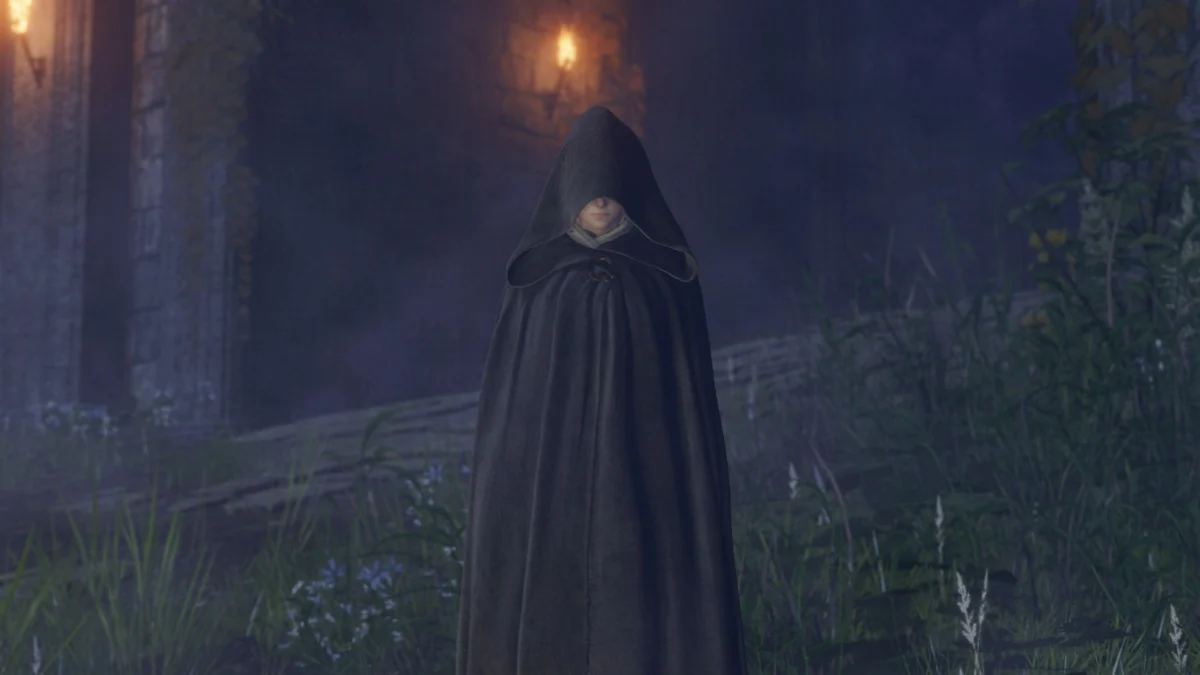
The arrival of Elden Ring: Tarnished Edition on the Nintendo Switch 2 marks a significant milestone in the evolution of handheld gaming, representing one of the most ambitious porting projects in recent industry history. Developed by FromSoftware and optimized for Nintendo’s next-generation architecture, this version seeks to bring the sprawling expanse of The Lands Between to a portable format without sacrificing the core mechanical integrity that defined the original 2022 release. As early technical assessments emerge, the focus remains on how the hardware handles the game’s demanding open-world rendering and whether the transition from high-performance consoles and PC to a mobile-oriented chipset maintains the precision required for high-stakes combat.
Hardware Context and the Ambition of the Port
When Elden Ring first launched on PlayStation 5, Xbox Series X, and PC, it was lauded for its artistic direction but noted for its significant hardware demands. The game’s proprietary engine, while capable of producing breathtaking vistas, often struggled with frame pacing and consistent performance even on high-end hardware. Bringing such a title to the Nintendo Switch 2—a console rumored and now confirmed to utilize NVIDIA’s T239 architecture with DLSS (Deep Learning Super Sampling) support—requires a delicate balance of graphical fidelity and computational efficiency.
The Nintendo Switch 2 represents a generational leap over its predecessor, offering increased RAM bandwidth and a more robust GPU. However, it still operates within a restricted power envelope compared to stationary consoles. The "Tarnished Edition" is specifically tailored to these constraints, targeting a stable 30 frames per second (FPS) in contrast to the 60 FPS standard found on more powerful platforms. This reduction in frame rate is a necessary compromise to ensure the game’s vast draw distances and complex enemy AI remain functional in both docked and handheld modes.
The Initial User Experience: Control and Input Latency
For veterans of the "Soulsborne" genre, the shift from 60 FPS to 30 FPS introduces a tangible change in the game’s "feel." Initial reports from the field describe a sensation often referred to as "thick air," where the timing of dodges, parries, and heavy attacks must be recalibrated. In a game where success is measured in milliseconds, the increased input latency inherent to lower frame rates necessitates a more anticipatory style of play.
Furthermore, the physical layout of the Nintendo Switch 2 hardware introduces a minor but noteworthy learning curve. While the Joy-Con and Pro Controller layouts mirror the positioning of Xbox controllers, the internal button mapping follows Nintendo’s traditional configuration. In the Tarnished Edition, the ‘A’ button serves as the dodge/sprint command and the ‘X’ button handles interactions. For players transitioning from other platforms, where the bottom and top face buttons typically handle these actions respectively, the muscle memory adjustment is immediate. However, testers have noted that within several hours of gameplay—specifically through the completion of the Limgrave and Stormveil regions—these ergonomic differences become secondary to the gameplay experience.
Performance Benchmarks Across The Lands Between
The technical performance of Elden Ring: Tarnished Edition varies depending on the environmental density and the complexity of the assets being rendered. During the first ten to fifteen hours of gameplay, which typically encompass the Weeping Peninsula, Stormveil Castle, and the initial stretches of Liurnia of the Lakes, the game maintains a relatively stable 30 FPS.
.jpg?width=690&quality=85&format=jpg&dpr=3)
Stormveil Castle and Early Boss Encounters
The first major hurdles, Margit the Fell Omen and Godrick the Grafted, serve as the primary benchmarks for boss-fight stability. Despite the high-resolution textures of Godrick’s arena and the particle-heavy nature of his second-phase fire attacks, the Switch 2 hardware holds steady. The 30 FPS target allows the engine to prioritize the rendering of Godrick’s complex character model without the erratic frame-time spikes that plagued the original Switch’s more demanding ports.
Liurnia of the Lakes and Technical Volatility
Liurnia of the Lakes, characterized by its vast water surfaces and atmospheric fog, presents the first significant challenge to the hardware. While sprinting through the flooded plains to secure the Academy Glintstone Key, minor frame drops have been observed. These dips are most frequent when the engine is forced to load new assets rapidly while simultaneously calculating reflections on the water’s surface.
The most notable technical failure identified in early testing occurs during the encounter with the Red Wolf of Radagon within the Academy of Raya Lucaria. The Red Wolf is a high-mobility boss that utilizes magical projectiles and a conjured sword, creating a high volume of visual effects (VFX). During the Wolf’s more aggressive sequences, the frame rate has been reported to stutter significantly, occasionally dropping below the 25 FPS mark. This creates a disparity in difficulty, as the player must contend not only with the boss’s speed but also with a fluctuating visual feedback loop.
Tarnished Edition: New Content and Features
To incentivize a return to The Lands Between, the Tarnished Edition introduces exclusive content not found in the original release. Most notable are two new starting classes designed to showcase the game’s expanded weapon variety.
One of these classes grants early access to a new "Light Greatsword," a weapon category that was previously underrepresented in the base game. This weapon type offers a middle ground between the speed of a straight sword and the poise-breaking capabilities of a standard greatsword. Its inclusion in the starting roster suggests that FromSoftware intended to provide a fresh tactical approach for returning players who are experiencing the game on Nintendo’s hardware for the first time.
The Looming Challenge of the Shadow of the Erdtree
While the base game’s performance is largely commendable, significant concerns remain regarding the "Shadow of the Erdtree" DLC, which is included in the Tarnished Edition. The DLC areas, particularly the Realm of Shadow, are known for their increased asset density and more complex boss mechanics.
The Divine Beast and Messmer the Impaler
Bosses like the Divine Beast Dancing Lion are notorious for their chaotic movements and screen-filling elemental effects. On PC and high-end consoles, these encounters are known to cause performance hits. Analysts express skepticism regarding how the Switch 2 will handle the "Dancing Lion" or the frantic, fire-laden movements of Messmer the Impaler. If the Red Wolf of Radagon—a relatively simple boss by comparison—causes frame drops, these late-game encounters may push the hardware beyond its stable limits.
.jpg)
The Radahn Benchmark
The final boss of the DLC, Promised Consort Radahn, represents the ultimate technical test for the Tarnished Edition. This encounter features some of the most demanding lighting and gravity-based VFX in the entire FromSoftware catalog. Given that this fight has been known to strain mid-range PCs, the optimization required to make it playable on a handheld device at a consistent 30 FPS is monumental. The success of the Tarnished Edition will ultimately be judged by its ability to render this specific encounter without compromising the player’s ability to react to its infamously tight windows of opportunity.
Market Implications and Industry Reaction
The release of Elden Ring on a Nintendo platform is more than just a software port; it is a statement of intent for the Nintendo Switch 2. For years, Nintendo consoles were excluded from the conversation regarding massive, third-party AAA open-world titles due to hardware limitations. The existence of a functional, visually impressive version of Elden Ring suggests that the gap between Nintendo and its competitors is narrowing.
Industry analysts suggest that if Elden Ring: Tarnished Edition maintains its commercial and technical viability, it will open the floodgates for other "impossible" ports. Publishers who previously bypassed the original Switch due to its aging Tegra X1 chip are now looking at the Switch 2 as a viable destination for current-gen titles.
Conclusion: A Promising but Cautious Start
Elden Ring: Tarnished Edition on the Nintendo Switch 2 is a triumph of optimization, proving that The Lands Between can indeed fit into the palm of a hand. While the transition to 30 FPS and the occasional technical hiccup in VFX-heavy boss fights are present, they do not fundamentally break the experience. The game remains the same masterpiece of exploration and challenge that it was at launch, now bolstered by portability and new starting content.
However, the true test lies ahead in the darker corners of Caelid, the heights of the Mountaintops of the Giants, and the grueling depths of the Realm of Shadow. As players progress toward the game’s final challenges, the stability of the Nintendo Switch 2 will be tested like never before. For now, the "thick air" of a portable Lands Between is a small price to pay for the ability to hunt demigods on the go, provided the hardware can keep pace with the flames of ambition.