Sisilia Frederika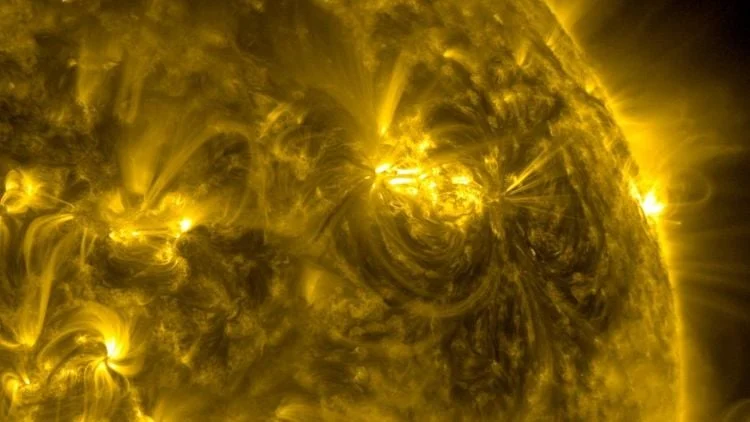
While the average person monitors weather forecasts to prepare for rain, snow, or heatwaves, a specialized branch of science focuses on a far more volatile environment: the vast expanse of space between the Earth and the Sun. Space weather, primarily driven by solar activity, represents a constant and potentially catastrophic threat to modern civilization’s technological backbone. From the disruption of global positioning systems (GPS) to the total collapse of high-voltage power grids, the stakes of solar forecasting have never been higher. For decades, the primary challenge for heliophysicists has been the inability to "see" beneath the Sun’s surface to predict eruptions before they manifest. However, a groundbreaking development from the New Jersey Institute of Technology (NJIT) suggests that artificial intelligence may finally provide the early warning system humanity requires.
A team of researchers has unveiled a sophisticated AI model dubbed "EarlyDetect," designed to identify the precursor signals of solar active regions nearly half a day before they become visible on the solar disk. The findings, recently published in the Journal of Geophysical Research: Machine Learning and Computation, represent a paradigm shift in how scientists approach the "conundrum" of space weather. By leveraging the same underlying architecture that powers advanced large language models (LLMs), the EarlyDetect system can discern subtle magnetic and acoustic patterns that have previously eluded human observation and traditional computational models.
The Hidden Mechanics of Solar Eruptions
To understand the significance of EarlyDetect, one must first grasp the nature of the Sun’s internal dynamics. Space weather activity—including solar flares and coronal mass ejections (CMEs)—originates in "active regions" on the Sun. These regions are characterized by intense, concentrated magnetic fields that eventually break through the Sun’s visible surface, the photosphere, appearing as sunspots.
The difficulty for forecasters lies in the fact that these magnetic structures do not form on the surface; they develop deep within the solar interior. By the time an active region is visible to telescopes, the energy required for a massive solar eruption may already be reaching a critical state. Dr. Alexander Kosovichev, a Distinguished Professor in the Department of Physics at NJIT and a co-principal investigator of the project, likens the challenge to identifying a single instrument’s deviation in a massive musical performance.
"The main difficulty is that an active region begins developing beneath the Sun’s visible surface, where we cannot directly observe the magnetic structure," Dr. Kosovichev explained. "Instead, we’re looking for very small changes in the magnetic field and in the pattern of acoustic waves continually traveling through the Sun. It’s more like detecting a slight change in rhythm within a very noisy orchestra."
These acoustic waves are part of a field known as helioseismology—the study of the Sun’s interior through the observation of sound waves that bounce around its inside. Just as geologists use seismic waves to map the Earth’s core, heliophysicists use solar oscillations to infer what is happening beneath the photosphere. EarlyDetect is specifically designed to process this "noise" and find the signal of an emerging active region.
Harnessing Transformer Architecture for Heliophysics
The technical innovation behind EarlyDetect lies in its use of Transformer architecture. While the public is most familiar with Transformers through applications like ChatGPT or Google’s Gemini, the NJIT team recognized that the architecture’s ability to process sequential data and identify long-range dependencies made it ideal for solar monitoring.
In the context of EarlyDetect, the "language" being analyzed is not words, but a stream of physical data points. The researchers utilized data from the Helioseismic and Magnetic Imager (HMI), an instrument onboard NASA’s Solar Dynamics Observatory (SDO). Since its launch in 2010, the SDO/HMI has provided high-resolution measurements of the solar magnetic field and the velocity of the Sun’s surface.
To train the model, the team fed EarlyDetect massive datasets of SDO/HMI observations, teaching it to recognize the minute fluctuations in magnetic flux and acoustic velocity that precede the emergence of a sunspot. Once the training phase was complete, the AI was tested on "unseen" data—active regions it had never analyzed before. The results were statistically significant: EarlyDetect successfully identified precursor signals for active regions an average of 9.24 hours before they became visible on the Sun’s surface.
Dr. Mengjia Xu, an assistant professor of data science at NJIT and the project’s principal investigator, noted that this represents one of the first successful applications of advanced deep learning to this specific problem. "Machine learning hasn’t been widely applied to solar activity forecasting yet," Dr. Xu stated. "Our work shows that advanced machine learning models can open new possibilities for future space weather prediction."
Lessons from History: The Carrington Event and Beyond
The necessity for a nine-hour lead time becomes clear when examining the historical impact of space weather. The most cited example of solar volatility is the Carrington Event of 1859. On the morning of September 1, British astronomer Richard Carrington observed a "white-light flare"—a massive release of energy so powerful it was visible to the naked eye.
Roughly 17 hours later, the resulting geomagnetic storm slammed into Earth’s magnetosphere. The consequences were unprecedented. Auroras, usually confined to the poles, were visible as far south as the Caribbean and Hawaii. More importantly, the primitive electrical infrastructure of the era—the global telegraph network—was crippled. Telegraph operators reported receiving electric shocks from their equipment. In some instances, telegraph machines continued to send messages even after their batteries were disconnected, powered entirely by the "auroral current" induced in the wires. Some telegraph stations even caught fire as the surge of energy ignited the paper ribbons used for recording messages.
In 1859, the world was not yet dependent on electricity. Today, a Carrington-class event would be catastrophic. Modern society relies on a delicate web of interconnected technologies that are highly sensitive to geomagnetic disturbances. A major solar storm could induce "Geomagnetically Induced Currents" (GICs) in high-voltage power lines, potentially melting the internal components of massive transformers that take years to manufacture. The resulting "black start" scenario could leave entire continents without power for months.
Furthermore, the surge in radiation during such events poses a direct threat to astronauts and can damage the sensitive electronics of satellites. GPS signals, which are essential for everything from maritime navigation to the timing of global financial transactions, can be degraded or blocked entirely as the Earth’s ionosphere becomes turbulent.
Strategic Implications of Improved Forecasting
The 9.24-hour warning window provided by EarlyDetect offers a critical buffer for decision-makers. In the event of a predicted solar eruption, various sectors could take preemptive action:
- Power Grid Management: Utility companies could "island" certain sections of the grid or reduce loads on high-voltage transformers to minimize the risk of GIC-induced damage.
- Aviation Safety: Airlines could reroute flights away from polar regions, where radiation exposure is highest and communication disruption is most severe.
- Satellite Operations: Operators could place satellites into "safe mode," orienting sensitive sensors away from the incoming solar wind and powering down non-essential systems.
- Space Exploration: NASA and other space agencies could instruct astronauts on the International Space Station or future lunar missions to retreat to shielded modules.
The transition from reactive to proactive space weather management is essential as humanity moves toward becoming a multi-planetary species. With the Artemis missions aiming to return humans to the Moon and eventually Mars, the lack of Earth’s protective magnetic field makes early solar warnings a matter of life and death for explorers.
The Future of AI in Solar Science
The success of EarlyDetect signals a new era in heliophysics, where the marriage of "big data" from space-based observatories and advanced AI architectures allows scientists to probe the Sun in ways previously thought impossible. The researchers at NJIT emphasize that this is only the beginning. As AI models become more refined and data from newer missions—such as the Parker Solar Probe and the European Space Agency’s Solar Orbiter—is integrated, the accuracy and lead time of these forecasts are expected to improve.
However, the path forward is not without challenges. Solar activity follows an 11-year cycle, and as we approach the "Solar Maximum" of the current cycle, the frequency of flares and CMEs will increase. This provides more data for AI models to learn from, but it also increases the urgency of deploying reliable forecasting tools.
The broader scientific community has reacted with cautious optimism. While traditional physics-based models remain the gold standard for understanding the why of solar behavior, AI models like EarlyDetect are proving superior at the when. The integration of these two approaches—physics-informed machine learning—is likely the next frontier in the field.
As Dr. Xu and Dr. Kosovichev continue their work, the focus will shift toward real-time implementation. The goal is to move EarlyDetect from a retrospective research tool to a live monitoring system that feeds data directly into the National Oceanic and Atmospheric Administration’s (NOAA) Space Weather Prediction Center.
The primary conundrum of forecasting space weather may not be fully solved, but with the advent of EarlyDetect, the "noisy orchestra" of the Sun is finally starting to make sense. For a world that grows more technologically dependent by the day, these nine hours of advanced warning could be the difference between a minor technical glitch and a global infrastructure collapse. As the NJIT team concludes, the pursuit of these hidden signals is not just a scientific endeavor; it is a vital necessity for the protection of modern life. In the words of the researchers, "This is why we science"—to look up, to understand, and ultimately, to prepare for the storms that come from the stars.