Sisilia Frederika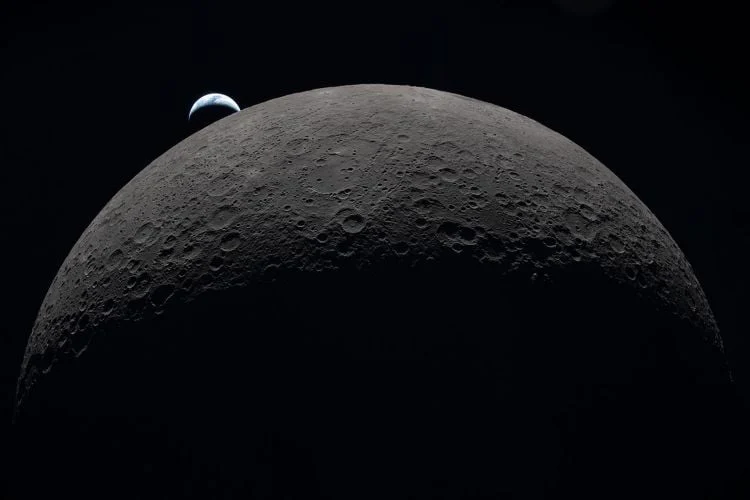
The quest to explore the lunar surface has long been driven by the dual ambitions of scientific discovery and the eventual establishment of a permanent human presence. However, as NASA prepares for the ambitious Artemis missions, a critical concern has moved to the forefront of aerospace biology: the risk of forward contamination. Recent research conducted by a collaborative team from the NASA Goddard Space Flight Center and the NASA Johnson Space Center has provided new evidence suggesting that certain terrestrial microbes may be capable of surviving the harsh conditions of the Moon’s south polar regions. This finding, published in the journal Science Advances, challenges previous assumptions regarding the sterility of the lunar environment and highlights the urgent need for robust planetary protection protocols.
Forward contamination refers to the inadvertent transfer of Earth-based organisms to other planetary bodies via robotic or human-crewed spacecraft. This phenomenon poses a significant threat to the integrity of space science, as the introduction of terrestrial life could lead to "false positives" in the search for extraterrestrial biosignatures. Furthermore, there is an ethical and scientific imperative to preserve the pristine nature of celestial environments to ensure that any indigenous life-forms, should they exist, are not outcompeted or destroyed by invasive Earthly microbes. While the vacuum of space, extreme temperature fluctuations, and intense solar radiation typically serve as a lethal barrier to most life, the unique topography of the lunar south pole may offer "safe havens" for microscopic hitchhikers.
The Microbes Under Investigation: Resilient Terrestrial Organisms
To understand the potential for survival, the NASA research team selected a suite of microorganisms known for their resilience on Earth and their previous performance in space-like environments. The study focused on several key species, including Aspergillus niger, Bacillus subtilis, Staphylococcus aureus, Deinococcus radiodurans, and various species of the fungal genus Fusarium. These organisms represent a cross-section of microbial life that is commonly associated with human habitation or has demonstrated extreme environmental tolerance.
Aspergillus niger, a common black mold found in many terrestrial environments, was a primary focus of the study. This fungus has previously been sampled on the International Space Station (ISS), where it demonstrated an ability to withstand the rigors of low Earth orbit. On Earth, A. niger thrives in temperatures ranging from 35°C to 37°C (95°F to 99°F) but can survive in temperatures as low as 6°C (43°F). Its ability to form resilient spores makes it a particularly formidable candidate for accidental transport to the Moon.
Similarly, Deinococcus radiodurans, often nicknamed "Conan the Bacterium," is renowned for its extraordinary resistance to ionizing radiation. It can survive radiation doses thousands of times higher than those that would be fatal to a human being, thanks to its highly efficient DNA repair mechanisms. Bacillus subtilis, a spore-forming bacterium, is also a staple of planetary protection studies due to its ability to enter a dormant state that protects it from desiccation and UV exposure.
Mapping the Lunar South Pole: Topography and Survival Niches
The lunar south pole is fundamentally different from the equatorial regions visited during the Apollo era. It is characterized by deep craters and rugged terrain that create "permanently shadowed regions" (PSRs). These areas never receive direct sunlight and are among the coldest places in the solar system, with temperatures dropping as low as -230°C (-380°F). Conversely, nearby ridges and crater rims may experience near-constant sunlight, creating a complex thermal and radiative mosaic.
The researchers utilized sophisticated topographic models to analyze the distribution of radiation across specific sites, including the Nobile Rim, the Connecting Ridge, and the De Gerlache Rim. These locations are of particular interest to NASA as they are being considered as potential landing sites for the Artemis III mission and subsequent lunar base operations. By combining these environmental models with laboratory data on microbial resilience, the team sought to identify areas where the lethal effects of ultraviolet (UV) radiation might be mitigated.
The findings indicate that the Moon’s south pole could host several micro-environments where the terrain provides sufficient shielding from solar UV rays. In these shielded "cold traps" or shadowed crevices, the primary threat to microbial life—solar radiation—is significantly reduced. The study specifically noted that Aspergillus niger could potentially survive in these regions, as its pigmented spores provide an additional layer of protection against radiation, allowing it to remain viable even in the absence of a thick atmosphere.
Planetary Protection and the Office of Safety and Mission Assurance
The management of microbial contamination is overseen by NASA’s Office of Safety and Mission Assurance (OSMA). This office implements the agency’s planetary protection policies, which are designed to prevent both forward contamination (Earth to space) and backward contamination (space to Earth). These policies are not merely internal guidelines but are rooted in the 1967 Outer Space Treaty, which mandates that space exploration be conducted in a manner that avoids harmful contamination of celestial bodies.
NASA classifies missions into five distinct categories based on the scientific priority of the target body and the likelihood of hosting life:
- Category I: Missions to targets not of direct interest for understanding the origins of life (e.g., the Sun or Mercury).
- Category II: Missions to targets where there is significant interest in the origins of life, but only a remote chance of contamination (e.g., the Moon, Venus).
- Category III: Flyby or orbiter missions to targets of high interest for life (e.g., Mars, Europa).
- Category IV: Lander or rover missions to high-interest targets.
- Category V: Any mission returning samples to Earth.
Historically, the Moon was viewed as a Category I or II environment. However, the discovery of water ice in the polar craters has shifted the scientific perspective. The presence of water increases the "biological potential" of these regions, leading to stricter scrutiny of human and robotic activities. As Dr. Heather Graham, an organic chemist at NASA Goddard and co-author of the study, emphasized, the Moon must be viewed as a place where biological cells can persist. This necessitates a proactive approach to characterizing lunar chemistry before human arrival permanently alters the landscape.
The Artemis Timeline and the Human Factor
The urgency of this research is tied directly to the timeline of the Artemis program. Artemis I successfully tested the Orion spacecraft in 2022, and Artemis II is slated to carry a crew around the Moon in the mid-2020s. Artemis III, the first mission to land humans on the Moon since 1972, will target the south pole. Unlike the short stays of the Apollo missions, the Artemis program aims to establish the Artemis Base Camp, a permanent facility that will support long-term human habitation.
Humans are inherently "leaky" biological systems. We shed thousands of skin cells every hour, and our breath and waste contain trillions of microbes. While spacecraft are sterilized in cleanrooms before launch, it is impossible to completely eliminate the microbial load associated with human explorers. The establishment of a lunar base will inevitably introduce terrestrial biology to the lunar environment.
The research suggests that mission planners must develop new strategies for waste management and extravehicular activity (EVA) protocols. For instance, the design of spacesuits and airlocks must be optimized to minimize the venting of internal air—and the microbes it contains—into the lunar vacuum. Furthermore, the selection of landing sites must balance scientific accessibility with the need to protect sensitive shadowed regions from contamination.
Scientific Analysis and Broader Implications
The findings of the NASA Goddard and Johnson team have profound implications for the future of astrobiology. If terrestrial microbes can survive at the lunar poles, they could potentially migrate through the extremely thin lunar exosphere or be transported by the movement of dust and equipment. This creates a risk of "contaminating the record." If a future mission detects organic molecules or microbial life on the Moon, scientists will face the daunting task of proving that these are not remnants of previous human missions.
Dr. Graham’s work on "agnostic biosignatures" is particularly relevant here. Agnostic biosignatures are signs of life that do not rely on specific Earth-like biochemistry, such as DNA or specific proteins. If the lunar surface becomes littered with Earth-based DNA, the search for truly "alien" biology becomes significantly more difficult.
Moreover, the Moon serves as a "proving ground" for future missions to Mars. Mars is a Category IV destination, with much stricter protection requirements because it possesses an atmosphere and historical evidence of liquid water. If NASA and its international partners cannot successfully manage contamination on the Moon, the challenges of protecting Mars will be even more insurmountable. The lessons learned from the survival of Aspergillus niger and Deinococcus radiodurans on the Moon will directly inform the sterilization techniques and mission architectures used for the first human missions to the Red Planet in the 2030s and 2040s.
Conclusion: Stewardship of the Lunar Frontier
The study from NASA Goddard and Johnson Space Centers serves as a vital reminder that space exploration is not merely a feat of engineering, but a complex biological undertaking. The revelation that the lunar south pole offers viable niches for microbial survival necessitates a shift in how we approach our nearest celestial neighbor. As we stand on the precipice of a new era of lunar habitation, the scientific community must prioritize the "characterization of lunar chemistry" as advocated by Dr. Graham.
The ongoing research into microbial resilience ensures that as we expand the footprint of humanity into the solar system, we do so with a full understanding of our biological impact. Protecting the integrity of the lunar poles is not just about preventing "false discoveries"; it is about the responsible stewardship of the cosmos. As the Artemis missions move forward, the "microbial hitchhikers" traveling with our astronauts will be as much a part of the mission’s focus as the rocks they collect and the craters they explore. The future of space science depends on our ability to look up at the stars while remaining ever-vigilant about the life we carry with us from Earth.