Garick Elordi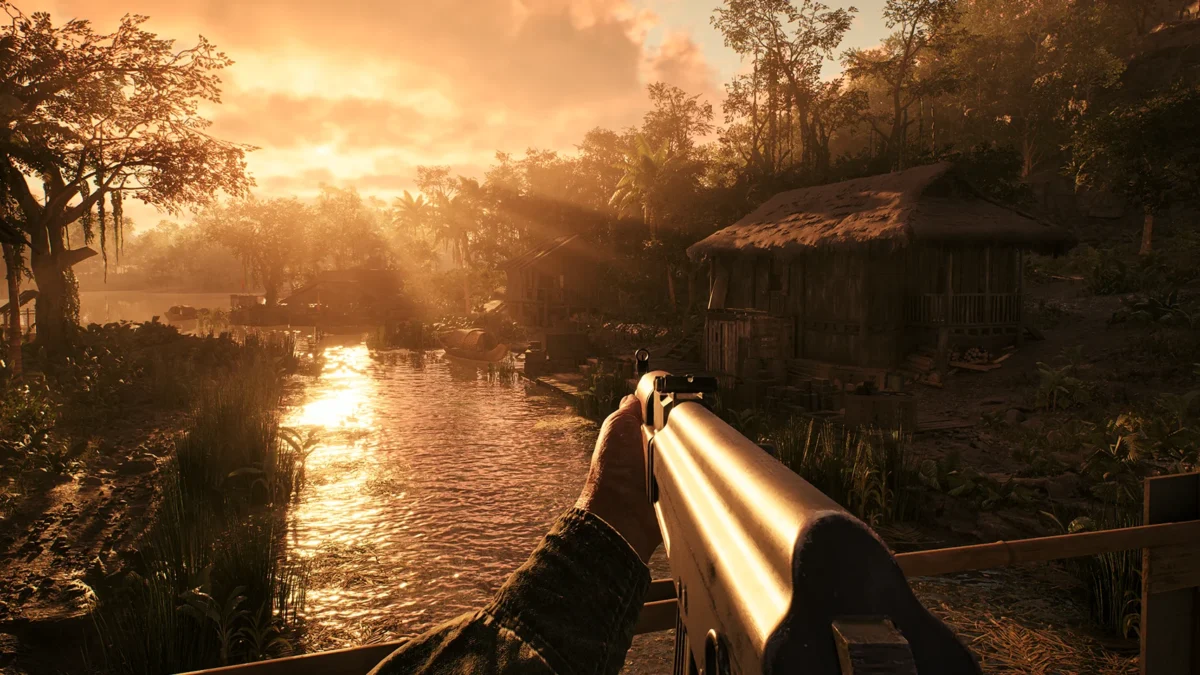
The tactical shooter landscape has undergone a significant shift with the release of Hell Let Loose: Vietnam, a title that transitions the established hardcore mechanics of its predecessor from the European theaters of World War II to the dense, unforgiving jungles of Southeast Asia. Developed by Expression Games and published by Team17, this iteration seeks to maintain the franchise’s reputation for high-stakes, communication-heavy combat while introducing faction asymmetry and environmental challenges unique to the Vietnam War era. As a 100-player tactical simulator, the game places a premium on organizational hierarchy and verbal coordination, often punishing individualistic playstyles in favor of cohesive unit maneuvers.
The Evolution of Tactical Warfare: From Normandy to the Mekong
The original Hell Let Loose established itself as a middle ground between the accessibility of the Battlefield series and the uncompromising realism of titles like Squad or Arma. By moving the setting to Vietnam, Expression Games has inherited a framework defined by 50-versus-50 combat, where players occupy specific roles within a rigid command structure. The transition is more than cosmetic; it represents a fundamental change in the "meta-game" of tactical shooters, moving away from the relatively open fields of 1940s France into environments where visibility is a primary obstacle.
In this new theater, the game retains its signature focus on combined-arms warfare. Players are divided into infantry, armor, and reconnaissance squads, all overseen by a single Commander. This Commander is responsible for the macro-level strategy, utilizing a resource-based system to deploy airstrikes, supply drops, and heavy vehicles. The introduction of Vietnam-era technology, specifically the integration of rotary-wing aircraft, has added a vertical dimension to the battlefield that was absent in the previous World War II setting.
Faction Asymmetry and Historical Authenticity
One of the most significant departures from the original game is the implementation of faction-specific mechanics designed to reflect the historical realities of the Vietnam War. In the original Hell Let Loose, the Allied and Axis forces functioned with largely mirrored capabilities. In Vietnam, however, the developers have opted for a more asymmetric approach.
The United States Army forces are characterized by their superior technological firepower and mobility. The inclusion of helicopters serves as a primary logistical and offensive tool, allowing for rapid troop deployment and aerial fire support. Conversely, the North Vietnamese Army (NVA) lacks air superiority but compensates through enhanced concealment and a unique tunnel system. This mechanic allows NVA players to establish a network of underground passages, facilitating fast travel across the map and enabling flanking maneuvers that can bypass established US frontlines.

This asymmetry extends to the weaponry. While US squaddies often rely on the versatility of the M16 and the overwhelming power of napalm strikes, NVA troops utilize a mix of Soviet-era equipment and guerrilla tactics. This design choice forces players to adapt their strategies based on their faction, rather than relying on a universal set of tactics.
Environmental Design and Technical Specifications
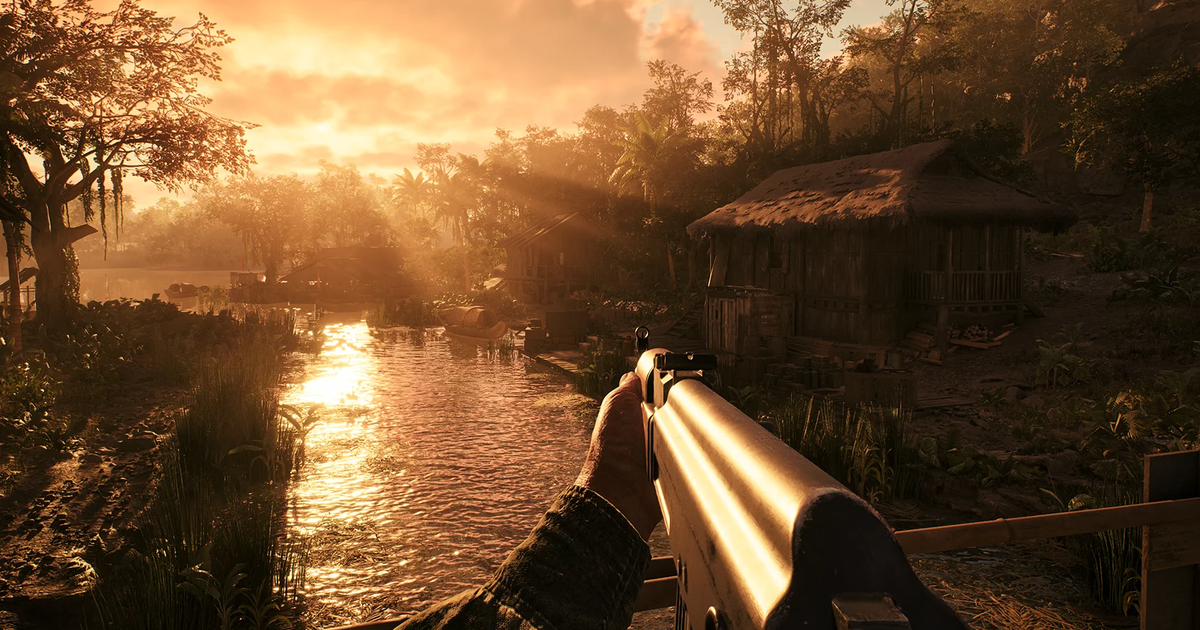
Expression Games has utilized the latest iteration of its engine to render some of the most complex jungle environments seen in the tactical shooter genre. The maps, such as the Thanh Hóa Bridge and the Huế Outskirts, are designed to emphasize the contrast between long-range engagements and close-quarters battle (CQB).
The Thanh Hóa Bridge map features a central railway bridge bisecting the terrain, creating a focal point for intense conflict while the surrounding riverbanks offer opportunities for long-distance sniping and amphibious assaults. The Huế Outskirts map focuses on verticality, utilizing mountainous terrain and industrial zones to challenge players’ spatial awareness.

However, the technical demands of rendering such dense vegetation have introduced challenges. Industry analysts have noted the phenomenon of "LOD (Level of Detail) phasing," where players at different distances may see varying levels of foliage. This can lead to instances where a player believes they are concealed by thick grass, while a distant enemy sees them clearly against a low-detail backdrop. Despite these hurdles, the visual fidelity remains a high point for the title, providing a sense of immersion that is central to the "war simulator" experience.
The Communication Mandate: A Social and Strategic Requirement
At its core, Hell Let Loose: Vietnam functions as a social experiment in large-scale cooperation. The game utilizes a sophisticated proximity and radio-based voice chat system. Squad members can communicate locally or within their unit, while Squad Leaders have a dedicated channel to coordinate with the Commander.
This reliance on verbal communication has been described as a "stick" approach to game design. Unlike titles that reward coordination through bonuses, Hell Let Loose: Vietnam effectively mandates it through the threat of failure. Without a Squad Leader placing "Outposts" (squad-only spawn points) or "Garrisons" (team-wide spawn points), a team can find itself forced to trek across kilometers of terrain on foot, often only to be eliminated by an unseen sniper.

While this creates a rewarding experience for organized groups, it presents a significant barrier to entry for casual players or those without microphones. The community response to this requirement has been mixed, with some praising the depth of the tactical coordination and others criticizing the potential for "spawn-killing" and frustration when leadership fails to communicate.
Community Dynamics and the Challenge of Moderation
As with many titles that rely heavily on voice communication, Hell Let Loose: Vietnam faces ongoing challenges regarding community behavior. The requirement for constant vocal engagement exposes players to the broader spectrum of online interactions, which can range from highly professional tactical coordination to instances of toxicity and harassment.
Team17 and Expression Games have implemented muting and blocking tools to allow players to manage their social experience. However, the inherent design of the game—which forces players into close cooperation with strangers—means that the social environment significantly impacts the overall quality of the gameplay. Industry observers have pointed out that for a game to maintain a healthy long-term player base, developers must be proactive in fostering a welcoming community, especially when the gameplay mechanics themselves do not provide a buffer against negative social interactions.

Market Impact and Future Outlook
The release of Hell Let Loose: Vietnam comes at a time of increased interest in tactical, "extraction-lite," and large-scale military simulators. By offering a more structured, objective-based experience than "sandbox" simulators like Arma, but a more lethal and slower-paced environment than Battlefield, the game occupies a specific niche in the market.
Preliminary data suggests that the game has successfully migrated a significant portion of the original Hell Let Loose player base while attracting new interest due to the popular Vietnam setting. However, the game’s longevity will likely depend on the developers’ ability to address technical issues such as the "intangible" feeling of the shooting mechanics and the lack of visual or audio feedback during combat.
Expression Games has hinted at a post-launch roadmap that includes additional maps, faction-specific vehicles, and refinements to the movement system, which some players have described as "sluggish" compared to more arcade-leaning shooters. The success of these updates will determine whether Hell Let Loose: Vietnam can maintain its position as a premier tactical shooter or if it will remain a niche title for a dedicated but limited audience.

Conclusion
Hell Let Loose: Vietnam represents a bold, if occasionally flawed, attempt to capture the chaotic and claustrophobic nature of the Vietnam War. Its emphasis on communication, command hierarchy, and environmental tension sets it apart in a crowded market. While the high learning curve and reliance on social cooperation may deter some, the game offers a level of strategic depth and atmospheric immersion that few other titles can match. As the title evolves through post-launch support, it remains a significant case study in the balance between historical authenticity and multiplayer engagement.