Sisilia Frederika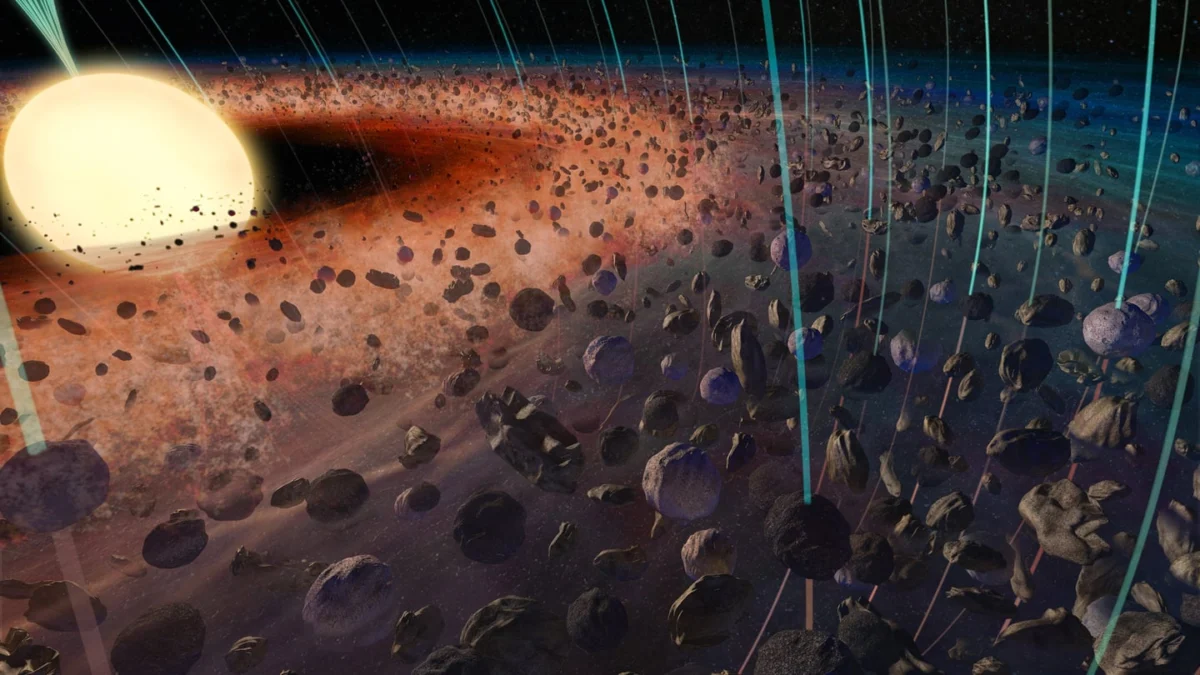
The origins of our solar system have long been attributed primarily to the inexorable pull of gravity, yet new evidence suggests that an invisible, pervasive force—magnetism—was a fundamental architect in the Sun’s birth. Scientists at the Massachusetts Institute of Technology (MIT) have uncovered records of extremely ancient magnetism imprinted within meteorite samples, providing a rare glimpse into the first 200,000 years of our solar system’s existence. By analyzing microscopic grains of material found in a meteorite recovered from the frozen wastes of Antarctica, researchers have determined that magnetic fields were active and influential long before the planets had even begun to take shape. These findings, published in various journals including Geochimica et Cosmochimica Acta and PNAS, challenge the traditional gravity-centric model of stellar evolution and suggest that magnetic forces were essential for driving the accretion of material that eventually formed the Sun and its surrounding celestial bodies.
The Discovery of DOM 08006 and the Pristine Records of Space
The focal point of this breakthrough is a meteorite known as DOM 08006, which was discovered in 2008 in the Dominion Range of Victoria Land, East Antarctica. This region serves as one of the world’s most prolific "natural freezers," preserving extraterrestrial material in a state of near-perfect suspended animation for millennia. Unlike many meteorites that undergo significant geological alteration—such as heating, aqueous alteration (exposure to water), or structural damage during collisions in the asteroid belt—DOM 08006 is categorized as a CO3 carbonaceous chondrite. This classification indicates it is one of the most primitive and least altered rocks in the solar system’s inventory.
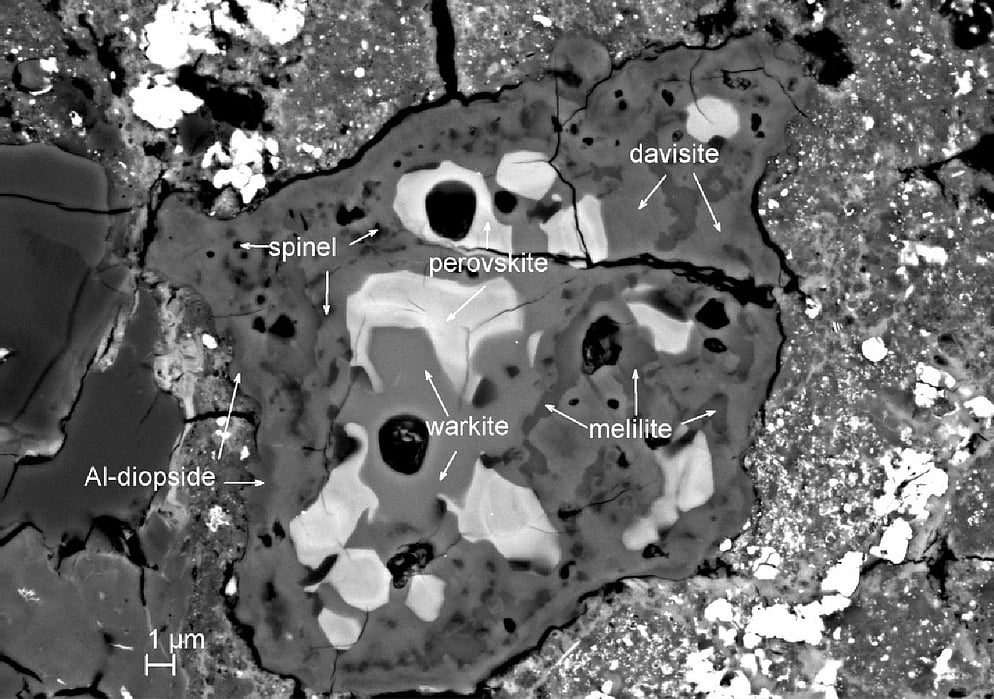
Within the matrix of DOM 08006 are tiny, white, irregularly shaped nuggets known as calcium-aluminum-rich inclusions (CAIs). These inclusions are the oldest solid objects ever dated in the solar system, forming roughly 4.567 billion years ago. Because they condensed at extremely high temperatures from the cooling gas of the protosolar nebula, they acted as "magnetic tapes," recording the orientation and strength of the surrounding magnetic field as they solidified. While most meteorites have had their original magnetic signatures erased by billions of years of cosmic history, the pristine nature of DOM 08006 has allowed researchers to peer back to the very dawn of time.
The Role of Magnetism in the Protoplanetary Disk
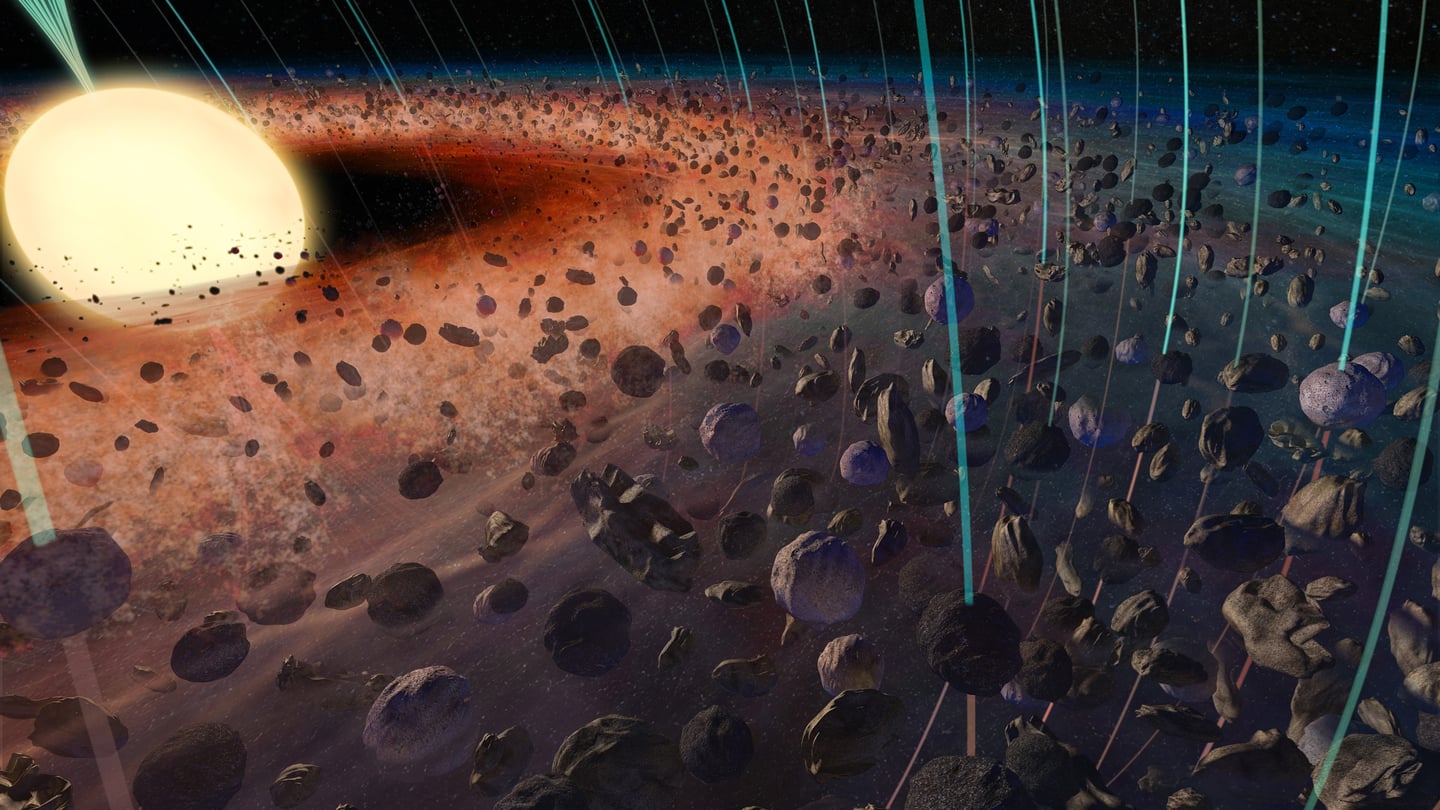
To understand the significance of this discovery, one must look at the transition of the solar system from a chaotic cloud of gas and dust into a structured protoplanetary disk. Approximately 4.6 billion years ago, a giant molecular cloud began to collapse. As it did, it flattened into a spinning disk with a dense core that would eventually become the Sun. For decades, the primary debate in astrophysics has centered on what mechanism allowed the gas in this disk to lose its angular momentum and fall inward toward the growing Sun.
If gravity were the only force at play, the gas would likely have remained in orbit, much like a satellite, rather than spiraling inward to fuel the Sun’s growth. The MIT study, led by Cauê Borlina, an assistant professor at Purdue University and former MIT graduate student, and Professor Benjamin Weiss of MIT, provides empirical evidence that magnetic fields provided the necessary "friction" or torque. These fields arose from the movement of charged particles—ions and electrons—within the hot, turbulent gas of the nebula. As these charged particles moved, they generated magnetic fields that exerted a force back on the gas, stirring up turbulence and driving "magnetized winds." These winds helped transport gas from the outer regions of the disk toward the center, facilitating the Sun’s rapid growth during its most critical formative epoch.
Chronology of the Early Solar System
The timeline established by the MIT team places the recorded magnetic activity within the first 200,000 years of the solar system. This is a significantly earlier window than previously studied magnetic events. To place this in perspective, the following chronology outlines the evolution of these fields:
- T-Minus 4.6 Billion Years: The initial collapse of the giant molecular cloud begins, triggered perhaps by a nearby supernova or a density wave in the galaxy.
- The First 200,000 Years: CAIs form as the first solid grains in the disk. The measurements from DOM 08006 show a strong magnetic field was already present, influencing the movement of gas and the concentration of dust.
- 2 Million Years Post-Formation: Previous studies identified a magnetic field at this stage, but by this point, the Sun was already well-developed and the disk was beginning to clear, with larger planetesimals (the precursors to planets) already forming.
- 4.5 Billion Years to Present: Most meteorites are processed by heat and water, losing their primordial magnetic records. DOM 08006 remains sequestered in the asteroid belt before eventually being knocked into an Earth-crossing orbit and landing in Antarctica.
By identifying magnetism in the 200,000-year window, the researchers have moved the "clock" of magnetic influence back to the very beginning, proving that magnetism was not just a later byproduct of planetary formation, but a primary driver of the Sun’s initial assembly.
Supporting Data and Paleomagnetic Analysis
The methodology used to extract these ancient secrets involves sophisticated paleomagnetic techniques. The researchers used a SQUID (Superconducting Quantum Interference Device) microscope to map the magnetic remnants in the CAIs. This device is capable of detecting incredibly faint magnetic signals at a sub-millimeter scale.
The data revealed that the magnetic field in the early protosolar nebula was surprisingly strong—significantly stronger than the magnetic field currently surrounding Earth. This strength is vital because it confirms the field was powerful enough to influence the massive quantities of gas in the disk. Furthermore, the team explored two primary hypotheses for how the CAIs became magnetized:
- Hypothesis A: The inclusions were magnetized as they first condensed from the hot nebular gas.
- Hypothesis B: They were magnetized during subsequent "flash-heating" events, such as shock waves moving through the disk, before they were incorporated into larger asteroids.
Both scenarios point to a pervasive magnetic environment in the inner solar system during the earliest stages of the disk’s evolution. The findings suggest that magnetic fields were a constant "ingredient" in the recipe for a solar system, rather than a transient phenomenon.
Expert Perspectives and Scientific Implications
The implications of this research extend far beyond our own solar system. Professor Benjamin Weiss noted that while the transition from a spherical cloud to a protoplanetary disk is one of the most significant events in cosmic history, it has remained one of the most mysterious. "It has long been theorized that gravity caused this," Weiss stated, "but our measurements show magnetism likely played a role."
Cauê Borlina emphasized that the debate in the scientific community has shifted. "Nowadays people don’t debate whether magnetism is present when planets are forming. But the debate is around the very early solar system, before planets are forming, when there’s just a disk," Borlina explained. By operating in this "pre-planetary" window, the team has provided the missing link between the birth of the star and the birth of the planets.
This research also provides a framework for understanding exoplanetary systems. As astronomers use the James Webb Space Telescope (JWST) to observe young stars in other parts of the Milky Way, they see protoplanetary disks that look remarkably similar to our own. The MIT study suggests that the "magnetized wind" model is likely a universal mechanism for star formation throughout the galaxy.
Broader Impact: From Dust Grains to Terrestrial Worlds
The study of DOM 08006 and its CAIs reminds us that the vast complexities of Earth—our oceans, atmosphere, and life itself—began as microscopic dust grains. These grains were not merely passive observers of gravity; they were influenced by the invisible hand of electromagnetism.
The presence of a strong magnetic field in the early disk also explains the "sorting" of materials in the solar system. Magnetism and turbulence would have influenced which materials stayed in the hot inner regions and which were pushed to the cold outer reaches. This chemical sorting eventually dictated the composition of the inner rocky planets (like Earth and Mars) versus the outer gas giants (like Jupiter and Saturn).
In conclusion, the analysis of the DOM 08006 meteorite has successfully pushed back the record of solar system magnetism to its earliest possible frontier. By demonstrating that magnetic fields were active within the first 200,000 years, MIT researchers have refined the "standard model" of how stars are born. Gravity may have provided the raw material, but magnetism provided the engine that drove that material into the heart of our Sun, setting the stage for everything that followed. As scientists continue to analyze primitive meteorites, they are likely to find that the history of our cosmic neighborhood is written in the magnetic alignment of its smallest, most ancient particles.