Sisilia Frederika
For decades, the field of astrophysics has operated under a fundamental assumption that served as a cornerstone for measuring the cosmos: the idea that stars form in roughly the same proportions of mass regardless of where they are in the universe. This principle, encapsulated in a mathematical tool known as the Initial Mass Function (IMF), has allowed astronomers to estimate the total mass of distant galaxies by observing only their brightest members. However, a groundbreaking study from a team of researchers at the University of Missouri suggests that this "universal yardstick" may be fundamentally flawed. By analyzing data from the European Space Agency’s Gaia mission, the team has provided evidence that the IMF is not a constant, but rather a variable that shifts based on the specific environmental conditions of star-forming regions.
The implications of this discovery are profound. If the ratio of large to small stars varies across the universe, then our current estimates of galactic mass, the age of stellar populations, and even the total mass of the universe itself may be inaccurate. As Charles Steinhardt, an astronomy professor at the University of Missouri and co-author of the study, noted, the scientific community may have been using the wrong tool for the job. "Other galaxies weren’t breaking the laws of physics—we were measuring them with the wrong yardstick," Steinhardt stated, highlighting a shift in perspective that could necessitate a recalculation of cosmological models developed over the last half-century.
The Historical Context of the Initial Mass Function
To understand the weight of the Missouri study, one must first look at the history of the Initial Mass Function. The concept was first introduced by astrophysicist Edwin Salpeter in 1955. Salpeter proposed a power-law relationship to describe the distribution of stellar masses at the time of their birth. He observed that for every massive, luminous star born in a molecular cloud, there are hundreds of smaller, dimmer stars produced.
Because small stars—such as red dwarfs—are incredibly faint and difficult to detect across intergalactic distances, astronomers relied on the IMF to fill in the blanks. By measuring the light from the "titans" of a galaxy—the O-type and B-type stars that burn hot and bright—scientists used the IMF to mathematically infer the number of unseen smaller stars. This allowed for the calculation of a galaxy’s "stellar mass," which in turn helped determine the amount of dark matter required to explain the galaxy’s gravitational behavior.
For nearly 70 years, the IMF was treated as a "universal constant." It was largely based on observations within our own Milky Way, specifically in the solar neighborhood. The assumption was that the physics of gas cloud collapse was uniform enough that the resulting "stellar recipe" would be the same in a galaxy ten billion light-years away as it is in our own backyard.
The Bias of the Brightest: A Statistical Oversight
The central problem with the traditional application of the IMF is a form of observational bias. In the vast majority of astronomical observations, the most massive stars dominate the light profile of a galaxy. These stars can be tens or even hundreds of times the mass of our Sun, emitting radiation so intense they can be seen across the observable universe. Conversely, low-mass stars, which make up the bulk of the universe’s stellar population, contribute very little to the total luminosity of a distant galaxy.
The Missouri research team likens the current method of measuring galactic mass to estimating the total weight of the human population by only measuring the world’s tallest and heaviest individuals. If one were to take the average weight of professional basketball players and apply it as a global average for every man, woman, and child, the resulting total mass estimate for humanity would be wildly inflated. In the case of the universe, the opposite has often been the fear: that by failing to account for variations in the distribution of smaller stars, astronomers may be missing a significant portion of the "baryonic" (normal) matter that makes up the cosmos.

Leveraging the Gaia Satellite for High-Precision Data
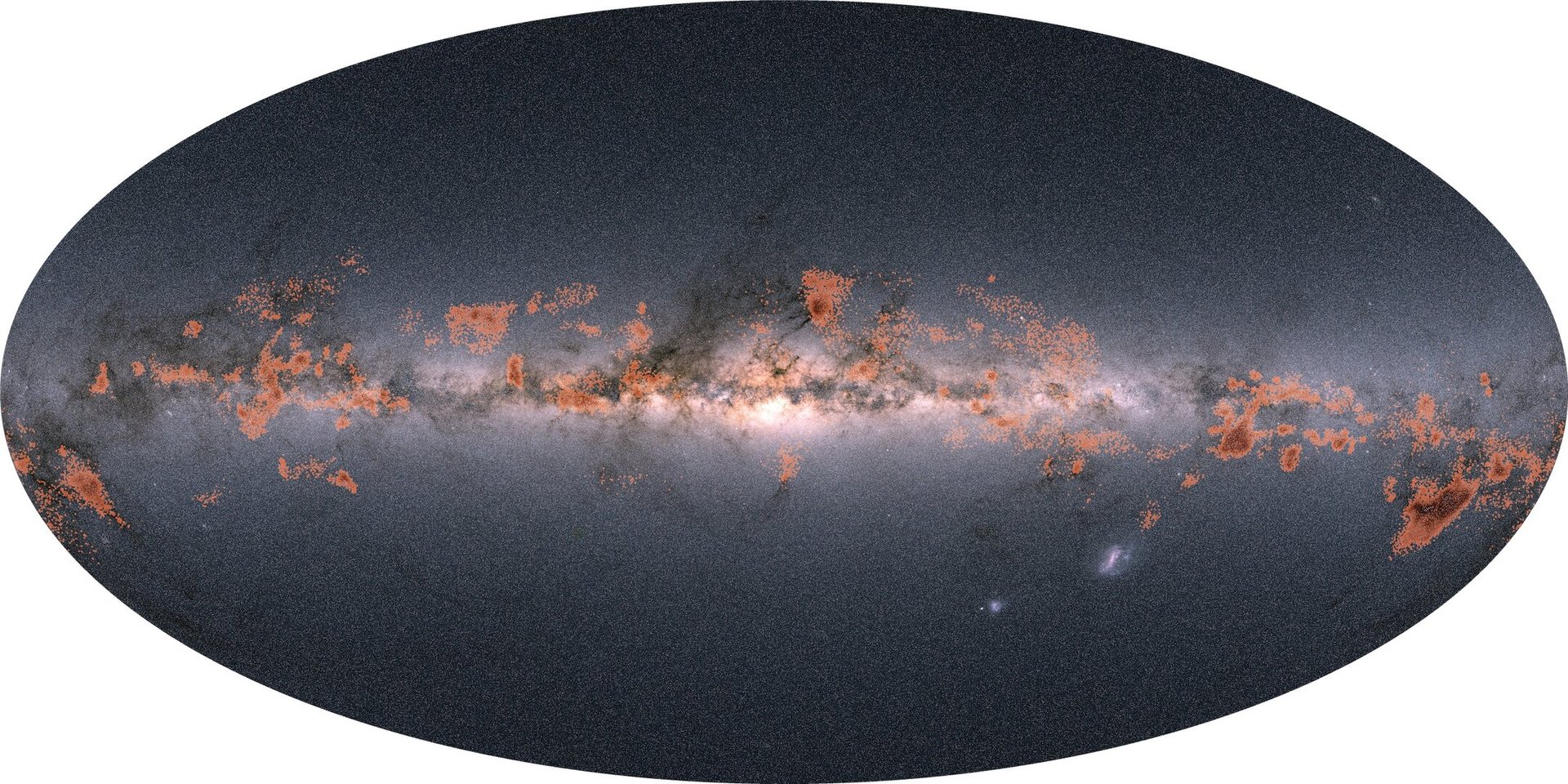
The breakthrough in the Missouri study was made possible by the Gaia satellite. Launched by the European Space Agency (ESA) in 2013, Gaia has been tasked with creating the most detailed three-dimensional map of the Milky Way ever assembled. By measuring the positions, distances, and motions of nearly two billion stars, Gaia provides a dataset of unprecedented scale and precision.
The University of Missouri team, including undergraduate researcher Carter Meyerhoff, focused their analysis on star clusters within the Milky Way. Star clusters are ideal "laboratories" for testing the IMF because all stars within a single cluster are formed from the same parental molecular gas cloud at approximately the same time. This eliminates variables such as age and chemical composition differences that complicate observations of field stars.
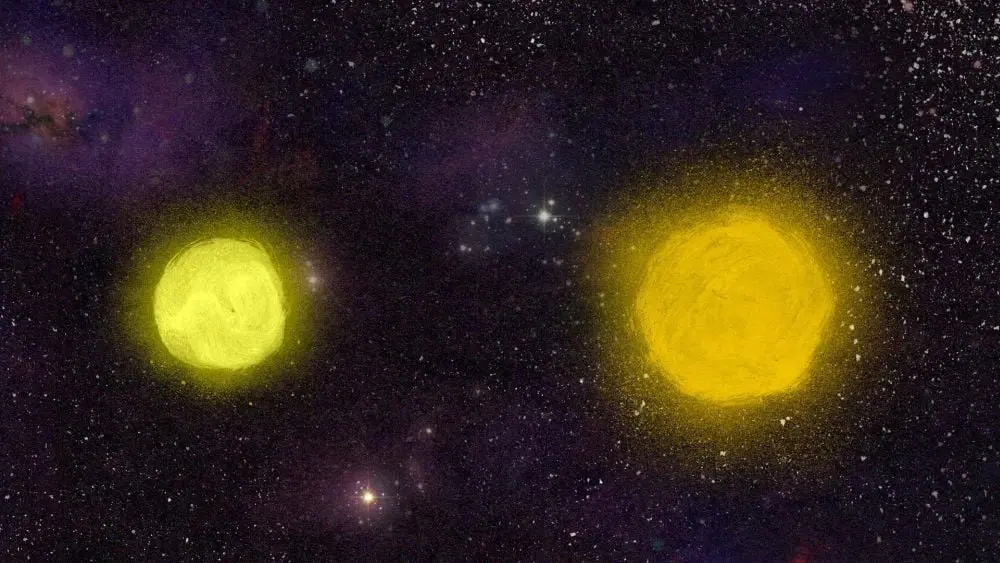
By examining these clusters, the researchers sought to answer a simple but critical question: Does every cluster show the same ratio of big stars to small stars? The data suggested a clear "no." The researchers found that the IMF varied significantly from one cluster to another. Some regions were "top-heavy," producing a higher proportion of massive stars, while others were "bottom-heavy," dominated by low-mass dwarfs.
Findings: The Influence of the Formation Environment
The study’s findings indicate that the "clean" pattern discovered by Meyerhoff and his colleagues points toward environmental influence. Factors such as the temperature of the molecular cloud, the density of the gas, and the presence of turbulence or magnetic fields appear to dictate the final mass distribution of the stars produced.
"Instead of applying the same model to every galaxy, astronomers could account for the conditions under which stars formed and select the IMF that best matches that environment," Meyerhoff explained. This suggests that the IMF is not a single equation, but a family of equations that must be selected based on the local physics of the star-forming region.
For example, in the early universe, gas clouds were generally hotter and lacked the "metals" (elements heavier than helium) that help gas cool and fragment into smaller pieces. Theoretical models have long suggested that the first generations of stars were much more massive than those forming today. The Missouri study provides empirical support for the idea that such variations are not just limited to the distant past but are a fundamental feature of stellar birth in the modern universe.
Chronology of Stellar Mass Research
The evolution of our understanding of stellar mass has moved through several key phases:
- 1955: Edwin Salpeter publishes his seminal work on the IMF, establishing the first mathematical framework for stellar mass distribution.
- 1970s-1990s: Astronomers refine the IMF (e.g., the Miller-Scalo and Kroupa IMFs) to better account for the observed drop-off in the number of extremely low-mass stars.
- 2000s: Discrepancies begin to appear in observations of elliptical galaxies, suggesting they might have more low-mass stars than the standard Milky Way IMF predicts.
- 2013: Gaia mission launches, beginning the collection of high-precision astrometric data for billions of stars.
- 2020-2024: Advanced computer simulations and high-resolution telescopes (like James Webb) provide hints of IMF variability in extreme environments.
- Present: The University of Missouri team publishes their findings, using Gaia data to demonstrate that IMF variability is a detectable reality within our own galaxy’s clusters.
Broader Implications for Cosmology and Dark Matter
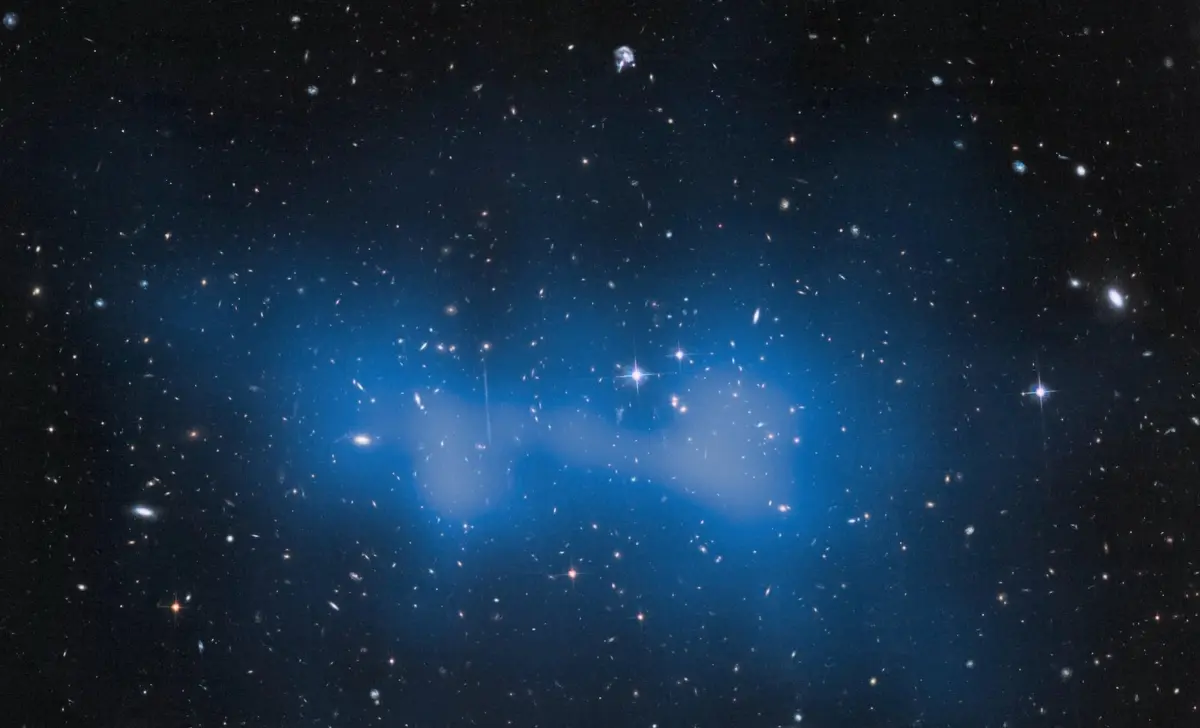
The revelation that the IMF is variable has "domino effect" implications for almost every subfield of astronomy. One of the most significant impacts concerns the study of dark matter. Dark matter is currently inferred by calculating the difference between the observed gravitational pull in a galaxy and the mass of its visible stars and gas. If our estimates of "visible" stellar mass are off because we are using the wrong IMF, the calculated amount of dark matter required to fill the gap must also change.
Furthermore, the age of galaxies is often determined by analyzing their light spectra and comparing them to models of stellar evolution. These models are built upon the IMF. If a galaxy has a different proportion of long-lived small stars versus short-lived large stars than we assumed, our estimates of when that galaxy formed could be off by hundreds of millions, or even billions, of years.
This research also intersects with the ongoing "Hubble Tension"—a discrepancy in the measured expansion rate of the universe. While the IMF study doesn’t solve the tension directly, it highlights a broader theme in modern astrophysics: that our fundamental "standard candles" and "standard yardsticks" may require more nuance than previously thought.
Expert Reactions and Future Directions
The astronomical community has greeted the Missouri findings with a mixture of caution and excitement. While the idea of a non-universal IMF has been debated for years, the use of Gaia data provides a level of statistical rigor that is difficult to ignore.
The next step for researchers will be to integrate these findings into larger cosmological simulations. By creating "environmentally dependent" IMF models, scientists can re-examine observations from the James Webb Space Telescope (JWST), which is currently looking at the very first galaxies to form after the Big Bang. These early galaxies exist in environments vastly different from the modern Milky Way, making them the ultimate test subjects for a variable IMF.
Professor Steinhardt emphasizes that this is not the end of the IMF, but rather its evolution. "We’ve found that the Universe is more complicated than we assumed," he said. "But we’re also getting closer to measuring it correctly."
As astronomers move forward, the "wrong yardstick" is being replaced by a more sophisticated, adaptable set of tools. By acknowledging the complexity of star formation, the scientific community is taking a significant step toward a more accurate inventory of the cosmos, ensuring that our map of the universe is as precise as the technology of the 21st century allows. This shift from "universal" to "contextual" physics may well be the key to unlocking the remaining mysteries of galactic evolution and the true mass of the universe.