admin
admin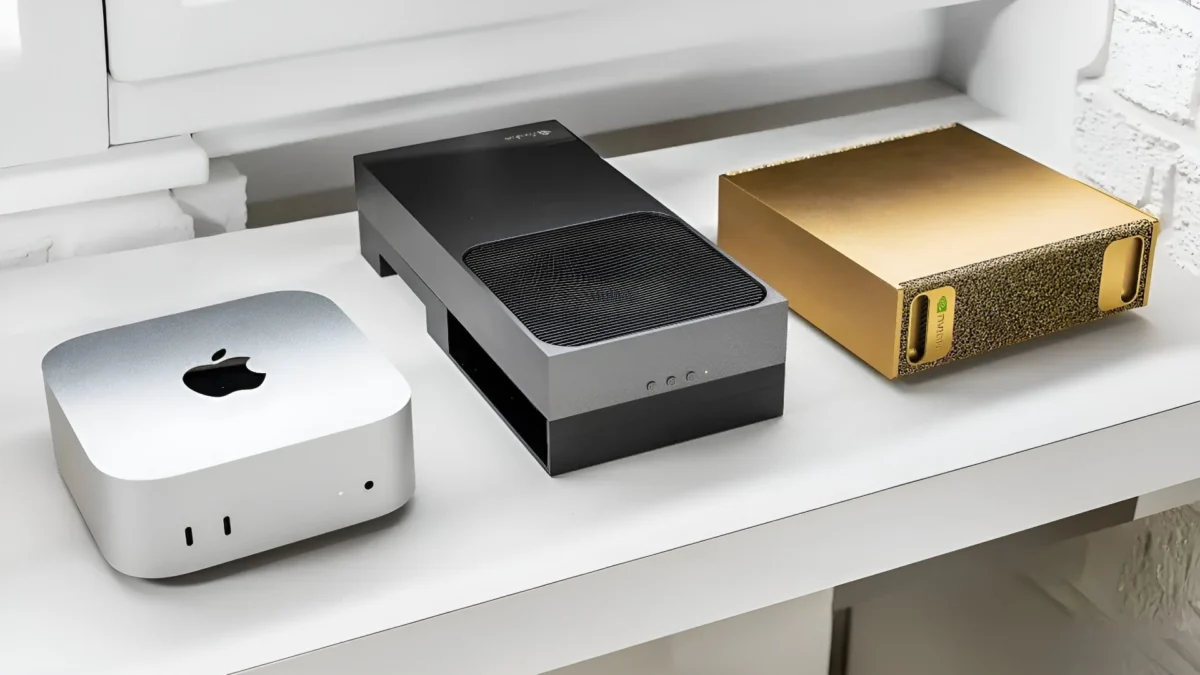
The global semiconductor landscape is witnessing a profound shift as the primary drivers of hardware demand transition from consumer electronics to enterprise-level artificial intelligence applications. While the average consumer finds themselves increasingly marginalized by "chipflation"—a phenomenon characterized by soaring costs for high-performance memory and processing units—leading AI laboratories are aggressively stockpiling hardware. Recent industry reports indicate that OpenAI has procured tens of thousands of Apple Mac mini and Mac Studio devices, while NVIDIA’s upcoming RTX Spark superchips are reportedly sold out months ahead of their official retail debut. This surge in demand underscores a strategic pivot toward decentralized, on-device compute capabilities to support the next generation of agentic AI and reinforcement learning models.
The Strategic Pivot: Why AI Giants are Banking on Apple Silicon
The revelation that OpenAI has integrated "tens of thousands" of Apple Mac mini and Mac Studio units into its infrastructure marks a significant departure from the industry’s traditional reliance on massive, centralized GPU clusters. According to reports from The Information, these devices are not being utilized for standard office tasks but are being deployed as critical nodes for reinforcement learning and the development of "computer-use agents."
The appeal of Apple’s hardware in this context is rooted in two primary technical advantages: the Unified Memory Architecture (UMA) and the recent introduction of Thunderbolt 5. Unlike traditional PC architectures where the CPU and GPU have separate memory pools, Apple’s M-series chips allow both processors to access a single, high-bandwidth pool of memory. For AI workloads, which are notoriously memory-intensive, this architecture eliminates the latency associated with moving data between discrete components.
Furthermore, the implementation of Thunderbolt 5 has transformed the Mac mini from a standalone desktop into a viable cluster component. Thunderbolt 5 offers a high-bandwidth connection that can bypass the standard TCP/IP networking stack. This allows for the creation of low-latency, peer-to-peer connections between devices, effectively enabling AI labs to daisy-chain Mac minis into a formidable, distributed compute fabric. This setup is particularly effective for "agentic orchestration," where multiple AI agents must communicate and process data in real-time with minimal lag.
Anthropic and the Rise of Managed Apple Hardware
OpenAI is not the only major player leveraging Apple’s hardware ecosystem. Anthropic, the developer of the Claude LLM, has reportedly begun renting Apple Silicon-based compute power through Amazon Web Services (AWS). This suggests a growing market for "Mac-as-a-Service" (MaaS) in the enterprise sector.
For companies like Anthropic, the ability to rent Mac hardware via AWS provides the flexibility to scale reinforcement learning workloads without the capital expenditure of purchasing and maintaining physical hardware. It also highlights a unique synergy between Apple’s hardware design and the cloud infrastructure of major providers. The industry’s shift toward Apple Silicon for AI development is a trend that few analysts predicted at the start of the year, yet it has become a cornerstone of the current hardware arms race.
Hardware Specifications: The M6 Mac mini and M5 Ultra Mac Studio
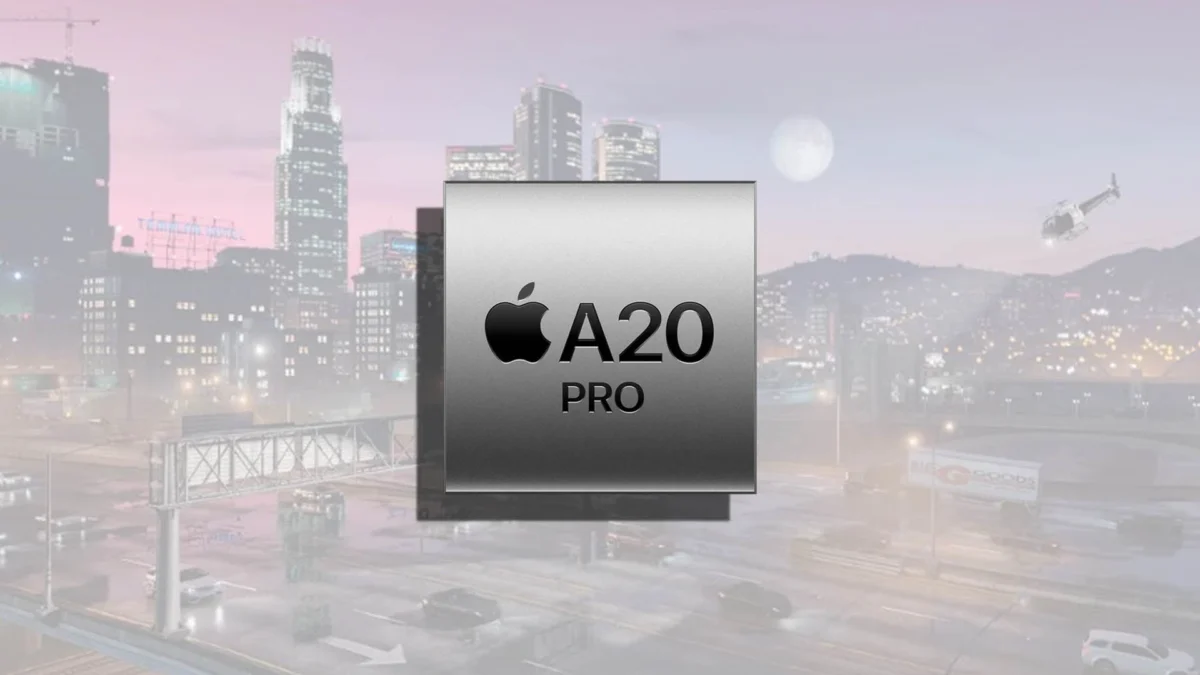
The timing of these mass acquisitions coincides with Apple’s latest hardware refresh. Last week, Apple officially unveiled the M6-powered Mac mini and a refreshed Mac Studio featuring the M5 Ultra chip. These devices represent the pinnacle of Apple’s current silicon capabilities.
The M5 Ultra, utilizing a quad-die configuration, offers an unprecedented amount of unified memory—potentially reaching up to 192GB or more in high-end configurations. For AI researchers, this memory capacity is vital for running large language models (LLMs) locally. The M6 Mac mini, built on a refined 2nm-class process, provides a significant leap in performance-per-watt, making it an ideal candidate for dense data center deployments where energy efficiency and heat management are paramount.
NVIDIA RTX Spark: The Sold-Out Superchip
While Apple dominates the specialized desktop cluster market, NVIDIA is asserting its dominance in the burgeoning "AI PC" sector with its RTX Spark platform. Co-designed with MediaTek and manufactured using TSMC’s cutting-edge 3nm node, the RTX Spark superchip is the centerpiece of the new "Windows on Arm" ecosystem.

According to reports from Taiwan’s Economic Daily, the initial production run of RTX Spark chips is already entirely spoken for. Major original equipment manufacturers (OEMs), including ASUS, MSI, Dell, HP, Lenovo, and Microsoft, have exhausted their initial quotas. The demand is so high that ASUS and MSI have reportedly petitioned NVIDIA for additional supply to meet pre-order volumes that have far exceeded internal projections.
The RTX Spark platform is divided into two primary tiers:
- N1x (High-End): This variant features a 20-core Grace CPU (consisting of 10x ARM Cortex-X925 "prime" cores and 10x ARM Cortex-A725 performance cores) paired with a Blackwell-architecture GPU and 128GB of LPDDR5X unified memory.
- N1 (Mainstream): This variant utilizes a 12-core CPU (8x Cortex-X925 and 4x Cortex-A725) paired with a GeForce RTX 5050 GPU and 64GB of unified memory.
The N1x systems are expected to retail for approximately NT$110,000, or roughly $3,400 USD. Despite this "nosebleed" pricing, the enterprise and prosumer markets are viewing these systems not as traditional laptops, but as portable AI workstations capable of running a full NVIDIA software stack on a mobile form factor.
Market Analysis: The Era of "Chipflation" and Enterprise Dominance
The current market dynamics reflect a growing divide between the consumer and enterprise sectors. "Chipflation" is being driven by the scarcity of High Bandwidth Memory (HBM) and the high costs associated with TSMC’s 3nm and 2nm nodes. While these costs are prohibitive for the average laptop buyer, they are viewed as a necessary cost of doing business for AI labs.
The sell-out of the RTX Spark and the mass purchase of Mac minis suggest that the market is currently supply-constrained rather than demand-constrained. Hu Shubin, co-CEO of ASUS, noted that channel customers are treating these new AI-capable systems as "scarce SKUs" (Stock Keeping Units). The value proposition has shifted from raw clock speeds to the ability to run complex AI agents locally, providing privacy, reduced latency, and independence from cloud-based API costs.
Timeline of Recent Developments in AI Hardware
To understand the current state of the market, one must look at the rapid progression of hardware releases over the past several months:
- Early 2026: Initial reports emerge of Apple’s M-series chips being used in experimental AI clusters due to unified memory advantages.
- Mid-2026: NVIDIA and MediaTek finalize the architecture for the RTX Spark, aiming to challenge Qualcomm’s dominance in the Windows on Arm space.
- August 2026: Apple announces the M6 Mac mini and M5 Ultra Mac Studio. Simultaneously, reports confirm OpenAI’s massive hardware acquisition.
- Late August 2026: Taiwan’s Economic Daily confirms that the first batch of RTX Spark N1x systems is sold out.
- Fall 2026 (Projected): The first RTX Spark-based PCs are scheduled to ship to enterprise customers and early adopters.
Broader Implications for the Tech Industry
The aggressive acquisition of hardware by OpenAI and Anthropic suggests that the next phase of AI development—autonomous agents—will require a massive amount of local compute power. Unlike the training phase of LLMs, which happens in massive cloud data centers, the "inference and action" phase of agentic AI benefits from being closer to the end-user or the specific task environment.
For Apple, this trend validates their long-term strategy of vertical integration and unified memory. While Apple has often been criticized for being "late" to the generative AI race, their hardware has inadvertently become the preferred platform for the researchers building the software.
For NVIDIA, the RTX Spark represents a successful expansion beyond the data center and the gaming desktop. By partnering with MediaTek to enter the Windows on Arm market, NVIDIA is positioning itself to control the AI experience on every screen, from the server rack to the high-end laptop.
Conclusion: A New Hardware Paradigm
The semiconductor industry is entering a new era where the distinction between a "personal computer" and an "AI node" is blurring. As OpenAI and Anthropic continue to consume vast quantities of Apple hardware, and as NVIDIA’s new superchips sell out before they even hit the shelves, the message is clear: compute is the new oil. In this environment, the winners will be those who can secure a steady supply of silicon, regardless of the price. For the consumer, this may mean a period of sustained high prices, but for the world of artificial intelligence, it signals an unprecedented acceleration in capability and deployment.