Lina Irawan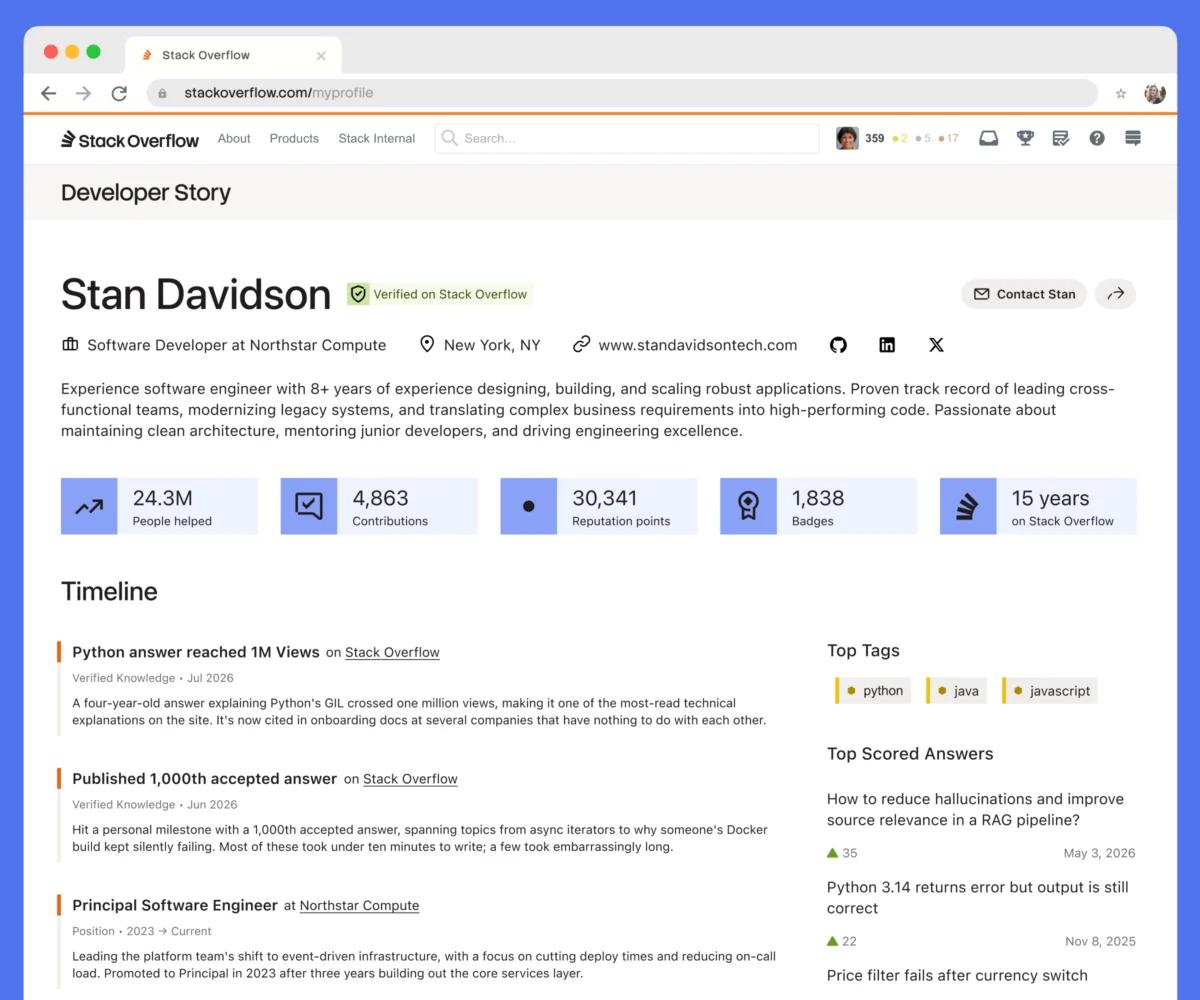
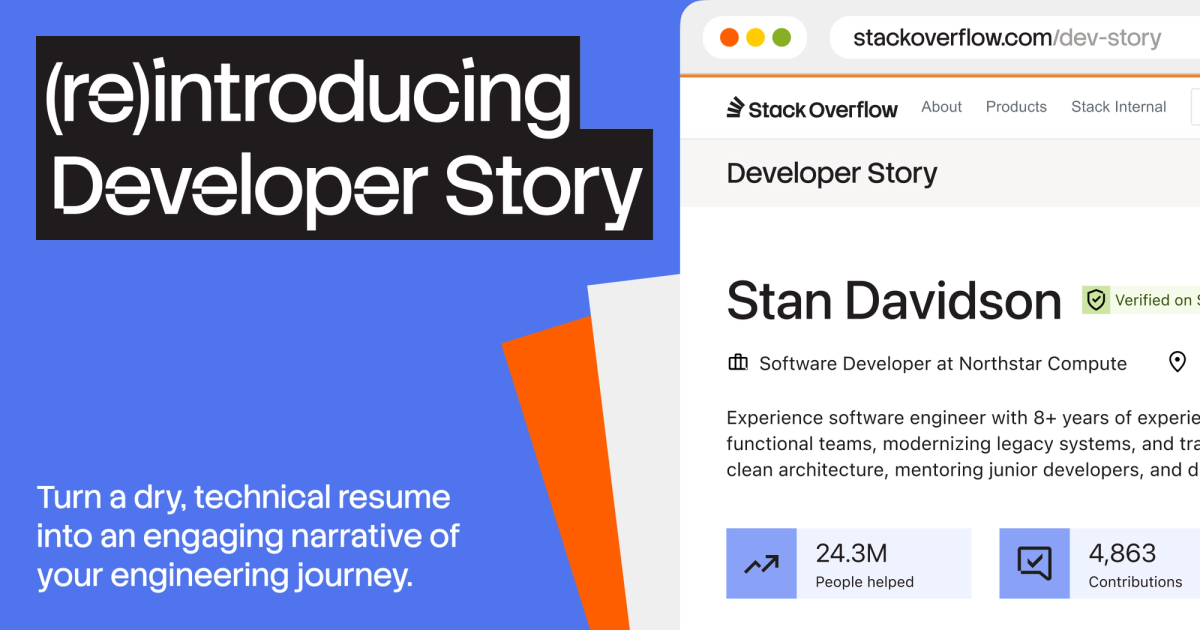
Stack Overflow, the world’s largest online community for developers to learn and share their programming knowledge, has officially announced the return of one of its most requested features: the Developer Story. This move marks a significant strategic pivot for the platform as it seeks to redefine the value of human expertise in an era increasingly dominated by generative artificial intelligence and large language models (LLMs). By reintroducing a modernized version of the "Dev Story," Stack Overflow aims to transition from being a repository of answers to a comprehensive verification layer for technical identities, a concept the company is branding as "Stack Identity."
The decision to bring back the Developer Story comes nearly five years after the company deprecated the original feature, a move that sparked considerable backlash among the site’s most active contributors. The original Developer Story was designed as a dynamic alternative to the traditional resume, allowing users to highlight their coding milestones, specific projects, and the programming languages they mastered through their contributions to the site. Its return is not merely a restoration of a legacy tool but a fundamental reimagining of how developers prove their worth in a job market that is rapidly being transformed by automated coding assistants.
The Evolution of Developer Identity: A Chronology of Stack Overflow’s Profile Strategy
To understand the significance of this relaunch, one must look at the timeline of Stack Overflow’s approach to user profiles. Founded in 2008, the platform quickly became the gold standard for technical Q&A. However, for much of its first decade, the user profile was largely a utilitarian display of "reputation points" and "badges."
In 2016, the company launched the first iteration of Developer Story. It was marketed as a "CV on steroids," emphasizing what a developer had built rather than where they had gone to school. It allowed for the inclusion of GitHub repositories, blog posts, and specific Stack Overflow answers that demonstrated high-level problem-solving. Despite its popularity, Stack Overflow announced the deprecation of the feature in early 2022. At the time, the company cited the need to focus on core products and the complexity of maintaining a feature that required significant privacy compliance updates.
The deprecation led to a period where the individual developer felt overshadowed by the collective knowledge base. While Stack Overflow excelled at showcasing "what" was known, it arguably failed to showcase "who" knew it. This gap became more pronounced following the 2021 acquisition of Stack Overflow by the global consumer internet group Prosus for $1.8 billion. Under new leadership, the company began evaluating how to better serve its core community while navigating the rise of AI tools like GitHub Copilot and OpenAI’s ChatGPT.
In 2023 and early 2024, as LLMs began providing direct answers to programming queries, Stack Overflow’s traffic patterns shifted. Users no longer needed to visit the site to find a solution to a "how-to" question if a chatbot could provide the snippet instantly. This necessitated a shift in the company’s value proposition: if the "answer" is now a commodity, the "expertise" required to verify and create that answer is the new premium asset. This realization served as the catalyst for the development of Stack Identity and the return of the Developer Story.
Technical Specifications and the Proof-of-Work Framework
The new Developer Story is built on a foundation of what the company calls "Specialties." These are verified areas of expertise distilled from a user’s actual performance on the site. Unlike a traditional resume where a candidate might list "Python" after completing a weekend course, a Specialty on a Stack Overflow profile is backed by "proof-of-work"—a history of upvoted answers, accepted solutions, and peer-reviewed contributions within that specific tag.
The current iteration of the tool provides users with granular control over their digital persona. Key features include:
- Verified Specialties: Users can highlight specific technical domains where they have a proven track record. The system pulls data from their history of helping others to validate these claims.
- Customizable Timelines: Developers can add inflection points to their careers, such as new job roles, the acquisition of new certifications, or the learning of new frameworks.
- Privacy-Centric Architecture: Learning from past compliance hurdles, the new system is built with a "privacy-first" mindset. No private information is displayed unless explicitly authorized by the user.
- Integration Roadmap: Stack Overflow has signaled that future updates will include integrations with third-party sites. This will allow the Developer Story to aggregate contributions from other platforms like GitHub or specialized technical forums, creating a unified "Stack Identity" across the internet.
Crucially, the company noted that data from the original Developer Story, which was deleted during the 2022 deprecation for privacy compliance reasons, cannot be recovered. Users are essentially starting with a clean slate, though their historical reputation and question/answer data remain intact and will populate the new Specialties tool.
Strategic Pivot: Addressing the Impact of Generative AI
The relaunch is a direct response to the challenges posed by artificial intelligence. Most modern LLMs have been trained on Stack Overflow’s massive dataset, effectively "scraping" the collective intelligence of millions of developers to power their predictive text engines. While this has made coding more efficient for the average user, it has often left the original contributors without recognition or tangible benefit.
By creating a "verified developer proof-of-work layer," Stack Overflow is attempting to re-insert the human element into the AI ecosystem. The company’s leadership has stated that creators should derive value from their work. In a future where AI-generated code is ubiquitous, the ability to prove that a human expert authored a solution or understands the underlying architecture of a system becomes a vital commodity for employers.
Internal data from Stack Overflow suggests that while "drive-by" traffic for simple questions may be declining, the demand for complex, high-level architectural advice remains steady. Furthermore, the 2023 Stack Overflow Developer Survey indicated that while 70% of developers are using or plan to use AI tools in their development process, they remain concerned about the accuracy of AI-generated code. This creates a market for "verified experts" who can audit, correct, and guide AI implementations.
Market Implications and Industry Reactions
The introduction of Stack Identity places Stack Overflow in more direct competition with professional networking sites like LinkedIn, though with a narrower focus on technical verification. Recruiters have long used Stack Overflow reputation as an informal metric for vetting candidates; the new Developer Story formalizes this process.
Industry analysts suggest that this move could improve the signal-to-noise ratio in technical hiring. "The tech industry is currently grappling with ‘resume inflation’ where keywords are used to bypass automated tracking systems," says technology analyst Marcus Thorne. "A platform that ties a candidate’s claims directly to a public, peer-reviewed body of work offers a level of transparency that a PDF resume cannot match."
Initial reactions from the developer community have been cautiously optimistic. On community forums, long-time contributors expressed relief that the platform is once again prioritizing the "profile" aspect of the site. However, some users remain skeptical about how well the "Specialties" algorithm will reflect niche expertise versus high-volume participation in popular tags like JavaScript or Python.
Future Outlook: The "Release Early, Often" Philosophy
Stack Overflow has characterized this launch as a "Day 1" release, signaling that the product is in a state of rapid evolution. The development team is reportedly pushing updates on a daily basis, with a focus on improving the specialty-selection tools and expanding the range of external integrations.
The broader vision for Stack Identity is to serve as a portable credential that developers can use across the web. Whether it is contributing to open-source projects on GitHub, participating in bounty programs, or applying for high-stakes engineering roles, the Stack Identity layer is intended to provide a "trust score" for technical competence.
As the tech industry continues to adjust to the presence of LLMs, Stack Overflow’s pivot toward identity and verification may serve as a blueprint for other knowledge-based communities. By focusing on the "who" behind the "what," the platform is betting that in a world of infinite, AI-generated content, human expertise—and the ability to prove it—will become the most valuable resource of all.
The company is encouraging users to actively participate in the beta phase by editing their timelines and providing feedback on the specialties tool. This community-centric approach is likely intended to rebuild the trust that was strained during the 2022 deprecation and the subsequent rise of AI competitors. For now, the Developer Story stands as a bridge between Stack Overflow’s past as a community forum and its future as a critical piece of the internet’s professional infrastructure.