George Chandra Eka
The Nintendo GameCube controller, an idiosyncratic peripheral launched alongside its console in 2001, has achieved an unprecedented status in the annals of gaming history. Despite Nintendo’s continuous innovation in input methods across subsequent console generations, this quirky gamepad has not only retained a passionate fanbase but has also enjoyed official support from the company for over two decades. As the GameCube approaches its quarter-century mark of influence, the controller stands as a testament to ergonomic design, specialized functionality, and the power of player muscle memory, solidifying its position as one of the most revered and persistently utilized controllers in the industry.
When the GameCube debuted in November 2001 in North America, entering the fiercely competitive sixth generation of consoles against Sony’s PlayStation 2 and Microsoft’s Xbox, it brought with it a distinct design philosophy. Nintendo, often prioritizing innovative gameplay experiences over raw graphical power or multimedia capabilities, imbued its console and peripherals with a unique identity. The GameCube controller was a radical departure from its N64 predecessor, which featured a three-pronged design, yet it continued Nintendo’s tradition of challenging conventional controller layouts. This bold approach, while initially met with curiosity, ultimately cultivated a deep loyalty among players who found its specialized design perfectly suited for the console’s burgeoning library of first-party titles.
Anatomy of an Icon: Design Philosophy and Functional Innovations
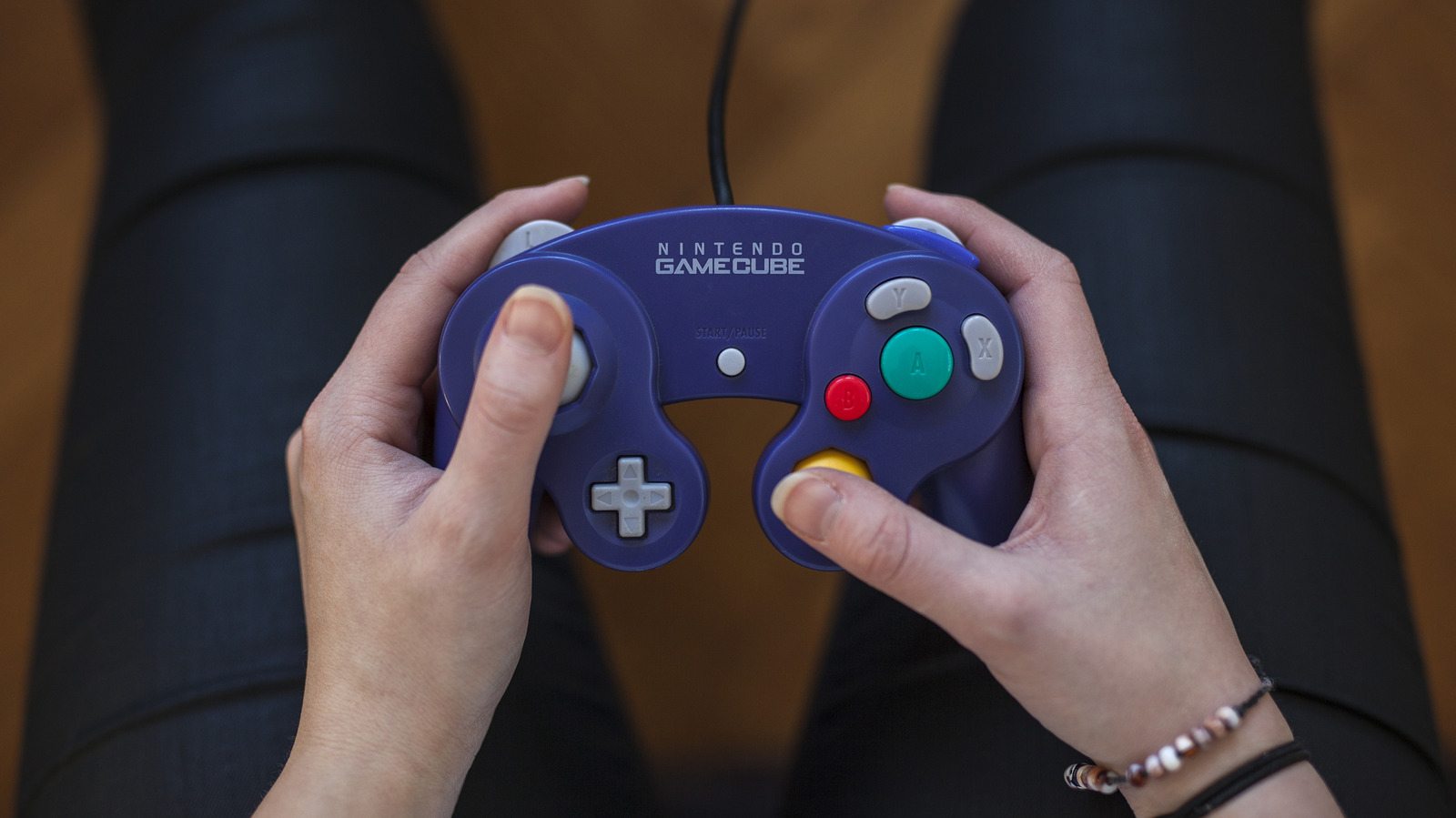
From the moment a player grips a GameCube controller, its distinctiveness becomes apparent. Unlike the symmetrical, diamond-button layouts prevalent on most controllers of its era and those that followed, the GameCube controller features an oversized, emerald-green ‘A’ button centrally located, flanked by a smaller red ‘B’ button and two kidney-shaped ‘X’ and ‘Y’ buttons. This unconventional arrangement was not arbitrary; it was a deliberate design choice aimed at simplifying complex inputs and guiding player intuition. Newcomers instinctively gravitated towards the prominent ‘A’ button for primary actions, while experienced players found that the varied button shapes and sizes allowed for tactile differentiation without needing to glance down, enabling faster, more fluid combinations, particularly the seamless pressing of ‘A’ in conjunction with other face buttons.
A crucial innovation that significantly contributed to the controller’s precise feel was its analog L and R shoulder buttons. Unlike simple digital switches, these triggers registered pressure, allowing for a spectrum of inputs rather than a binary on/off state. This nuanced control scheme was expertly integrated into many GameCube exclusives. In Super Mario Sunshine, for instance, lightly pressing the R button allowed Mario to spray water while moving, while a full depression locked him in place for more precise aiming. Similarly, in Metroid Prime, the analog triggers facilitated seamless lock-on targeting and weapon firing, providing a depth of control that digital buttons could not replicate. The loss of this specific analog functionality was keenly felt by players when later ports, such as Super Mario 3D All-Stars on the Switch, attempted to remap these actions to separate, non-analog buttons, often resulting in a less intuitive and less satisfying experience.
Further enhancing its precision, the GameCube’s primary analog stick featured an octagonal gate – a physical restriction around the stick’s base that ensured inputs were aligned to cardinal and ordinal directions (up, down, left, right, and the diagonals). This design, inherited from the N64 controller, was a boon for games demanding exact directional control. Titles like Super Monkey Ball, where navigating narrow, precarious stages required pixel-perfect movements, benefited immensely from this feature. In fighting games such as Soulcalibur II, the octagonal gate simplified the execution of directional attacks, making complex combos more accessible and consistent. For the competitive Super Smash Bros. community, this gate proved indispensable for executing precise directional air dodges, tilts, and smash attacks, becoming a cornerstone of advanced gameplay mechanics.
The Super Smash Bros. Phenomenon: A Symbiotic Relationship
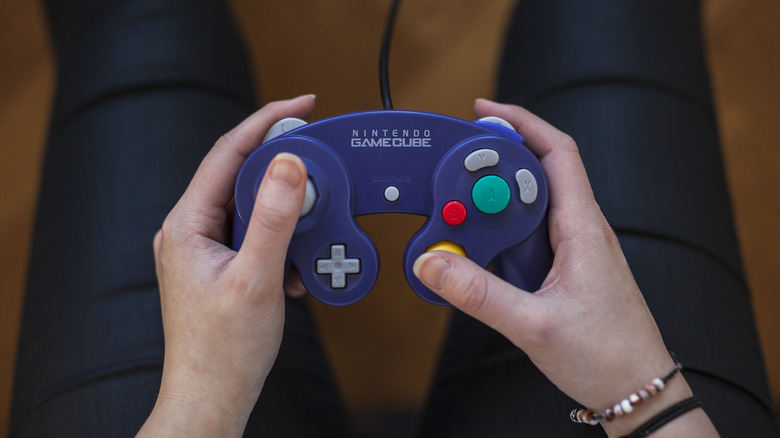
The enduring legend of the GameCube controller is inextricably linked to the Super Smash Bros. series, particularly Super Smash Bros. Melee. Released in 2001, Melee quickly became the best-selling title on the GameCube and cultivated a massive, dedicated following that transcended casual party gaming. Its intricate mechanics, high skill ceiling involving techniques like wavedashing, L-canceling, and perfect shielding, and its fast-paced combat transformed it into a cornerstone of competitive esports. Tournaments featuring Melee continue to draw thousands of spectators and competitors, years after its initial release, cementing its status as one of the most enduring competitive fighting games. The GameCube controller became the undisputed standard for Melee players, its unique button layout and octagonal gate perfectly optimized for the game’s demanding inputs.
Recognizing this powerful connection and the immense loyalty of the Smash Bros. fanbase, Nintendo made an unprecedented move: it continued to officially support the GameCube controller for subsequent installments of the series. When Super Smash Bros. Brawl launched on the Wii in 2008, players could utilize their original GameCube controllers thanks to the Wii’s backward compatibility and four dedicated GameCube controller ports. This was a critical decision, as many players found the Wii Remote and Nunchuk, or even the Classic Controller, inadequate for Brawl‘s competitive demands compared to their familiar GameCube pad.
The commitment deepened with Super Smash Bros. for Wii U in 2014. Nintendo released a standalone adapter that allowed four GameCube controllers to connect to the Wii U console, explicitly catering to the Smash community. This accessory proved so popular and essential that it was re-released with updated branding for the Nintendo Switch when Super Smash Bros. Ultimate, one of the console’s most acclaimed titles, arrived in 2018. This continuous, official endorsement for a controller designed for a console two generations prior highlights not only the controller’s ergonomic superiority for Smash Bros. but also Nintendo’s shrewd understanding of its dedicated player base. Furthermore, Nintendo has released new iterations of the controller, including "Smash Bros. edition" wired versions in 2014 and 2018, and most recently, a revamped wireless GameCube controller for the Switch, incorporating modern features like ZL and Home buttons, alongside support for Nintendo Switch Online’s GameCube Classics library. This sustained product line underscores the controller’s unwavering demand.
Pioneering Wireless: The WaveBird’s Quiet Revolution
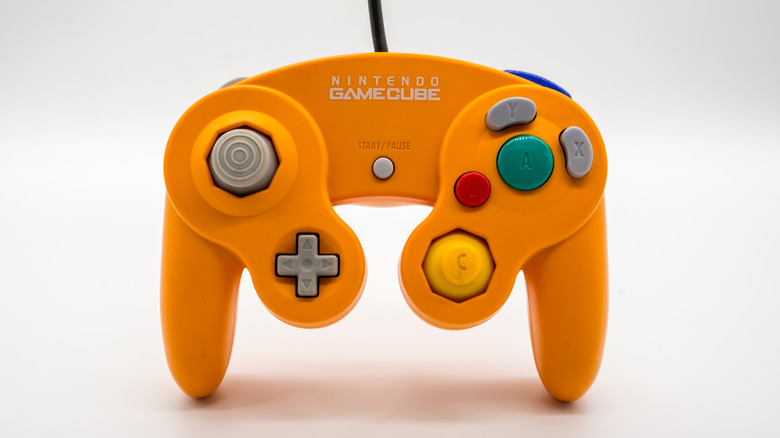
Beyond its wired counterpart, the GameCube controller ecosystem also saw a significant innovation in wireless technology with the release of the WaveBird in 2002. While earlier consoles had experimented with wireless peripherals, these often relied on infrared (IR) technology, which required an unobstructed line of sight and was prone to interference. The WaveBird, however, utilized radio frequency (RF) technology, offering players unprecedented freedom of movement without the constraint of cables. Each WaveBird controller came with a receiver that plugged into a GameCube controller port, and players could set a matching channel on both the controller and receiver to avoid interference with other wireless devices.
The WaveBird quickly earned a reputation for its exceptional reliability, minimal input lag, and remarkably long battery life, often running for hundreds of hours on two AA batteries. While it notably lacked rumble functionality – a design decision to conserve battery power and potentially reduce manufacturing costs – this trade-off was largely accepted by players who valued the untethered gaming experience. Though slightly bulkier than the standard wired controller, the WaveBird set a new benchmark for mainstream wireless gamepads, influencing subsequent generations of controller design and solidifying the expectation of reliable wireless connectivity. Many original WaveBirds remain fully functional today, a testament to their robust engineering and quality.
Acknowledged Imperfections: A Triumphant Controller, Not a Perfect One
Despite its many virtues and enduring appeal, the GameCube controller was not without its flaws. Two primary criticisms often levied against it were its diminutive D-pad and its "C-stick" (a secondary, smaller analog stick). The D-pad, small and somewhat mushy, proved inadequate for precise inputs required by 2D fighting games or classic retro titles, where accurate directional presses are paramount. Its size and feel made accidental diagonal inputs a common frustration.
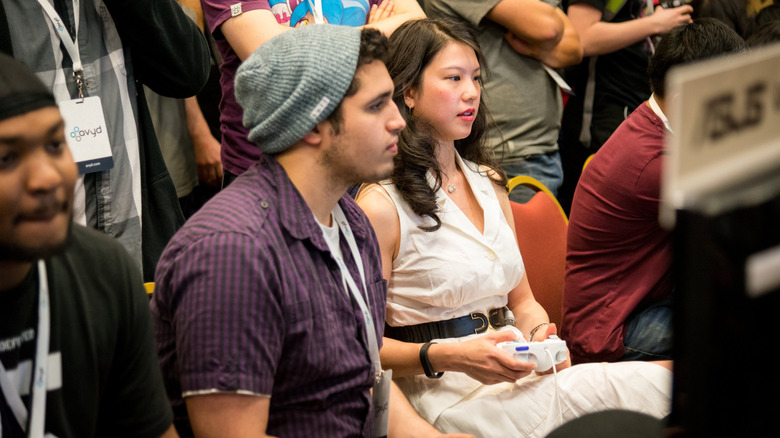
The C-stick, a yellow nub-like stick, was a compromise. While functional for quick camera adjustments in 3D adventure games like The Legend of Zelda: The Wind Waker and for executing smash attacks in Super Smash Bros. Melee, it lacked the precision and range of motion of a full-sized second analog stick. This limitation meant that the GameCube controller was less adaptable to certain genres, particularly first-person shooters, which were rapidly gaining prominence on competing platforms like the PlayStation 2 and Xbox, both of which featured dual, full-sized analog sticks. Furthermore, the absence of a second dedicated shoulder button (equivalent to modern ZL) also limited its versatility compared to contemporary designs. When attempting to play games designed for other systems, such as many SNES titles on virtual console services, the GameCube’s unique button layout could feel awkward, forcing players to adapt to non-standard control schemes.
Durability and Lasting Impact
Perhaps one of the most striking aspects of the GameCube controller’s legacy is its exceptional durability. Decades after its initial release, countless original GameCube controllers remain in active use, often exhibiting minimal signs of wear and tear, and remarkably, few suffer from common issues like stick drift that plague many modern controllers. This stands in stark contrast to more recent hardware, such as the Nintendo Switch’s Joy-Cons, which have been plagued by pervasive stick drift issues leading to widespread consumer complaints and even class-action lawsuits and significant financial penalties for Nintendo in some regions. The GameCube controller’s robust construction and reliable components highlight a design philosophy that prioritized longevity and consistent performance.
The GameCube controller’s quarter-century journey from a quirky peripheral to a revered icon is a multifaceted narrative of innovative design, symbiotic relationships with groundbreaking games, and an unwavering commitment from its manufacturer. Its unique button layout, pressure-sensitive triggers, and octagonal gate have not only defined a generation of Nintendo gaming but have also shaped competitive esports culture. Nintendo’s continued support, through adapters and re-releases, demonstrates a rare acknowledgement of player preference and the enduring power of muscle memory. The GameCube controller stands as a testament to the idea that sometimes, challenging conventions and focusing on a specialized, yet highly effective, user experience can forge a legacy that transcends console generations, cementing its place as a truly triumphant and timeless piece of gaming hardware.