Evan Lee Salim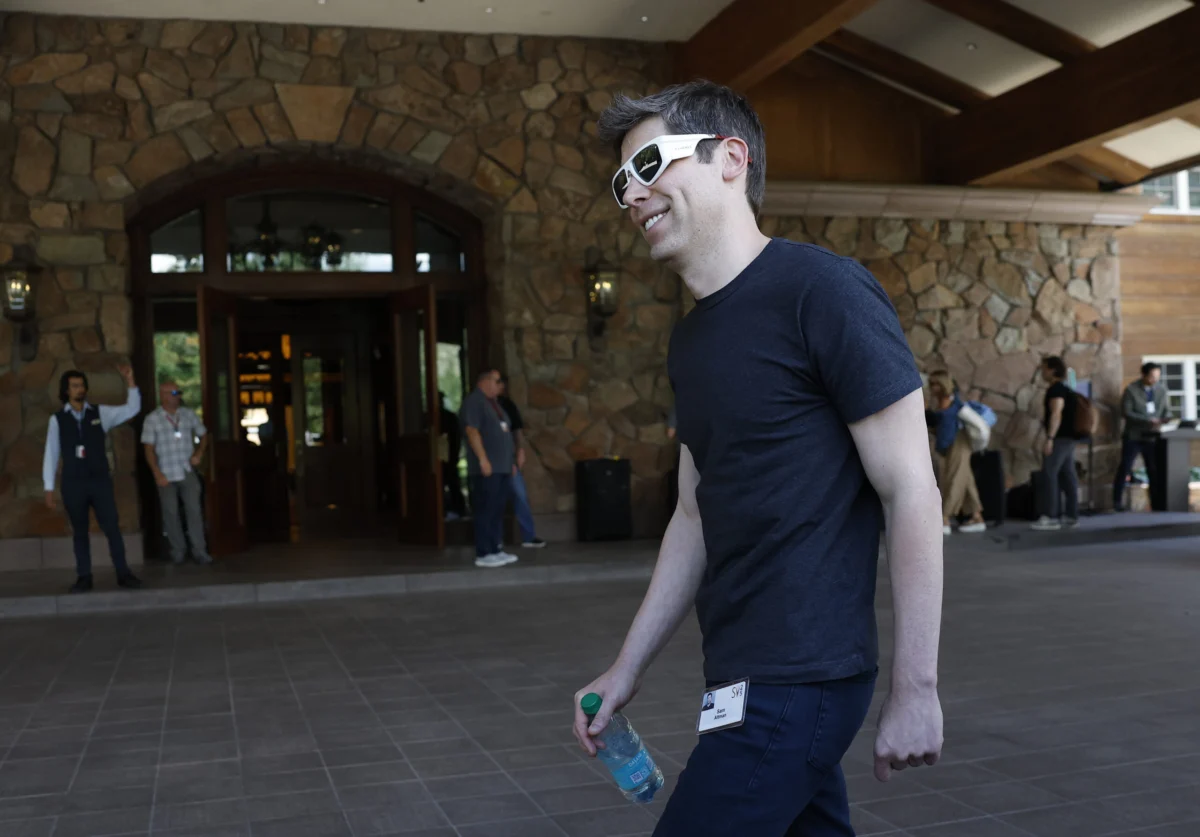
In a significant stride towards redefining digital identity in an increasingly AI-saturated world, Sam Altman’s verification project, World, unveiled its ambitious expansion plans at a vibrant event held at The Midway, a trendy venue near the San Francisco pier. The announcement signals a pivotal moment for the initiative, aiming to weave its "proof of human" technology into the fabric of everyday digital interactions, starting prominently with the global dating giant, Tinder. Tools for Humanity (TFH), the company spearheading the World project, declared on Friday its intentions to integrate its robust verification technology across a broad spectrum of online arenas, including dating applications, event and concert ticketing systems, business organizations, email, and various other facets of public life.
The strategic pivot and aggressive integration push come amidst a rapidly evolving digital landscape where the lines between human-generated content and AI-generated content are blurring at an unprecedented pace. Sam Altman, co-founder of World, articulated this pressing concern to a packed audience. "The world is getting close to very powerful AI, and this is doing a lot of wonderful things," Altman stated, acknowledging the transformative potential of artificial intelligence. However, he quickly underscored the concomitant challenge: "We are also heading to a world now where there’s going to be more stuff generated by AI than by humans. I’m sure many of you [have had moments] where you’re like, ‘Am I interacting with an AI or a person, or how much of each, and how do I know?’" This fundamental question forms the bedrock of World’s mission.
The Dawn of "Proof of Human": Addressing the AI Identity Crisis
World, formerly known as Worldcoin, differentiates itself in the burgeoning field of digital identity verification through its unique approach: verifying the presence of a real, living human behind a digital service while meticulously safeguarding that individual’s anonymity. This delicate balance is achieved through sophisticated cryptographic techniques, notably "zero-knowledge proof-based authentication." The practical outcome is the creation of what the company terms "proof of human" tools – mechanisms designed to unequivocally confirm human activity in an online environment increasingly populated by sophisticated AI agents and bots.
The cornerstone of World’s high-assurance verification is a distinctive spherical digital reader dubbed the Orb. This device performs a swift scan of a user’s eyes, converting their iris pattern into a unique, anonymous cryptographic identifier, known as a verified World ID. This World ID then serves as a passport to access World’s integrated services, though users can still engage with the World app itself without undergoing Orb verification, albeit with lower levels of assurance. The journey from initial concept to this expanded vision has seen World evolve, refining its technology and strategy to address the complexities of global adoption and privacy concerns.
Altman’s remarks at the event were concise, with much of the presentation later handed over to World’s chief product officer, Tiago Sada, and his team, due to the unexpected absence of TFH co-founder and CEO Alex Blania, who was recovering from hand surgery. Sada detailed the launch of the newest version of the World app, an iterative improvement following its last major update in December, alongside a plethora of new integrations set to broaden the project’s reach dramatically.
Key Integrations: From Dating to Concerts
The immediate and most impactful integration announced was with Tinder, the world’s most popular dating app. World has been strategically preparing for a significant deployment in the dating app sector for some time. This endeavor saw a successful pilot program in Japan last year, where Tinder users could opt-in for World ID verification. The positive outcomes of that pilot have paved the way for a global rollout, including critical markets like the U.S. This integration will introduce a World ID emblem into the profiles of users who have successfully completed the verification process, offering an unprecedented layer of authenticity.
The implications for online dating are substantial. The global online dating market, valued in the tens of billions of dollars, has long grappled with pervasive issues such as catfishing, scam profiles, and automated bots. These issues erode user trust, lead to frustrating experiences, and, in severe cases, can pose safety risks. By allowing users to display a World ID emblem, Tinder aims to foster a more trustworthy environment, enabling individuals to connect with greater confidence, knowing they are interacting with verified human beings. This move could significantly enhance user experience and differentiate Tinder in a competitive market by prioritizing genuine connections over anonymity-driven deception.

Beyond personal connections, World is also making significant inroads into the entertainment industry with the launch of its "Concert Kit." This innovative feature allows musical artists and event organizers to reserve a specific allocation of concert tickets exclusively for World ID-verified humans. The primary objective is to combat the persistent problem of ticket scalping, a practice frequently facilitated by automated bots that rapidly acquire large quantities of tickets, only to resell them at inflated prices. The Concert Kit is designed for broad compatibility with major ticketing systems, including industry giants like Ticketmaster and Eventbrite. To kickstart its adoption, World has secured high-profile partnerships with renowned artists 30 Seconds to Mars and Bruno Mars, both of whom plan to leverage the technology for their upcoming tours.
The fight against scalpers is a continuous battle for the live entertainment industry, which generates hundreds of billions annually. Bots can snatch up tickets within seconds of their release, leaving genuine fans frustrated and often forced to pay exorbitant prices on secondary markets. By ensuring that a portion of tickets are accessible only to verified humans, World’s Concert Kit aims to restore fairness to the ticketing process, guaranteeing that more seats end up in the hands of real fans. This initiative could set a new standard for ticket distribution, enhancing fan loyalty and mitigating financial exploitation.
Enterprise and the Agentic Web: Securing Digital Interactions
The event also highlighted several critical announcements targeting the business sector, signaling World’s intent to become an integral part of enterprise security and trust infrastructure. In an era where deepfake technology poses a growing threat, a new Zoom/World ID verification integration seeks to provide a robust defense against impersonation and fraud in critical business communications. This partnership aims to authenticate participants in video calls, offering assurance that individuals are indeed who they claim to be, thereby safeguarding sensitive discussions and decisions from malicious actors.
Similarly, a partnership with Docusign, a leader in electronic signature technology, is designed to ensure that digital signatures originate from authentic, verified users. This collaboration could significantly bolster the integrity of digital contracts and legal documents, reducing the risk of fraud and enhancing trust in remote transactions.
Looking ahead to the "Wild West" of the agentic web—a future where AI agents increasingly perform tasks on behalf of humans—World is proactively developing features like "agent delegation." This functionality will allow a verified person to delegate their World ID to an AI agent, empowering the agent to carry out online activities on their behalf while maintaining a traceable link to the human principal. This feature is crucial for establishing accountability and trust in an ecosystem where AI agents will interact autonomously with various online services.
Further reinforcing this vision is a strategic partnership with authentication firm Okta, which has resulted in the creation of a system (currently in beta) called HumanPrincipal.ai. This system is specifically designed to verify that an AI agent is acting legitimately on behalf of a human. Gareth Davies, Okta’s chief product officer, explained at the event that the system ties a World ID to a specific agent. When that agent operates on the web for its human principal, websites and services will be able to ascertain that a verified person stands behind the agent’s actions. This framework is vital for preventing the proliferation of unverified or malicious AI agents and ensuring responsible AI deployment in business and personal contexts.
Overcoming the Orb: Scaling Verification and Tiered Security
Despite its innovative approach, World has historically faced challenges in scaling its verification process. For a significant portion of the company’s existence, achieving the "gold standard" of World ID verification necessitated a physical visit to one of its designated offices to undergo an Orb iris scan—an experience often perceived as inconvenient and, for some, unusual. This logistical hurdle has impacted mass adoption.
Recognizing this, World has consistently taken steps to enhance the ease and incentives for verification. In the past, this included offering its associated crypto asset, Worldcoin, to early adopters. More recently, the company strategically distributed Orbs to various big retail chains, allowing users to conveniently verify themselves while engaged in everyday activities like shopping or grabbing coffee. Building on these efforts, World announced a significant expansion of its Orb presence in major metropolitan areas, including New York, Los Angeles, and San Francisco. Furthermore, a new service was promoted, offering interested users the convenience of having an Orb brought directly to their location for remote verification.

In a conversation with TechCrunch, Tiago Sada elaborated on World’s multi-pronged strategy to overcome scaling issues by introducing different tiers of verification, balancing security with accessibility. The Orb verification remains the highest assurance tier, leveraging the unique biometric data of the iris. Below this, World has previously offered a mid-level tier, which utilizes an anonymized scan of an official government ID via its NFC chip, providing a strong, yet more accessible, form of verification.
A pivotal new introduction is a low-level, or "low friction," tier, which Sada acknowledged as also being "low security." This tier involves a simple selfie verification. Daniel Shorr, a TFH executive, highlighted during the presentation that "Selfie is private by design." He emphasized that the system maximizes local processing on the user’s device, ensuring that "your images are yours," minimizing the data shared with World’s servers.
While selfie verification is not a novel concept and has been susceptible to spoofing by fraudsters, Sada candidly addressed these limitations. "Obviously, we do our best, and it’s like one of the best systems that you’ll see for this. But it has limits," he told TechCrunch. The introduction of these tiered options provides developers integrating World’s services with the flexibility to choose the level of security appropriate for their specific application, from high-stakes financial transactions to casual social interactions. This pragmatic approach aims to broaden adoption by making verification accessible across a spectrum of needs, while still offering the gold standard for critical applications.
The Broader Landscape: Digital Identity in an AI-Driven World
World’s ambitious expansion arrives at a critical juncture for digital identity. As generative AI models become increasingly sophisticated, capable of producing convincing text, images, audio, and video that are virtually indistinguishable from human creations, the need for robust "proof of human" mechanisms has never been more urgent. The project positions itself at the forefront of this challenge, aiming to provide a foundational layer of trust across the internet.
The concept of digital identity itself is undergoing a profound transformation, moving towards models that emphasize privacy, user control, and decentralization. World’s commitment to anonymity through zero-knowledge proofs aligns with these evolving principles, seeking to offer verification without compromising personal data. While the use of biometric data like iris scans has raised privacy concerns in certain jurisdictions and among some privacy advocates, World’s design philosophy explicitly aims to anonymize this data, converting it into an unidentifiable cryptographic hash rather than storing raw biometric information.
The long-term vision articulated by Tools for Humanity is nothing less than a global network for human verification—a universal digital passport that distinguishes real people from artificial constructs. This vision holds profound implications for everything from combating misinformation and electoral interference to enabling new forms of online governance and economic participation. In a future where AI agents might outnumber human users online, a reliable method for authenticating human presence is not just a convenience, but an imperative for maintaining societal trust and the integrity of digital interactions.
In conclusion, World’s latest announcements represent a significant escalation of its mission and capabilities. By integrating its "proof of human" technology into widely used platforms like Tinder, major ticketing systems, and critical enterprise tools, World is moving beyond theoretical discussions to practical, real-world applications. The introduction of tiered verification addresses past scaling challenges, offering a pragmatic path to broader adoption. As the digital world becomes increasingly complex and interwoven with AI, World’s efforts to establish a verifiable human layer could prove instrumental in building a more trustworthy, accountable, and fundamentally human-centric online experience.