admin
admin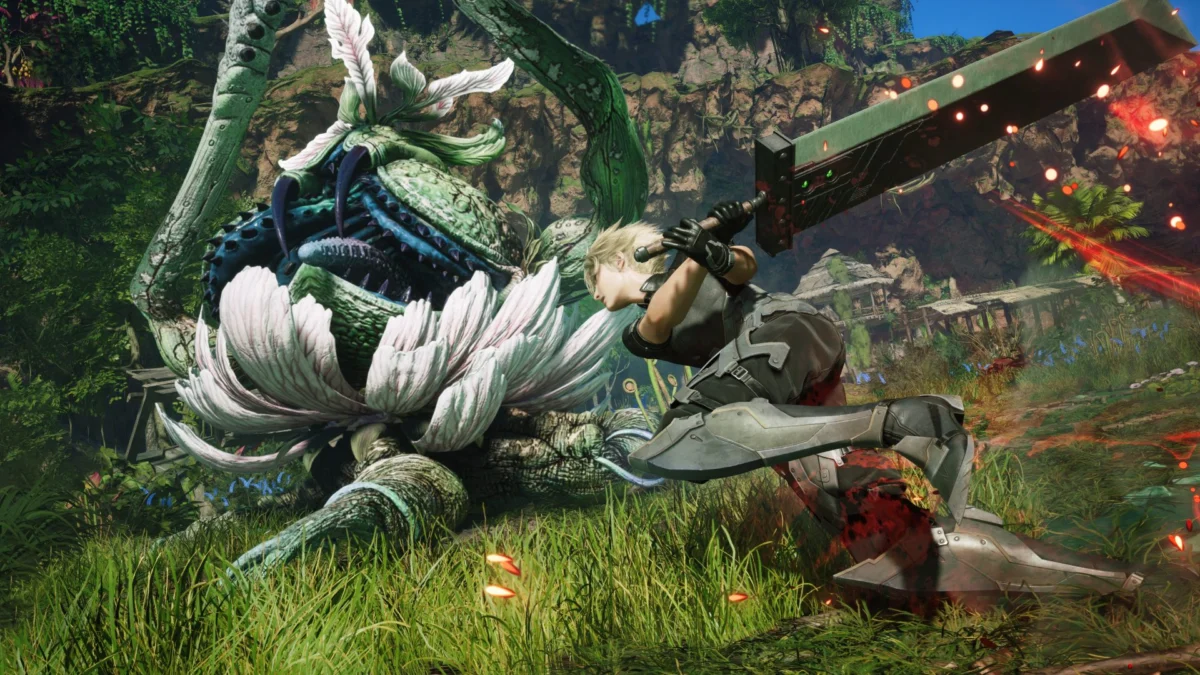
The final chapter of the ambitious Final Fantasy VII remake trilogy has officially been titled Final Fantasy VII Revelation, as Square Enix utilized the global stage of Gamescom Opening Night Live to debut a cinematic trailer and confirm a Spring 2027 release window. This third installment, which follows the critically acclaimed Final Fantasy VII Remake (2020) and Final Fantasy VII Rebirth (2024), is set to conclude the reimagined journey of Cloud Strife and his allies across a world increasingly under threat from both the Shinra Electric Power Company and the cosmic entity known as Jenova. In a significant shift for the franchise’s distribution model, Square Enix confirmed that Final Fantasy VII Revelation will launch simultaneously on PC, PlayStation 5, and Xbox Series X|S, marking the first time a title in this specific trilogy will arrive on Microsoft’s flagship consoles on day one.
The Gamescom presentation focused heavily on the "Weapons"—colossal, bio-mechanical entities created by the Planet as a fail-safe defense mechanism. In the original 1997 narrative, these creatures are awakened during the late-game crisis at the Northern Crater, serving as some of the most formidable boss encounters in role-playing game history. The new trailer showcased high-fidelity recreations of Diamond, Ruby, and Emerald Weapon, hinting at a massive scale for the concluding chapter’s combat encounters and world-map exploration. While the trailer provided a glimpse of the escalating stakes, Square Enix has indicated that more substantial information is imminent, with a dedicated PlayStation State of Play presentation scheduled for later this week.
The Upcoming PlayStation State of Play and State of Play Japan
Following the momentum of the Gamescom reveal, Sony Interactive Entertainment and Square Enix have announced a dual-broadcast event scheduled for Thursday, September 3. This event is designed to provide a comprehensive look at the upcoming software lineup for the PlayStation ecosystem, with a specific "extended look" reserved for Final Fantasy VII Revelation. According to an official update on the PlayStation Blog, the broadcast will be divided into two distinct segments to cater to global and regional audiences.
The first broadcast will feature a variety of updates from PlayStation Studios and third-party partners. This segment is expected to cover a range of titles currently in development for the PlayStation 5 and the rumored mid-generation hardware updates. However, the centerpiece of this initial stream will be a deep dive into the "vast world" of Final Fantasy VII Revelation. Sources suggest this segment will focus on the traversal mechanics of the Highwind—the iconic airship—and the expanded world map which, by this point in the story, should encompass the remaining unexplored territories of the Gaia landmass.
Immediately following the primary State of Play, a second broadcast titled "State of Play Japan" will air. This session will be hosted by Yuki Kaji, a prominent voice actor in the Japanese industry. While the primary State of Play focuses on global blockbusters, the Japan-centric episode will offer deep dives into titles specifically from Japanese and Asian development studios. This dual-format approach underscores the importance of the Asian market to the Final Fantasy brand and provides a platform for niche titles to gain international visibility.
For global audiences, the broadcast times have been finalized as follows:
- Pacific Time (PT): 6:00 am
- Eastern Time (ET): 9:00 am
- Central European Summer Time (CEST): 3:00 pm
- Japan Standard Time (JST): 10:00 pm
The presentations will be streamed live via PlayStation’s official YouTube and Twitch channels, with VOD (Video on Demand) versions available immediately afterward for those unable to watch the live broadcast.
Chronology of the Final Fantasy VII Remake Project
The announcement of Final Fantasy VII Revelation marks the beginning of the end for a project that has spanned over a decade of development and planning. To understand the significance of the 2027 release date, one must look at the timeline of the project’s evolution:
- June 2015: The project is officially announced at E3 with a teaser trailer that became one of the most-watched reveals in gaming history.
- April 2020: Final Fantasy VII Remake is released on PlayStation 4 after a short delay. It covers the Midgar portion of the original game and introduces the "Whispers," signaling that the remake would deviate from the original plot.
- June 2021: Final Fantasy VII Remake Intergrade launches on PlayStation 5, introducing the "Episode INTERmission" DLC featuring Yuffie Kisaragi and showcasing the technical capabilities of the new hardware.
- February 2024: Final Fantasy VII Rebirth is released on PlayStation 5. It expands the game into a massive open-world format, concluding at the Forgotten Capital.
- August 2026: Square Enix officially titles the third part "Revelation" and sets the 2027 window.
The three-year gap between Rebirth (2024) and Revelation (2027) is consistent with Square Enix’s internal development cycles for the project. By maintaining a modular approach, the development team, led by Creative Director Tetsuya Nomura and Director Naoki Hamaguchi, has been able to iterate on gameplay mechanics and graphical fidelity without the decade-long waits typical of modern AAA development.

Strategic Shift: Multi-platform Launch and Economic Context
One of the most noteworthy aspects of the Gamescom announcement is the confirmed release for Xbox Series X|S. Historically, the Final Fantasy VII Remake project has been tied to PlayStation exclusivity windows. The first entry remained a PlayStation exclusive for over a year before moving to PC, while the second entry, Rebirth, has yet to see an official Xbox or PC release date.
This shift to a multi-platform launch for Revelation aligns with Square Enix’s recently announced "Square Enix Reboots" business strategy. In May 2024, the company’s financial reports indicated a pivot away from platform exclusivity in favor of a "multi-platform strategy" intended to maximize reach and recoup the high costs of AAA development. By launching on PC, PS5, and Xbox simultaneously in 2027, Square Enix aims to capture the widest possible audience at the moment of peak marketing impact.
Industry analysts suggest that this move is also a response to the softening of the traditional console market and the rising dominance of PC gaming in both Western and Asian markets. Furthermore, the inclusion of Xbox Series X|S suggests a strengthening relationship between Square Enix and Microsoft, following years of perceived distance between the two companies regarding the Final Fantasy franchise.
Technical Ambition and the Role of the "Weapons"
Final Fantasy VII Revelation is expected to push the limits of current-generation hardware. While the previous entries utilized Unreal Engine 4 (with heavy modifications), there has been ongoing speculation regarding whether the final chapter will transition to Unreal Engine 5 to take advantage of Nanite and Lumen technologies. The "Weapons" featured in the Gamescom trailer—Diamond, Emerald, and Ruby—demonstrate a level of scale that suggests the game will feature environmental destruction and massive-scale boss battles that were previously impossible.
In the original lore, the Weapons are sentient bio-organic constructs birthed by the Lifestream. Their purpose is to eliminate any perceived threat to the Planet. In Revelation, these entities are expected to serve as both narrative catalysts and ultimate gameplay challenges. The "Emerald Weapon," traditionally found in the depths of the ocean, and the "Ruby Weapon," located in the Corel Desert, represented the pinnacle of difficulty in the 1997 original. Their inclusion in the trailer suggests that the "Gold Saucer" and "Underwater" segments of the world map will be fully realized in the final game.
Upcoming Industry Events: PAX West and Tokyo Game Show
The momentum for Final Fantasy VII Revelation will continue beyond the State of Play. Square Enix has confirmed a significant presence at PAX West in Seattle on September 5. A dedicated panel featuring Director Naoki Hamaguchi and Battle Director Teruki Endo is scheduled to take place, where the developers are expected to discuss the evolution of the "Tactical Mode" combat system.
Following PAX West, the industry will turn its attention to the Tokyo Game Show (TGS) in late September. Historically, TGS has been the venue where Square Enix provides more granular details regarding gameplay systems, such as Materia combinations, the "Synergy" mechanic introduced in Rebirth, and the implementation of the Highwind airship. Many fans and investors are hopeful that the combination of the State of Play and TGS will result in the announcement of a firm release date, rather than the broad "Spring 2027" window currently provided.
Implications for the RPG Landscape
The conclusion of the Final Fantasy VII Remake trilogy represents a milestone for the RPG genre. The project has been a lightning rod for discussion regarding how classic games should be updated for modern audiences. By blending real-time action with command-based strategy and expanding a 40-hour game into a trilogy of 100-hour epics, Square Enix has set a new benchmark for the "Remake" sub-genre.
As the industry moves toward 2027, Final Fantasy VII Revelation stands as one of the most significant releases on the horizon. Its success or failure will likely influence how other publishers approach their legacy intellectual properties. For now, the focus remains on September 3, as the State of Play promises to reveal just how "vast" the world of Gaia has become and how the developers intend to bring one of gaming’s most celebrated stories to its definitive conclusion.