Vera Intan Clara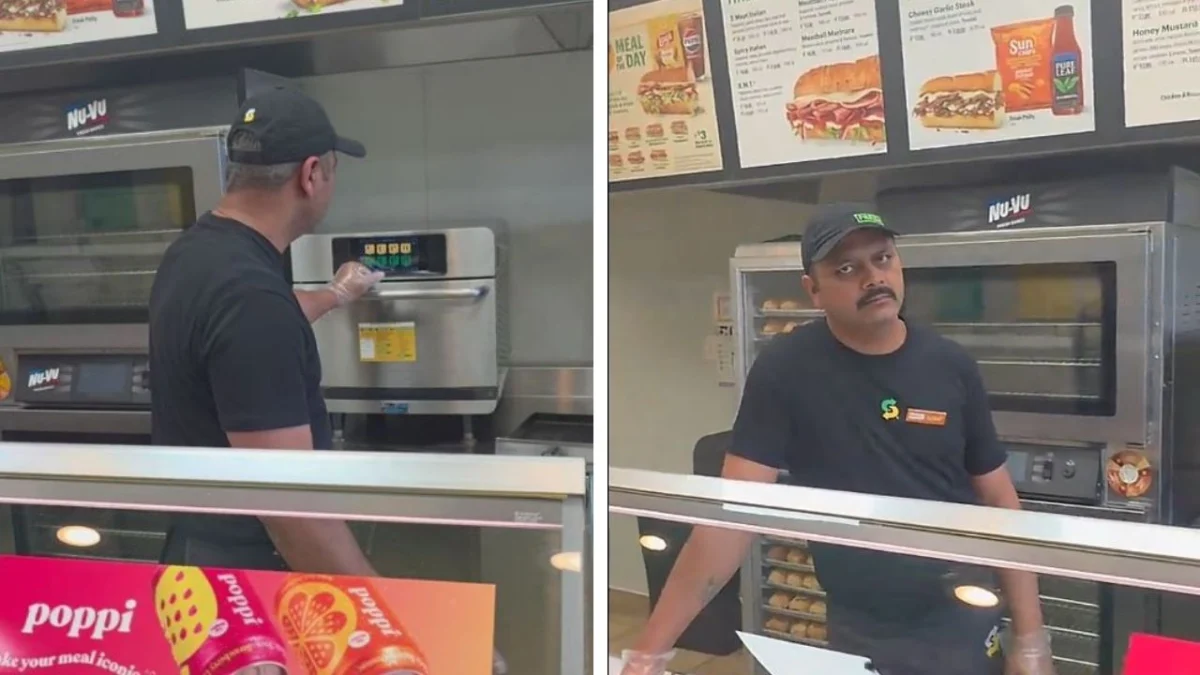
A recent incident at a Subway restaurant, captured in a TikTok video posted by user @daydaytvuncut1, has ignited a broad discussion regarding fast-food pricing policies, customer service protocols, and the pervasive influence of social media in public disputes. The video depicts a heated exchange between a customer and a Subway employee, stemming from an alleged charge for toasting bread—a service the customer vehemently insisted should be complimentary. The confrontation escalated to accusations of improper sandwich preparation, concerns for food safety, a demand for a refund, and an explicit threat to disseminate the interaction widely across social media platforms. While the specific location of the Subway franchise, the identities of the individuals involved, and the precise pricing policies of that particular establishment remain independently unverified, the video offers a raw glimpse into the complexities of consumer expectations and frontline employee challenges in the quick-service restaurant industry.
The Incident Unfolds: A Chronological Account
The video begins mid-confrontation, with the customer expressing astonishment and anger at the notion of being charged for toasting his bread. "Never in the history of me going to Subway have they ever charged a toast. Toast is free," the customer declared, challenging the employee’s explanation for the charge. He dismissed the employee’s rationale as fabricated, stating, "No, no, no. They don’t do that, bro. You making up stuff, bro." This initial disagreement set the contentious tone for the remainder of the interaction.
According to the employee, a charge for toasting was standard practice, and he claimed to have inquired about the customer’s preference for toasted bread before commencing the order. The customer, however, repeatedly asserted that he had answered "yes" multiple times to the toasting question, implying that he had agreed to the service without foreknowledge of an additional cost. His repetitive affirmation—"I told you yes. I told you yes. I told you yes. I told you yes. I told you yes"—underscored his belief that he had complied with the ordering process, and the charge was an unexpected imposition.
The dispute quickly expanded beyond the toasting charge to the very methodology of sandwich assembly. The customer objected to the sequence in which ingredients were being added, specifically admonishing the employee for attempting to toast lettuce. He insisted that certain ingredients, such as cheese and bacon, should be incorporated into the sandwich before the toasting process, not afterward. "You supposed to toast it when you put the, you know this already," he stated, suggesting a fundamental misunderstanding or deliberate deviation from standard Subway preparation practices by the employee. This criticism evolved into a direct accusation that the worker was intentionally preparing his sandwich incorrectly.
As the confrontation intensified, the customer escalated his concerns to food safety, alleging contamination. "You’re trying to contaminate my sandwich by putting it in there. That’s crazy, bro," he exclaimed. He further emphasized his long-standing loyalty to the Subway brand, asserting that he had never encountered such issues at any other location, thereby implying this incident was an anomaly or indicative of specific problems at this particular franchise.
The interaction culminated in the customer unequivocally demanding a refund, explicitly stating his unwillingness to consume the sandwich or remain in the establishment. "Can you give me my refund? I don’t want to eat here. I don’t feel safe. I don’t feel safe. That was crazy," he reiterated, emphasizing his distress and perception of a compromised experience. In a significant turn, he then informed the employee of his intent to broadcast the entire encounter online. "Now you on TikTok. Now I’m about to go viral over here because you trying to charge me for toasting and you f—–g up my order. That’s crazy," he declared, highlighting the modern reality of immediate digital dissemination of customer service disputes. The video concludes with the customer examining his payment method, appearing confused and uncertain about whether the disputed charge had already been processed, asking, "So is it on my card? I’m confused." This final moment underscores the immediate financial implications and the customer’s perceived lack of control over the transaction.
The Subway Franchise Model and Pricing Variability
To understand the context of such a dispute, it is crucial to examine Subway’s operational structure. Subway primarily functions as a franchise system, meaning that individual restaurants are owned and operated by independent franchisees rather than directly by the corporate entity. This model grants franchisees a degree of autonomy in various operational aspects, including staffing, local marketing, and, critically, pricing. While Subway corporate provides general guidelines and recommended pricing structures, franchisees often have the flexibility to adjust prices for certain menu items, promotions, and add-ons to account for local market conditions, operating costs, and competitive landscapes.
This decentralized pricing model can lead to inconsistencies in offerings and charges across different locations, even within the same geographic area. For instance, a Subway in a high-rent urban center might implement surcharges that a location in a suburban area does not. While core sandwich prices are generally consistent, specific customizations or "extras" can vary. This variability often creates confusion and frustration for customers who expect a uniform experience across all locations of a national chain. Customers accustomed to a particular service being free at one Subway may be surprised, and even angered, to find a charge for it elsewhere. This structural reality forms the backdrop against which disputes like the one captured on TikTok often unfold.
Understanding "Toasting" in the Fast-Food Context
The act of toasting bread for a sandwich is widely perceived by many consumers as a fundamental, complimentary service, particularly in establishments like Subway where it is an integral part of the sandwich-making process. Unlike optional toppings or premium ingredients, toasting is often seen as a preparation method that enhances the product, rather than an "add-on" worthy of a separate charge. However, from a business perspective, toasting does involve resources: electricity to power the toaster ovens, the incremental wear and tear on equipment, and the employee’s time dedicated to the process.
In the broader fast-food landscape, "upcharges" for customization are common. Extra sauces, premium cheese, avocado, or additional meat portions frequently incur additional costs. The question of whether toasting falls into this category is contentious. While some fast-food chains might integrate the cost of toasting into the base price of a sandwich, others, particularly franchisees seeking to optimize profitability, might view it as a justifiable, albeit minor, additional service. The ambiguity around whether "toasting" is a standard inclusion or a premium service can lead to significant friction, especially when the policy is not clearly communicated upfront or is inconsistent across different locations. The customer’s assertion that "Toast is free" reflects a widely held consumer expectation that may not always align with the specific pricing strategies of individual franchisees.
The Digital Echo Chamber: Social Media’s Role in Customer Disputes
The decision by the customer to film the interaction and threaten to post it on TikTok highlights the profound impact of social media on contemporary customer service. Platforms like TikTok have become powerful arenas for consumers to voice grievances, expose perceived injustices, and exert pressure on businesses. The potential for a video to "go viral" instantly transforms a private dispute into a public spectacle, capable of reaching millions of viewers within hours.
This phenomenon presents both opportunities and challenges. For consumers, it offers a platform to hold businesses accountable and potentially influence policy changes. For businesses, it means every customer interaction carries the risk of public scrutiny, necessitating impeccable service and transparent policies. Frontline employees, often low-wage workers, find themselves on the front lines of these digital battles, their actions and demeanor subject to instant global judgment. The unverified nature of many viral videos, which often present only one side of a complex interaction, further complicates matters, making it difficult for the public or businesses to ascertain the full truth. The threat of "going viral" itself has become a leverage point for customers, adding an extra layer of pressure to already tense situations.
Reactions and Commentary from the Online Community
The TikTok video, as intended by the customer, quickly garnered significant attention and a diverse range of reactions from online commenters, underscoring the divided opinions on the matter. Several users corroborated the employee’s claim, indicating that charges for toasting at Subway locations are not uncommon. One commenter, claiming to have worked at Subway, stated, "Nahhh subway do charge to toast its been like that since I’ve been working and for my mom too who’s been working for subway almost 20+ years." This perspective suggests that the customer’s experience, while perhaps unusual for him, might not be an isolated incident within the Subway system. Such comments lend credence to the idea of varying franchise policies.
Conversely, a significant portion of the online discourse focused on the customer’s confrontational demeanor. Commenters criticized his aggressive tone and tendency to yell at the employee, pointing out that frontline staff typically do not set store policies or prices. "Yelling at the worker like he can control the policy omg ur doing the most," one user wrote, highlighting the common challenge faced by customer service representatives who are tasked with enforcing rules beyond their control. This sentiment reflects a broader concern about the treatment of service workers in an increasingly demanding consumer environment.
Another interesting point raised by commenters revolved around the typical payment sequence at Subway. One user questioned the customer’s request for a "refund," writing, "Refund? Who pays before getting the sandwich at subway." This observation implies that at many Subway locations, payment is processed after the sandwich has been fully prepared and handed over to the customer. If this is indeed the standard procedure at the location in question, it raises questions about how the "disputed charge" was processed and whether the customer had actually completed the payment before the full extent of the dispute, particularly concerning the refund, emerged. This specific detail further complicates the chronology and financial implications of the incident.
Navigating Customer Service: Expectations vs. Reality
The incident serves as a stark reminder of the inherent tension between customer expectations and the operational realities of fast-food establishments. Customers often arrive with preconceived notions of pricing, service speed, and product consistency, which may not always align with the specific policies or circumstances of a given franchise location. Frontline employees, often young and working under pressure, bear the brunt of these misalignments. They are tasked with enforcing policies they did not create, de-escalating conflicts, and maintaining composure in the face of aggression, all while striving to deliver efficient service.
Effective communication from both sides is paramount. Businesses have a responsibility to clearly articulate their pricing structures, especially for add-ons or customizations that might not be universally complimentary. For customers, approaching perceived discrepancies with a respectful inquiry rather than immediate confrontation can often lead to more productive resolutions. The power dynamic, amplified by the presence of a camera, further complicates the ability of employees to resolve issues without feeling threatened or intimidated. The incident underscores the urgent need for enhanced training for employees in de-escalation techniques and for customers to exercise empathy and understanding when interacting with service staff.
Implications for Subway and the Fast-Food Industry
This viral incident carries several implications for Subway and the broader fast-food industry. For Subway, it highlights the potential for brand perception issues stemming from pricing inconsistencies across its extensive franchise network. A lack of uniform policy on seemingly minor items like toasting can erode customer trust and lead to widespread confusion, especially in the age of social media where such discrepancies are quickly brought to light. It may prompt Subway corporate to review and potentially standardize pricing for common customizations or ensure clearer communication of such charges at the point of sale.
More broadly, the incident reflects the evolving landscape of consumer behavior and expectations. In an era of rising operational costs, fast-food companies are increasingly looking for ways to maintain profitability, sometimes through minor surcharges. However, this must be balanced against deeply ingrained consumer expectations of value and complimentary services. The widespread use of smartphones as recording devices means that every customer service interaction is potentially public, forcing companies to prioritize transparent policies, robust employee training, and effective crisis communication strategies. The challenge for the industry lies in finding a harmonious balance between operational efficiency, profitability, and consistently positive customer experiences, all while navigating the unpredictable currents of digital scrutiny.
In conclusion, the viral TikTok video of the Subway dispute over a toasting charge is more than an isolated incident; it is a microcosm of larger trends at play within the quick-service restaurant industry. It encapsulates the complexities of franchise models, the nuances of fast-food pricing, the challenges faced by frontline employees, and the profound, often volatile, influence of social media on contemporary consumer-business interactions. As these forces continue to shape the commercial landscape, clarity, consistency, and respectful dialogue will remain essential ingredients for navigating the ever-evolving world of customer service.