admin
admin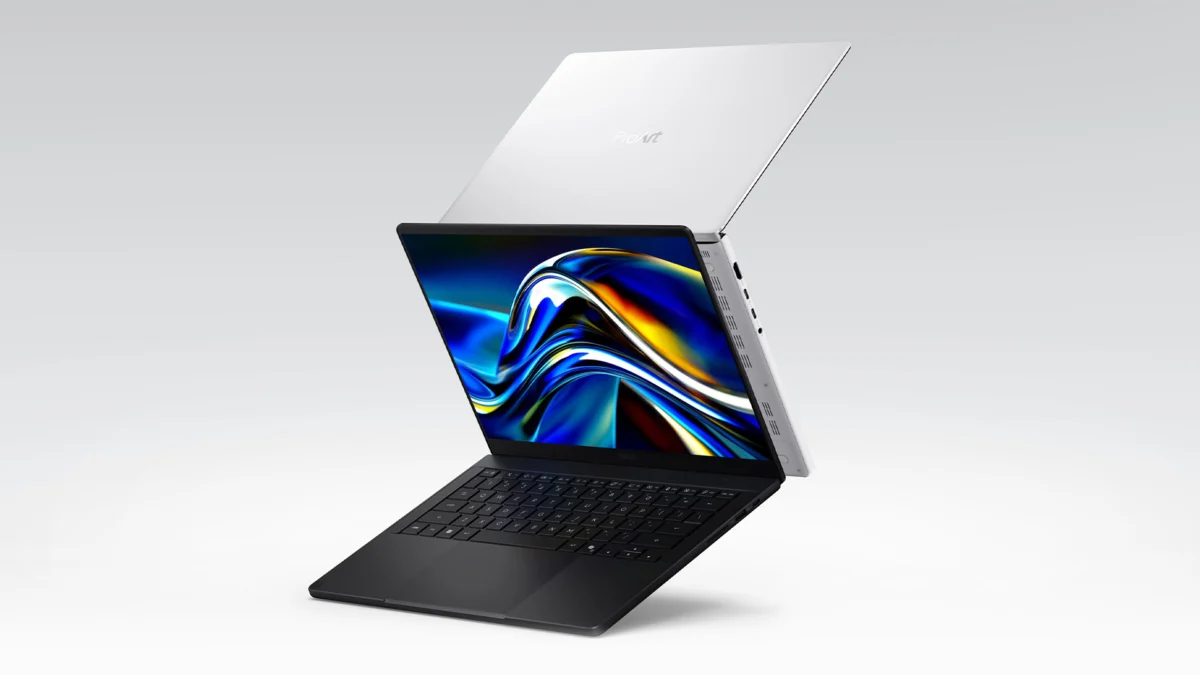
The detailed specifications for the upcoming ASUS ProArt P14 have surfaced, providing a comprehensive look at how the Taiwanese manufacturer intends to integrate NVIDIA’s highly anticipated RTX Spark architecture into its creative professional lineup. This leak, which encompasses hardware configurations ranging from entry-level models to high-end workstations, suggests a significant shift in how ASUS approaches mobile performance. By prioritizing unified memory and high-core-count processing, the ProArt P14 appears positioned to challenge the dominance of established players in the creative market, though the specifications also reveal several design compromises that may impact long-term scalability for power users.
At the heart of the ProArt P14’s value proposition is the inclusion of NVIDIA’s RTX Spark, a platform that marks a new chapter in NVIDIA’s expansion into the broader PC hardware ecosystem. Unlike traditional discrete GPU setups, the RTX Spark architecture emphasizes a tighter integration between processing units and memory. According to the leaked documentation, ASUS is moving away from the industry-standard 8GB or 16GB memory baselines. The ProArt P14 is expected to launch with a minimum of 24GB of LPDDR5X unified memory, with higher-tier configurations offering 36GB, 48GB, 64GB, and a flagship 128GB option. This tiered approach to unified memory reflects a growing demand for high-bandwidth RAM in workflows involving 8K video editing, complex 3D rendering, and local AI model deployment.
The Shift Toward Unified Memory and High-Performance Silicon
The decision to offer 24GB as the starting configuration is a strategic move that addresses a long-standing criticism of "thin and light" professional laptops. In traditional architectures, system RAM and GPU VRAM are separate entities, often leading to bottlenecks when one pool is exhausted while the other remains underutilized. Unified memory, a concept popularized in the mobile workstation space by Apple’s Silicon transition, allows the CPU and GPU to access the same high-speed memory pool. This is particularly relevant given recent updates to the Windows 11 operating system. Microsoft has recently signaled that it will allow users to manually allocate how much unified memory is dedicated to GPU-intensive AI workloads, a feature that will be essential for users of the RTX Spark-powered ProArt P14.
Supporting this memory architecture is a 20-core processor designed to handle intensive multi-threaded applications. While the specific silicon provider—whether Intel’s latest Ultra series or a proprietary implementation—remains to be officially confirmed, the 20-core count suggests a hybrid architecture capable of balancing high-performance tasks with energy efficiency. For creators, this means more efficient background rendering and faster compilation times in software suites such as Adobe Creative Cloud, DaVinci Resolve, and Blender.

Storage Constraints and Hardware Compromises
Despite the impressive strides in memory and processing power, the leaked specifications indicate that the ProArt P14 will require users to make significant compromises regarding internal storage. In an era where PCIe Gen 5 is becoming the standard for high-end desktops and premium gaming laptops, the ProArt P14 remains tethered to the PCIe NVMe Gen 4 standard. While Gen 4 speeds are more than sufficient for most contemporary tasks, the lack of Gen 5 support may be seen as a missed opportunity for a device marketed toward "pro" users who move massive raw video files daily.
Furthermore, the physical expansion capabilities of the P14 are notably limited. Most 15-inch and 16-inch workstations typically offer two or three M.2 slots to allow for storage redundancy or secondary scratch disks. However, the ProArt P14 is limited to a single M.2 slot. Out of the box, the device will be available with either a 512GB or 1TB drive. While the slot supports upgrades of up to 4TB, the single-slot limitation means users cannot easily mirror their drives for data security or add a second high-speed drive without replacing the primary boot drive. This design choice is likely a byproduct of the "thin and light" chassis design, which prioritizes portability and thermal management over modularity.
The financial timing of these storage limitations is also a point of concern for industry analysts. The global semiconductor market is currently navigating what many refer to as a "DRAM crisis," characterized by rising costs for high-density NAND and RAM modules. For a user to maximize the ProArt P14’s potential by installing a 4TB SSD, they would face substantial aftermarket costs that could significantly inflate the total cost of ownership for the machine.
Power Delivery and Portability Specifications
A standout feature of the leaked specifications is the ProArt P14’s approach to power management. Traditional mobile workstations are often hampered by the requirement for proprietary, heavy power bricks to sustain peak performance. ASUS appears to be bucking this trend by making the P14 compatible with standardized USB-C power delivery. The laptop is expected to support chargers ranging from 140W to 240W, allowing professionals to use a single high-output USB-C adapter for multiple devices.
The laptop will ship with a 140W USB-C charger and features a 90WHr battery. A 90WHr cell is near the legal limit for air travel (100WHr), suggesting that ASUS is aiming for the best possible battery life within the constraints of international regulations. When combined with the efficiency gains promised by the RTX Spark architecture and LPDDR5X memory, the ProArt P14 could potentially offer class-leading "unplugged" performance, a critical metric for field-based photographers and videographers.

Chronology of the ProArt Evolution and Market Context
The development of the ProArt P14 with RTX Spark is the latest step in a multi-year effort by ASUS to differentiate its creative line from its ROG (Republic of Gamers) gaming brand.
- Early 2023: ASUS refreshed the ProArt Studiobook line with dial-based physical controls and OLED displays, establishing a design language focused on tactile creative input.
- Late 2023: Rumors began circulating regarding NVIDIA’s "Project Spark," an initiative intended to bring unified memory architectures to the Windows ecosystem to compete with Apple’s M-series chips.
- Mid-2024: Reports emerged that ASUS had secured a primary partnership with NVIDIA for the first wave of RTX Spark-integrated laptops.
- August 2024: Leaked internal documents (H7407BA model) confirmed the specific memory tiers and storage limitations of the P14.
The market context for this launch is defined by the "AI PC" movement. Manufacturers are no longer just competing on raw clock speeds; they are competing on the ability to run Large Language Models (LLMs) and generative AI tools locally. By offering up to 128GB of unified memory, ASUS is positioning the P14 as a mobile development bed for AI researchers and creative directors who need to run Stable Diffusion or local LLMs without relying on cloud-based GPU clusters.
Official Responses and Industry Reception
While ASUS has not issued a formal press release regarding the specific leaked specifications of the H7407BA model, the company has publicly acknowledged the high demand for its next-generation ProArt hardware. During a recent briefing with channel partners, ASUS representatives indicated that the initial production run for RTX Spark-powered notebooks has already been fully pre-ordered by global distributors. This level of sell-in suggests that retailers have high confidence in the RTX Spark value proposition, despite the niche nature of the ProArt brand.
Industry analysts suggest that the "fully pre-ordered" status may also be a preemptive move to secure inventory ahead of further price fluctuations in the memory market. By locking in orders now, ASUS and its partners can mitigate some of the risks associated with the ongoing DRAM supply volatility.
Broader Impact and Future Implications
The arrival of the ASUS ProArt P14 marks a pivotal moment for the Windows laptop ecosystem. For years, the lack of a true unified memory architecture has been a primary reason why creative professionals migrated toward macOS. If NVIDIA’s RTX Spark can deliver on the promise of seamless memory sharing between the CPU and GPU on a Windows platform, it could reverse this trend and revitalize the high-end PC workstation market.

However, the P14 also highlights the ongoing tension between portability and professional utility. The decision to limit the device to a single M.2 slot and PCIe Gen 4 storage may alienate a segment of the "pro" market that requires maximum data throughput and internal expansion. For these users, the choice will be between the sleek, unified efficiency of the P14 or the bulkier, more expandable traditional workstations.
As the official launch date approaches later this year, the tech industry will be watching closely to see if the real-world performance of the RTX Spark architecture justifies these hardware trade-offs. If the 20-core CPU and 128GB unified memory configuration can outperform current-gen discrete GPU setups in specialized creative tasks, the ProArt P14 may set a new standard for what a mobile workstation is expected to achieve. For now, the leaked specifications paint a picture of a device that is ambitiously forward-looking in its processing capabilities, yet strictly conservative in its physical expansion and storage architecture.