Evan Lee Salim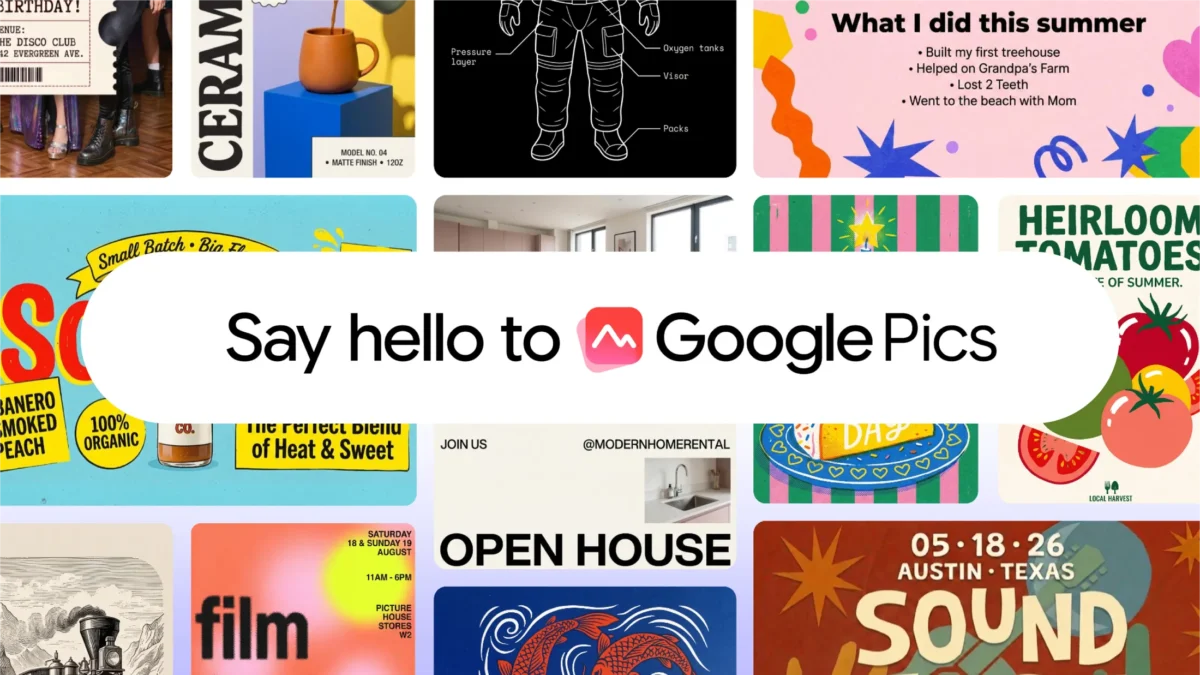
Google is making a significant foray into the burgeoning creative design market with the introduction of "Google Pics," a new image-creation and editing tool set to be integrated seamlessly into its widely used Google Workspace suite for business customers and premium Google AI subscribers. This strategic move positions Google to directly compete with established players like Adobe Express and Canva, aiming to democratize visual content creation for a broad user base while further embedding artificial intelligence into its core productivity offerings.
The company has confirmed that Google Pics, powered by its advanced Nano Banana image-generation model, will commence its rollout in the coming weeks. The initial availability targets the majority of Workspace customers, alongside individuals subscribed to Google AI Pro or Ultra tiers, signaling a dual approach to reach both enterprise and advanced individual users with its generative AI capabilities. The initial integration will see Google Pics functionality embedded directly within Google Docs and Slides starting today, with plans to extend its reach to Google Drive in the near future, ensuring a comprehensive presence across the Workspace ecosystem.
Unpacking Google Pics: Functionality and Core Differentiators
At its heart, Google Pics is designed to streamline and simplify the creation of visual assets for common workplace and personal needs. Users will be able to generate posters, social media posts, various visuals, and illustrations with unprecedented ease, leveraging the power of AI to transform textual prompts into compelling imagery. This aligns with a growing industry trend towards making sophisticated design tools accessible to non-designers, empowering individuals and small businesses to produce high-quality visual content without requiring extensive graphic design expertise or specialized software.
Beyond pure image generation, Google Pics boasts a suite of intuitive editing tools aimed at enhancing and refining created visuals. These include functionalities to isolate and transform objects within an image, modify or translate text embedded in graphics, and other capabilities that allow for quick adjustments and personalization. A key feature highlighted by Google is its support for collaborative editing, allowing teams to work together on visual projects in real-time, mirroring the collaborative strengths already present in other Google Workspace applications. Furthermore, the tool’s ability to generate several different variations of a requested image provides users with creative flexibility, enabling them to select the most suitable output for their specific needs.
However, Google Pics distinguishes itself significantly from its competitors through its fundamental approach to content creation. Unlike Canva, which operates a vast marketplace where artists, illustrators, and photographers can contribute templates, graphics, and photos, earning royalties for their work, Google Pics emphasizes purely AI-driven generation. While Canva does incorporate AI tools, a substantial portion of its appeal lies in its extensive library of human-created assets. Google Pics, in contrast, focuses on creating content based on prompts, leveraging an AI model that has been trained on a massive dataset, including existing artistic works.
Similarly, when compared to Adobe Express, a tool frequently utilized by professional creators to craft original designs from scratch, Google Pics positions itself differently. Adobe Express, while increasingly integrating generative AI through features like Firefly, still largely caters to a workflow where designers actively manipulate elements, draw, and build visuals from the ground up. Google Pics, as articulated by the company, is primarily a "prompt to create" tool, meaning users input descriptions, and the AI generates the visual. This distinction highlights Google’s focus on accelerating the initial ideation and creation phase through automation, rather than providing a comprehensive environment for intricate manual design.
The Broader AI Landscape and Google’s Strategic Play
Google Pics’ launch is not an isolated event but rather a crucial component of Google’s overarching "AI-first" strategy, which has seen a rapid acceleration of AI integration across its product portfolio. Following the introduction of its conversational AI models like Bard and Gemini, and the productivity-enhancing Duet AI for Workspace, Google Pics represents the company’s aggressive push into the generative AI space, particularly in visual content. This move places Google squarely in competition with tech giants and specialized AI firms that have been rapidly innovating in generative AI over the past two years.
The generative AI market has experienced explosive growth since 2022, with models like OpenAI’s DALL-E, Midjourney, and Stability AI’s Stable Diffusion captivating public imagination and demonstrating the transformative power of AI in creating photorealistic images, digital art, and other visual media. The market for AI-powered design tools alone is projected to reach several billion dollars in the coming years, driven by demand from marketing professionals, content creators, and businesses seeking efficient ways to produce visual assets.
Google’s entry with Nano Banana and Google Pics is a direct response to this burgeoning market and a strategic imperative to maintain its competitive edge in the enterprise software and productivity sectors. Microsoft, Google’s perennial rival, has also been aggressively integrating its Copilot AI into Microsoft 365, offering AI-powered assistance for document creation, data analysis, and image generation. By embedding Google Pics into Workspace, Google aims to provide its extensive user base – numbering in the billions across individual and organizational accounts – with a comprehensive, AI-enhanced productivity suite that rivals or surpasses competitors’ offerings. The move reinforces Workspace as a fully integrated ecosystem, where AI isn’t just an add-on but an intrinsic part of the user experience across applications like Docs, Slides, and Drive.
Ethical Considerations and the Creator Economy
The mention that Google Pics’ underlying AI model, Nano Banana, was "trained on artists’ work" immediately brings to the forefront the ongoing, complex ethical debate surrounding generative AI and intellectual property rights. The use of vast datasets, often scraped from the internet without explicit consent or compensation to the original creators, has sparked significant controversy and legal challenges from artist communities worldwide.
The core of the debate revolves around fair compensation, attribution, and the potential for AI-generated content to dilute the value of human artistry or even displace human jobs. While Google, like many other AI developers, asserts that its models learn patterns and styles rather than directly copying works, the ethical implications for the creator economy are profound. The distinction between Google Pics’ purely AI-generated output and Canva’s model, which supports a marketplace for human artists, underscores a fundamental divergence in philosophy that will likely draw scrutiny from the creative community.
Industry leaders like Adobe have attempted to address these concerns by developing models like Firefly, which are trained on licensed content or public domain images, and by establishing compensation models for contributing artists whose work is used in training data. Google’s approach with Nano Banana and Google Pics will undoubtedly be watched closely to see how it navigates these ethical waters, particularly concerning potential future policies on artist compensation or opt-out mechanisms for training data. The company’s success in the creative market may hinge not only on the technological prowess of Google Pics but also on its ability to foster trust and address the legitimate concerns of the artistic community.
Phased Rollout and Accessibility
The phased rollout strategy for Google Pics is designed to ensure a smooth integration and broad accessibility across Google’s diverse user base. The initial availability for most Workspace customers indicates a wide enterprise adoption strategy, allowing businesses of all sizes to immediately leverage AI for their visual content needs. This includes small businesses creating marketing materials, large corporations developing internal communications, and educational institutions crafting engaging learning resources.
For individual power users and those seeking advanced AI capabilities, Google Pics will be accessible to subscribers of Google AI Pro and Ultra tiers. These premium subscriptions typically offer enhanced AI features, greater processing power, and priority access to new AI innovations, positioning Google Pics as a valuable perk for Google’s most engaged AI users. The immediate integration into Docs and Slides is particularly strategic, as these are two of the most frequently used applications within Workspace for presentations, reports, and collaborative document creation, where visual elements play a critical role in conveying information effectively. The subsequent rollout to Google Drive will further enhance its utility, enabling users to manage, store, and share their AI-generated visuals seamlessly within their existing file management system.
Implications for the Future of Work and Design
Google Pics represents more than just a new feature; it signifies a pivotal moment in the evolution of digital productivity and creative work. By integrating advanced generative AI directly into the tools people use every day, Google is poised to redefine how individuals and organizations approach visual content creation.
Democratization of Design: The most immediate impact will be the further democratization of design. Individuals without formal training can now generate sophisticated visuals, reducing reliance on external designers or expensive stock photo subscriptions. This could empower small businesses, non-profits, and educational institutions to elevate their visual communication with minimal investment.
Productivity Boost: For businesses, the ability to rapidly generate visuals for marketing campaigns, internal reports, or social media will translate into significant productivity gains. Marketing teams can iterate on concepts faster, HR departments can create engaging internal communications, and sales teams can develop more compelling presentations.
Competition and Innovation: Google’s entry will intensify competition in the AI design tool market. Adobe, Canva, and Microsoft will likely accelerate their own AI development and integration strategies, leading to a wave of innovation that benefits end-users with more powerful, intuitive, and ethically sound tools.
Evolving Role of Designers: While some fear job displacement, many analysts suggest that AI tools will instead augment human designers, freeing them from repetitive tasks and allowing them to focus on higher-level strategic thinking, creative direction, and complex problem-solving. Designers may transition to roles involving AI prompting, refining AI outputs, and managing AI-driven workflows.
Ethical Frameworks: The launch will further fuel discussions around the ethical governance of AI, particularly concerning copyright, data provenance, and the future of human creativity. It will put pressure on Google and other tech giants to establish clearer guidelines and potentially compensation models for artists whose work contributes to AI training.
In conclusion, Google Pics is a bold strategic move by Google, leveraging its vast ecosystem and advanced AI research to disrupt the creative design market. While promising unprecedented ease and efficiency in visual content creation, its success will also depend on Google’s ability to navigate the complex ethical landscape of generative AI and demonstrate a commitment to responsible innovation that benefits all stakeholders, including the creative community. The coming months will reveal the true extent of its impact on the future of work and design.