George Chandra Eka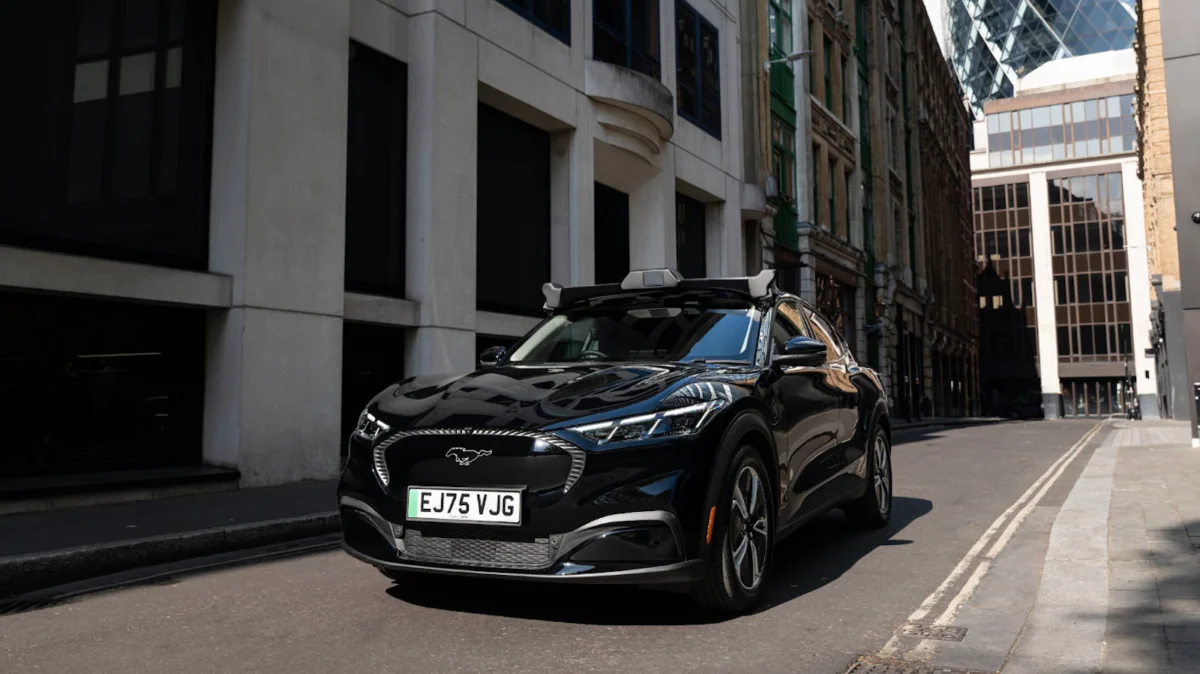
London’s bustling streets have officially welcomed a new era of urban mobility with Uber’s announcement that it has commenced autonomous vehicle (AV) ride-hailing services in the capital. This significant development marks a pivotal moment for the autonomous driving industry in Europe, as Uber leverages a strategic partnership with Wayve, a pioneering British artificial intelligence company specializing in AV technology. Customers requesting an UberX, Uber Comfort, or Uber Electric ride within designated operational zones could now find themselves matched with a specially outfitted Ford Mustang Mach-E, powered by Wayve’s advanced self-driving system. This rollout, while a testament to technological progress, operates under strict regulatory mandates, notably requiring a human safety operator to be present in the vehicle at all times, underscoring the measured approach adopted by UK authorities.
A New Chapter in Urban Mobility: The London Debut
The introduction of robotaxis in one of the world’s most complex and iconic cities represents a substantial leap for Uber’s global autonomous ambitions and Wayve’s homegrown innovation. The Ford Mustang Mach-E vehicles, integral to this initial phase, are equipped with Wayve’s sophisticated AI-driven autonomous technology, designed to navigate London’s intricate road networks, diverse traffic conditions, and varying urban environments. Before an autonomous vehicle is dispatched, customers will receive a clear notification within the Uber app, providing them with the option to accept the AV ride or opt for a traditional, human-driven vehicle if they prefer. This transparent approach aims to build passenger confidence and allow for a gradual transition to this new mode of transport.
The pricing structure for these autonomous rides mirrors that of Uber’s conventional services, ensuring that the advanced technology does not translate into a premium cost for consumers. This strategy is crucial for encouraging adoption and integrating AVs seamlessly into the existing ride-hailing ecosystem. Interestingly, while a human safety operator is present, Uber has clarified that passengers will not be prompted to tip through the app for AV rides. However, the option to tip remains available through the Trip History page, reflecting a nuanced approach to compensation given the supervisory role of the human operator rather than a primary driving function.
The Regulatory Maze: Navigating London’s Demanding Landscape
The launch in London was not without its significant regulatory hurdles, highlighting the cautious yet progressive stance of UK authorities towards autonomous vehicle deployment. Uber secured its license to operate AVs in London only last month, a culmination of extensive testing, safety assessments, and collaborative discussions with Transport for London (TfL) and other relevant bodies. A cornerstone of this regulatory approval is the stringent requirement for a human safety driver to be present in the front seat of every autonomous vehicle. This individual’s role is to monitor the vehicle’s performance, intervene if necessary, and ensure passenger safety, acting as a crucial safeguard during this pilot phase.
This mandate reflects a global trend among regulators who are prioritizing safety and public trust in the nascent stages of AV deployment. Unlike some regions where fully driverless operations are being tested or are already active under specific conditions, the UK’s approach is distinctly phased. Industry experts widely anticipate that it will be some time before any company is granted permission to operate AVs in London without a human supervisor. This cautious timeline allows for the accumulation of real-world data, refinement of technology, and the continuous evolution of regulatory frameworks to ensure robust safety standards are met before fully autonomous operations become commonplace. The regulatory environment for AVs in the UK is governed by several pieces of legislation and guidance, including the Automated and Electric Vehicles Act 2018, which provides a framework for future liability and insurance, and ongoing consultations for more comprehensive legal reforms that would facilitate broader AV deployment.
Wayve: A British AI Success Story
At the heart of this London deployment is Wayve, a Cambridge-based company that has rapidly emerged as a leader in the autonomous vehicle space. Founded in 2018, Wayve distinguishes itself through its innovative approach to autonomous driving, heavily relying on end-to-end deep learning and artificial intelligence. Unlike traditional AV systems that often rely on extensive hand-coded rules, detailed high-definition maps, and precise localization, Wayve’s technology learns to drive directly from real-world data, using neural networks to perceive, predict, and plan. This data-driven approach is particularly suited for complex and unpredictable urban environments like London, where dynamic conditions, varied infrastructure, and diverse road users present significant challenges.
Wayve’s technology emphasizes learning from human driving behavior, enabling its systems to generalize to new scenarios and adapt to unforeseen circumstances more effectively. The company has attracted significant investment, including from prominent tech investors and automotive giants, underscoring the confidence in its unique methodology. For Wayve, partnering with Uber for a public rollout in its home country is a monumental achievement, validating years of research and development. It also positions the UK as a significant player in the global race for autonomous technology, showcasing local innovation on a global stage. The partnership with Uber is not merely transactional; it represents a shared vision for the future of mobility, with Wayve providing the foundational AI and Uber offering its expansive platform and operational expertise.
Uber’s Global Autonomous Footprint and Future Ambitions
The London launch is a significant milestone in Uber’s long-term strategy to integrate autonomous vehicles into its global ride-hailing and delivery network. Uber’s journey into AVs has been dynamic and marked by strategic shifts. Initially, the company invested heavily in its own Advanced Technologies Group (ATG), developing proprietary self-driving technology. However, in a strategic pivot in late 2020, Uber divested ATG to Aurora, an autonomous vehicle technology company, choosing instead to focus on partnerships with leading AV developers. This decision allowed Uber to leverage the specialized expertise of companies like Wayve, Waymo, Motional, and previously Argo AI, while concentrating on its core platform operations and rider experience.
Prior to London, Uber’s robotaxis have already established a presence across several cities in the United States. The company currently operates AV fleets in Dallas, Las Vegas, Atlanta, and Austin, offering passengers autonomous ride options in partnership with various technology providers. These deployments have served as crucial testing grounds, allowing Uber to refine its operational models, integrate AVs into its dispatch system, and gather valuable customer feedback. Looking ahead, Uber has ambitious expansion plans, with announcements for future AV services in Los Angeles and the Bay Area.
The partnership with Wayve extends beyond London. Uber and Wayve have already announced plans to collaborate on bringing Nissan AVs to Tokyo, marking another international expansion for their joint efforts. This multi-city, multi-continent strategy highlights Uber’s commitment to a diverse portfolio of AV partnerships, tailored to specific regional markets and regulatory environments. Uber’s vision is not just about replacing human drivers but enhancing the overall efficiency, safety, and accessibility of its services, potentially reducing operational costs in the long run and addressing driver shortages in certain markets.
Broader Implications: Transforming Urban Landscapes and Economies
The deployment of robotaxis in London carries profound implications that extend far beyond simply offering a new ride option. It signals a gradual but inevitable shift in urban mobility, potentially reshaping city planning, infrastructure development, and local economies.
Economic Impact: The global autonomous vehicle market is projected to grow substantially in the coming years, with market research firms estimating its value could reach hundreds of billions of dollars by the end of the decade. This growth is driven by advancements in AI, sensor technology, and increased investment. While initial deployments like London’s are limited in scope, they lay the groundwork for a future where autonomous services could significantly reduce transportation costs, increase vehicle utilization, and potentially create new economic opportunities in manufacturing, software development, and maintenance.
Urban Planning and Infrastructure: The widespread adoption of AVs could lead to a reduction in private car ownership, freeing up valuable urban space currently dedicated to parking. It could also influence the design of roads and traffic management systems, potentially leading to smoother traffic flow, reduced congestion, and more efficient use of road capacity. The integration of AVs with public transport networks could create a more seamless, multimodal transportation experience for city dwellers.
Environmental Benefits: The choice of the Ford Mustang Mach-E, an electric vehicle, for the London deployment underscores the potential environmental benefits of autonomous fleets. As AVs become more prevalent, the transition to electric autonomous vehicles could significantly reduce carbon emissions and air pollution in urban centers, contributing to cleaner, healthier cities.
Public Perception and Trust: The success of AV deployment hinges heavily on public acceptance and trust. The cautious, supervised approach in London is designed to build this confidence gradually. Incidents involving AVs, though rare, can significantly impact public perception, making transparent communication, robust safety protocols, and clear regulatory oversight paramount. The presence of a human safety driver during this initial phase serves as a critical bridge, allowing the public to become accustomed to the technology while ensuring immediate human intervention capability.
Job Market Evolution: The rise of autonomous vehicles inevitably raises questions about the future of jobs in the transportation sector. While the role of a traditional driver may evolve, new job categories are likely to emerge in areas such as remote monitoring, fleet management, AV maintenance, software development, and specialized customer support. The transition will require reskilling and upskilling initiatives to support the workforce through this technological shift.
The Path Forward: Challenges and Opportunities
Despite the excitement surrounding this launch, significant challenges remain on the path to fully autonomous, widespread deployment. The "last mile" problem in AV development—the ability of vehicles to navigate unpredictable and unstructured environments—is still a complex hurdle. Scalability, cost-effectiveness, and the ability to operate reliably in all weather conditions across diverse geographies are ongoing areas of research and development.
For London, the phased approach with human supervision is a pragmatic starting point. It allows for the collection of invaluable data from real-world operations in one of the world’s most dynamic urban environments. This data will be crucial for refining Wayve’s AI, demonstrating the technology’s safety and reliability, and informing future regulatory decisions. The ongoing collaboration between Uber, Wayve, and regulatory bodies like TfL will be vital in navigating these complexities and progressively advancing towards a future where autonomous vehicles play an even more integrated and transformative role in urban life. The London launch is not merely a service introduction; it is a live experiment, a learning opportunity, and a bold step towards shaping the future of transportation in one of the world’s leading global cities.